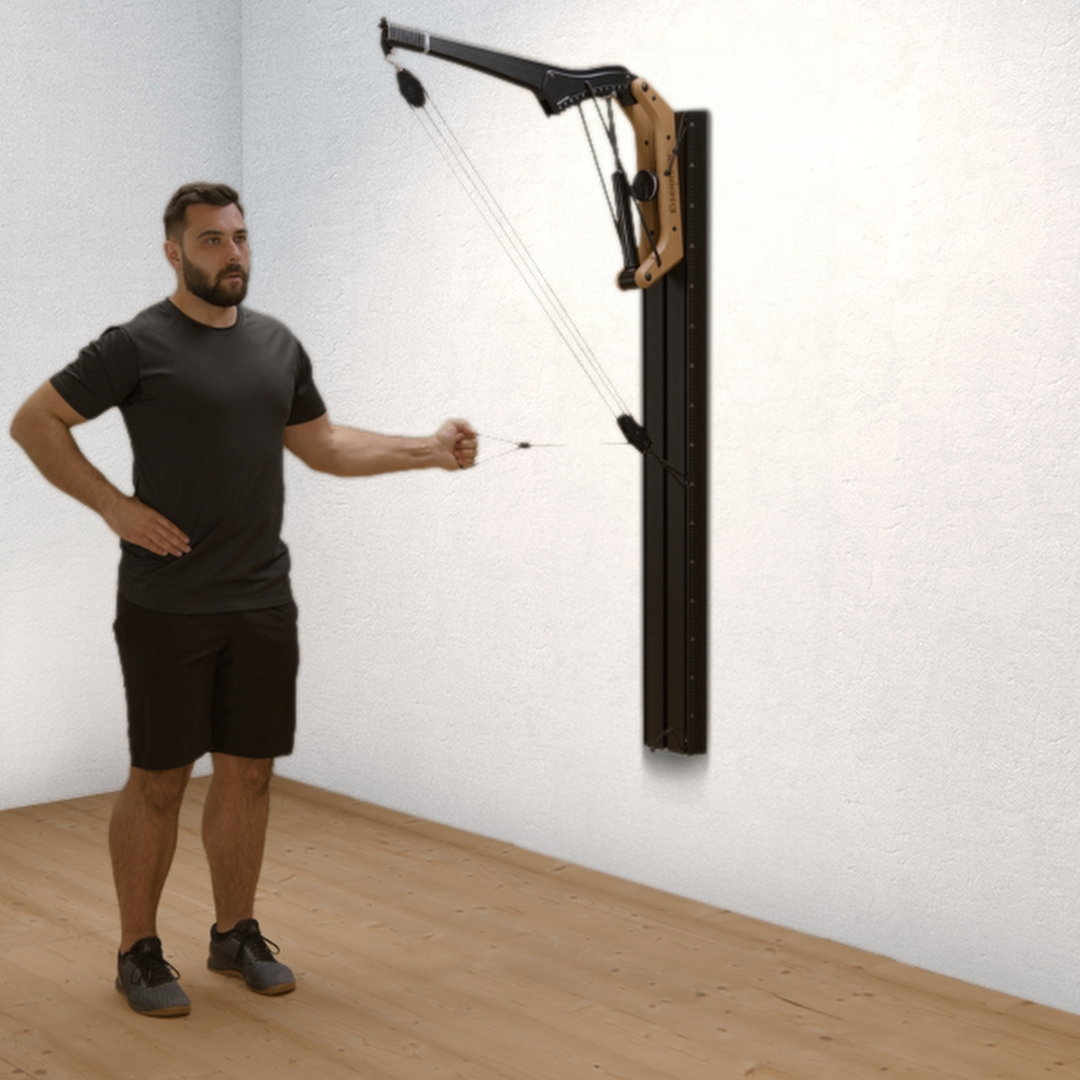
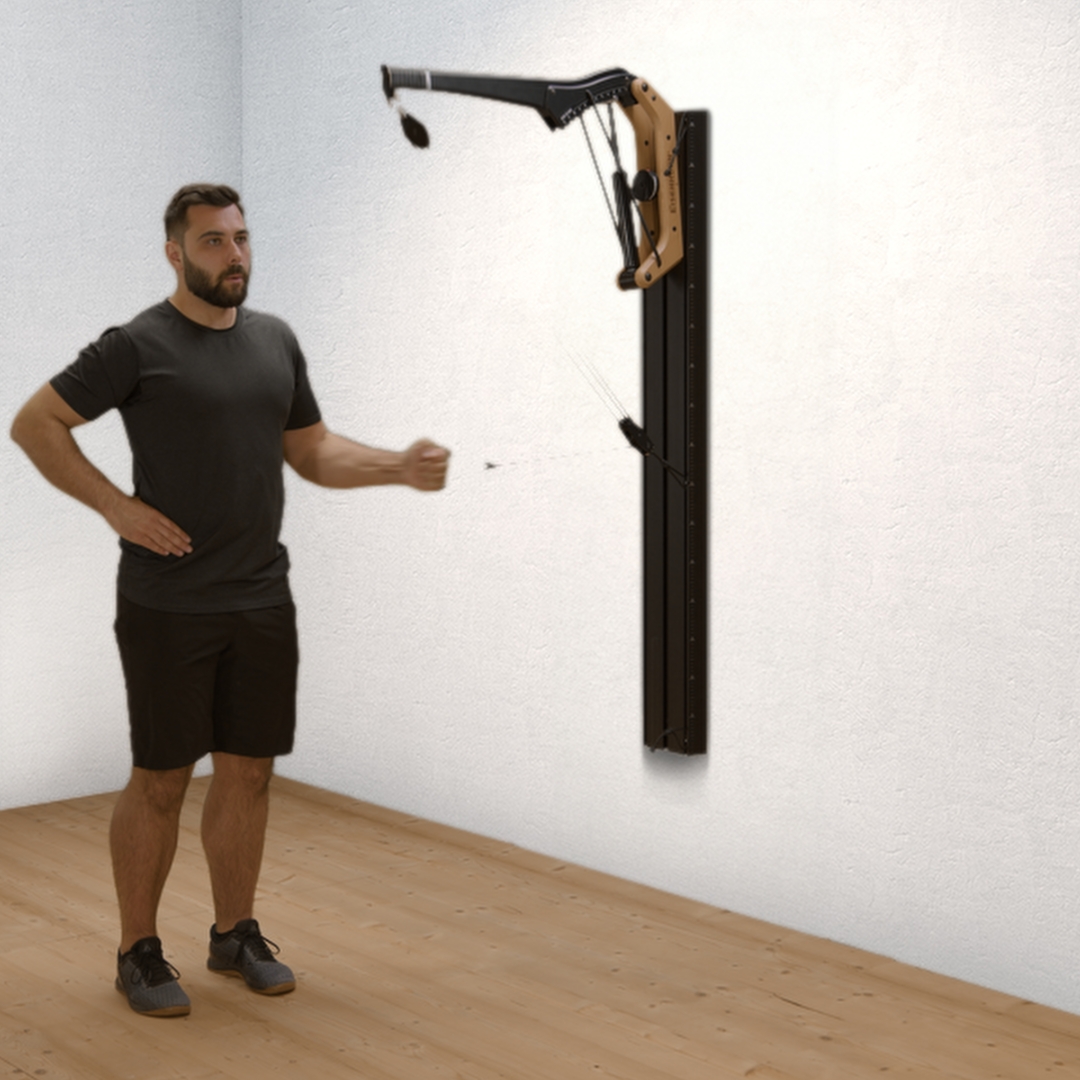

What makes this exercise particularly effective?
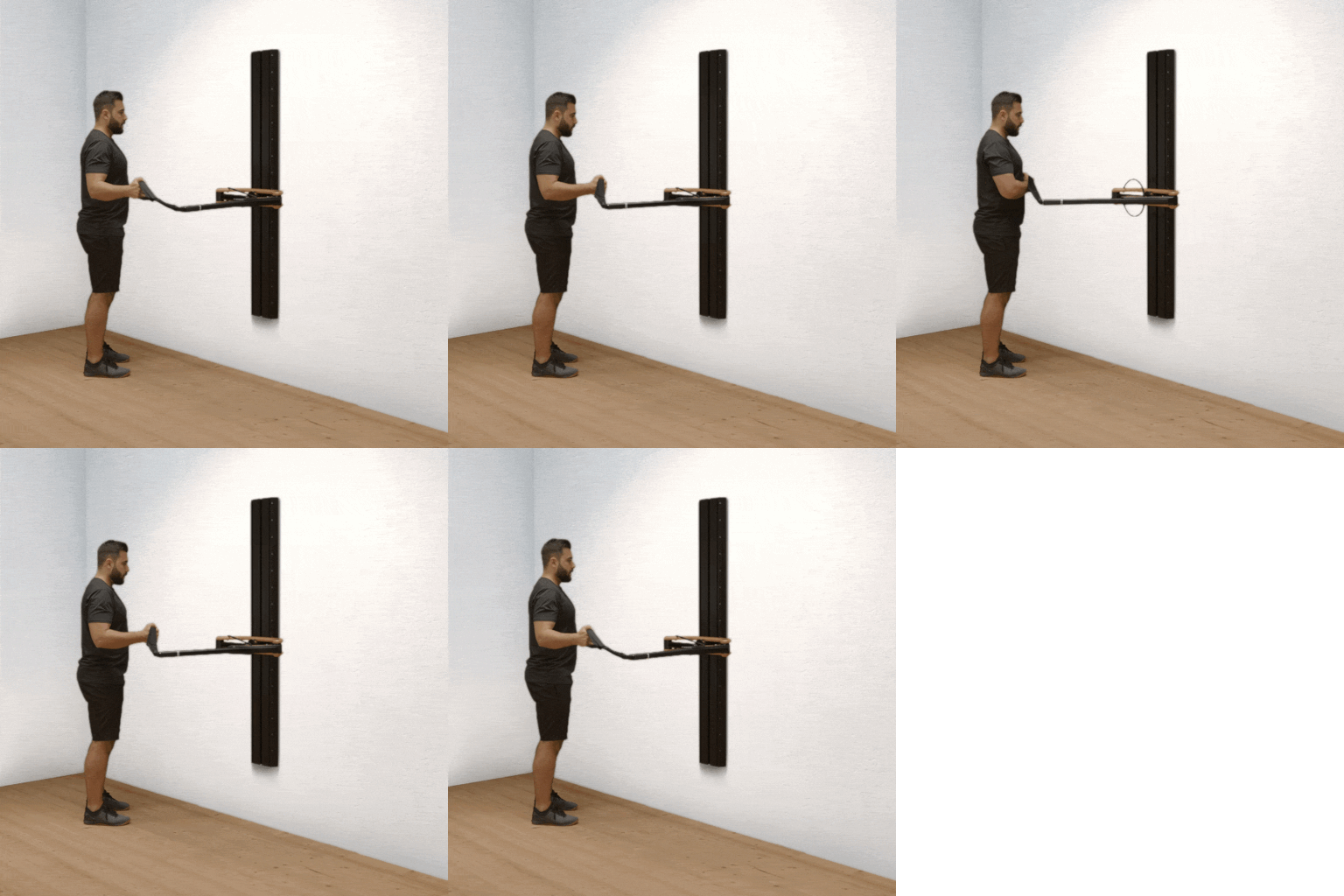
Internal rotation strengthens the deep rotator cuff — especially the subscapularis, which acts as a strong internal rotator and stabilizes the shoulder joint. Through controlled movement against the cable resistance, the shoulder joint function is trained in a targeted way and protected in the long term.
What effect does the exercise achieve?
Targeted stabilization of the shoulder joint: The rotator cuff muscles are directly trained — crucial for injury prevention and joint stability.
Improved mobility and functional rotation: Internal rotation plays an important role in everyday tasks (e.g., fastening a belt) as well as in athletic movements such as snatches or pull-ups, where the upper arm must stay close to the body.
Compensation of muscular imbalances: Many people develop dominant external rotators (e.g., through frequent pushing movements), which can contribute to rounded-forward posture over time. Internal rotation restores balance and improves posture.
Gentle, physiotherapy-recommended execution: This exercise can be performed safely even with limited mobility and is often included in shoulder rehabilitation programs.
How does this exercise fit into the Big 5 concept?
The Big 5 include the fundamental exercises: squat, deadlift, bench press, pull-up or lat pulldown, and shoulder press. Internal rotation with a cable meaningfully complements the Big 5 Training Concept:
Improved shoulder function and technique: Stable internal rotation enhances performance in complex upper-body patterns such as pull-ups and pressing movements.
Injury prevention focus: Strengthening the rotator cuff supports and protects the shoulder joint even under heavy loads in the basic exercises.
Full-body balance: Balanced development between internal and external rotators supports overall symmetry — essential for effective and sustainable strength training.
:format(webp))
)
)
)
)
)
:format(webp) "EISENHORN S Black Edition")
 "EISENHORN S Black Edition")