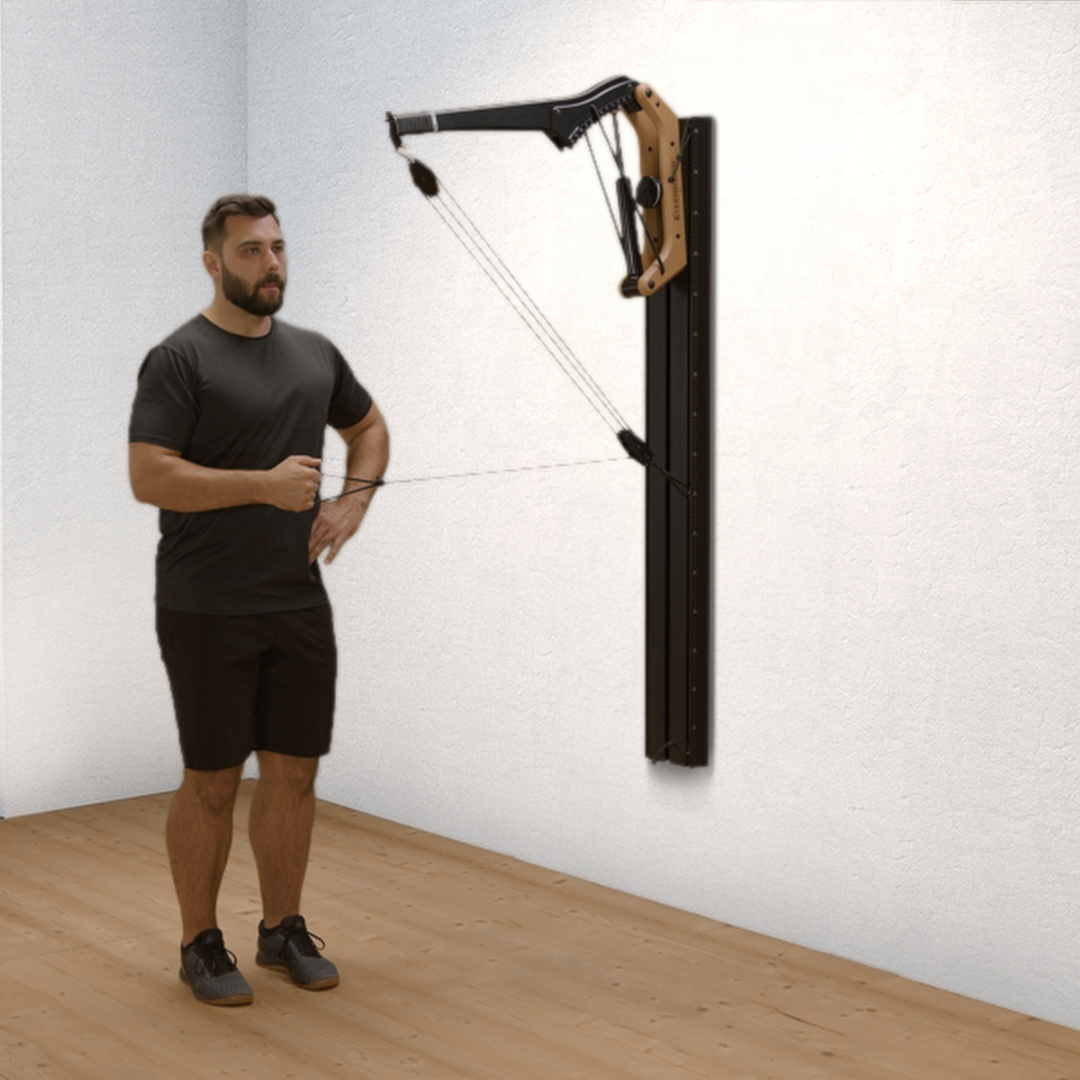
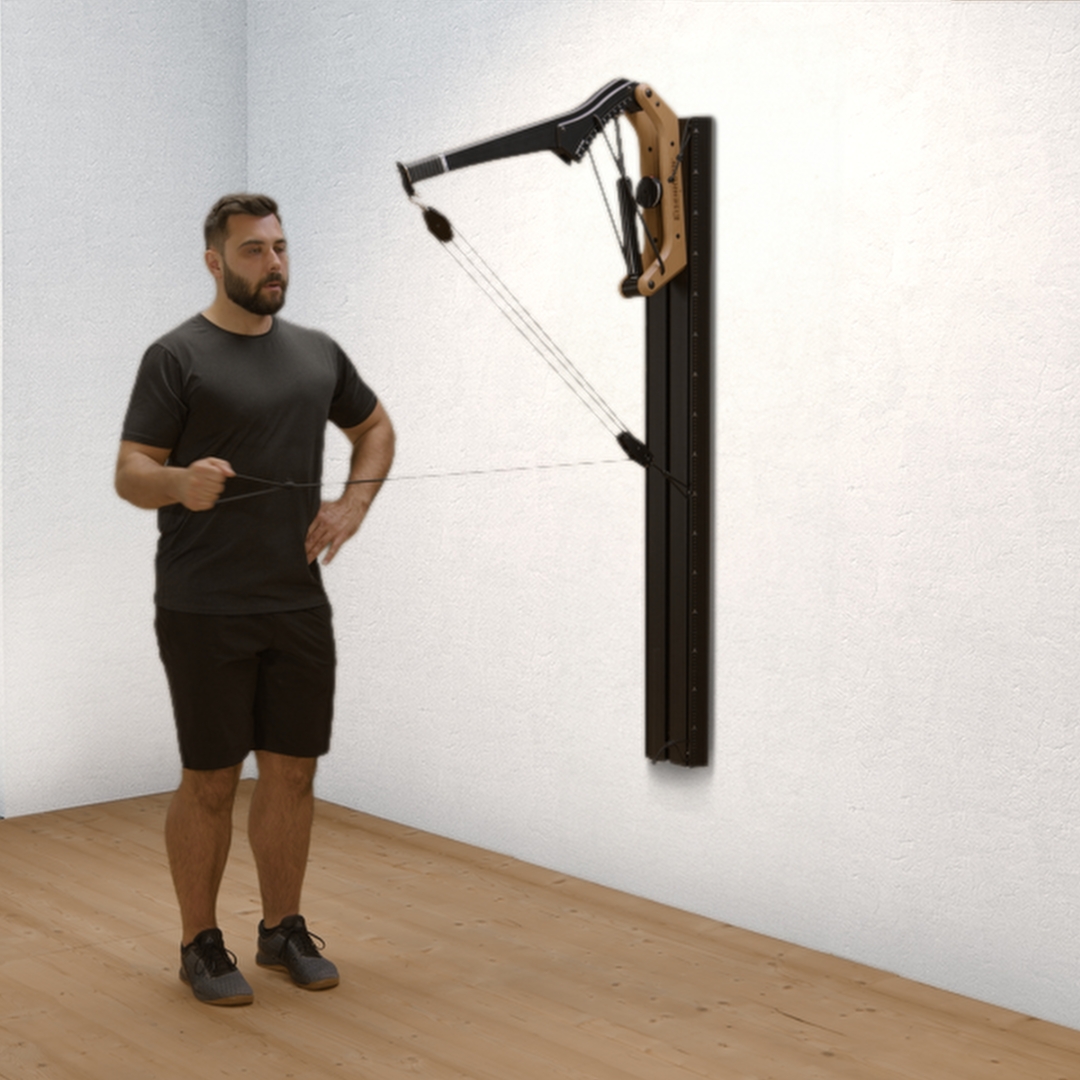
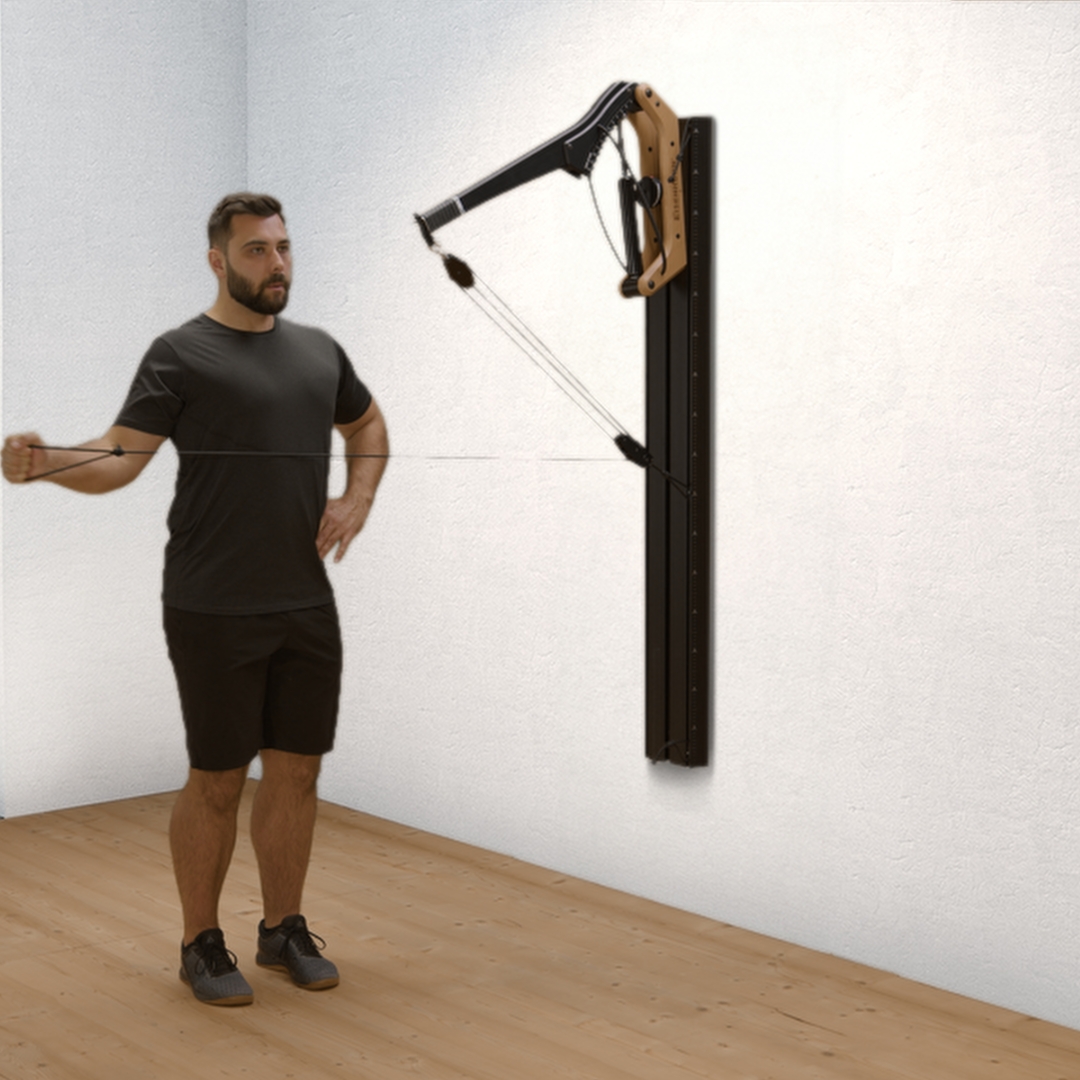
What makes this exercise particularly effective?
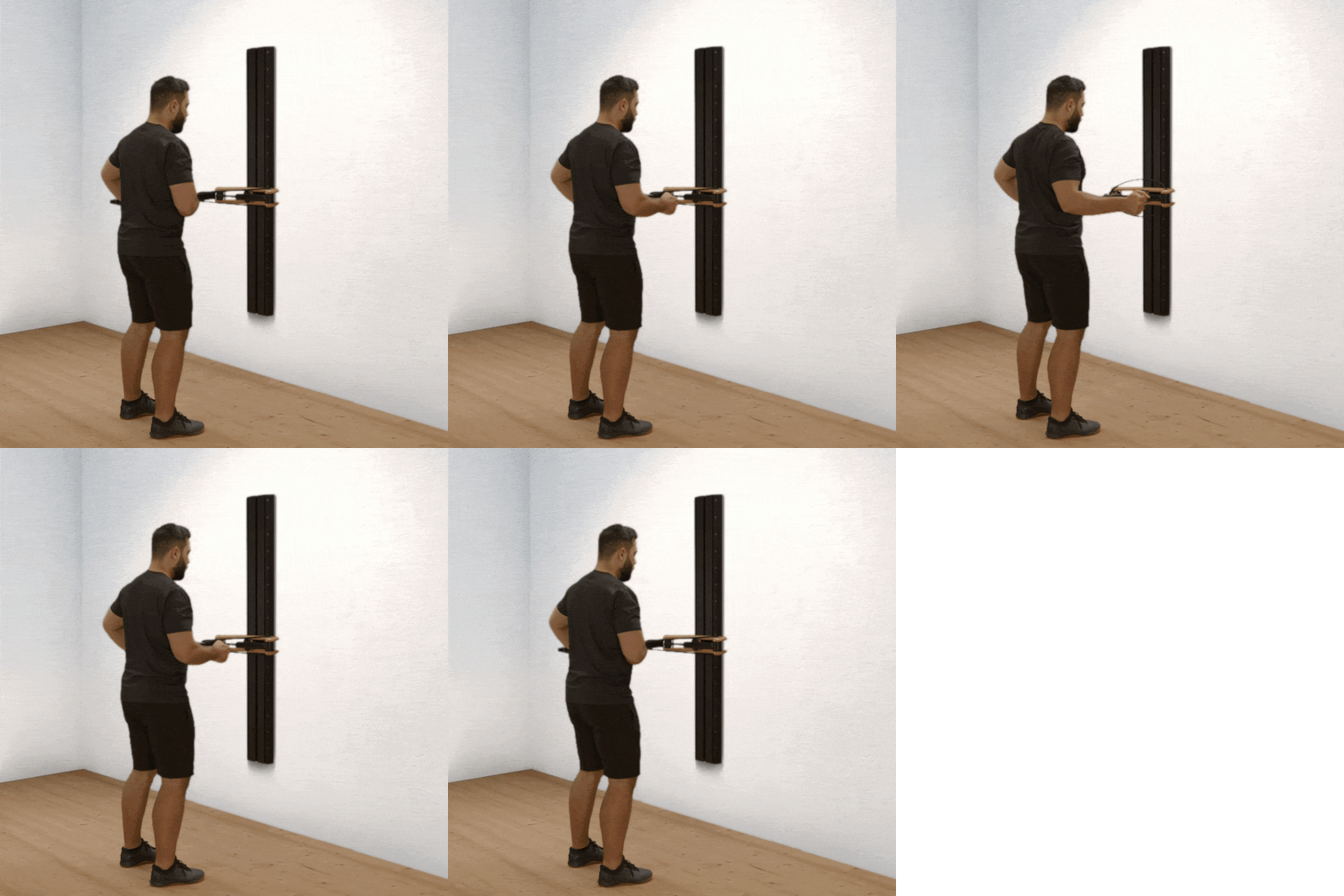
The external rotation with cable pulley specifically targets the external rotators of the shoulder joint, especially the infraspinatus and teres minor. These small muscles play a central role in stabilizing the head of the humerus in the joint. The controlled execution against resistance strengthens this muscle system, prevents injuries, and supports healthy shoulder function.
What effect does the exercise achieve?
Stable shoulder function & injury prevention: The external rotators act as dynamic stabilizers. Strong rotators prevent tendon impingement and reduce shoulder discomfort.
Targeted training with safety: Slow, low-intensity execution emphasizes the infraspinatus without excessive strain — ideal for rehabilitation and joint health.
Improved posture & movement quality: Strengthening the external rotators corrects muscular imbalances, promotes an upright posture, and supports healthy shoulder movement, especially during pushing and pulling exercises.
How does this exercise fit into the Big 5 concept?
The Big 5 include the fundamental exercises: squat, deadlift, bench press, pull-up or lat pulldown, and shoulder press. The external rotation with cable pulley is not part of the Big 5 but can meaningfully complement the Big 5 training concept:
Enhanced shoulder stability in basic exercises: A strong rotator cuff protects the shoulder during pressing and pulling movements — for example, during bench press or shoulder press.
Balanced training: It provides targeted stabilization work, helping prevent unilateral dominance and postural issues.
Long-term functionality: The exercise supports sustainable shoulder health and injury prevention — crucial for continuous training success.
:format(webp))
)
)
)
)
)
:format(webp) "EISENHORN S Black Edition")
 "EISENHORN S Black Edition")