What makes this exercise particularly effective?
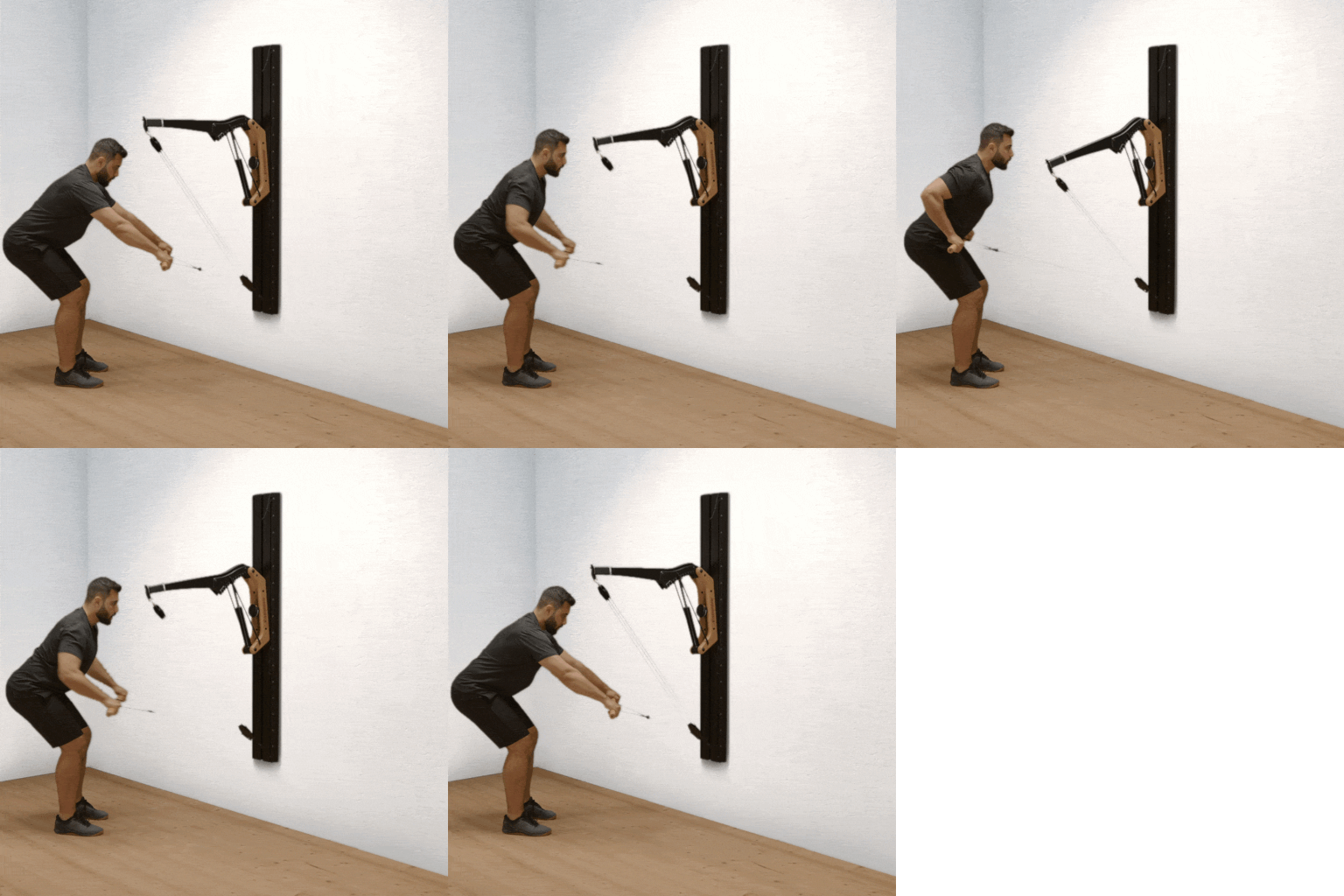
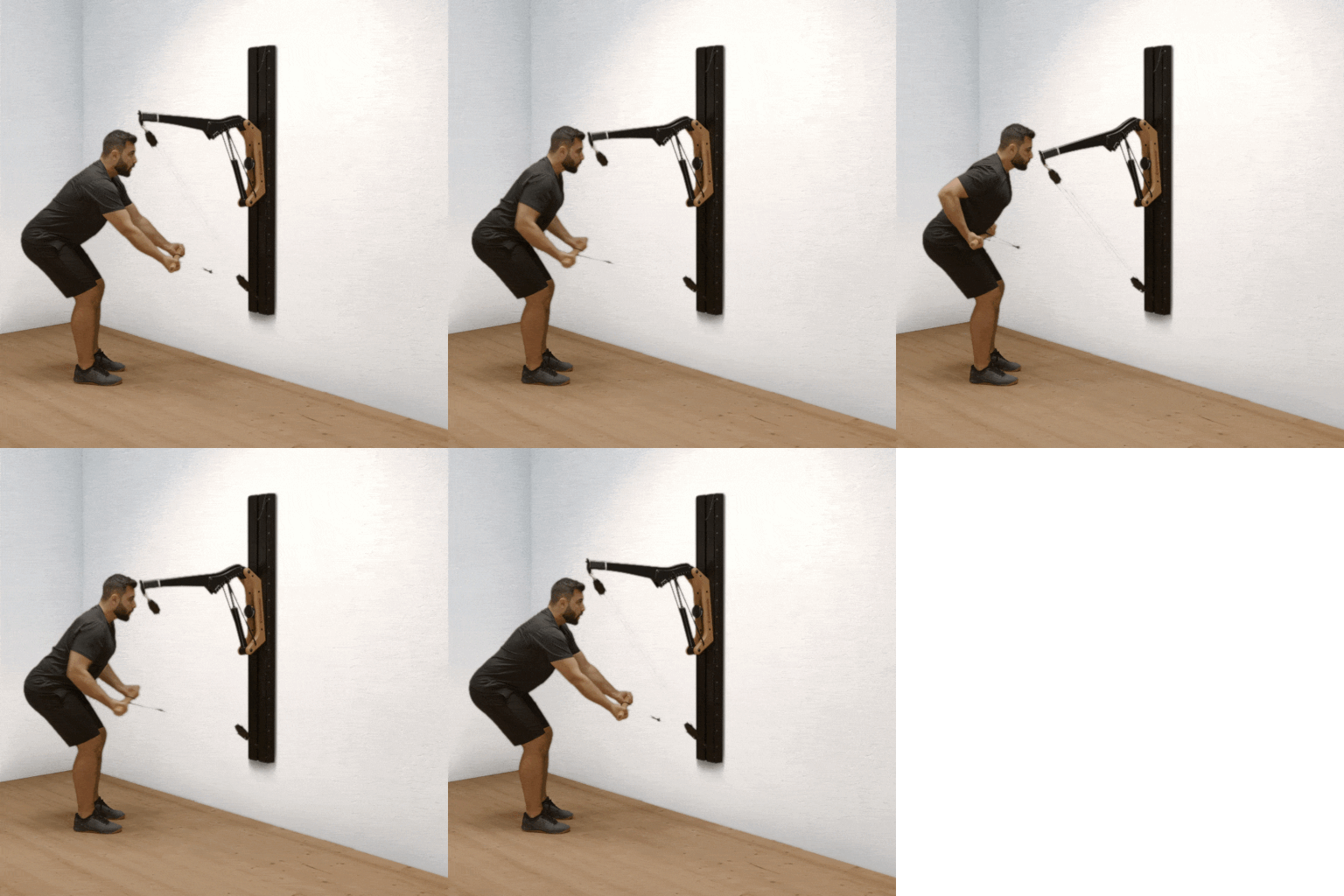
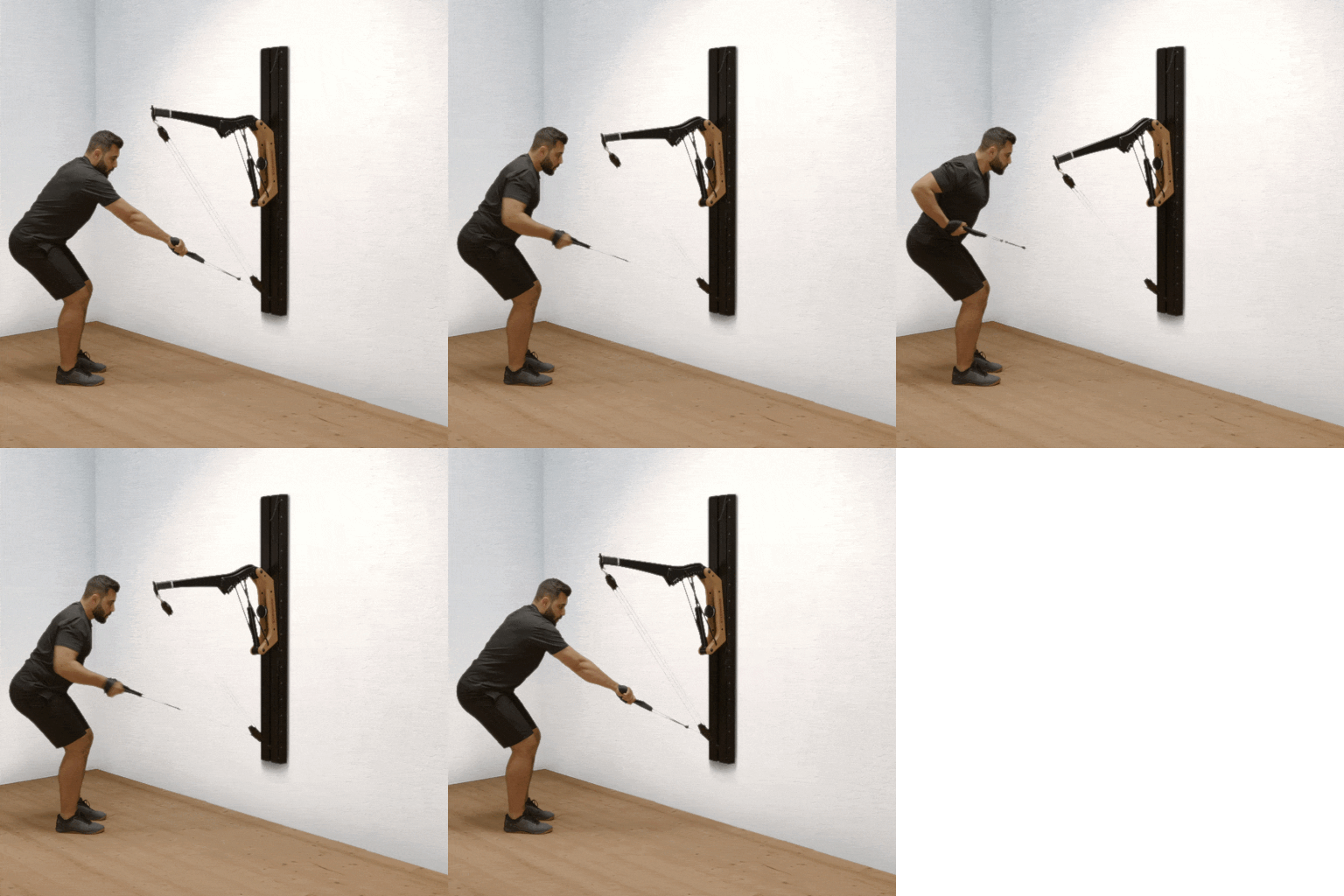
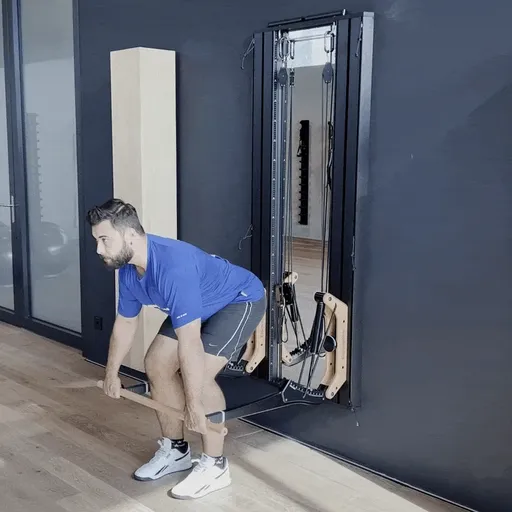
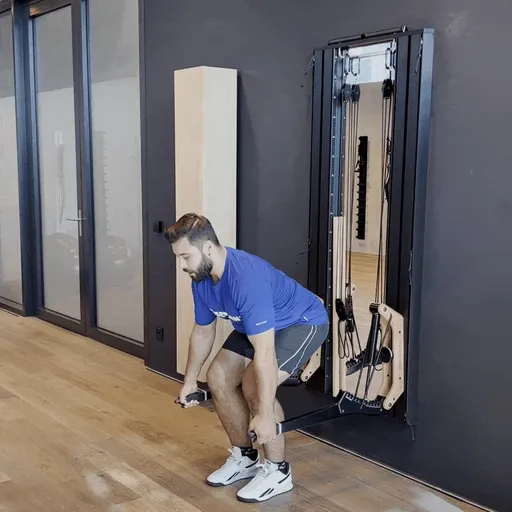
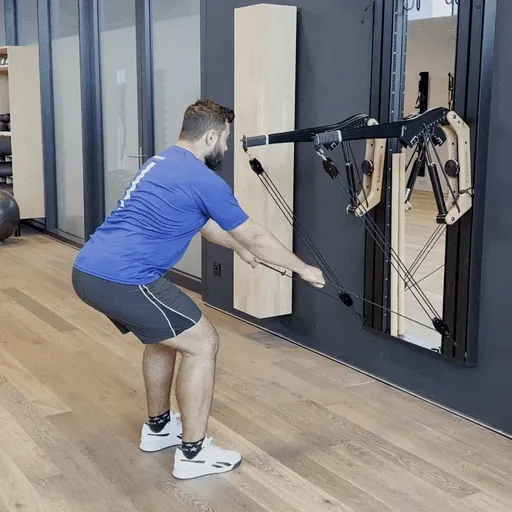
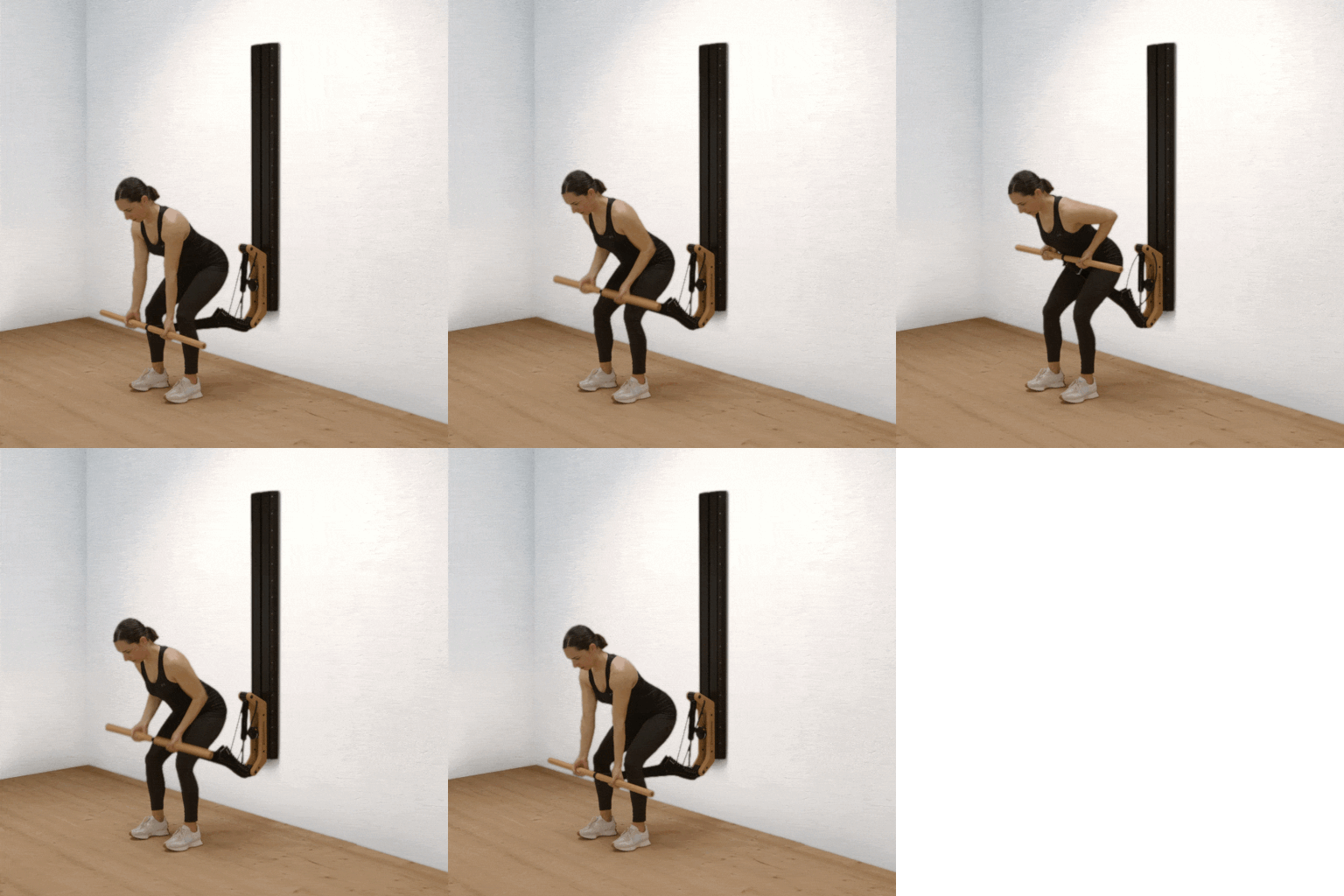
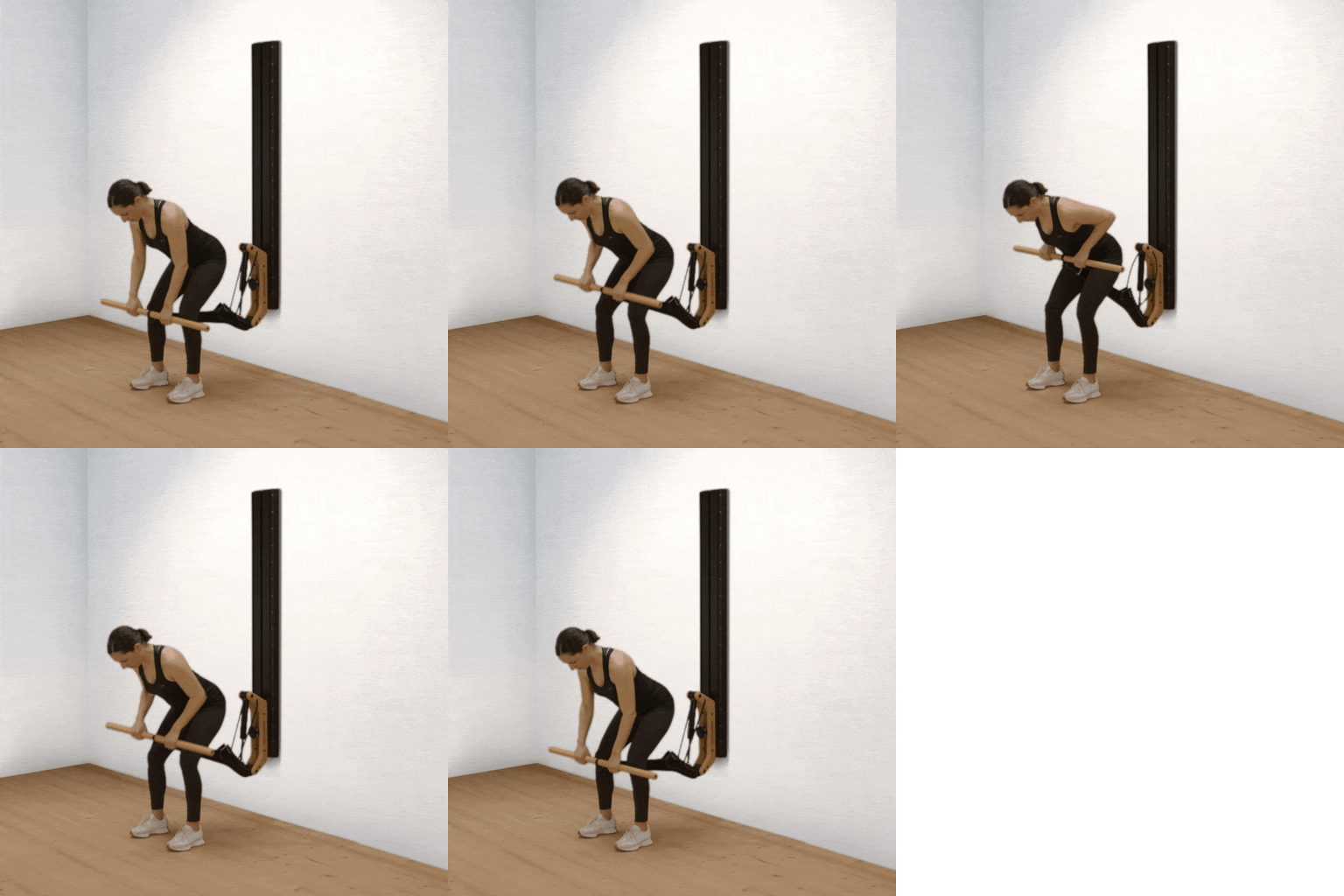
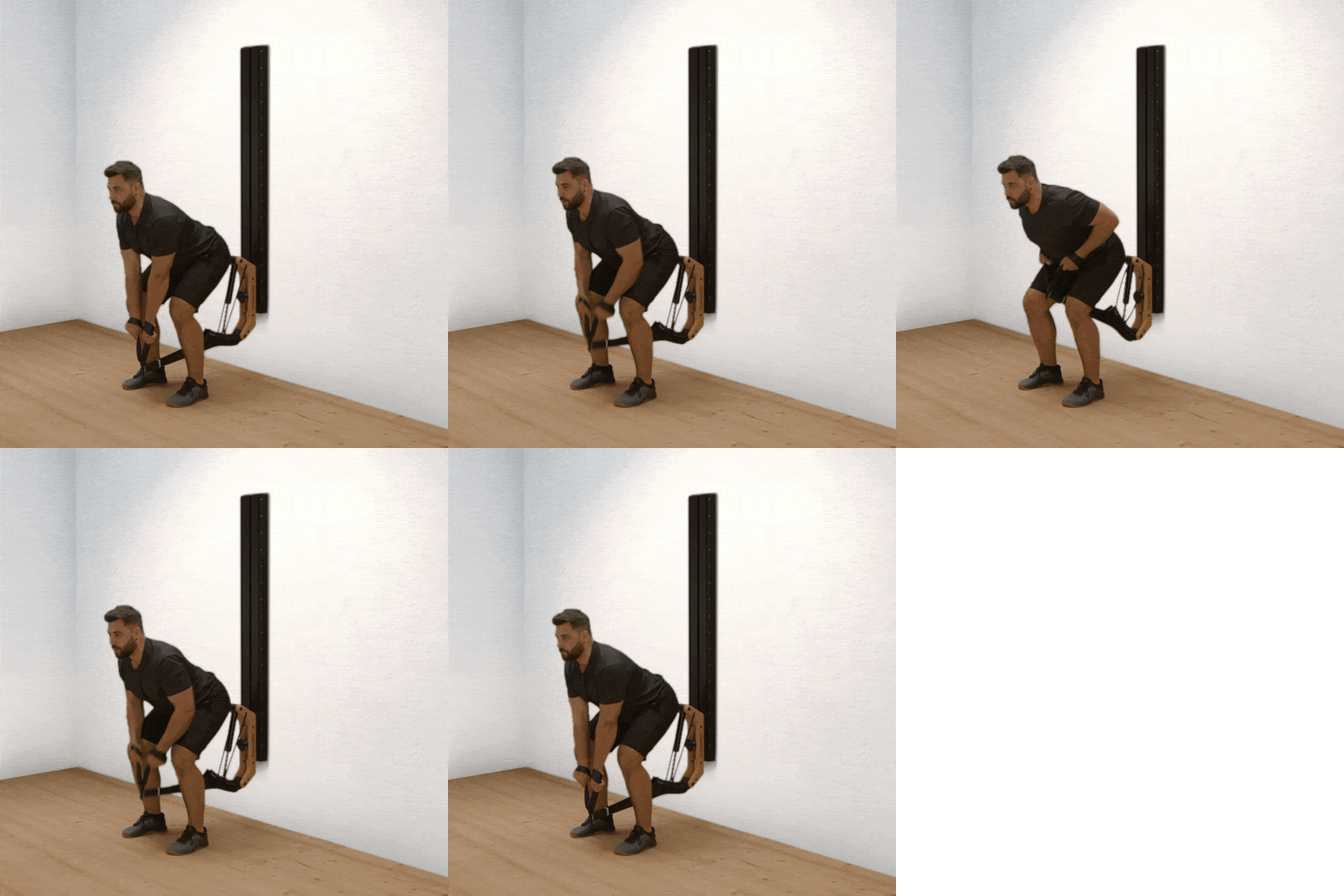
The bent-over row with horn grip combines the power of classic rowing with the controlled guidance and specific grip on the horn of the EISENHORN DS. The movement primarily targets the latissimus dorsi, as well as the rhomboids, middle trapezius, and rear shoulder muscles. In addition, maintaining proper upper-body posture engages the trunk and leg muscles for stabilization—especially the back extensors and core, which must constantly work against leverage forces. The guidance on the horn ensures a smooth pulling path and allows you to fully focus on pulling force and muscle contraction.
What effect does the exercise achieve?
Targeted back training: The latissimus dorsi, supported by the rhomboids, trapezius, and rear deltoids, is activated intensively.
Grip and forearm strengthening: The horn grip engages the forearm muscles, improving grip strength.
Trunk and spinal stability: The trunk continuously resists rotation and unwanted movements, challenging the back extensors and core.
Improved pulling strength: This exercise provides an excellent foundation for other pulling movements, such as pull-ups or free-weight bent-over rows.
Technical control & muscle balance: Controlled guidance allows for precise execution, better load distribution, and the opportunity to correct muscular imbalances.
How does this exercise fit into the Big 5 concept?
The Big 5 include the fundamental exercises: squat, deadlift, bench press, pull-up or lat pulldown, and shoulder press. Even though the bent-over row with horn grip is not part of the classical Big 5, it can be a meaningful addition:
Complements pulling movements: Bent-over rows with horn grip strengthen the muscles that are central to pulling exercises (e.g., pull-ups), which is important for balanced upper-body development.
Balances push and pull: Many basic exercises focus on pushing (e.g., bench press, shoulder press). Rows provide the antagonist movement, targeting the back and pulling muscles.
Stability training: This exercise requires high control and stabilization—skills that are also crucial for squats, deadlifts, and other compound movements.
Functional balance: In a holistic training approach, rowing on the EISENHORN DS fills a gap and contributes to symmetrical, high-performance musculature.
:format(webp))
)
)
)
)
)
:format(webp) "EISENHORN S Black Edition")
 "EISENHORN S Black Edition")