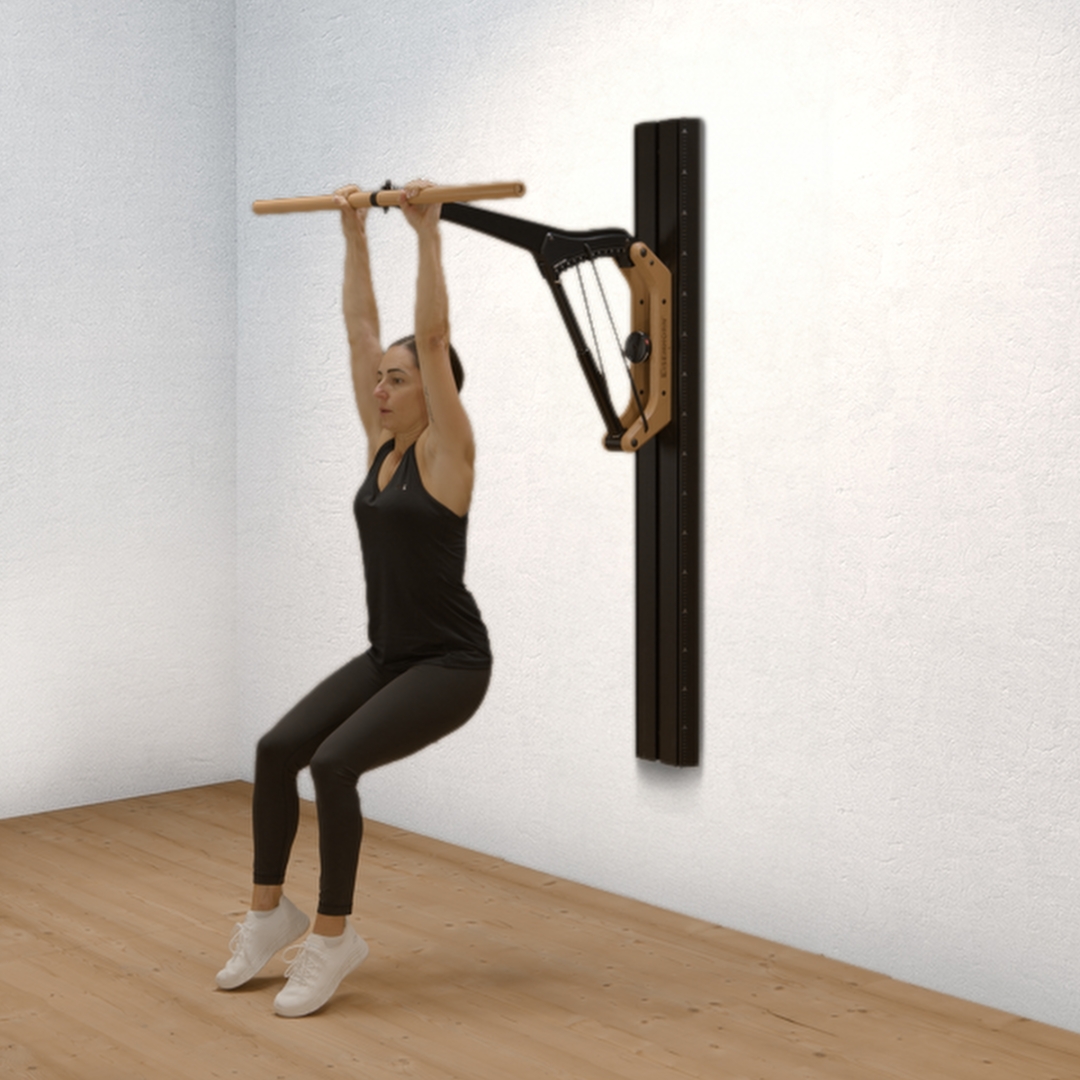
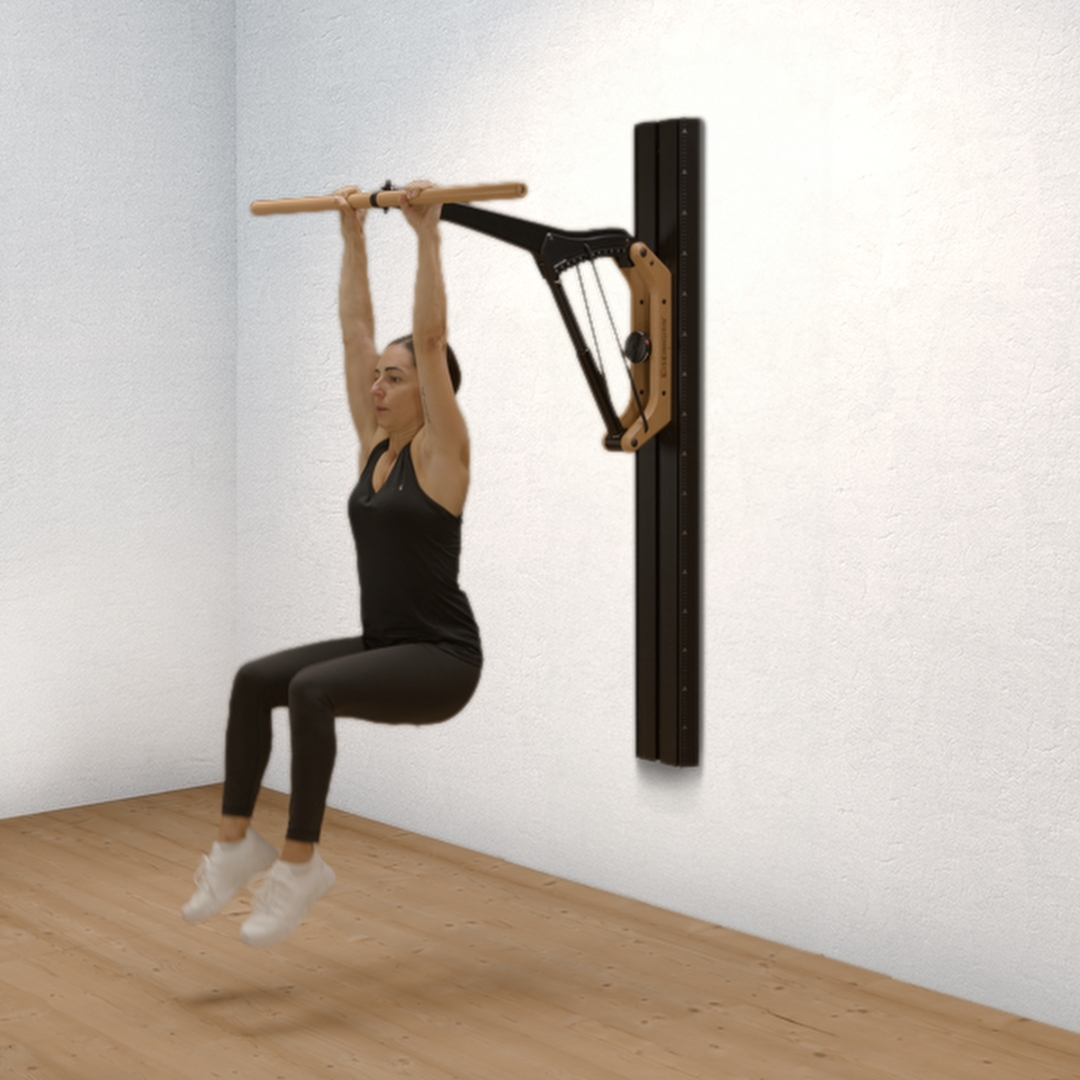
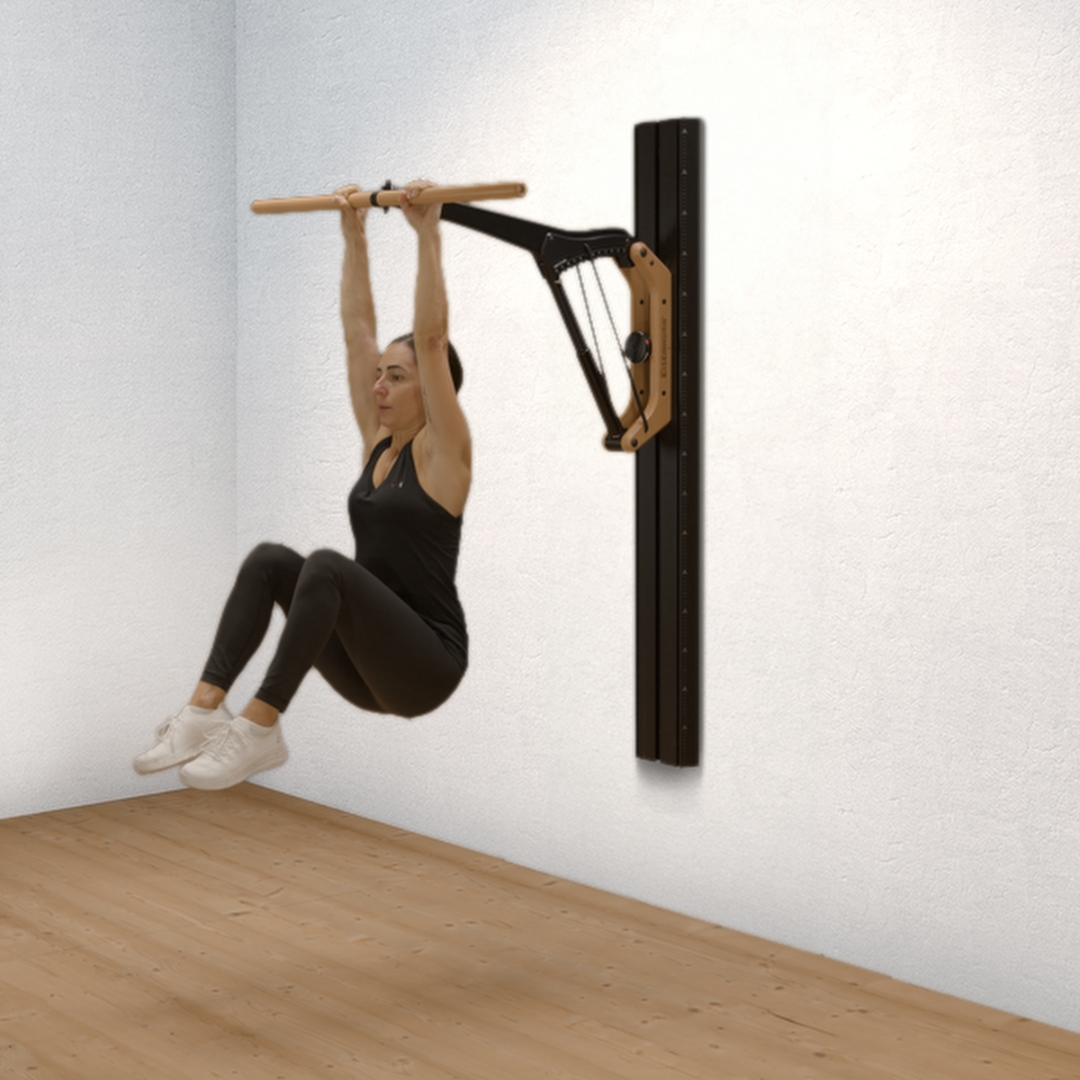
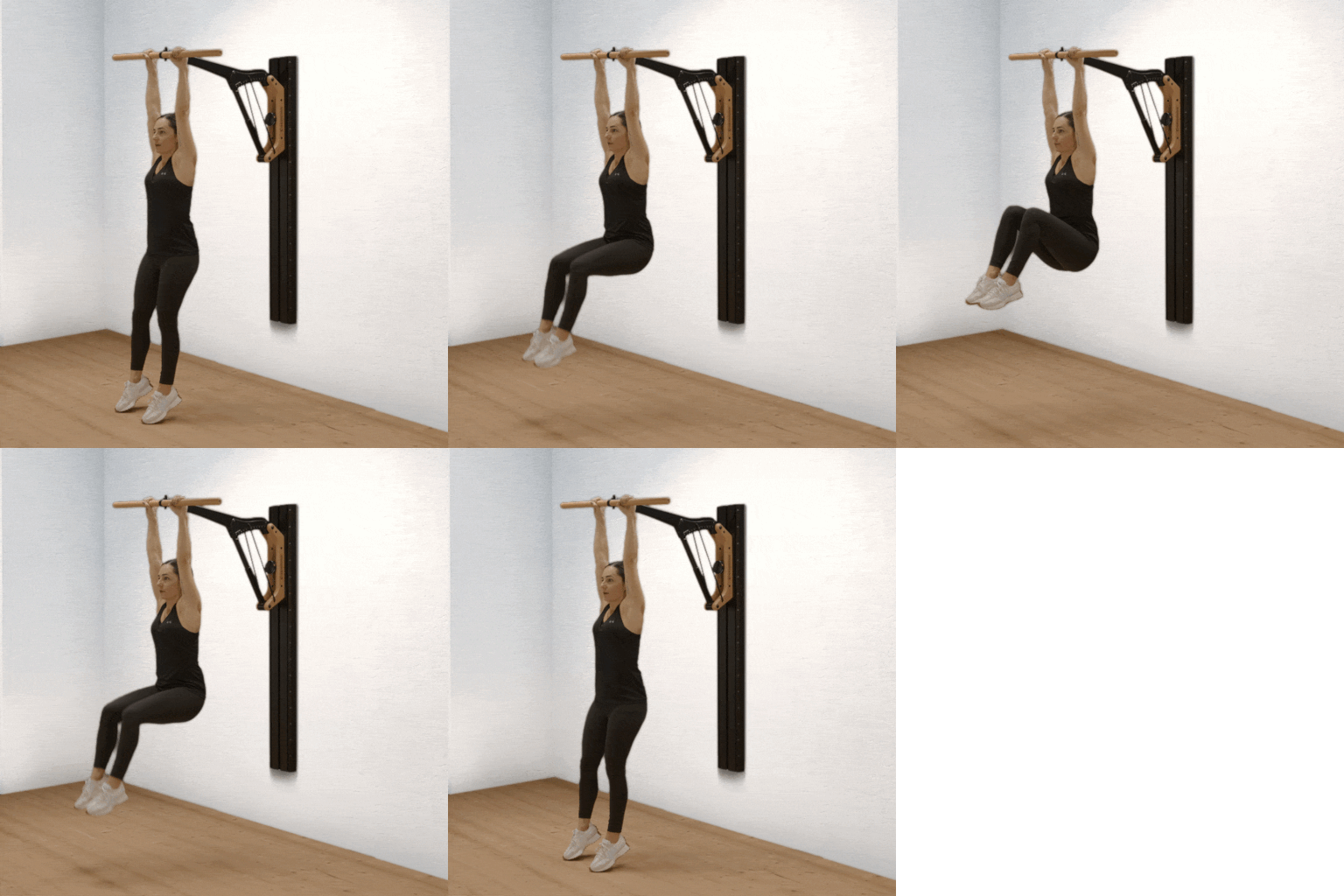
What makes this exercise particularly effective?
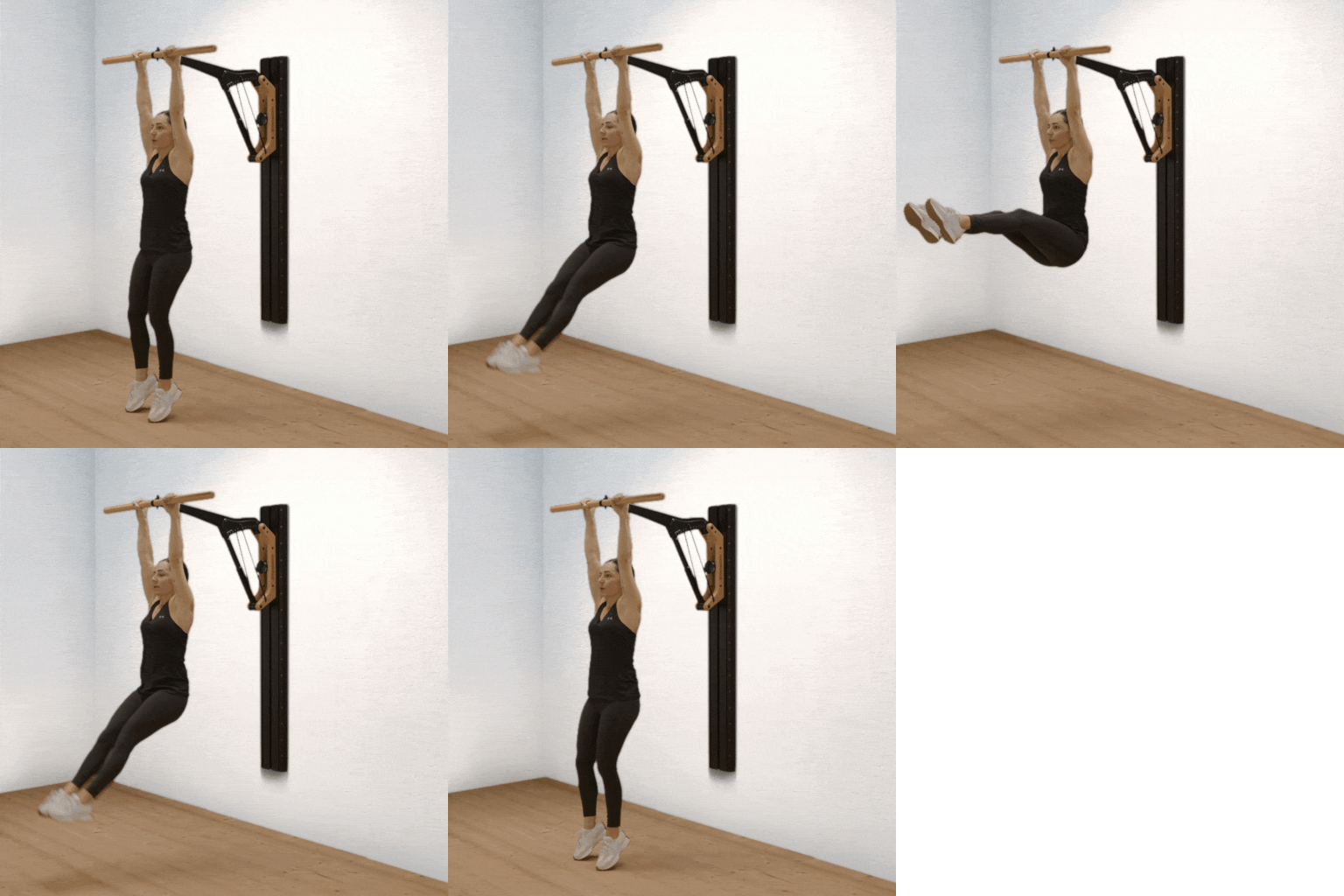
This variation intensely challenges your core stability—especially the rectus abdominis and the oblique abdominal muscles. In addition, it improves grip strength and shoulder stability, as you remain actively suspended on the bar throughout the entire exercise.
What effect does the exercise achieve?
Full-body core activation: In addition to the rectus abdominis and obliques, the hip flexors, forearm muscles, and shoulder girdle muscles are also engaged.
Improved core stability during pulling movements: The ability to maintain control while hanging and lift the knees in a controlled manner directly translates to better performance in stability-demanding exercises such as deadlifts or squats.
Hypertrophy and definition of the abdominal muscles: The high-intensity stimulus promotes muscle growth—especially in the lower abdominal area—and improves the visibility of the abs with corresponding body fat reduction.
How does this exercise fit into the Big 5 concept?
The Big 5 include the fundamental exercises: squat, deadlift, bench press, pull-up or lat pulldown, and shoulder press. Hanging leg raises with bent knees are not part of the Big 5 training program, but this exercise can meaningfully complement the training concept:
Strengthen your base: A strong core is essential for the technically safe execution of all Big 5 movements—this exercise strengthens the core throughout the entire movement chain.
Functional grip strength in focus: Dips, pull-ups, or rowing movements benefit greatly from the improved forearm and grip strength developed through hanging exercises.
:format(webp))
)
)
)
)
)
:format(webp) "EISENHORN S Black Edition")
 "EISENHORN S Black Edition")