What makes this exercise particularly effective?
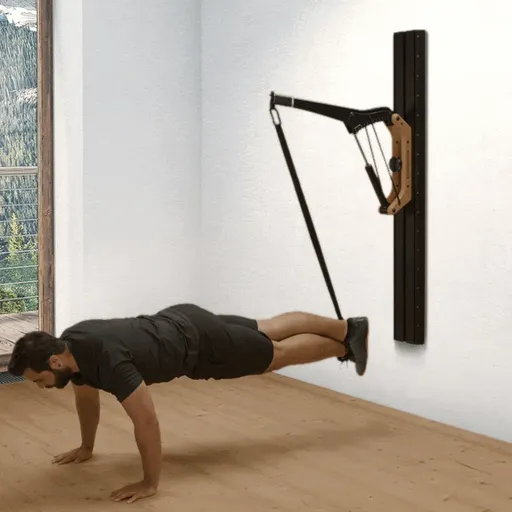
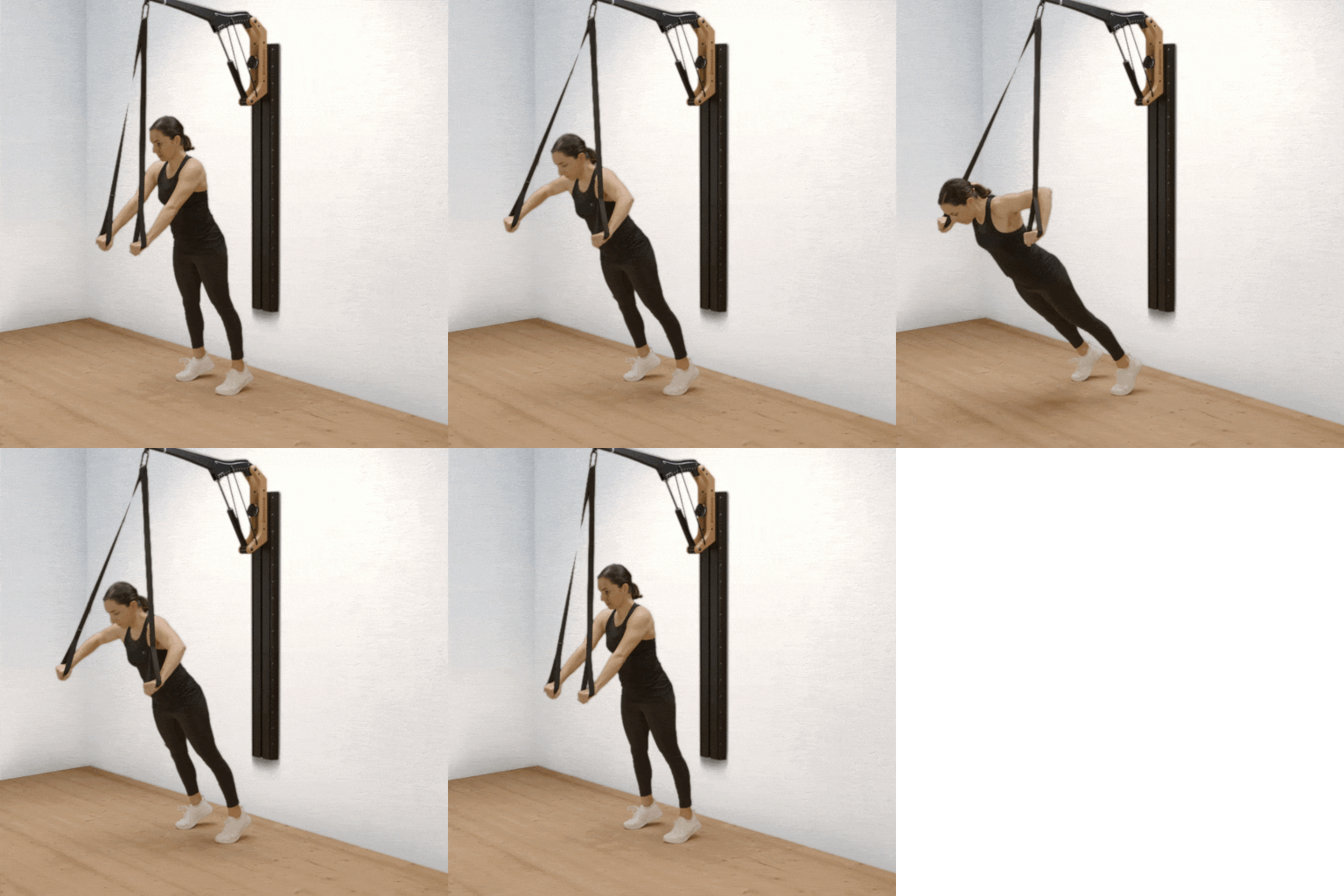
This variation combines classic push-ups with additional instability and grip variations. The handlebar provides a stable grip point, giving a clear hand position and precise control over the range of motion.
The grip integrates an additional challenge: it requires stability, as it can easily move or spring. This means that your upper body, especially the shoulders, chest, and core, must work harder to maintain proper posture and execution.
This combination increases the stimulus for the chest, triceps, and shoulders. Additionally, the core is more activated, as it must stabilize the body in a balancing manner. The parallel bars version also helps keep the wrists in a more favorable position and reduces strain on the joints.
What effect does the exercise achieve?
Stronger chest and triceps work: The pressure is applied over the chest muscles and triceps, especially during the upward movement.
Increased core and shoulder stability: Due to the instability of the band or handle, the core must generate more tension and correctly position the shoulders, strengthening stabilizing muscles.
Improved joint and wrist resilience: Using a bar plus band grip can help reduce strain on wrists and elbows, as it allows for a more ergonomic hand position and avoids flat-ground stress.
More variations: By adjusting grip width or foot position, the exercise can be tailored to your fitness level, allowing for more intensive or lighter training.
How does this exercise fit into the Big 5 concept?
The Big 5 include the fundamental exercises: squat, deadlift, bench press, pull-up or lat pulldown, and shoulder press. Even though the exercise “push-ups with grip band and grip bar” is not part of the classic Big 5, this variation can be a useful addition:
Supports pushing movements: It helps strengthen movements such as the bench press or shoulder press, as strong triceps, chest, shoulder muscles, and a stable core increase performance in these exercises.
Helps with technique and stability: For those with weaknesses in traditional push-ups, this variation improves form and control.
Diverse progression: In training phases where variety or supplementary exercises are needed, this exercise is ideal for introducing new stimuli and overcoming training plateaus.
:format(webp))
)
)
)
)
)
:format(webp) "EISENHORN S Black Edition")
 "EISENHORN S Black Edition")