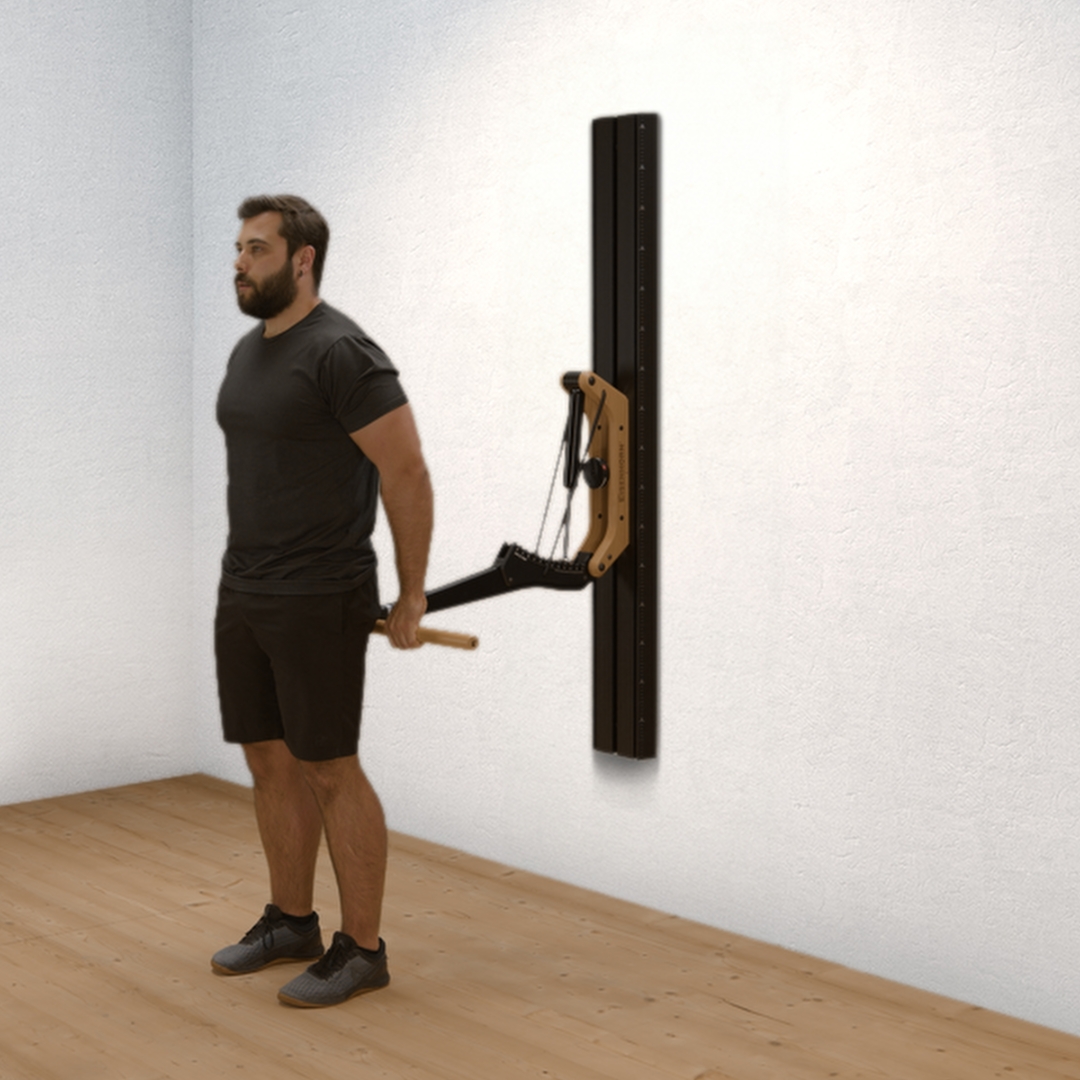
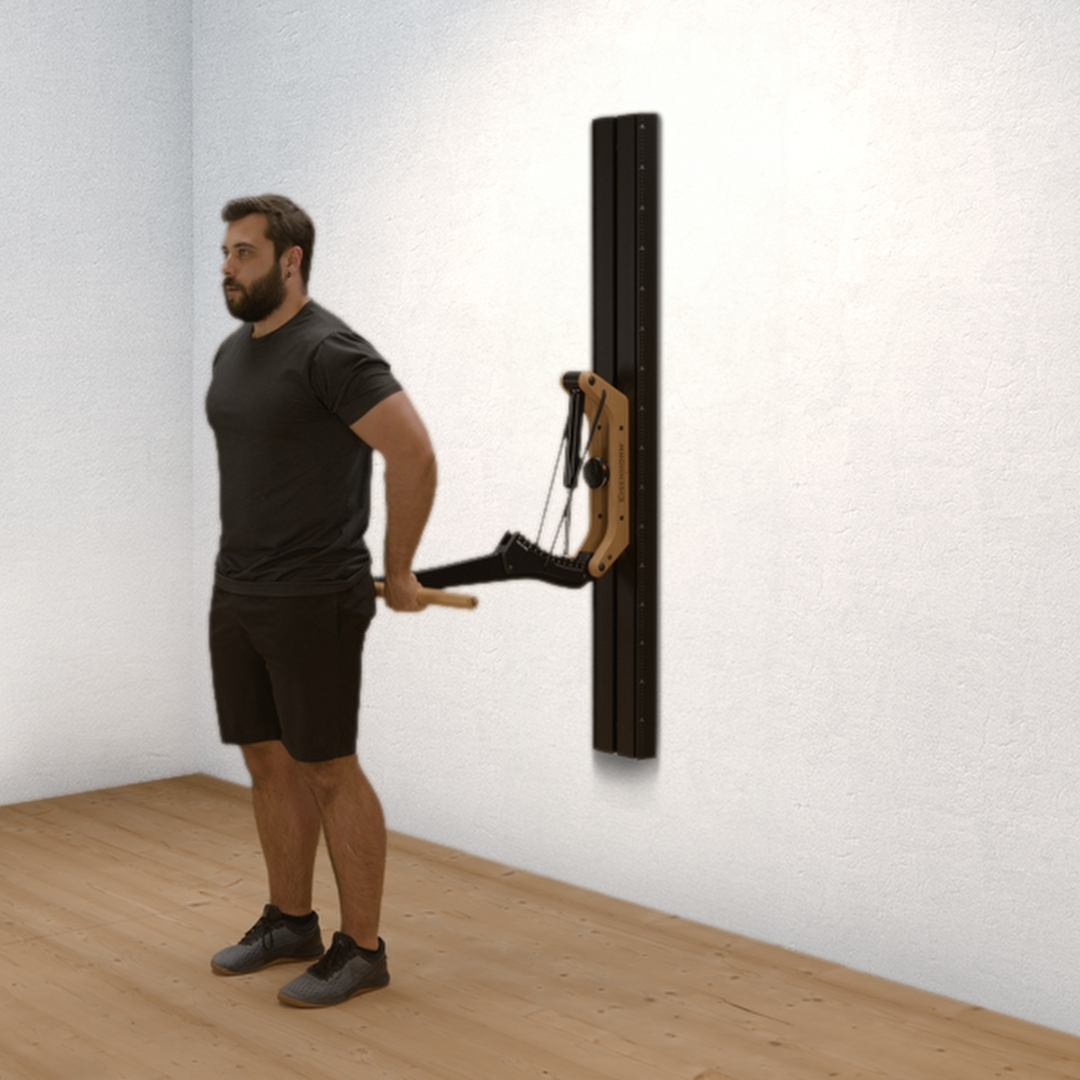
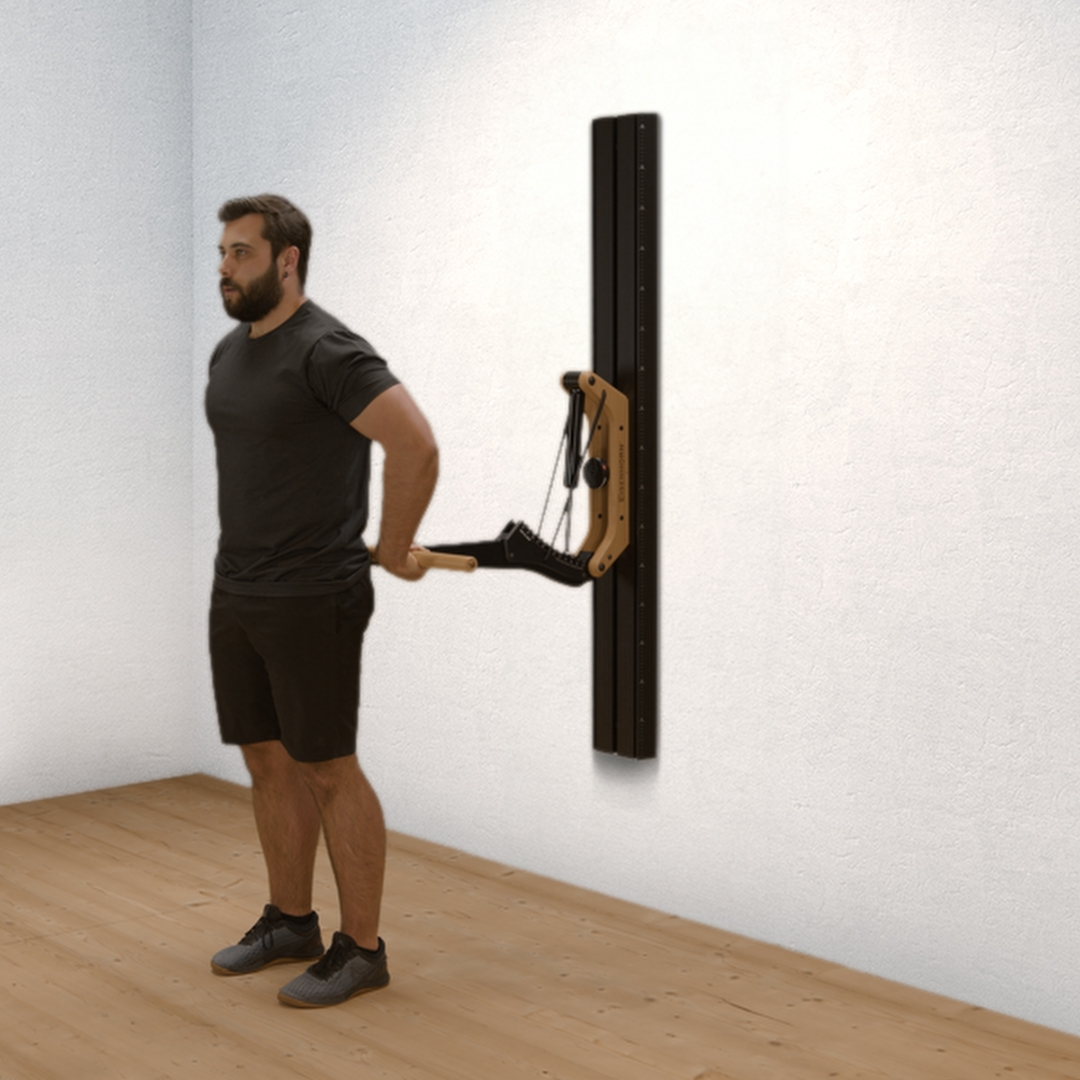
What makes this exercise particularly effective?
In this variation of forearm curls, the movement is performed behind your back, while your upper body is either slightly inclined forward or remains upright. The altered grip angle (usually overhand or underhand) specifically activates the finger and wrist flexor muscles, which are often underutilized. These muscles are crucial for grip strength, stability, and proper posture.
What effect does the exercise achieve?
Targeted activation of the wrist and finger flexors: The unconventional position provides new activation stimuli and targets parts of the muscles that are often neglected during classic curls.
Improved grip strength and endurance: The novel loading trains ergonomic grip strength, which positively impacts exercises such as deadlifts, pull-ups, and rows.
Promotion of forearm aesthetics and symmetry: Beyond grip strength, the forearm’s shape is developed evenly across both anterior and posterior areas through consistent training.
Variation and new motor stimuli: This form of exercise offers an interesting alternative, adding variety and targeted activation in arm training.
How does this exercise fit into the Big 5 concept?
The Big 5 include the fundamental exercises: squat, deadlift, bench press, pull-up or lat pulldown, and shoulder press. Underarm curls behind the back are not part of the Big 5 training concept but can complement your training in the following ways:
Optimization of pulling force: Strong forearm muscles support pulling movements in pull-ups and rows, which are important components of the Big 5.
Overall body stability: Even though it is seemingly isolated, this exercise contributes to functional full-body control—an advantage for complex movement patterns such as squats or deadlifts.
Balance and injury prevention: By directly training the flexors, this exercise corrects imbalances (for example, from overdeveloped extensors) and reduces the risk of overload injuries in the elbow or wrist over the long term.
:format(webp))
)
)
)
)
)
:format(webp) "EISENHORN S Black Edition")
 "EISENHORN S Black Edition")