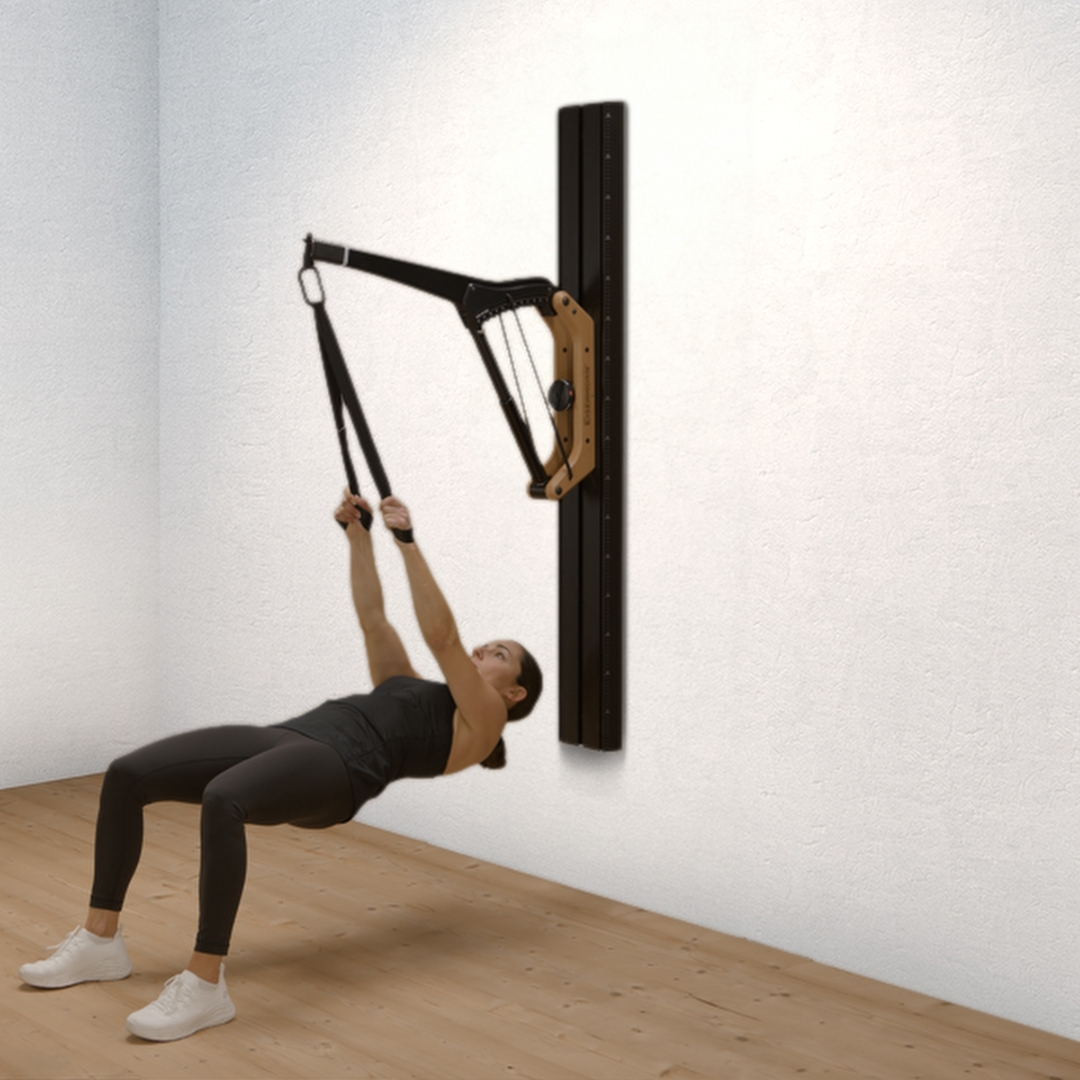
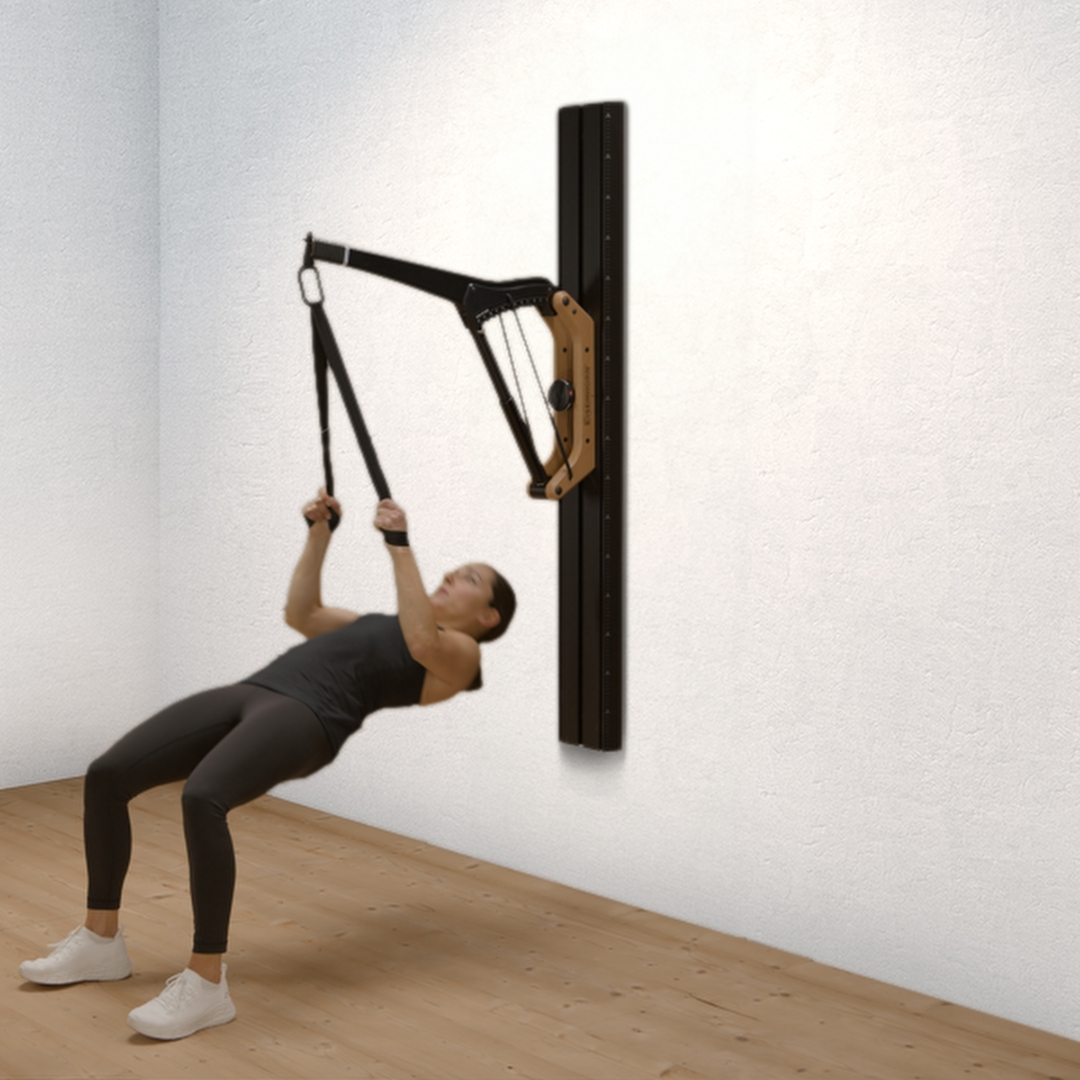
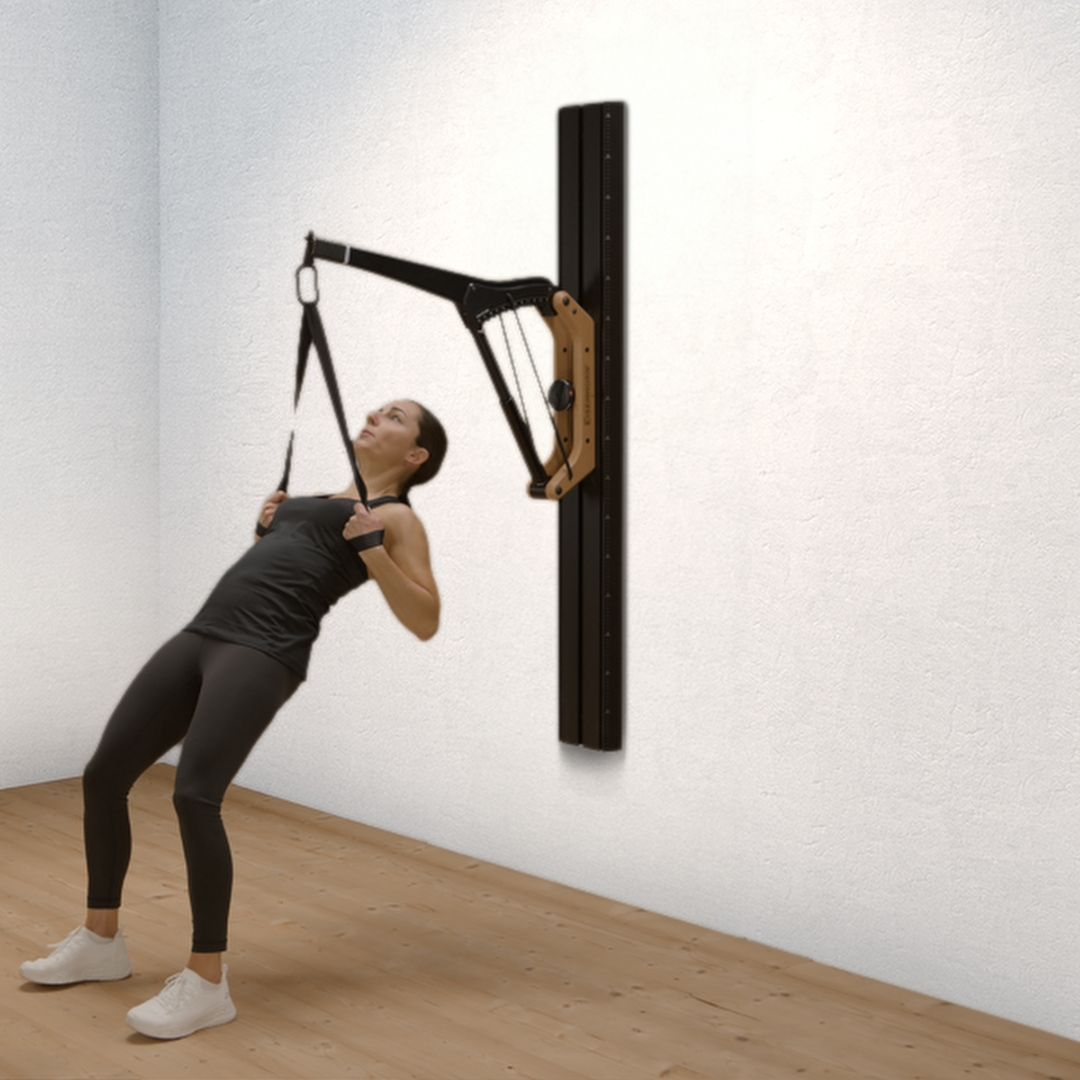
What makes this exercise particularly effective?
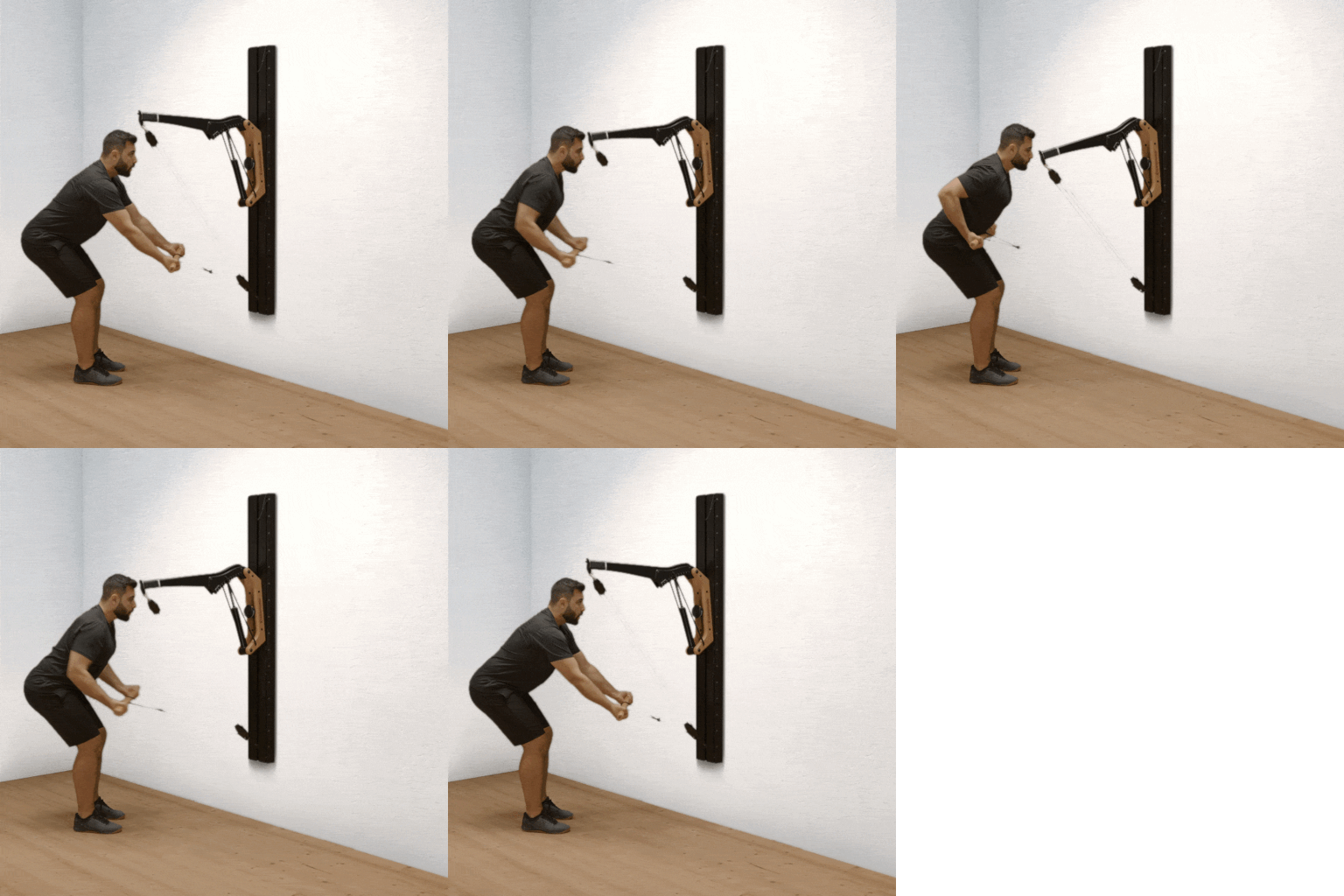
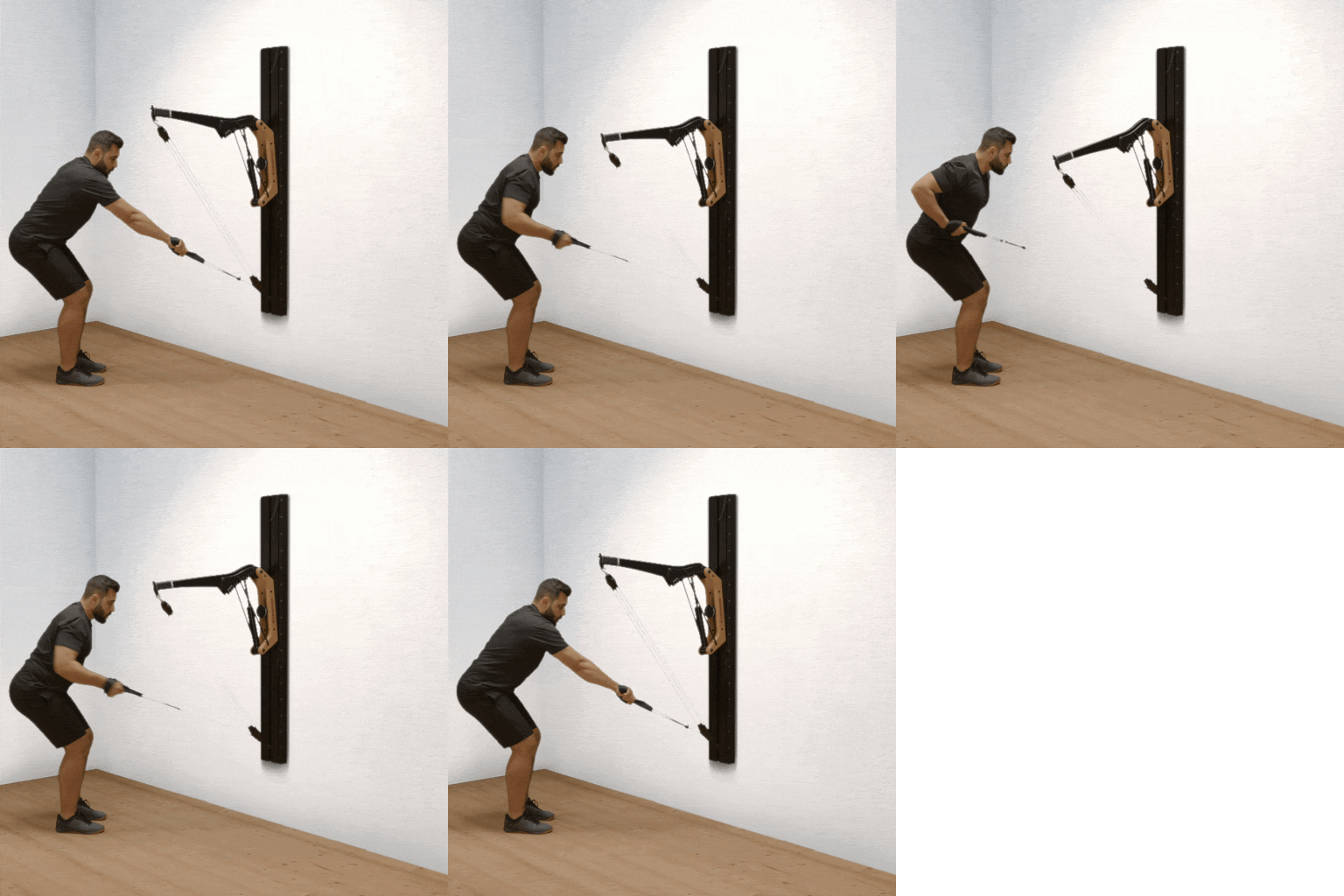
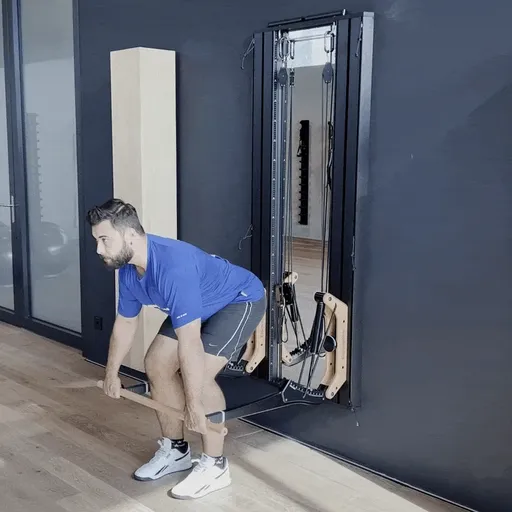
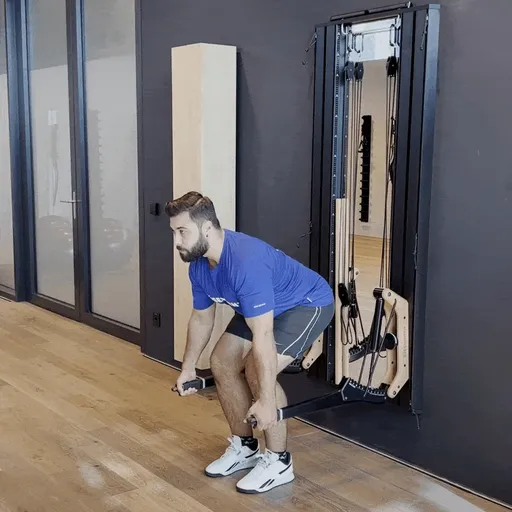
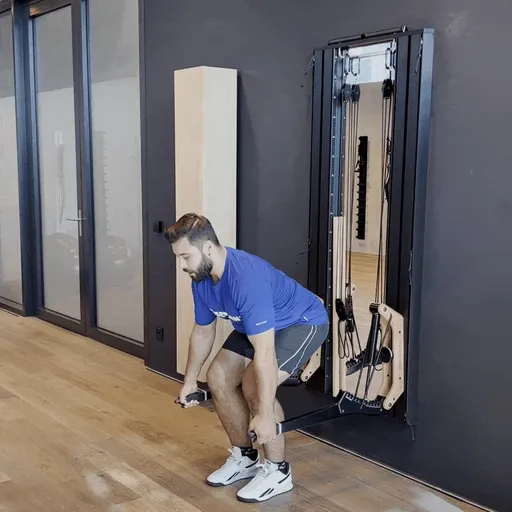
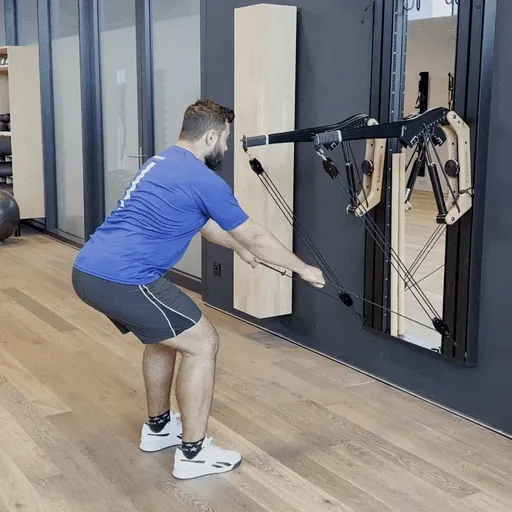
The hanging row with bent legs combines body weight with partial support from the legs. By bending the legs, you reduce the lever arm, making the row easier than with fully extended legs—ideal for strengthening the back, biceps, and core without overloading the movement.
What effect does the exercise achieve?
Strength in the upper back and latissimus: The back muscles are strongly activated, as well as the shoulder muscles (anterior and middle deltoid) and the rhomboids. The biceps act as a support.
Core stability: Keeping the body under tension (shoulders, back, glutes) strongly activates the deep core muscles and improves control over the hips and spine.
Joint-friendly entry/progression: Bent legs reduce the load on the back muscles and waist, making this exercise ideal as a starting point or when standard rows are still too challenging.
Effective stimulus for grip strength and posture: The hanging position also engages grip strength, scapular control, and a stable posture, supporting the back muscles while positively affecting overall posture and functional performance.
How does this exercise fit into the Big 5 concept?
The Big 5 include the fundamental exercises: squat, deadlift, bench press, pull-up or lat pulldown, and shoulder press. Even though the hanging row with bent legs is not considered one of the classic Big 5, it can be an excellent addition to your training:
Improves pulling movements: Strengthens back pulling strength (useful for pull-ups), promotes better technique in pulling exercises, and helps compensate for muscular weaknesses in the back.
Promotes balance and symmetry: Since both sides of the body work simultaneously, the exercise helps reduce compensatory movements or unilateral strain.
Supports transfer to other basic exercises: Strong back muscles and good body stability are crucial for many Big 5 exercises, particularly lifting, rowing, and pull-ups.
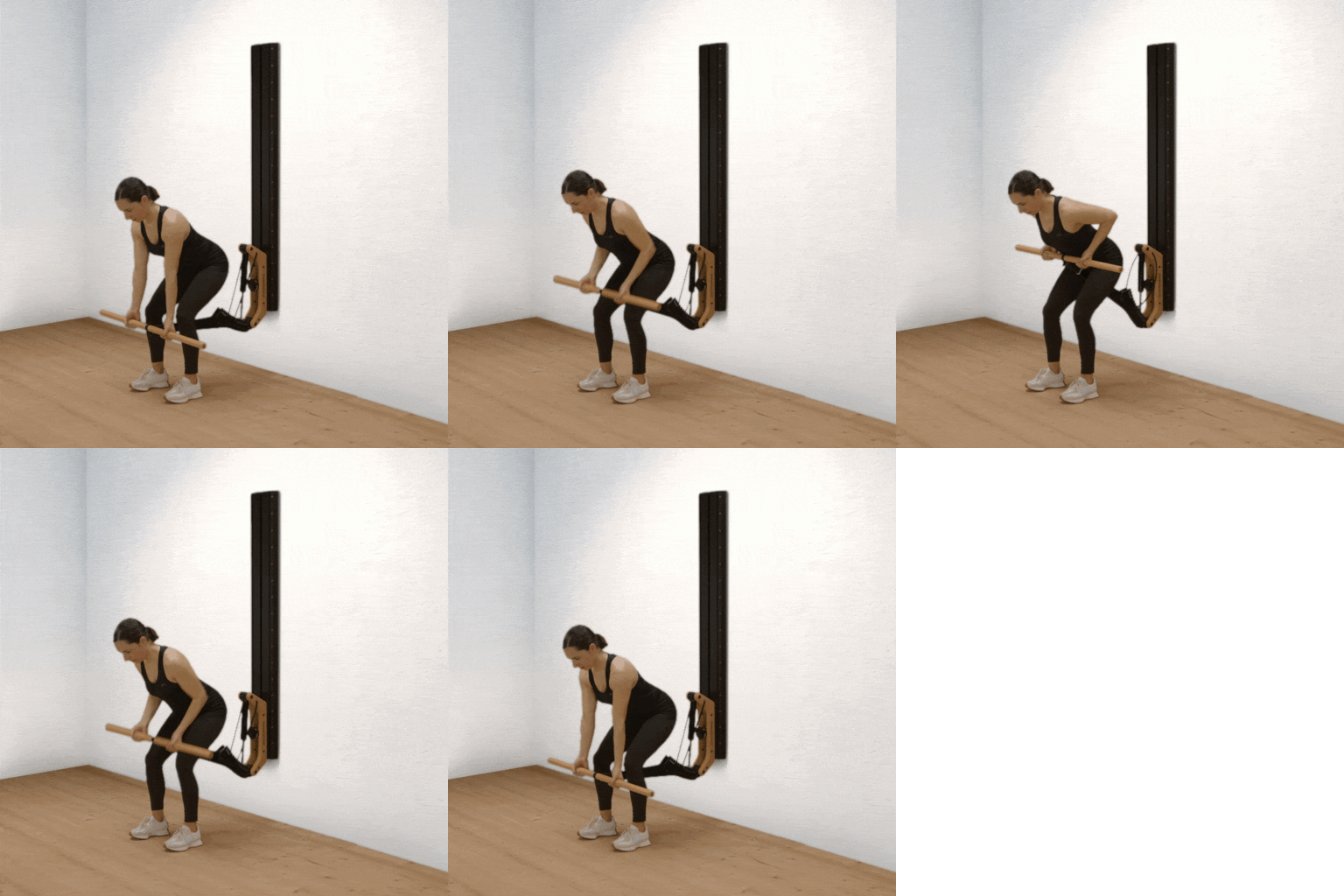
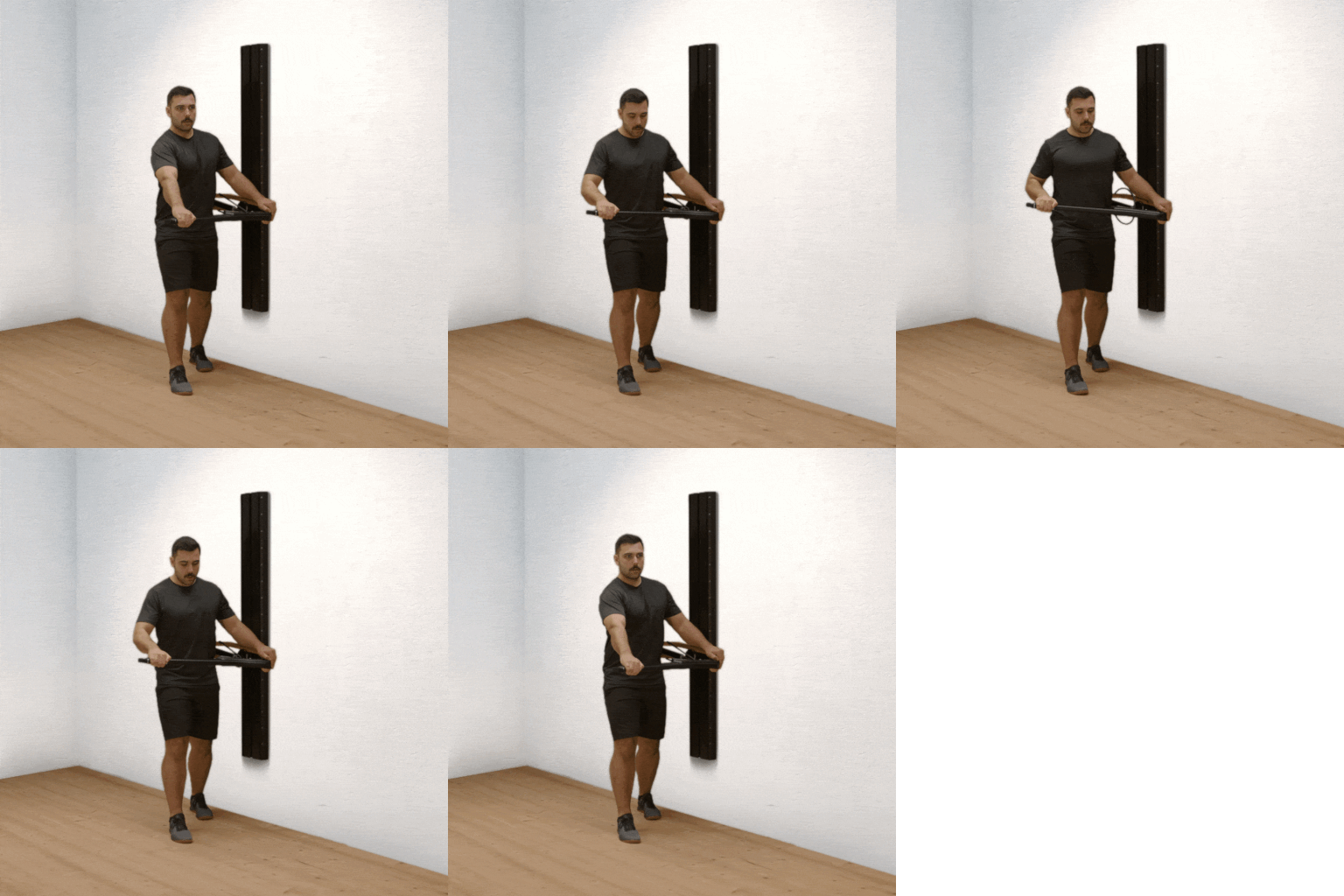
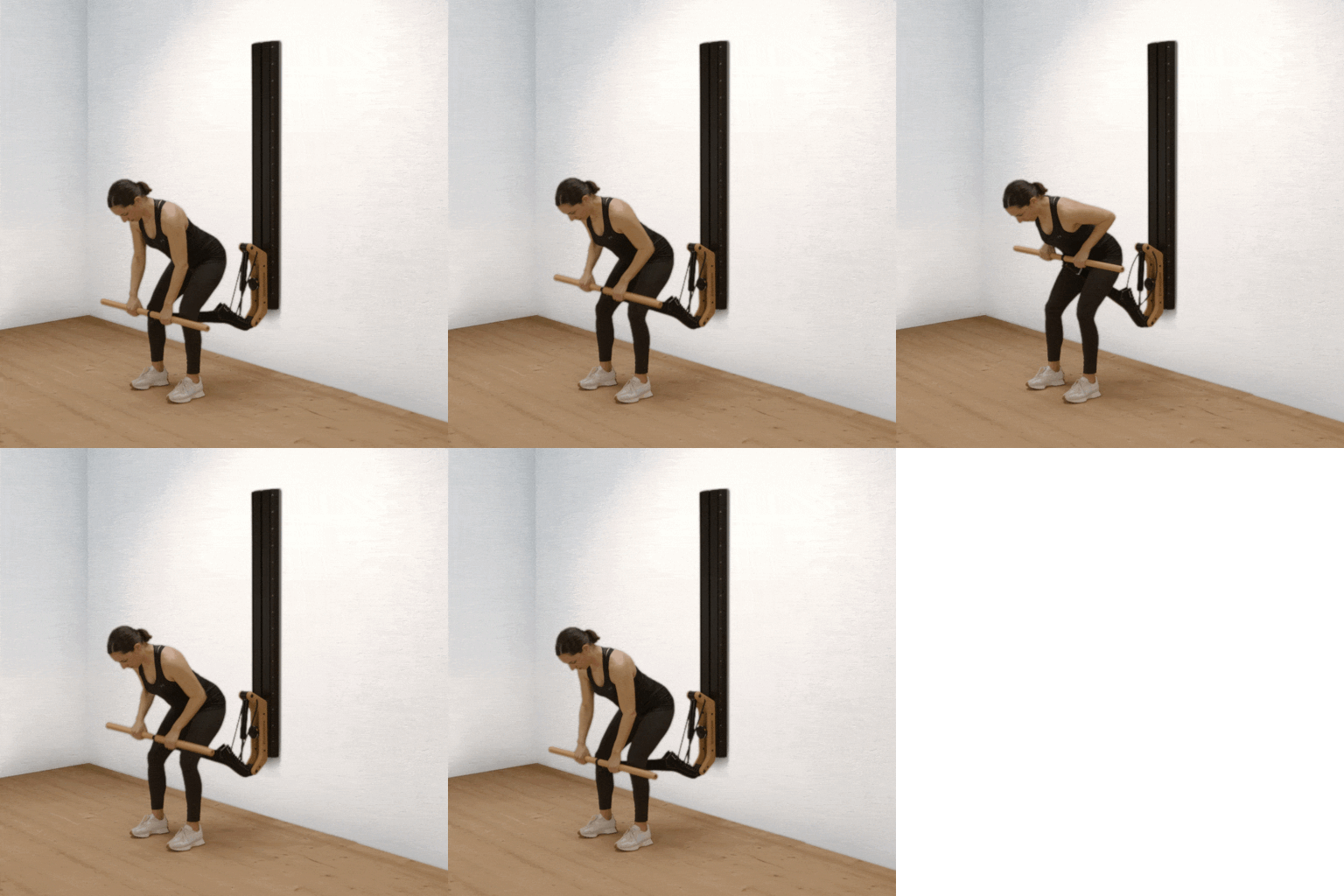
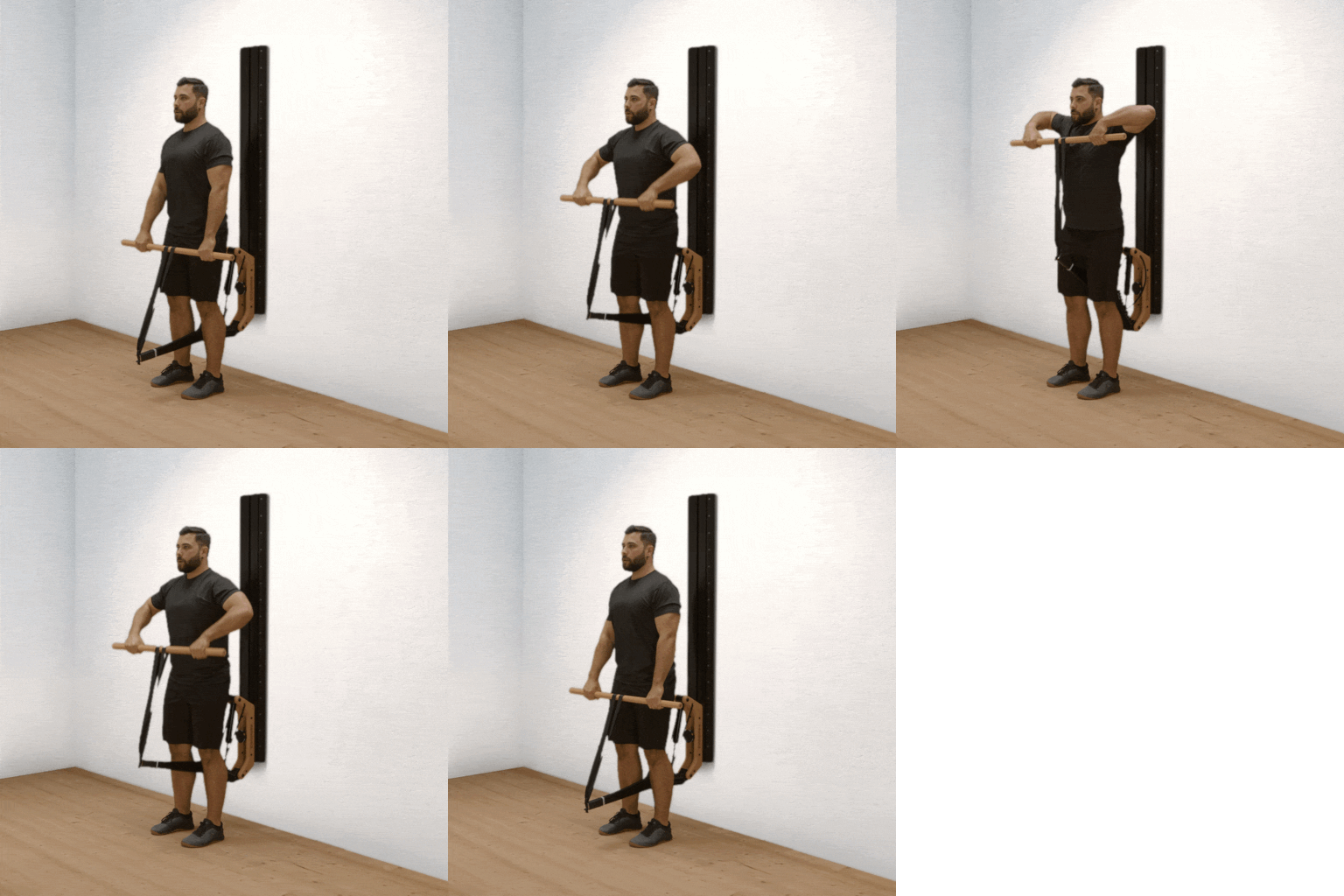
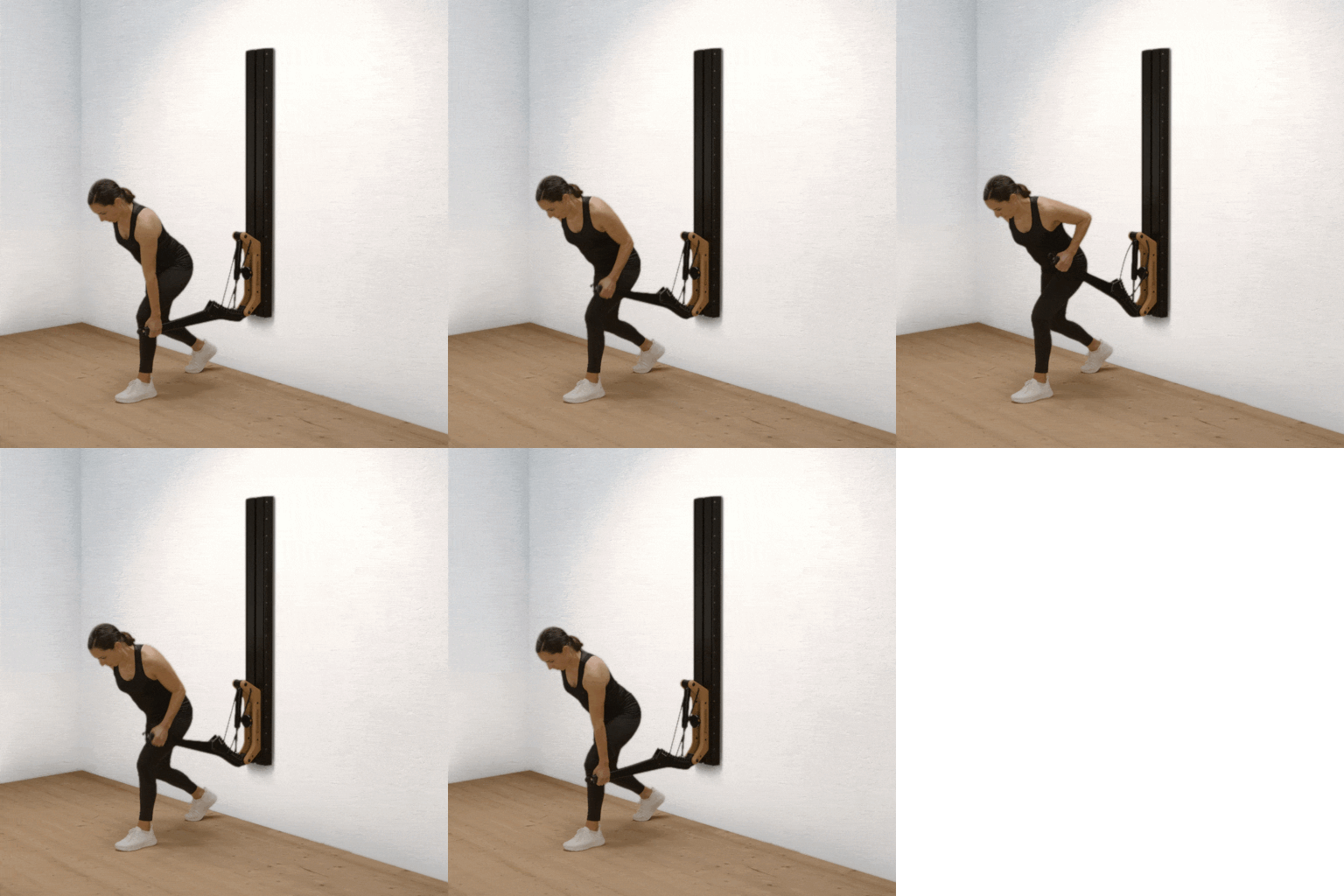
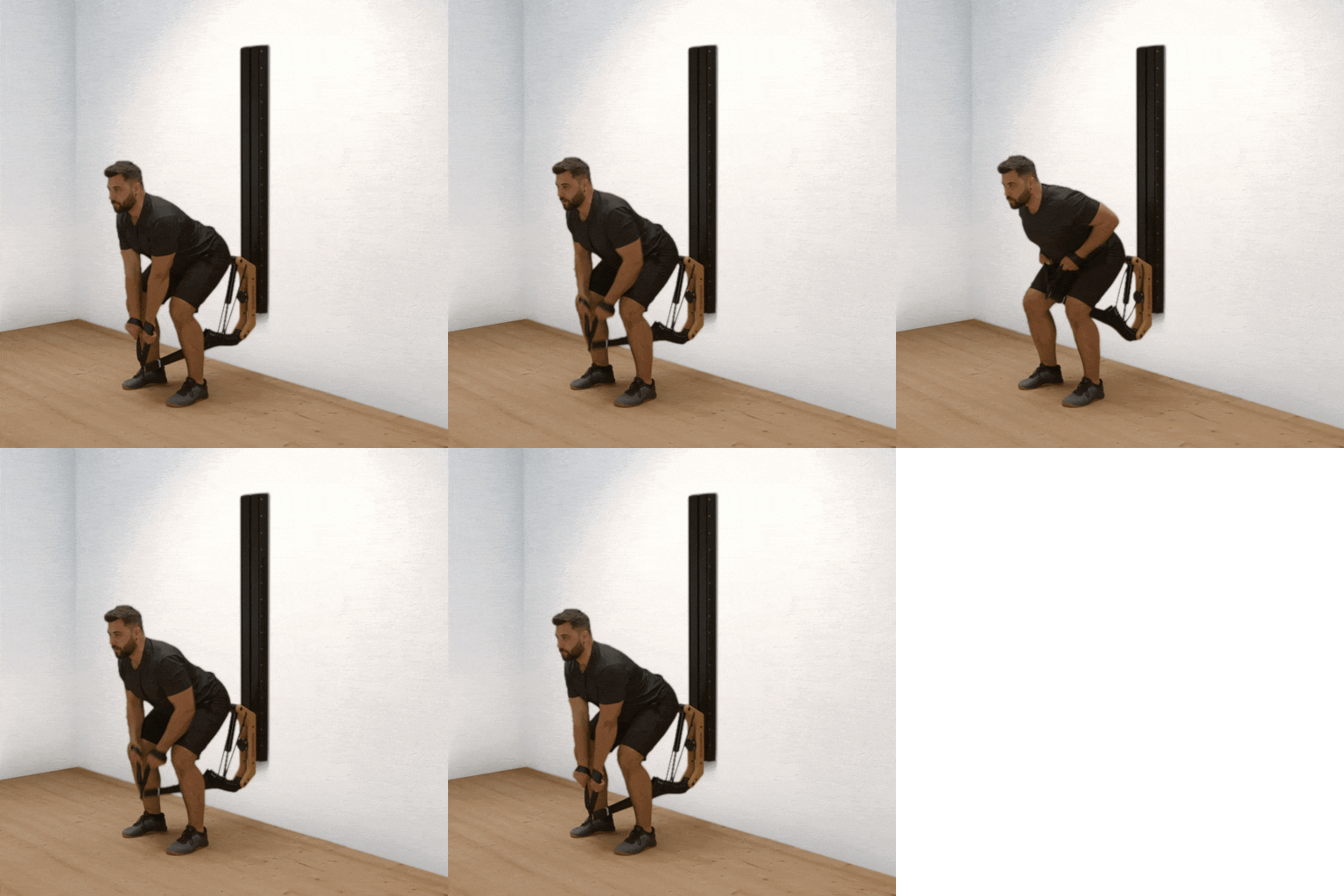
:format(webp))
)
)
)
)
)
:format(webp) "EISENHORN S Black Edition")
 "EISENHORN S Black Edition")