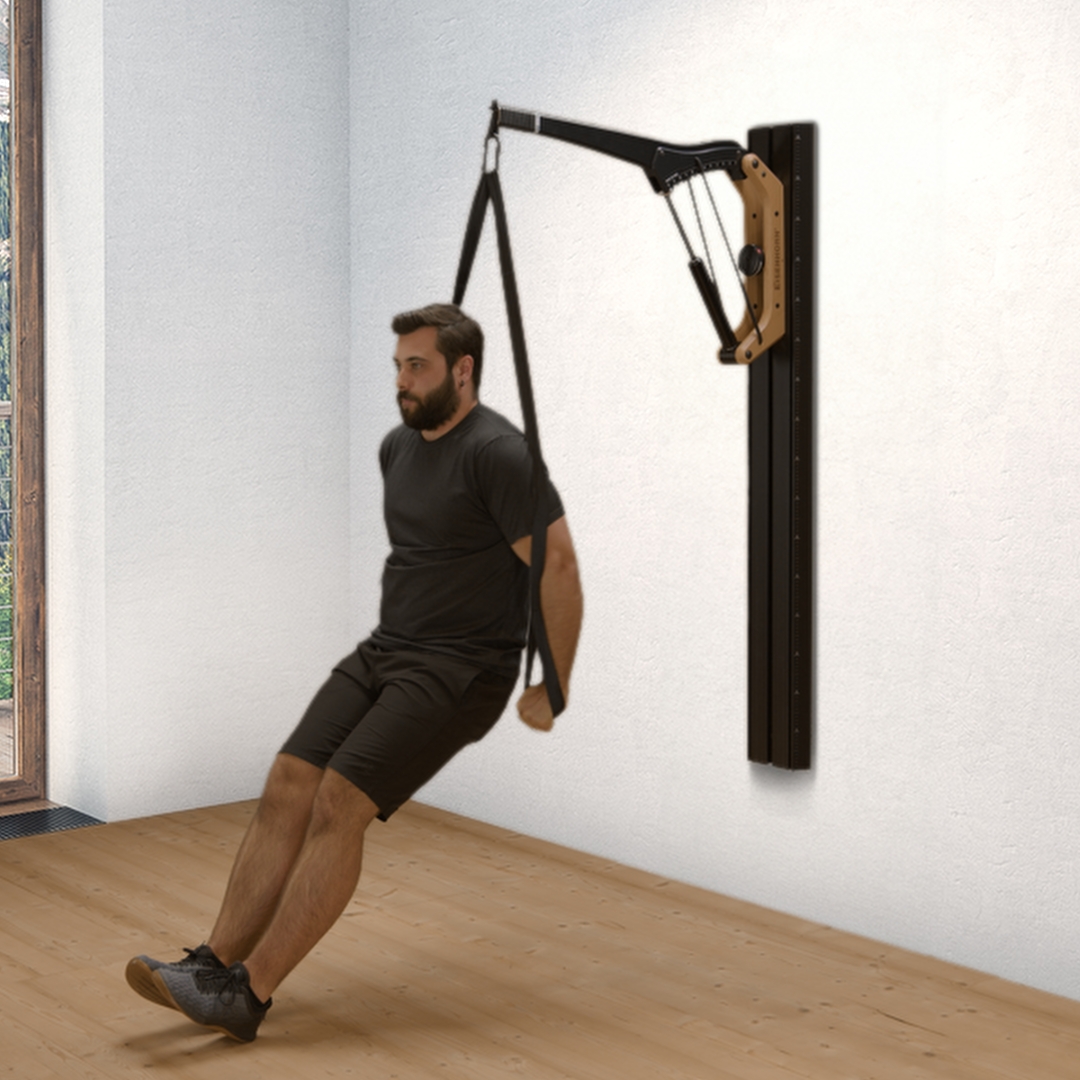
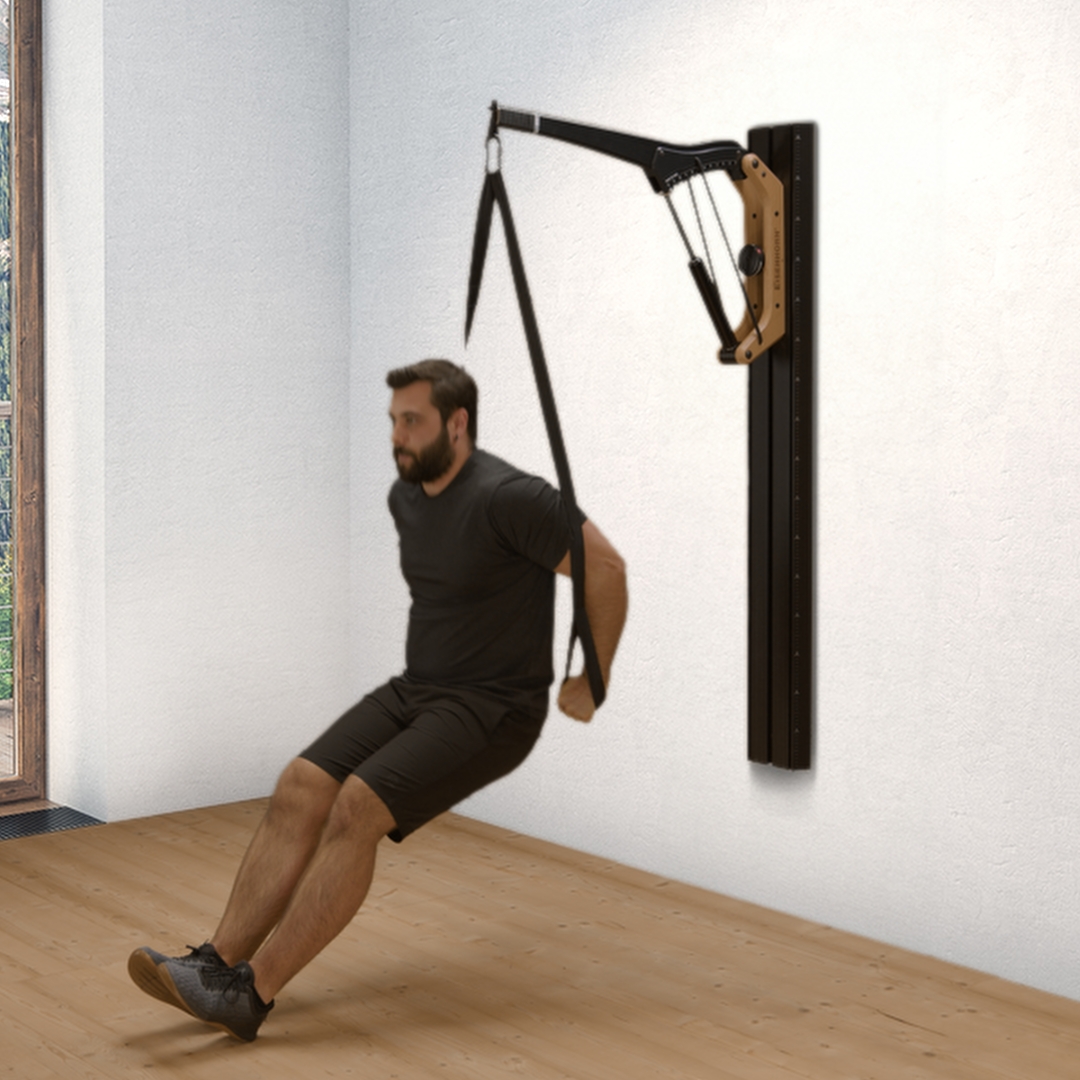
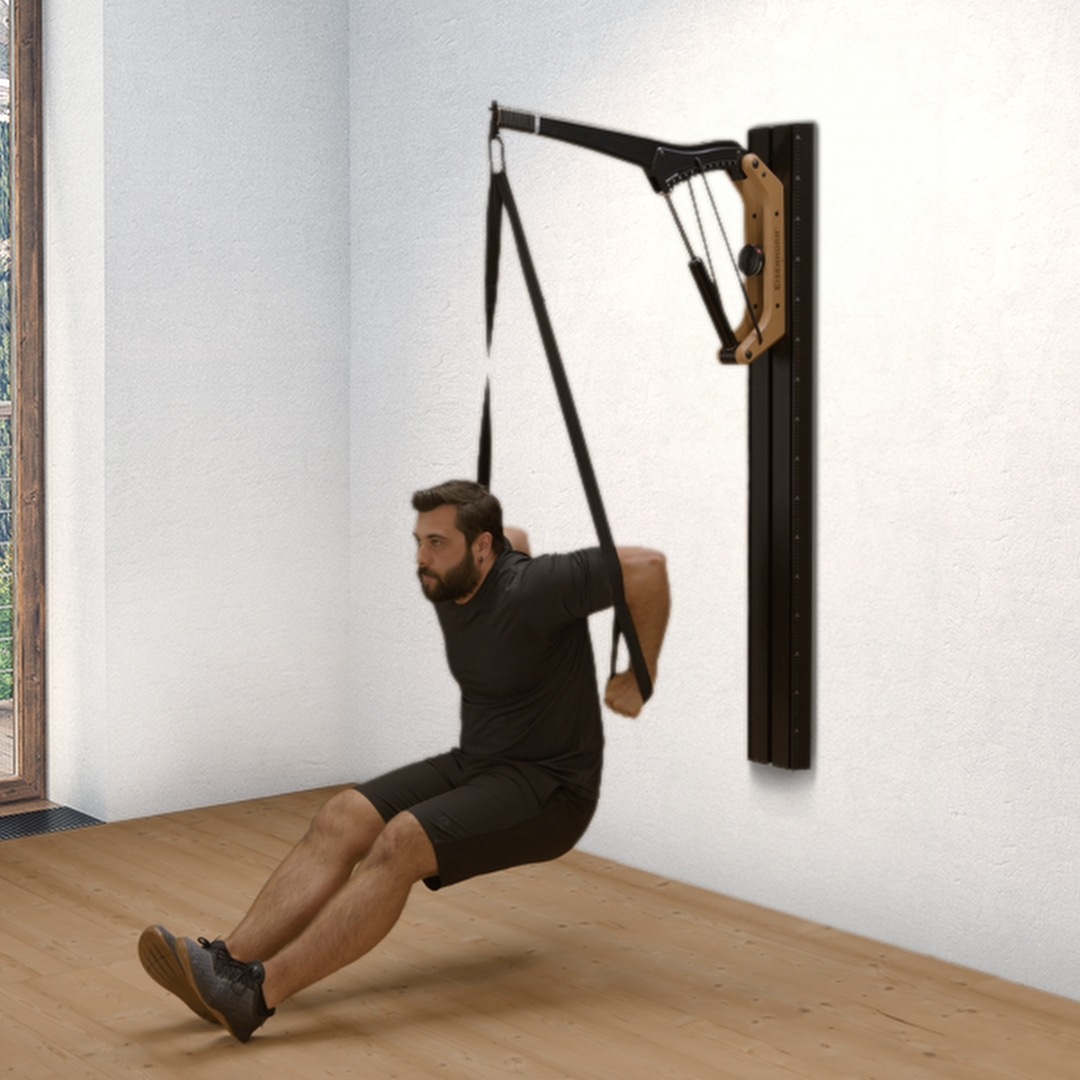
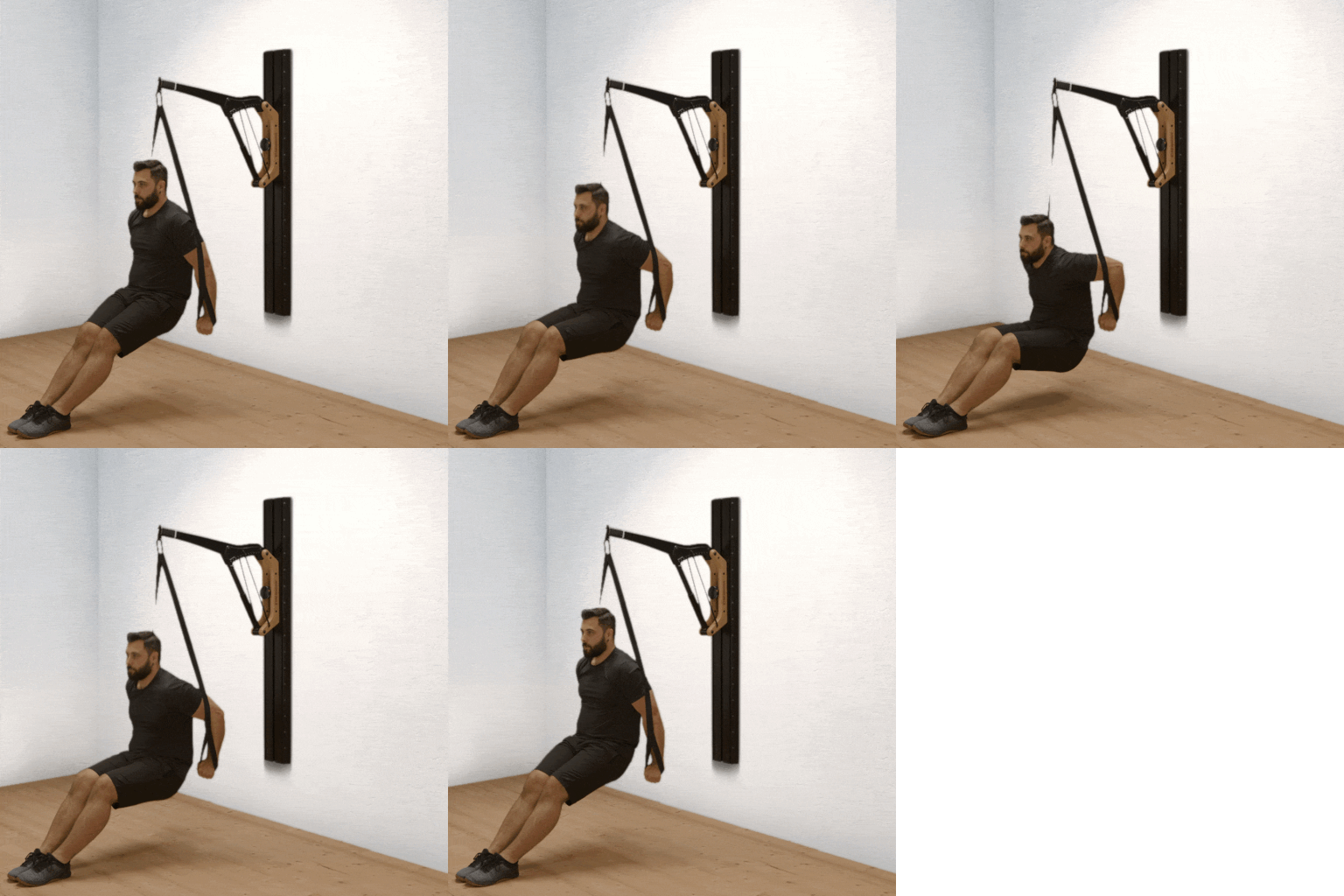
What makes this exercise particularly effective?
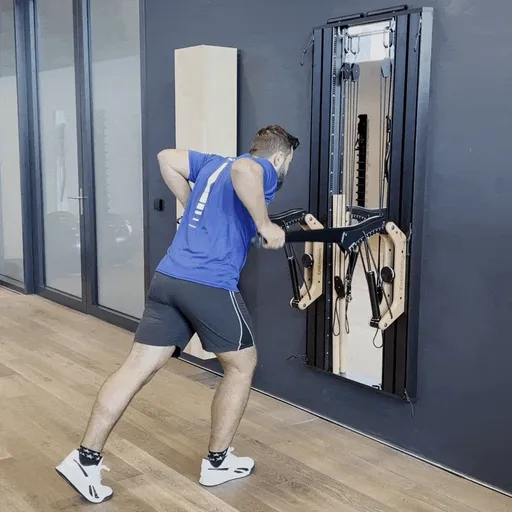
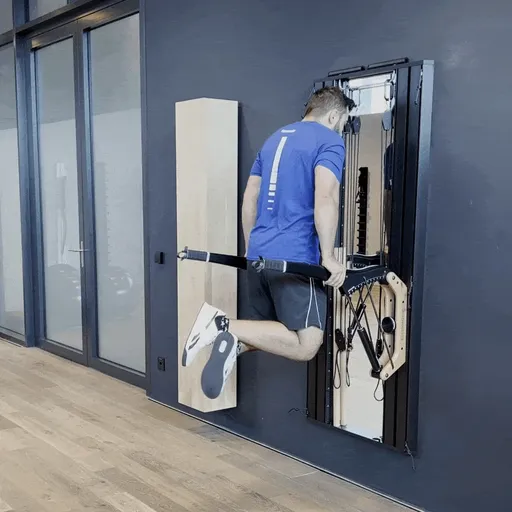
In contrast to classic dips performed on fixed handles or bars, dips with grip bands use a freely swinging band. This creates a flexible surface that requires higher neuromuscular control. The chest, shoulder, and triceps muscles work not only against body weight but also to maintain stability. This makes this variation particularly effective for strength, body tension, and coordination.
What effect does the exercise achieve?
Targeted upper body strengthening: The chest, anterior shoulders, and triceps are heavily engaged, promoting functional upper body strength.
Enhanced coordination and stability: Due to the freely swinging grip band, many stabilizing muscles are actively engaged—especially in the core and shoulders.
Core activation: A stable core is essential for executing the movement cleanly, automatically engaging the abdominal and back muscles.
Functional transferability: Improved intermuscular coordination positively impacts other pressing and holding exercises.
How does this exercise fit into the Big 5 concept?
The Big 5 include the fundamental exercises: squat, deadlift, bench press, pull-up or lat pulldown, and shoulder press. Even though dips are not part of the classic Big 5, dips with grip bands can complement your training optimally:
Excellent addition to the bench press: Similar muscle chains are trained, but with a different movement pattern and greater core engagement.
Improved shoulder and core stability: These skills are crucial for safe and powerful performance in all Big 5 exercises.
Functional full-body control: The unstable execution ensures that strength, balance, and body tension are trained simultaneously—a valuable transfer to many other movements.

:format(webp))
)
)
)
)
)
:format(webp) "EISENHORN S Black Edition")
 "EISENHORN S Black Edition")