What makes this exercise particularly effective?
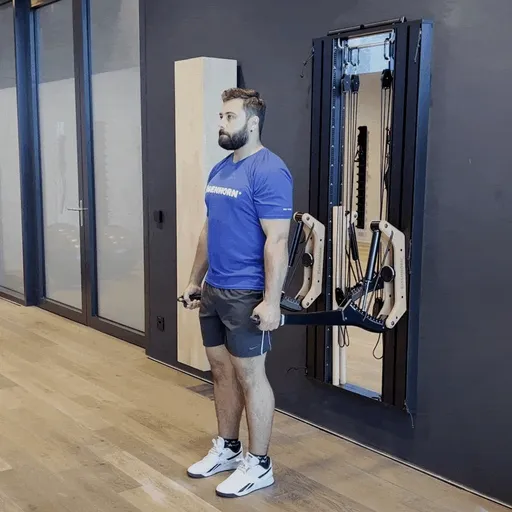
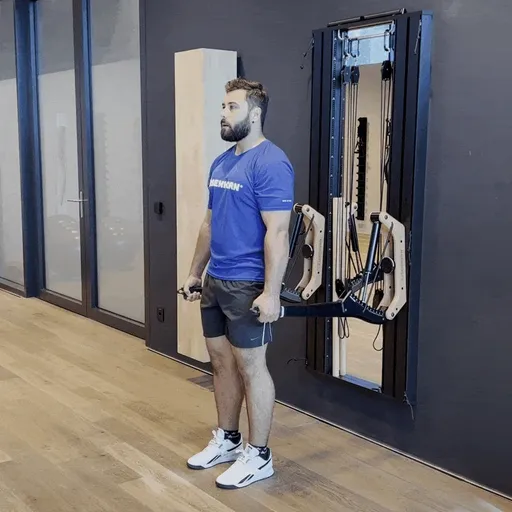
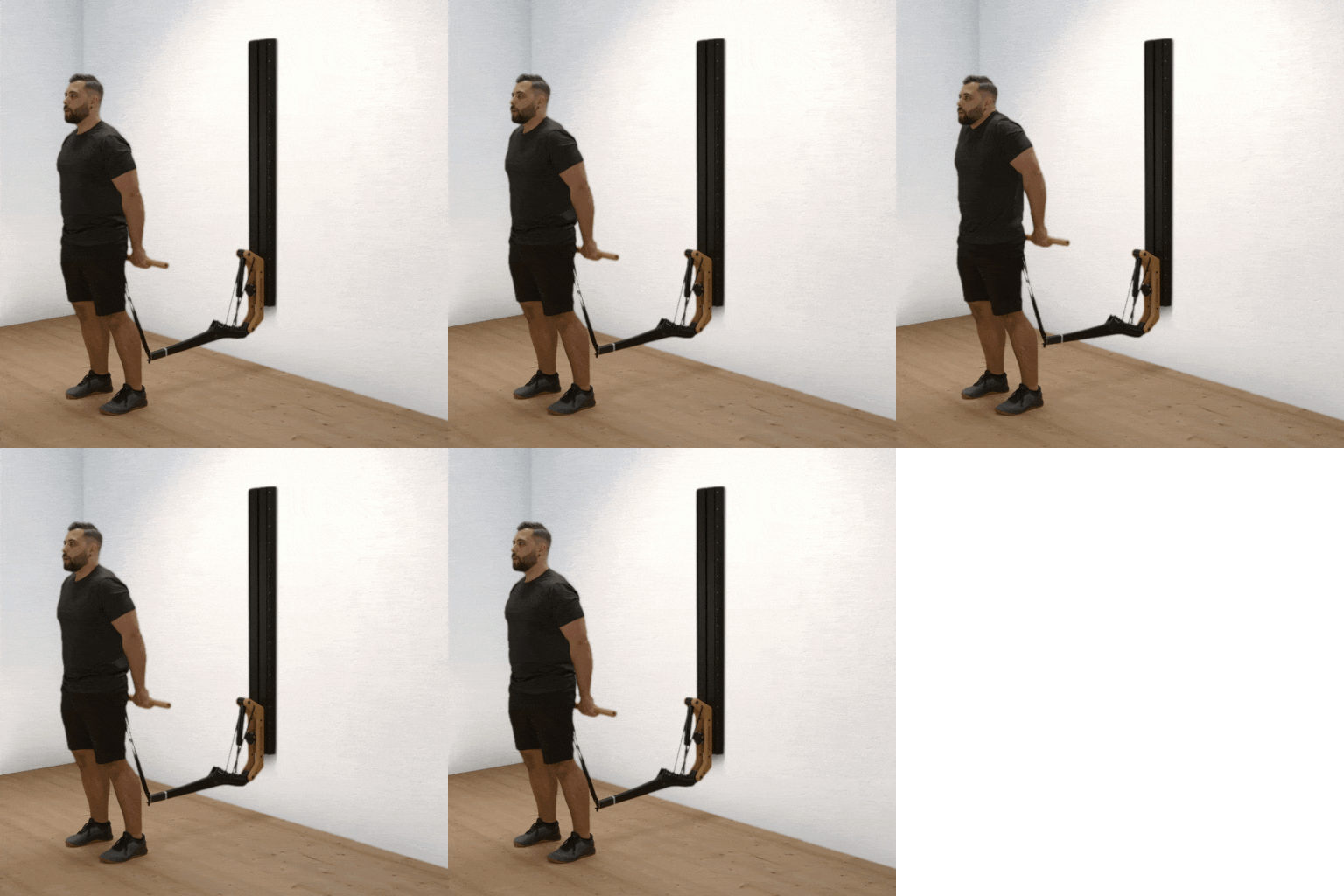
Front shoulder raises combine the movement of a front raise with conscious activation of the upper trapezius (Trapezius superior). Unlike traditional shoulder shrugs, which are performed to the side or behind the body, this movement is executed in front of the body. This variation engages the front deltoids and the upper neck area more, as the arms are held forward and the trapezius must work to stabilize and lift.
The exercise therefore presents a double challenge: it works both shoulder flexion/front delts and scapula/neck stability (shrug component). This combination is useful for improving posture, shoulders health, and aesthetic definition.
What effect does the exercise achieve?
Targeted activation of the anterior deltoid: The front delts are heavily engaged as the arms are raised forward. This improves both the aesthetic line of the shoulder and functional strength for pressing movements.
Strengthening of the upper trapezius: Raising the shoulders in front activates the upper trapezius intensively, which is particularly beneficial for movements involving the arms forward, such as carrying, pushing, or overhead pressing.
Improved shoulder stability and posture: Actively lifting and controlling the shoulders trains the ability to maintain stability in the shoulders and neck, even during daily activities. This helps prevent poor posture and muscle tension.
Synergy of front raise and shrug: This exercise combines two movement principles—raising the arms forward (front raise) and shrugging the shoulders—simultaneously engaging multiple muscles: anterior delts, upper trapezius, and potentially the neck and upper back muscles.
Scalability and variation: It can be performed with one arm or both, using different weights or resistance bands. Tempo, range of motion, and shoulder raise height can be adjusted, making it suitable for all training levels.
How does this exercise fit into the Big 5 concept?
The Big 5 include the fundamental exercises: squat, deadlift, bench press, pull-up or lat pulldown, and shoulder press. Although front shoulder raises are not a classic Big 5 exercise, they offer valuable benefits:
They strengthen the shoulders and upper trapezius through targeted isolation.
They help identify and correct weaknesses or imbalances in the front delts or upper back, which may otherwise appear during bench press or shoulder press.
They support pushing movements by ensuring a strong trapezius and well-aligned shoulders, which improves efficiency and safety.
They serve as a supplemental and fine-tuning exercise: once progress has been made in the Big 5, front raises enhance aesthetics, posture, and performance beyond the basic level.
:format(webp))
)
)
)
)
)
:format(webp) "EISENHORN S Black Edition")
 "EISENHORN S Black Edition")