What makes this exercise particularly effective?
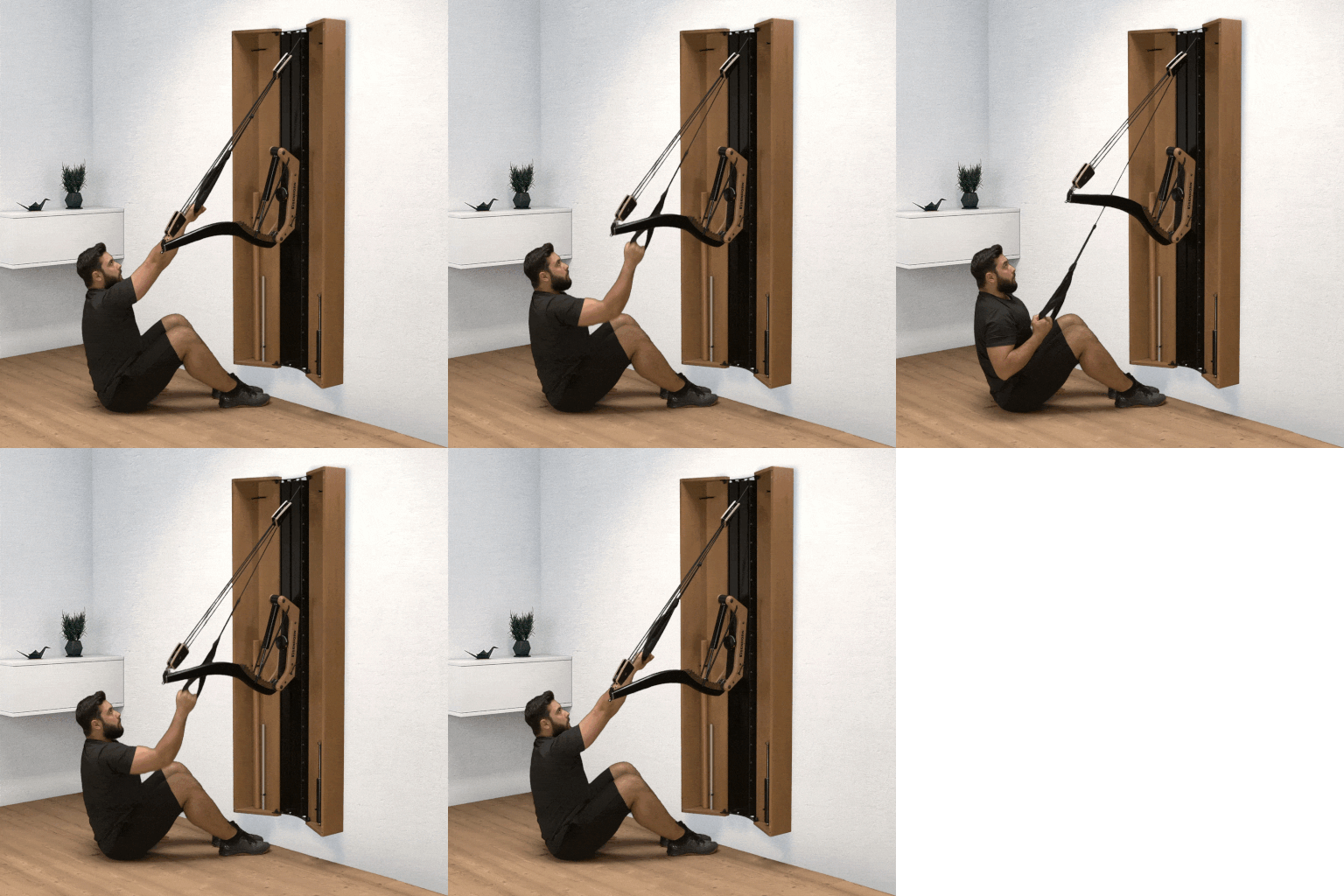
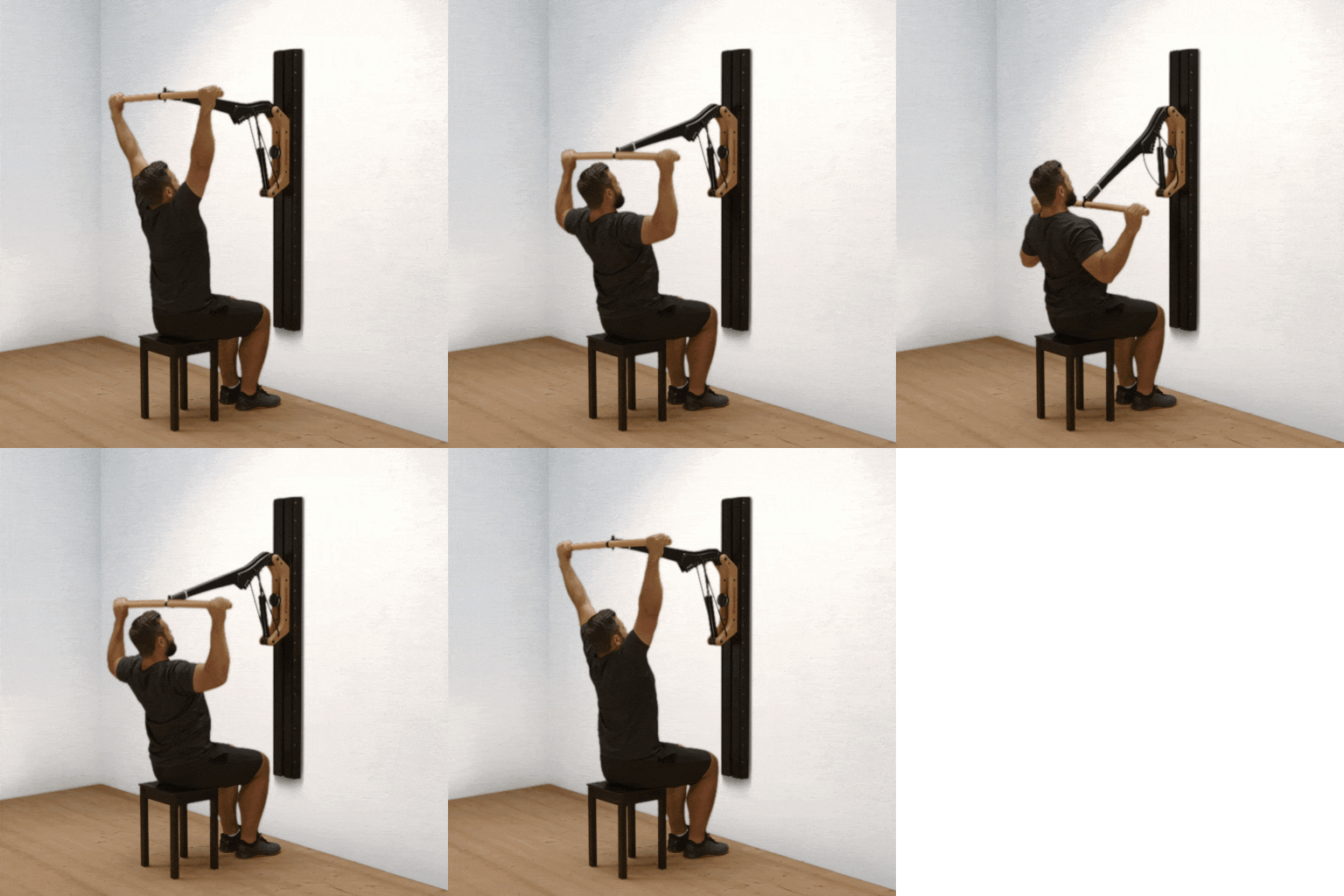
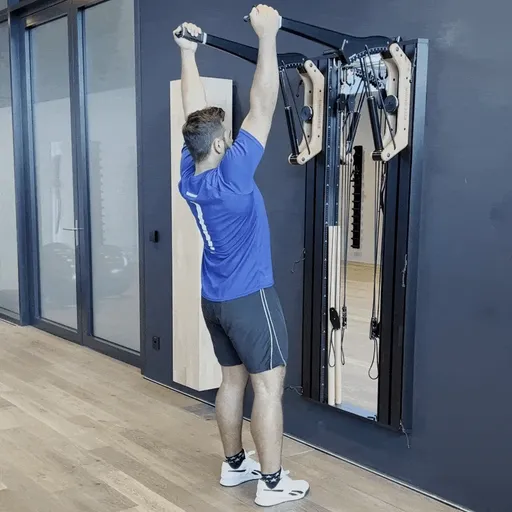
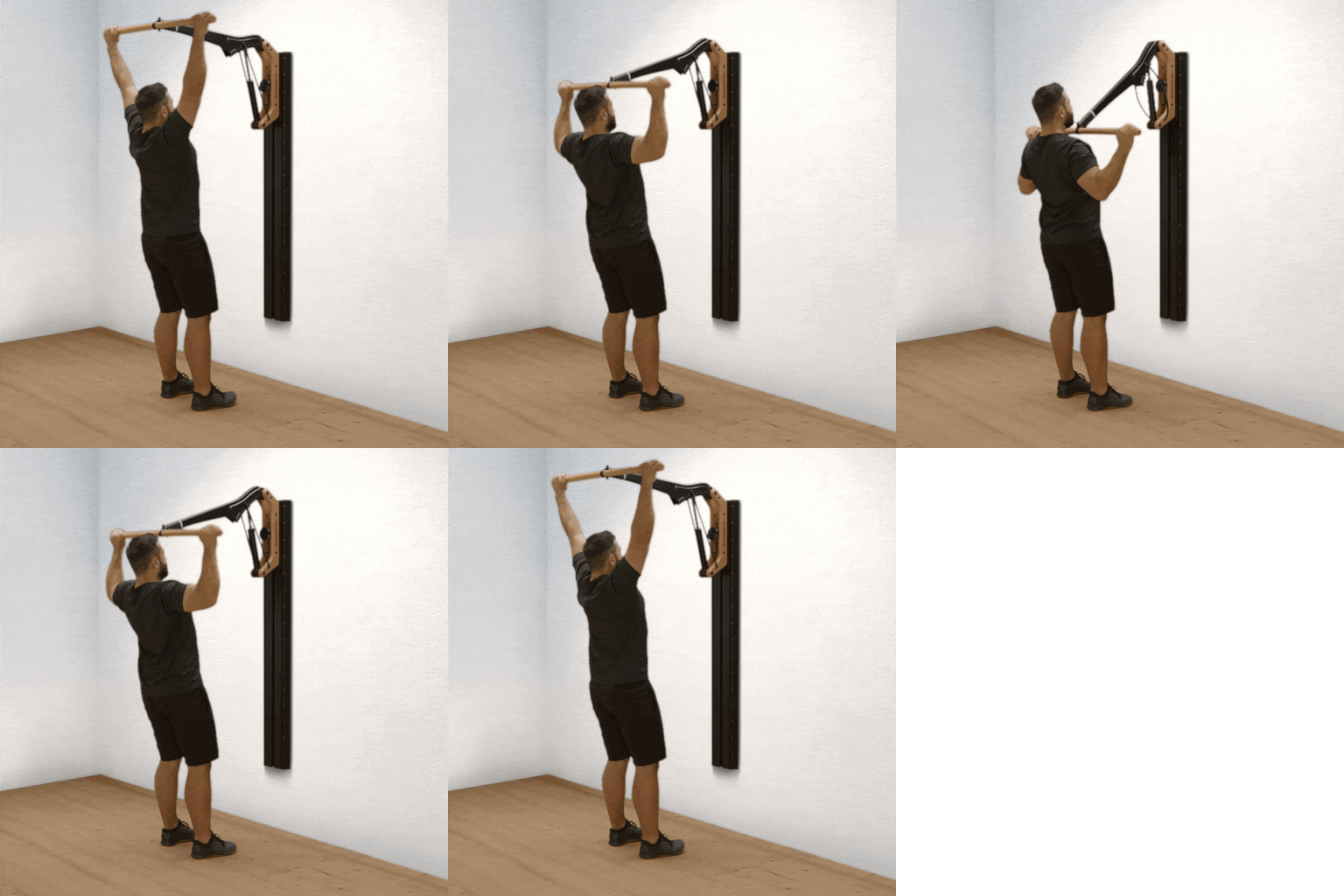
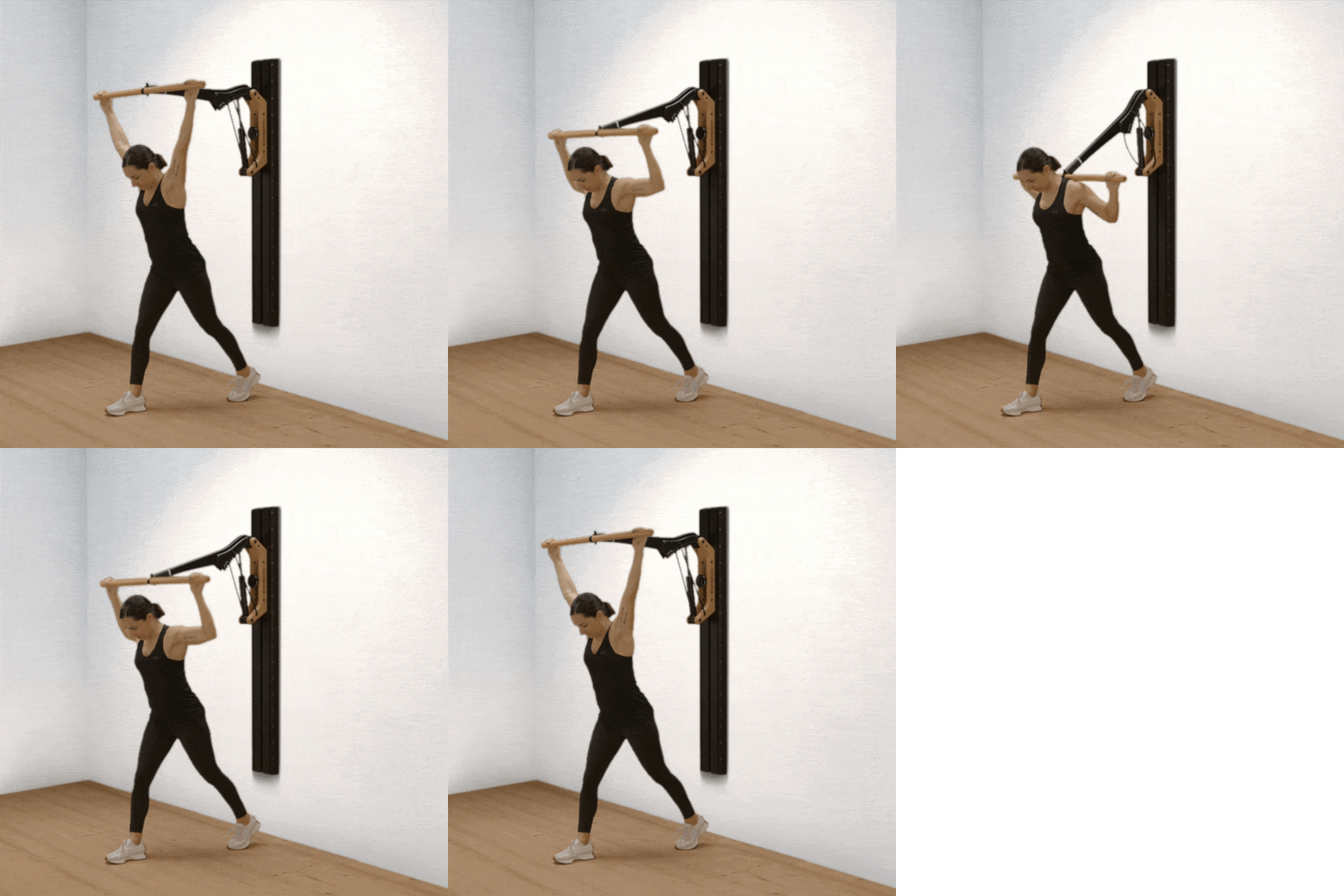
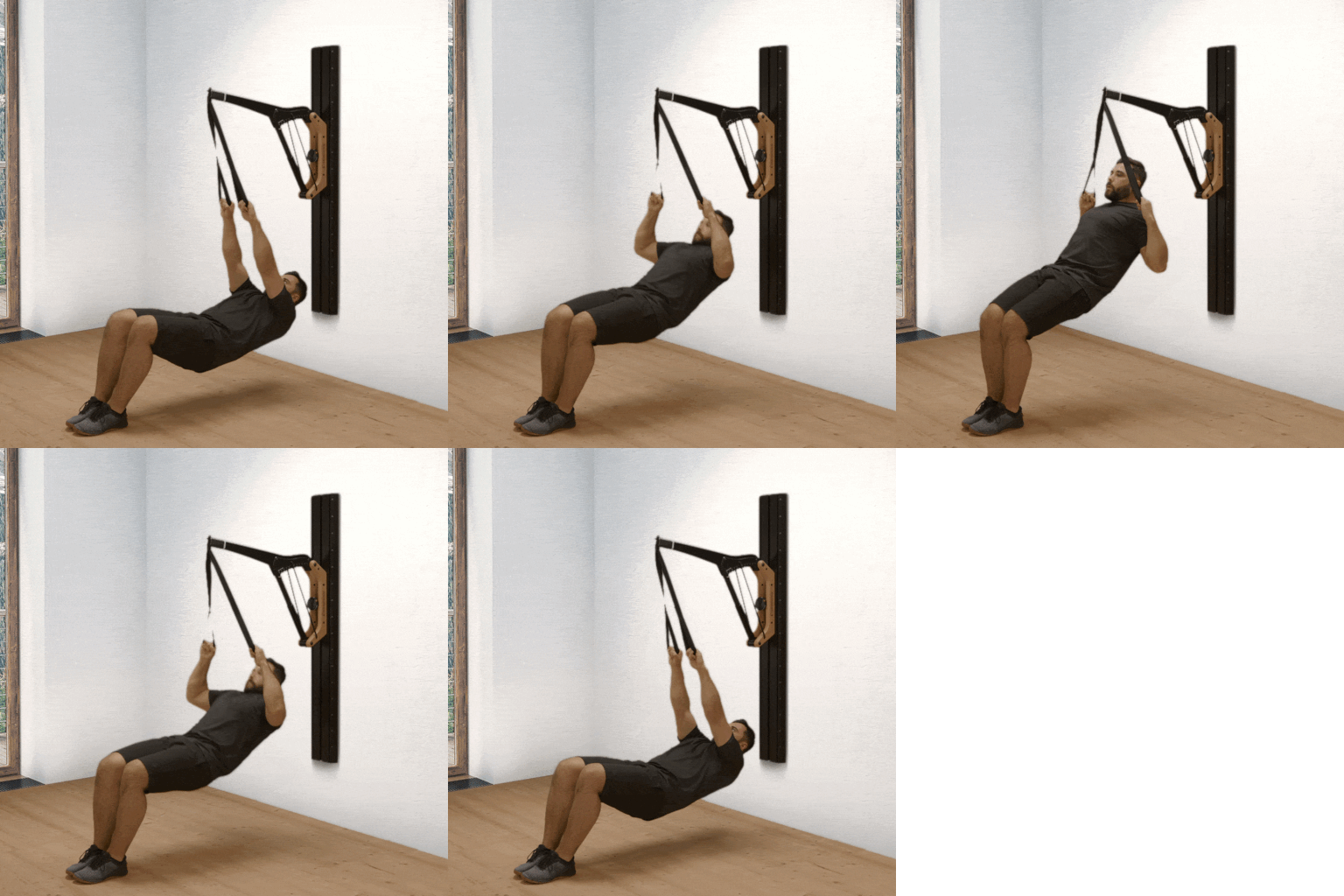
I'm sorry, but the text you provided is incomplete. Could you please provide more context or the full text for translation? Tilt your head back You sit down, and the handlebar is pulled behind your head – typically toward the neck or upper back. This variation changes the shoulder position and the pulling angle compared to the conventional version. Pull to chest I'm here to help! Just provide me with the text you'd like me to translate into English.
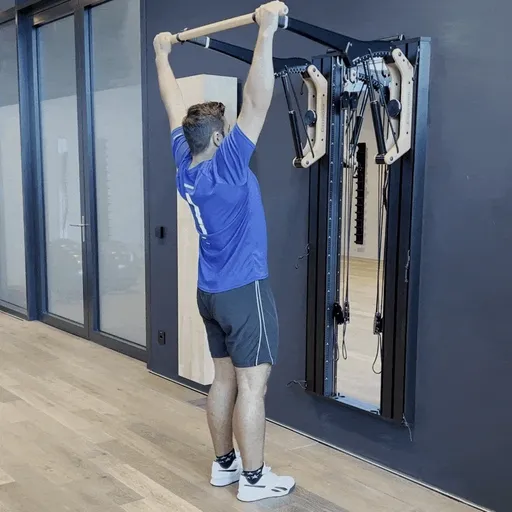
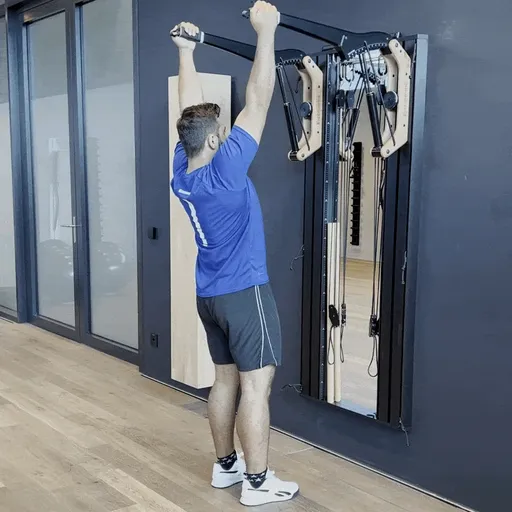
Sitting with the head tilted back can specifically target the upper part of the latissimus dorsi, the trapezius (upper part), and the rear shoulders more. The wider grip and the rear position of the handlebar also challenge the rotator cuff and neck muscles more.
However, it is important to note that in order for this exercise to be effective and safe, you need very good shoulder mobility, posture, and technique.
What effect does the exercise achieve?
Upper back muscles & neck: The posterior part of the latissimus dorsi, the upper trapezius muscles, and the posterior deltoid muscles are more strongly activated than in many front-pull variations.
Variation & new stimuli: Since the pulling angle is different and the bar is pulled behind the head, this variation provides a new training stimulus. This can be helpful to overcome a training plateau.
Flexibility and technique: To safely perform this exercise, it requires more attention to your scapular positioning, sitting posture, head position, and chest position.
Potential risks of incorrect execution: Possible problem areas include excessive external rotation of the shoulder, forward tilting of the head, limitations in shoulder joint mobility, or muscle/tendon pain (e.g., when using too much weight).
How does this exercise fit into the Big 5 concept?
The Big 5 include the fundamental exercises: squat, deadlift, bench press, pull-up or lat pulldown, and shoulder press. Even if the exercise "Sitting with the head tilted back" is not part of the classic Big 5, it can still provide important additional benefits:
Supports back pulling strength, especially when a training variation beyond the upper back muscles is needed.
It is helpful to move the shoulders and upper back muscles into positions that are usually less trained – important to avoid imbalances.
When technique and mobility are sufficient, this exercise helps introduce new stimuli and increase your training efficiency.
:format(webp))
)
)
)
)
)
:format(webp) "EISENHORN S Black Edition")
 "EISENHORN S Black Edition")