What makes this exercise particularly effective?
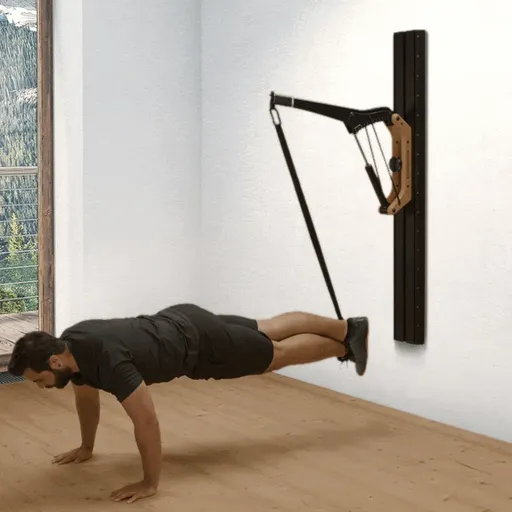
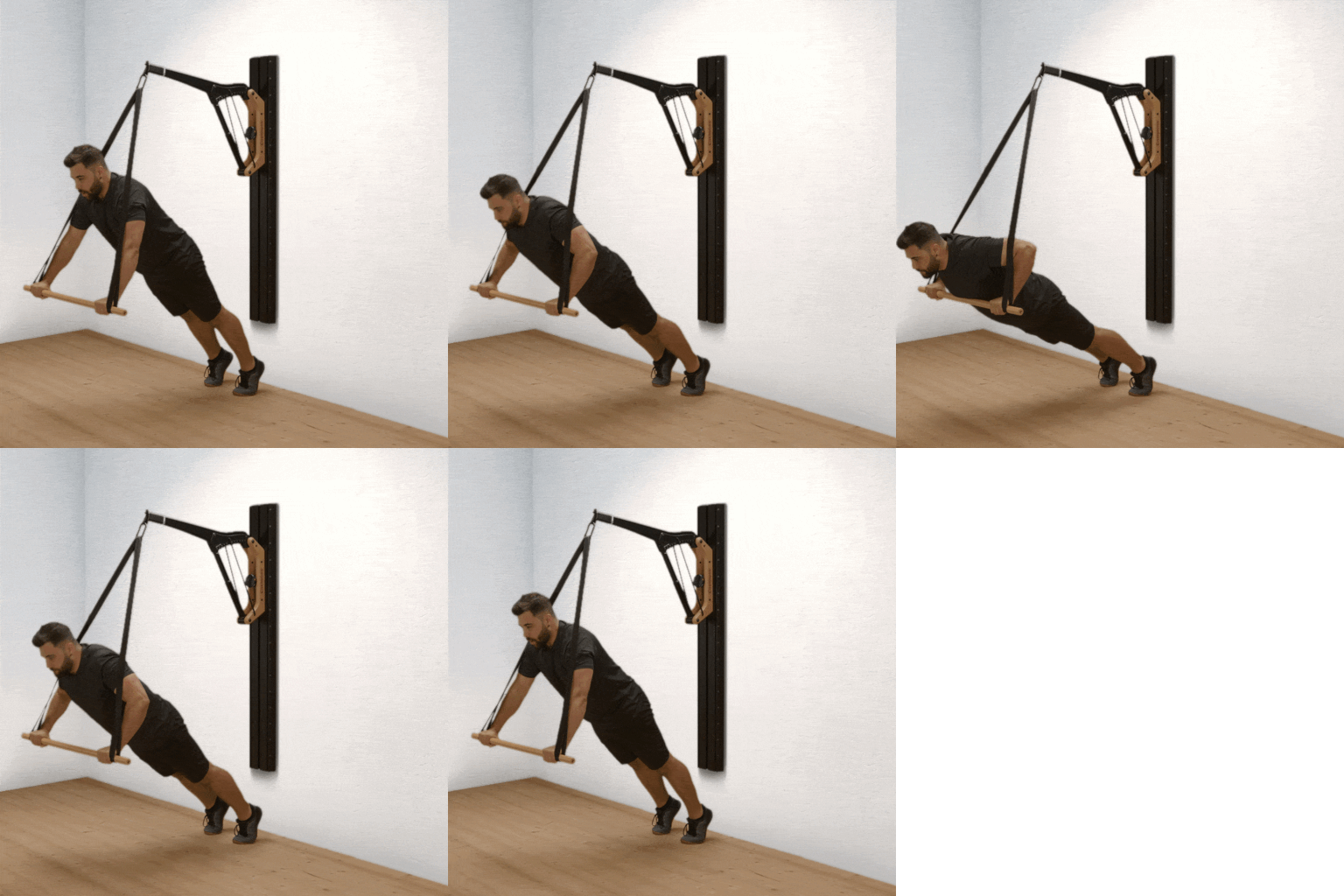
Combining push-ups with a grip band adds additional instability to the classic push-up. The grip band increases body tension and requires more stability from the shoulders, chest, core, and wrists. Studies show that performing push-ups under unstable conditions (e.g., with a band or strap) significantly enhances the activation of stabilizing muscles.
What effect does the exercise achieve?
Increased activation of chest, shoulder, and triceps muscles: The grip band intensifies the load, especially during the push-up phase, while also increasing stabilization during the lowering phase.
Improved core control and trunk stability: Controlling the band requires proper engagement of the abdominals, glutes, and lower back. Without stable core tension, the spine may sag or posture may collapse.
Enhanced joint and scapular symmetry: The instability of the band forces both sides to work evenly, helping to reduce muscular imbalances.
Greater challenge without additional weight: The band alone provides an effective increase in stimulus.
Promotion of technical sensitivity and control: The feedback from the band encourages a controlled and precise execution of the movement.
How does this exercise fit into the Big 5 concept?
The Big 5 include the fundamental exercises: squat, deadlift, bench press, pull-up or lat pulldown, and shoulder press. Although push-ups with grip bands are not considered classic Big 5 exercises, they can be an excellent addition:
Supporting pushing movements: They complement bench press and shoulder press by targeting the same muscle groups with slight variations in load and stabilization.
Synergy effects through improved stability: A stable core and controlled scapular movement benefit almost all Big5 exercises. This push-up variation develops exactly these skills.
Variable stimulus for progress and motivation: This variation adds variety and new stimulus, helping to keep training efficient and engaging.
:format(webp))
)
)
)
)
)
:format(webp) "EISENHORN S Black Edition")
 "EISENHORN S Black Edition")