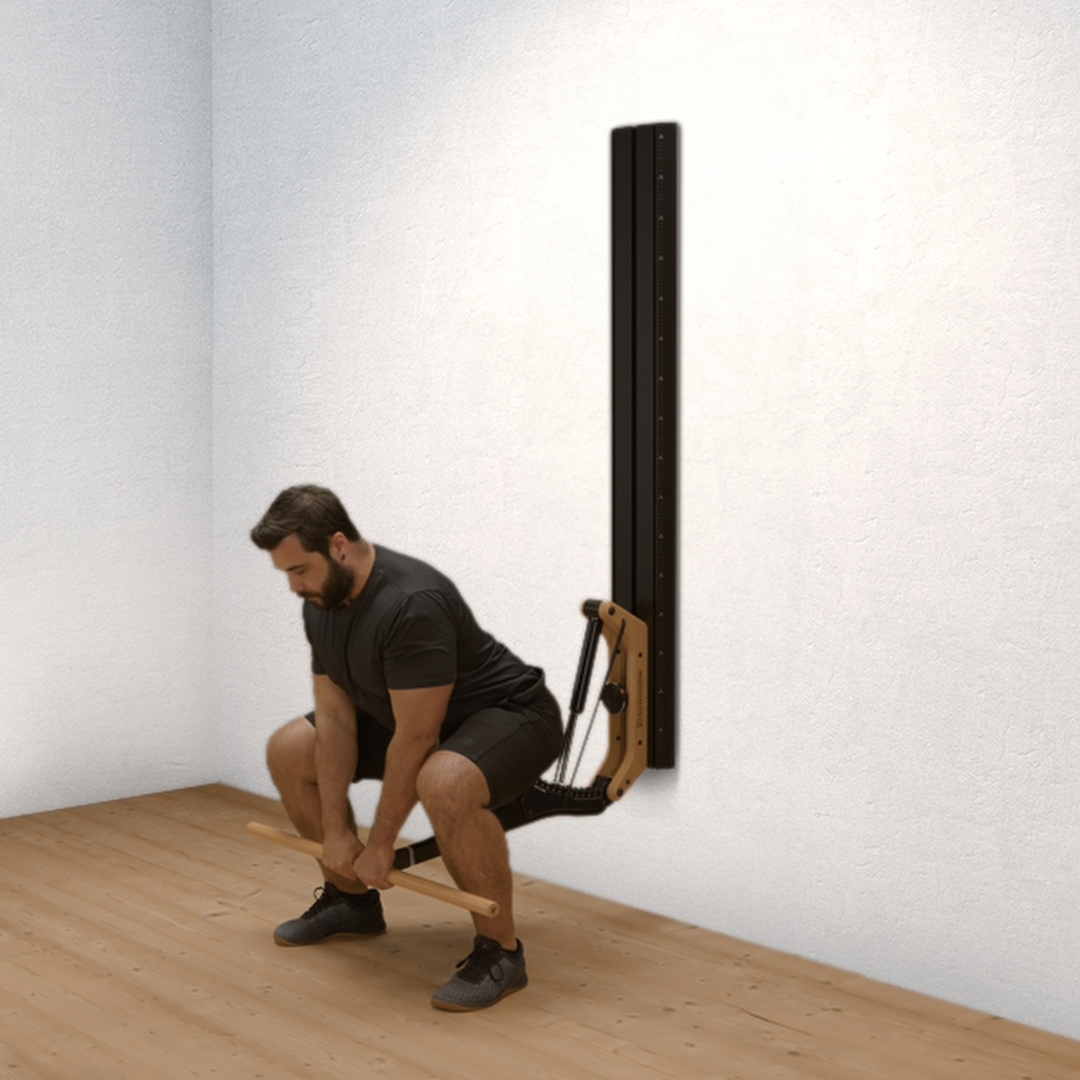

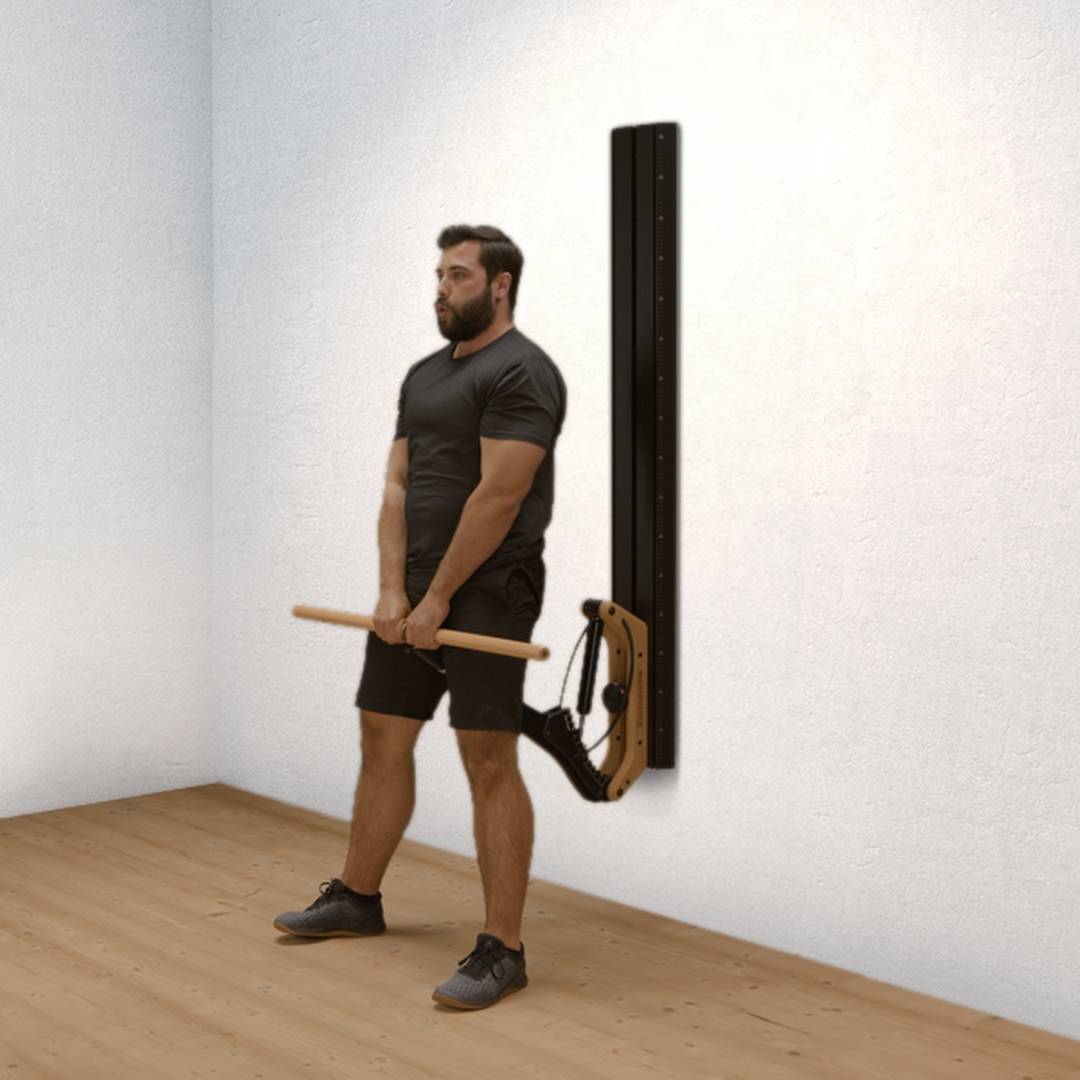
What makes this exercise particularly effective?
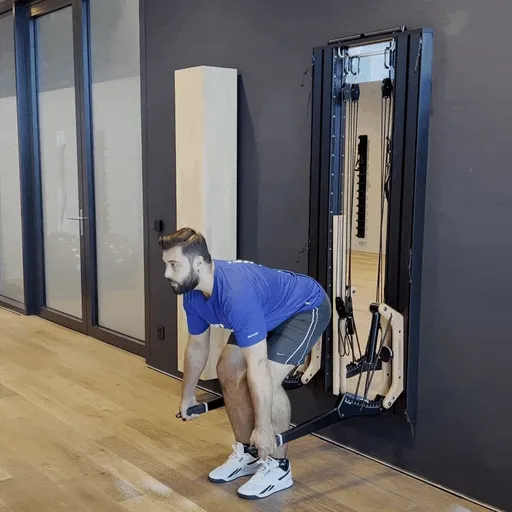
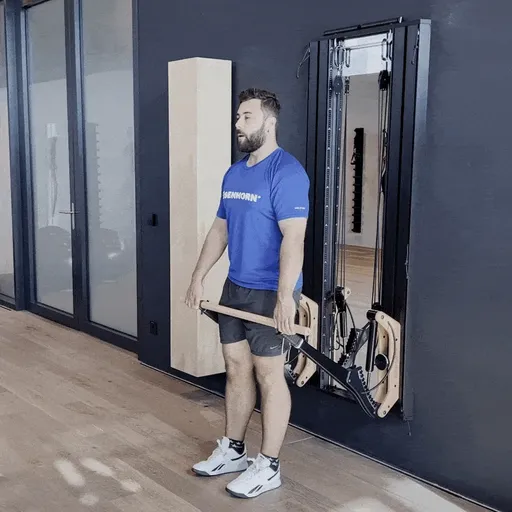
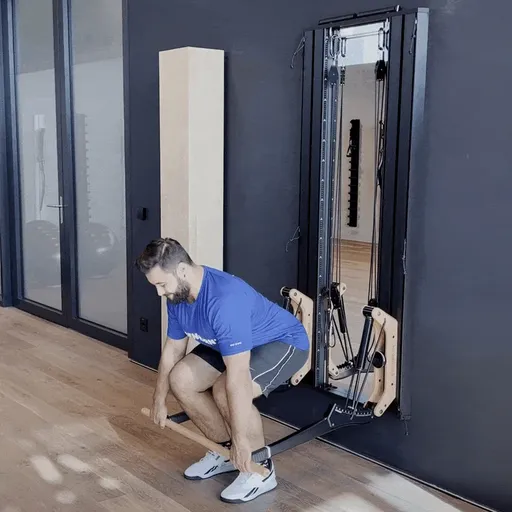
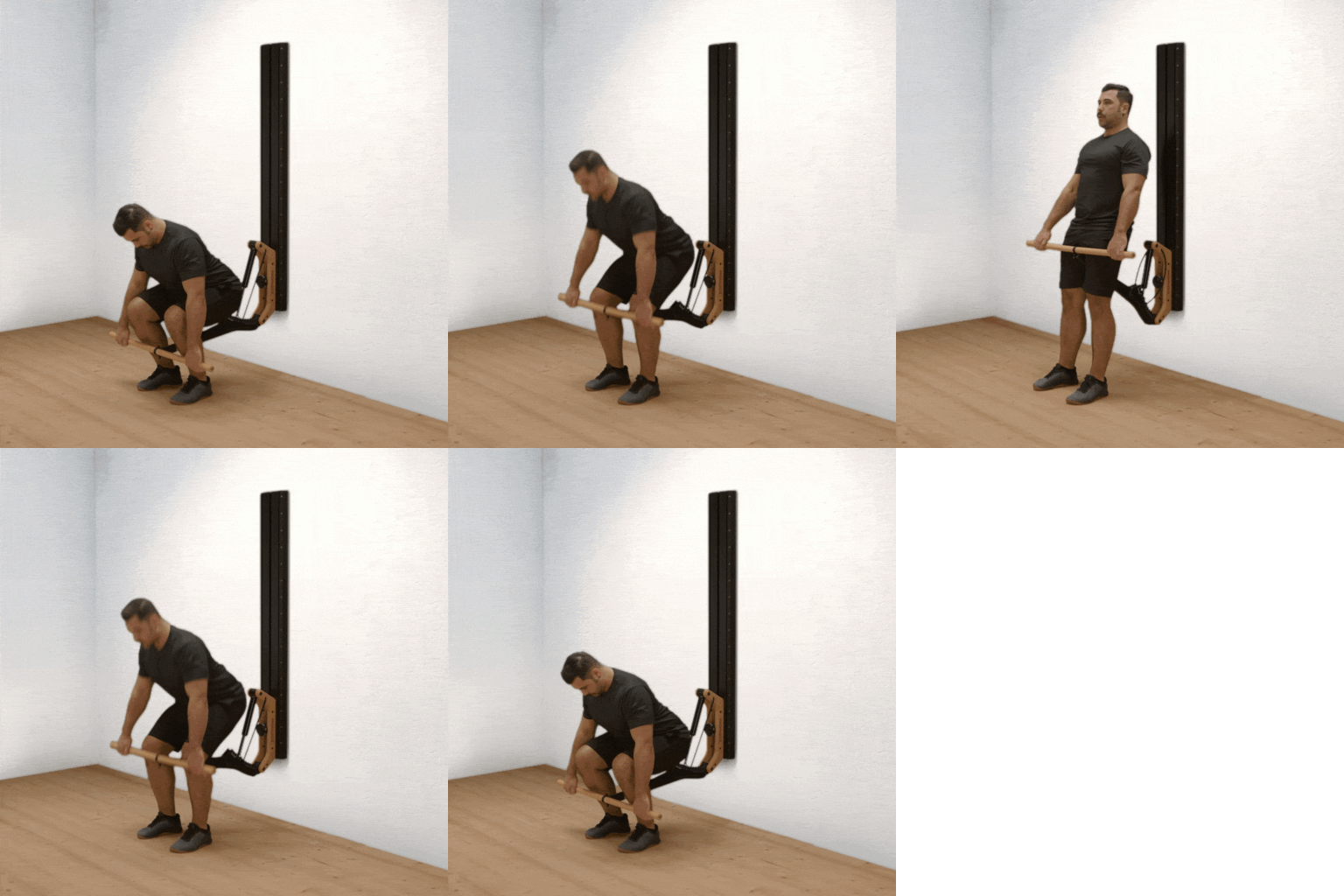
The sumo deadlift, with its wide foot stance, close overhand grip on the bar, and more upright torso, specifically targets the front of the thighs (quadriceps), inner thighs (adductors), and gluteal muscles, while simultaneously protecting the lower back and shortening the lever arm. This makes it ideal for individuals with limited mobility or those who want to reduce strain on the back.
What effect does the exercise achieve?
Greater focus on legs and hips: The sumo deadlift emphasizes the quads, glutes, and adductors more than the traditional deadlift variation.
Reduced lower back strain: The more upright torso angle shortens the lever arm, decreasing stress on the lumbar spine.
Improved movement efficiency: The shorter range of motion allows for greater force production and more effective power development with increased comfort.
Full-body engagement: In addition to the primary muscles, the hamstrings, back extensors, core, upper back, and grip strength are also activated.
How does this exercise fit into the Big 5 concept?
The Big 5 include the fundamental exercises: squat, deadlift, bench press, pull-up or lat pulldown, and shoulder press. The sumo deadlift with barbell can be an effective variation of the traditional deadlift:
Functional core integration: The sumo stance promotes full-body tension, particularly in the trunk, which is critical for performance in squats, deadlifts, and other lifts.
Harmonizes force chains: By emphasizing the anterior chain, the exercise complements pulling movements such as pull-ups, providing balanced development.
Alternative for back issues: Ideal for those who find the conventional deadlift challenging due to back limitations, allowing continuity and progression in training.
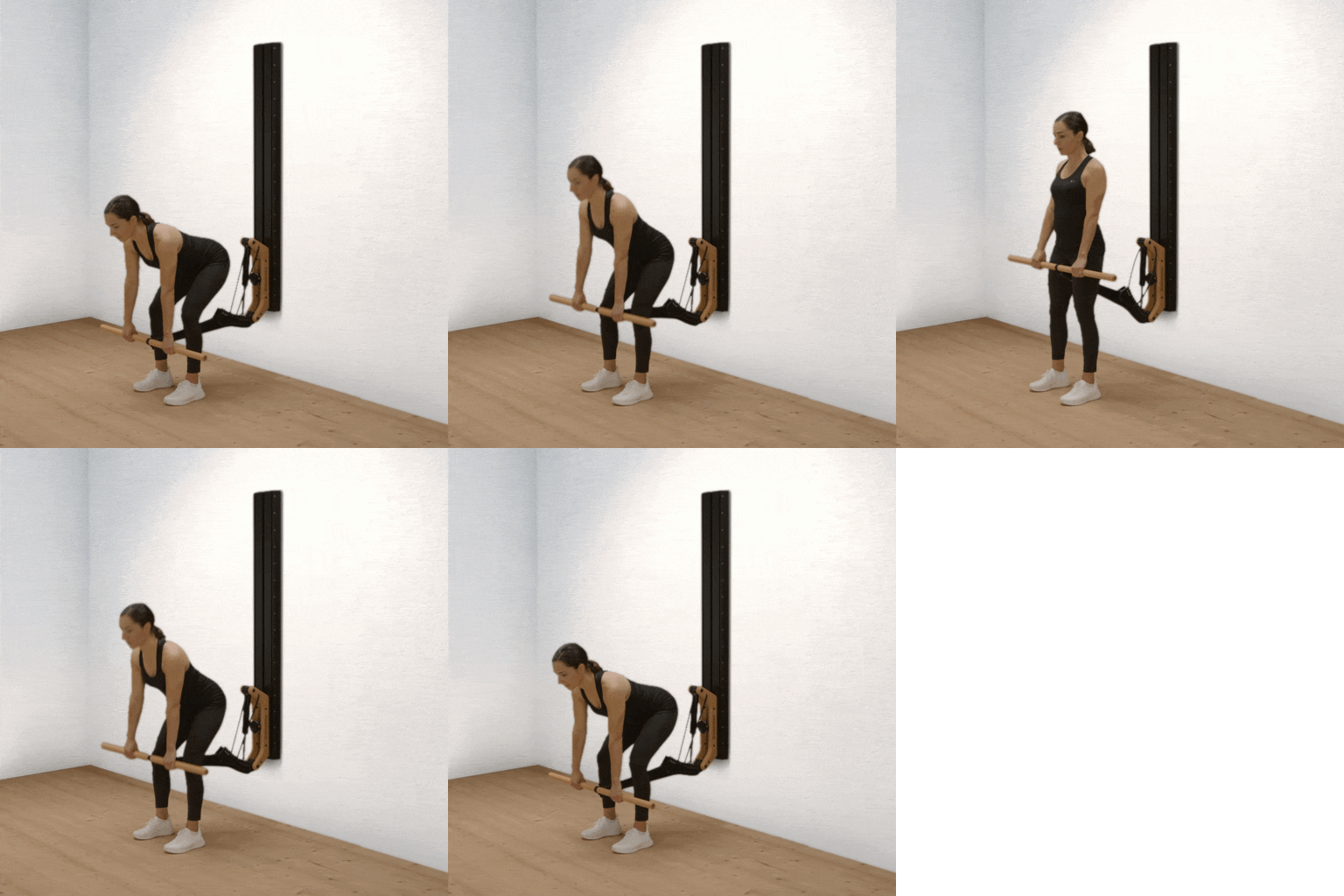
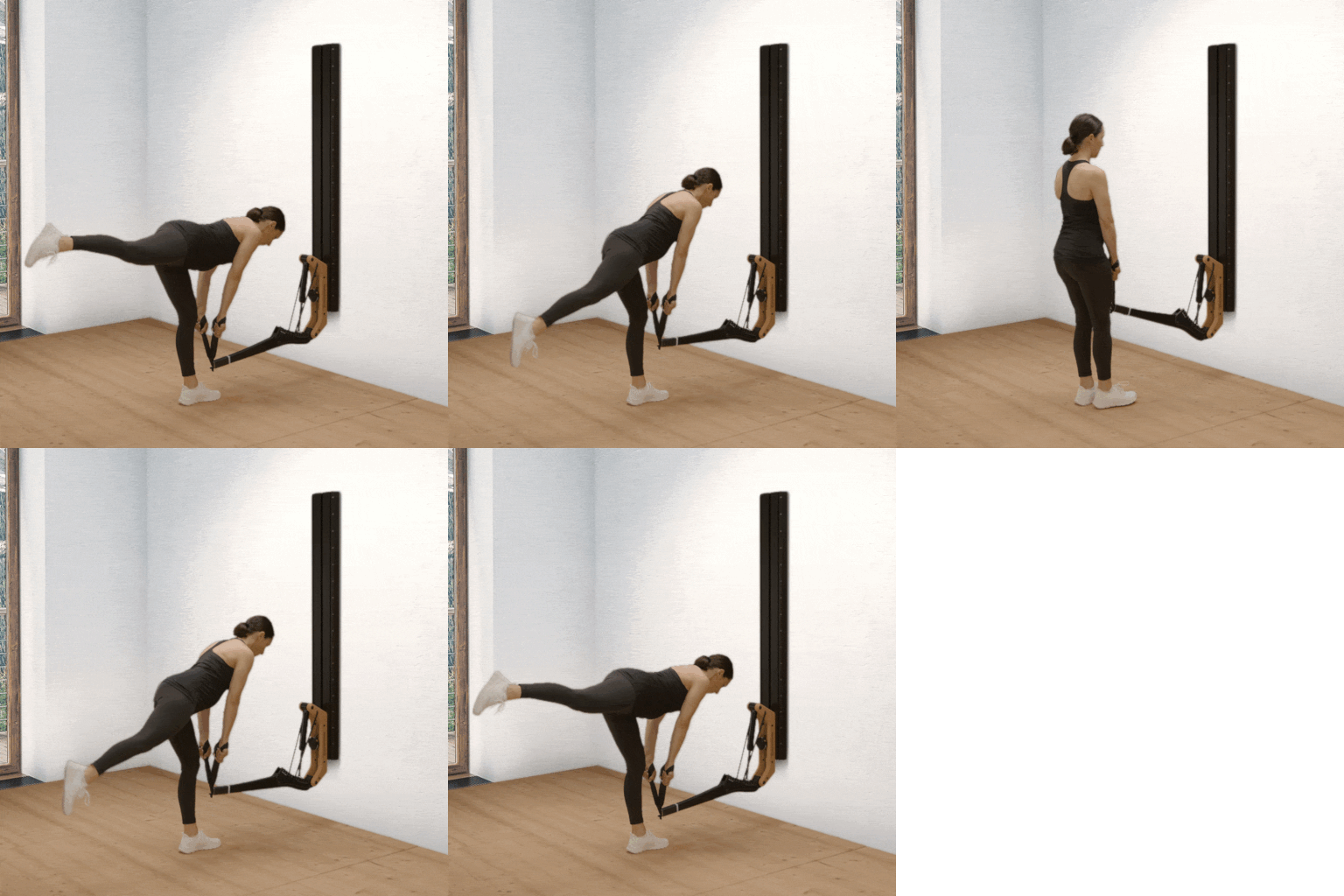
:format(webp))
)
)
)
)
)
:format(webp) "EISENHORN S Black Edition")
 "EISENHORN S Black Edition")