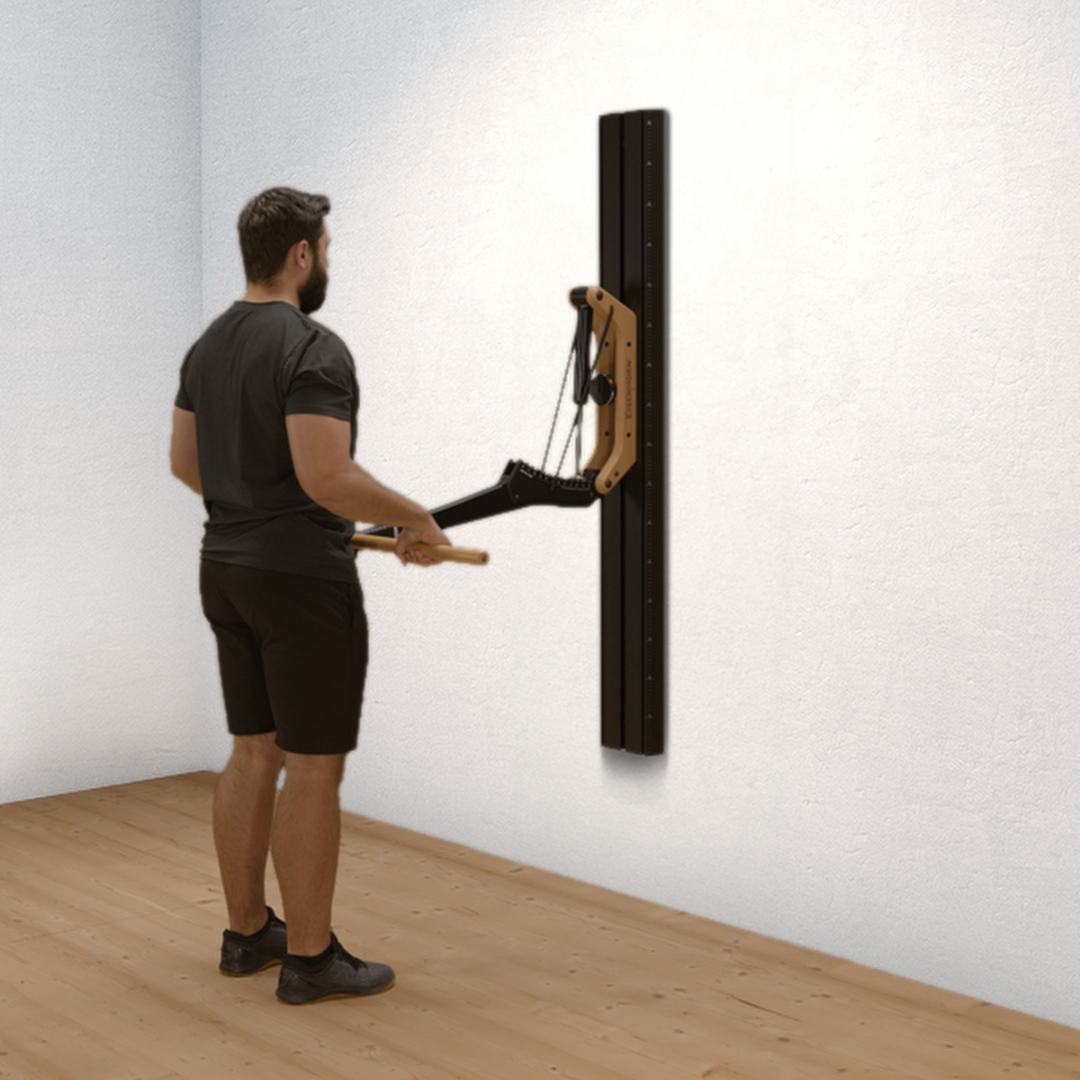
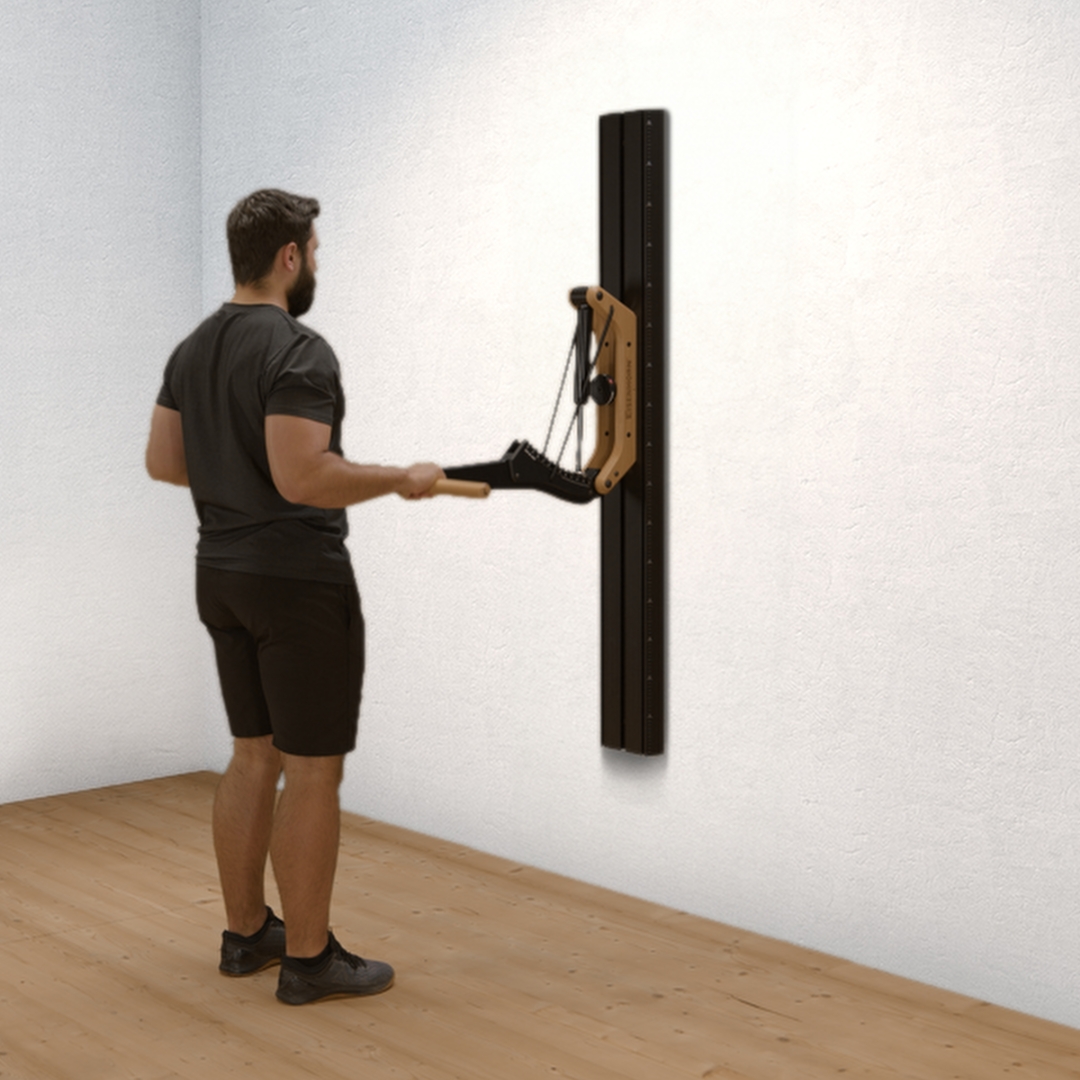
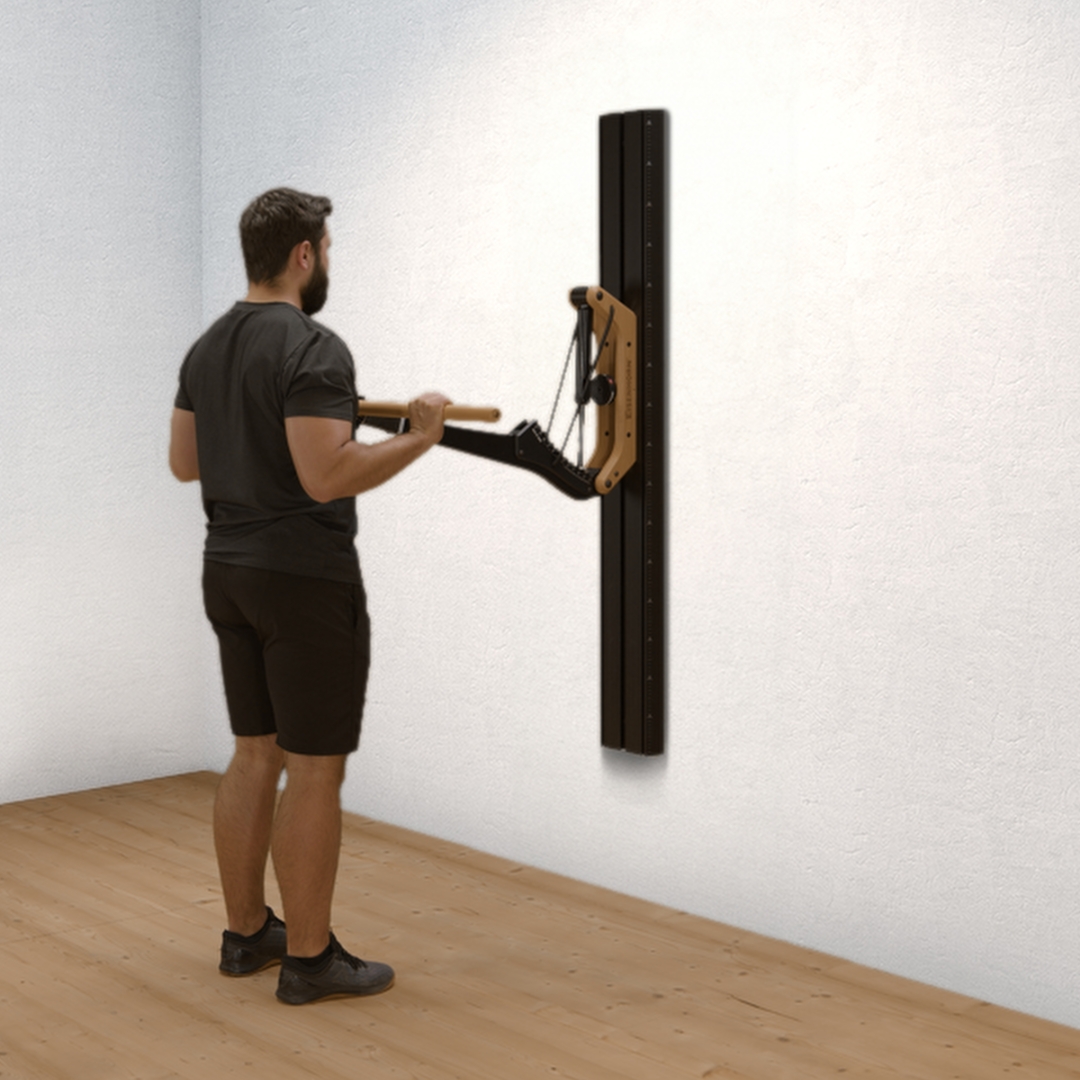
What makes this exercise particularly effective?
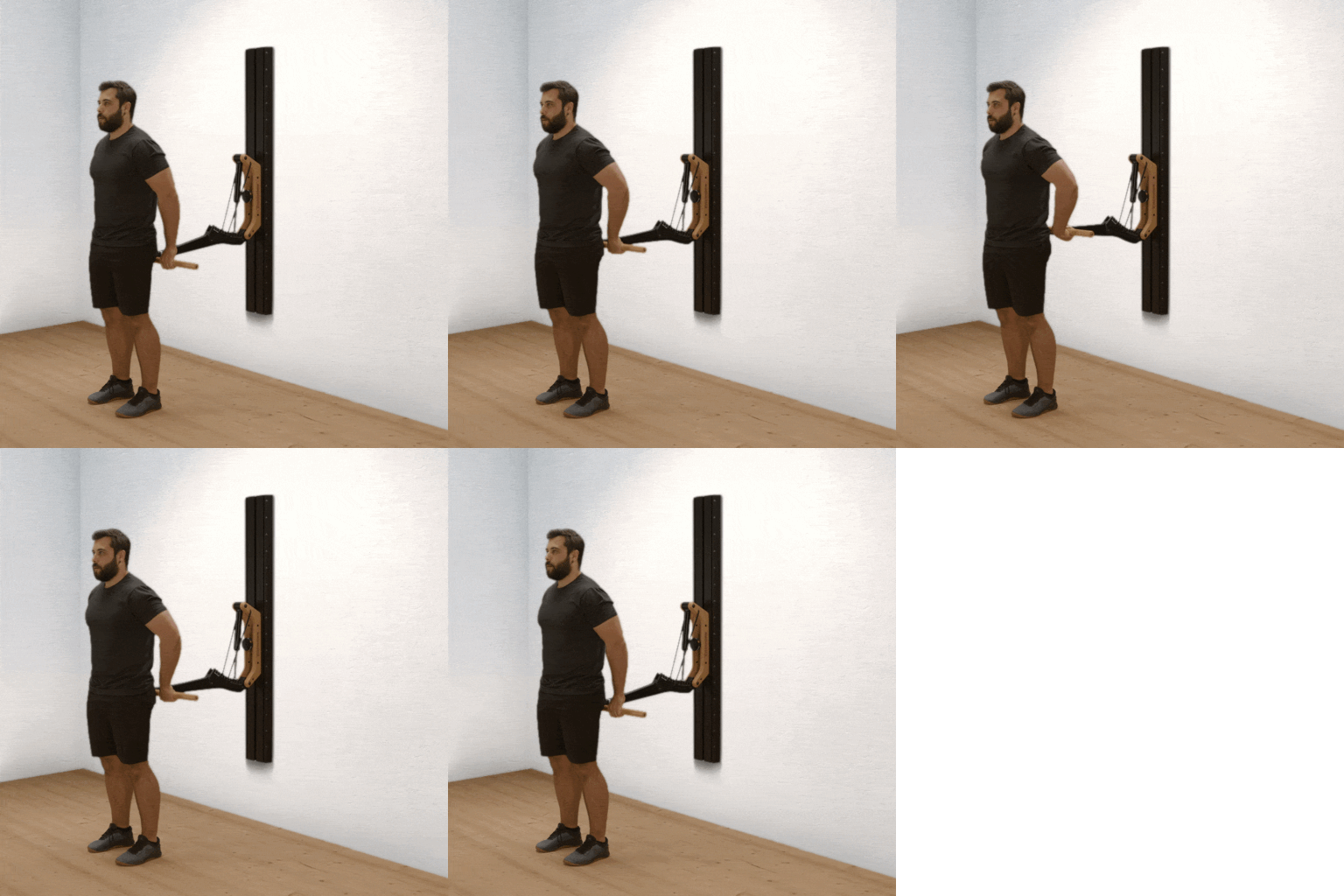
In this variation of wrist curls, the grip is in an overhand position (pronated), with the palms facing downwards. This places less emphasis on the flexors and more on the wrist extensor muscles, as well as the brachioradialis in the upper arm. This execution is particularly effective for developing functional forearm strength and improving grip.
What effect does the exercise achieve?
Targeted activation of the wrist extensors: Trains the extensor carpi radialis longus & brevis, extensor carpi ulnaris, as well as the finger and little finger extensors.
Strengthening the brachioradialis: The pronated grip heavily engages this important upper arm muscle.
Improved grip and wrist stability:Isolated loading of the wrist extensors helps prevent overload and reduces the risk of injuries.
How does this exercise fit into the Big 5 concept?
The Big 5 include the fundamental exercises: squat, deadlift, bench press, pull-up or lat pulldown, and shoulder press. Underhand forearm curls are not part of the core BIG 5 training concept but can complement your training:
Synergy with pulling movements: Strong forearm muscles support pull-ups, rowing, and other pulling exercises with reliable grip strength.
Counterbalance to flexor-dominant work: To achieve balanced arm development and maintain healthy joints, it is important to balance flexor (bending) and extensor (stretching) muscles.
Efficient addition to functional training: Particularly useful during intense, unilateral, or grip-intensive training, targeted forearm training delivers benefits without taking much time.
:format(webp))
)
)
)
)
)
:format(webp) "EISENHORN S Black Edition")
 "EISENHORN S Black Edition")