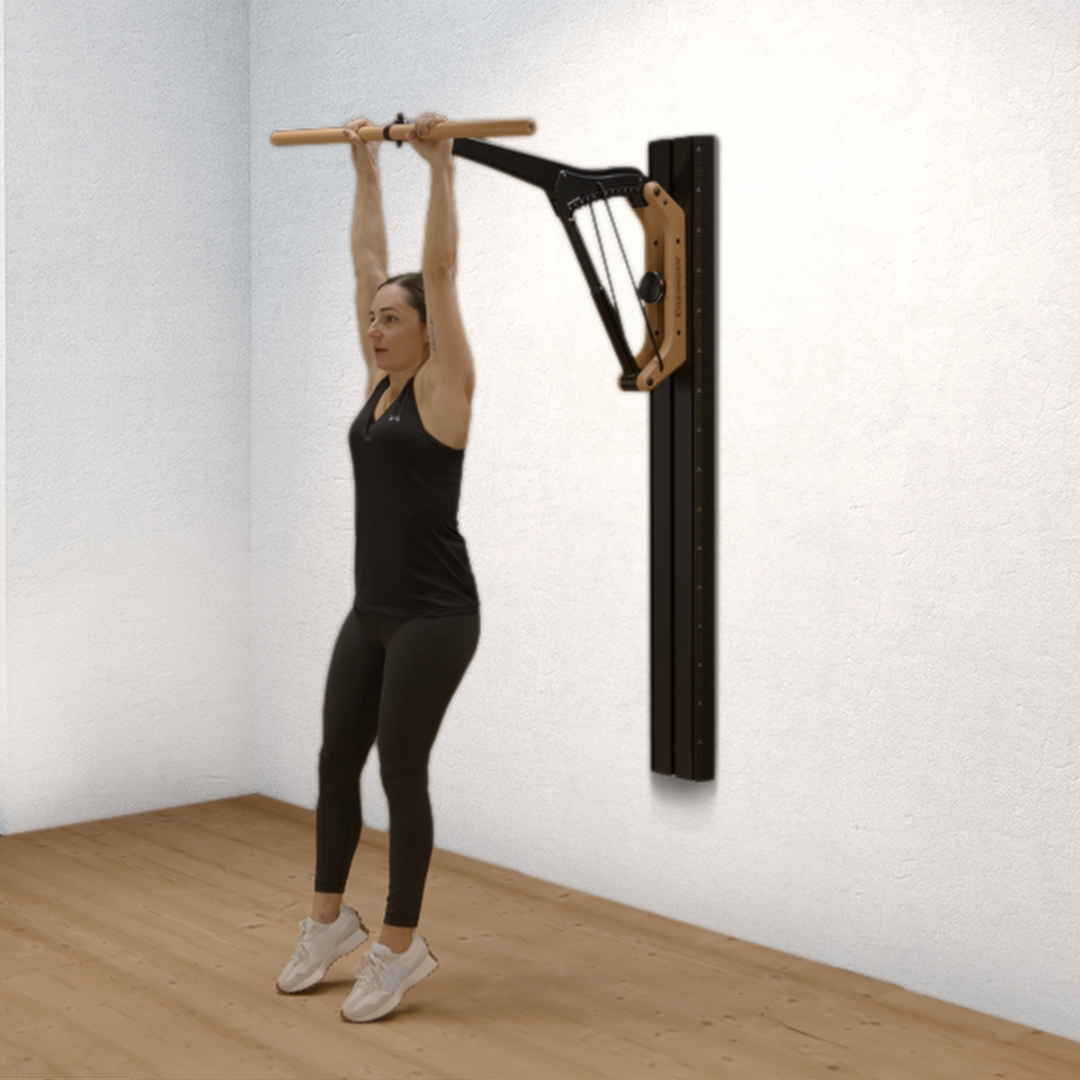
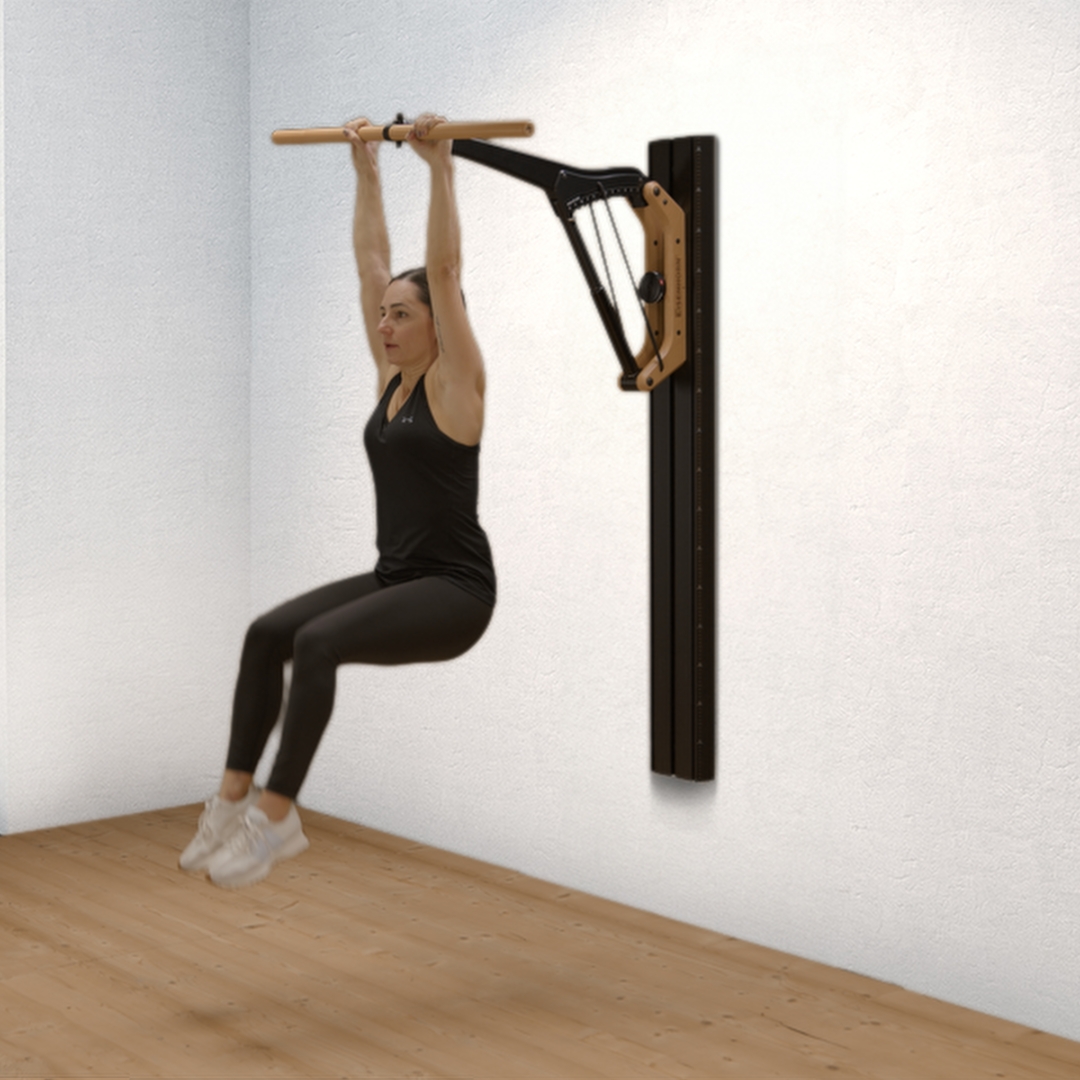
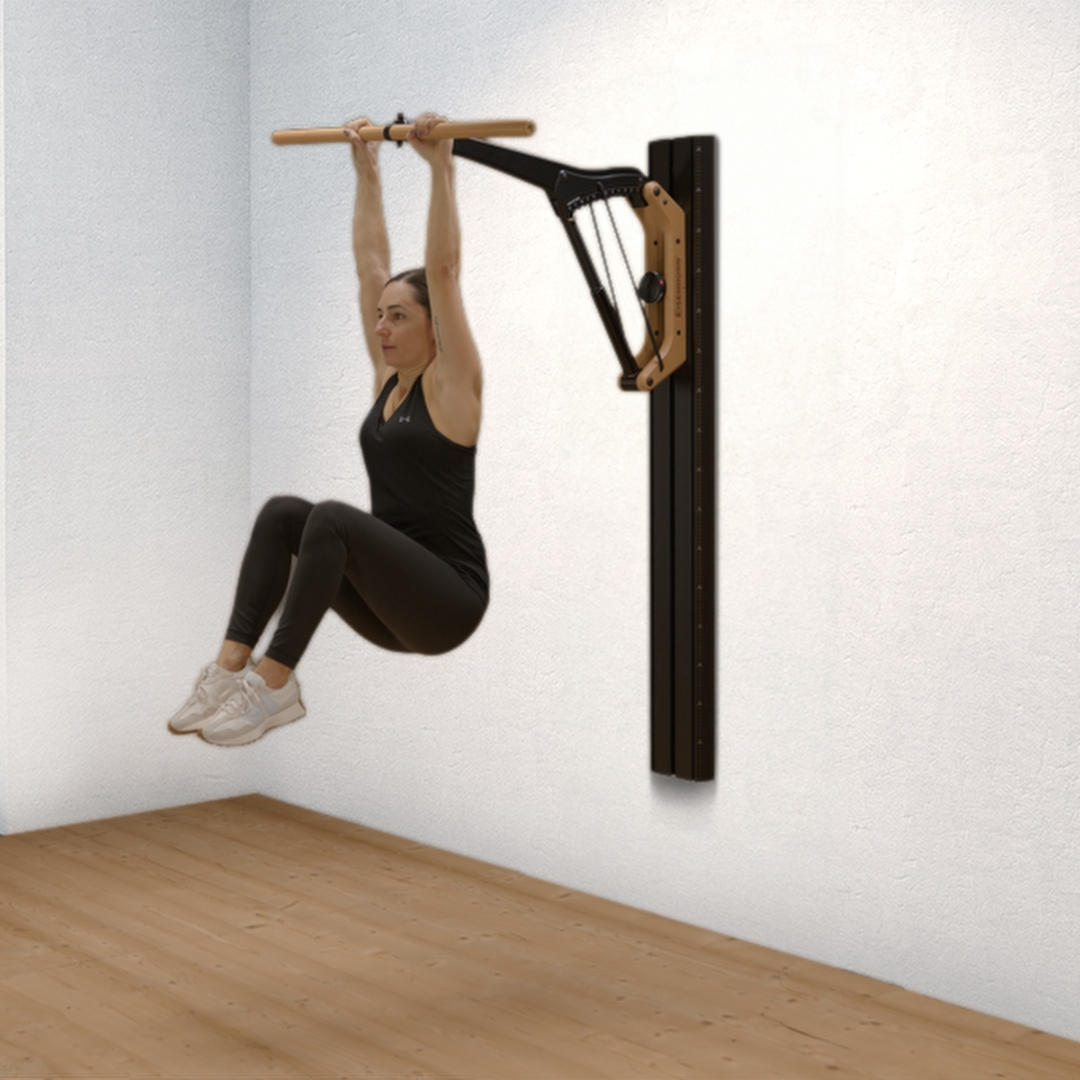
What makes this exercise particularly effective?
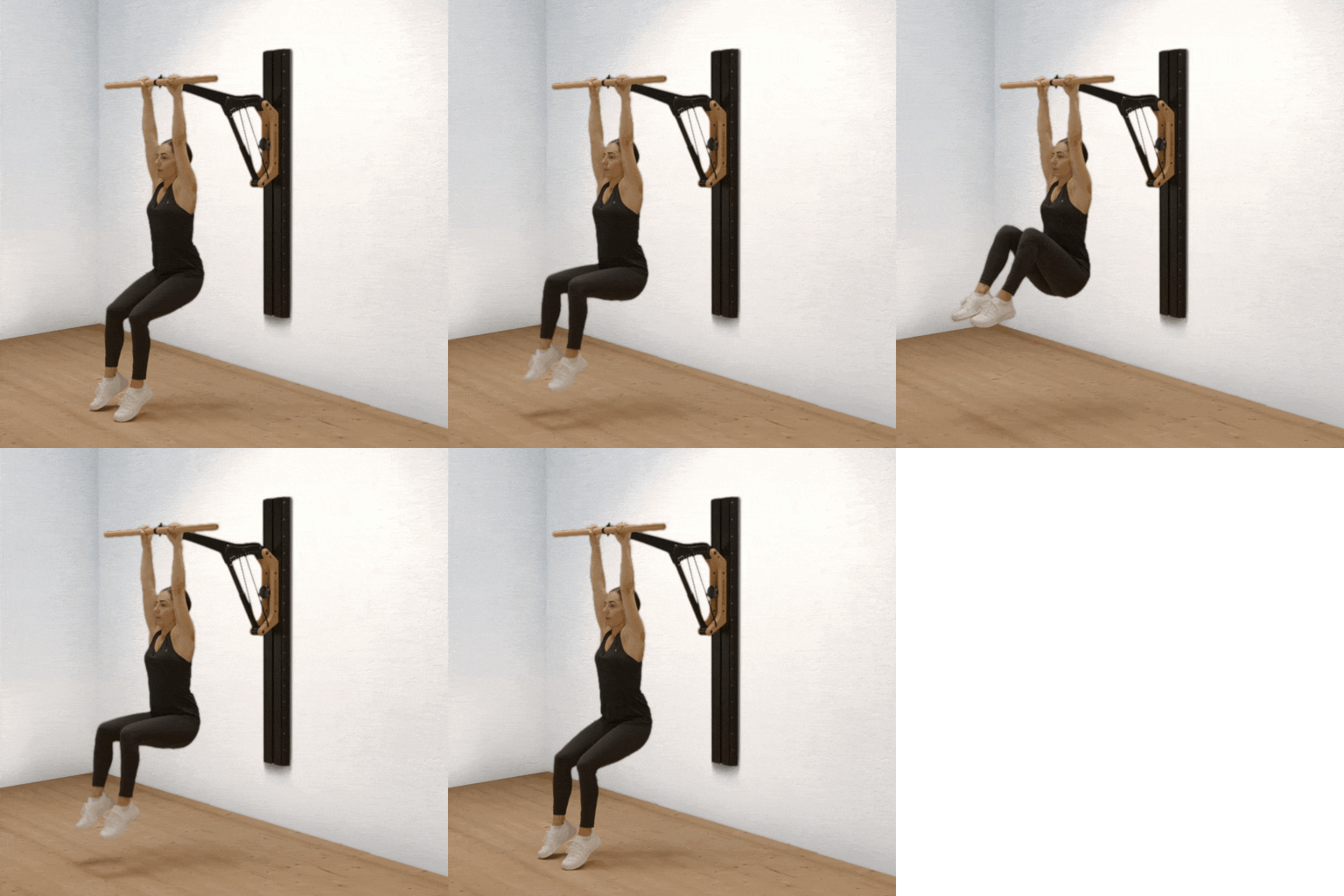
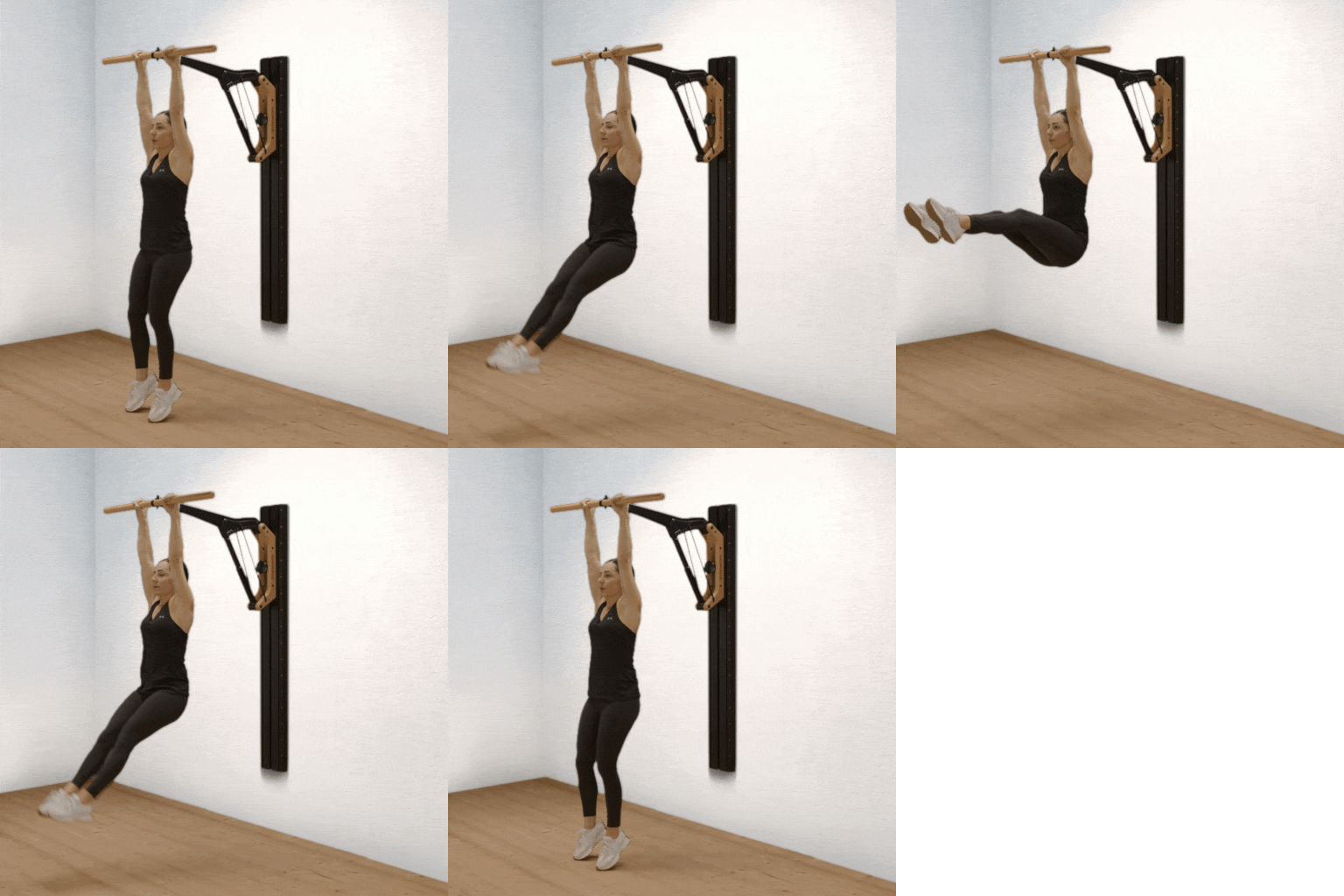
The hanging leg raise with bent legs is an effective core exercise that primarily targets the lower abs as well as the hip flexors. The bent leg position makes it easier to perform the movement initially without losing effectiveness—ideal for clean activation of the target muscles.
What effect does the exercise achieve?
Targeted abdominal activation: This exercise particularly engages the rectus abdominis, focusing on the lower abdominal muscles and a defined area of core training.
Strengthening the hip flexors: The combination of bent legs and the hanging position effectively trains the hip flexors, especially the rectus femoris.
Improved grip and shoulder stability: Maintaining the hanging position strengthens the grip and shoulders, including the deltoid muscles, due to the stability required in the upper body.
Holistic core activation: In addition to the abs and hips, the obliques, lower back muscles, and other core stabilizers are engaged, making the exercise particularly functional.
How does this exercise fit into the Big 5 concept?
The Big 5 include the fundamental exercises: squat, deadlift, bench press, pull-up or lat pulldown, and shoulder press.
The hanging leg raise complements this concept in several ways:
Core key exercise: It specifically targets the often undertrained lower abs, making it ideal for balancing muscular imbalances.
Transfer into functional stability: Improved core stability supports all Big 5 exercises by controlling and protecting spine and hip movement.
Progressive integration: Athletes can progress from the bent-leg version to straight-leg raises or even more complex variations (e.g., toes-to-bar) to progressively advance their training.
:format(webp))
)
)
)
)
)
:format(webp) "EISENHORN S Black Edition")
 "EISENHORN S Black Edition")