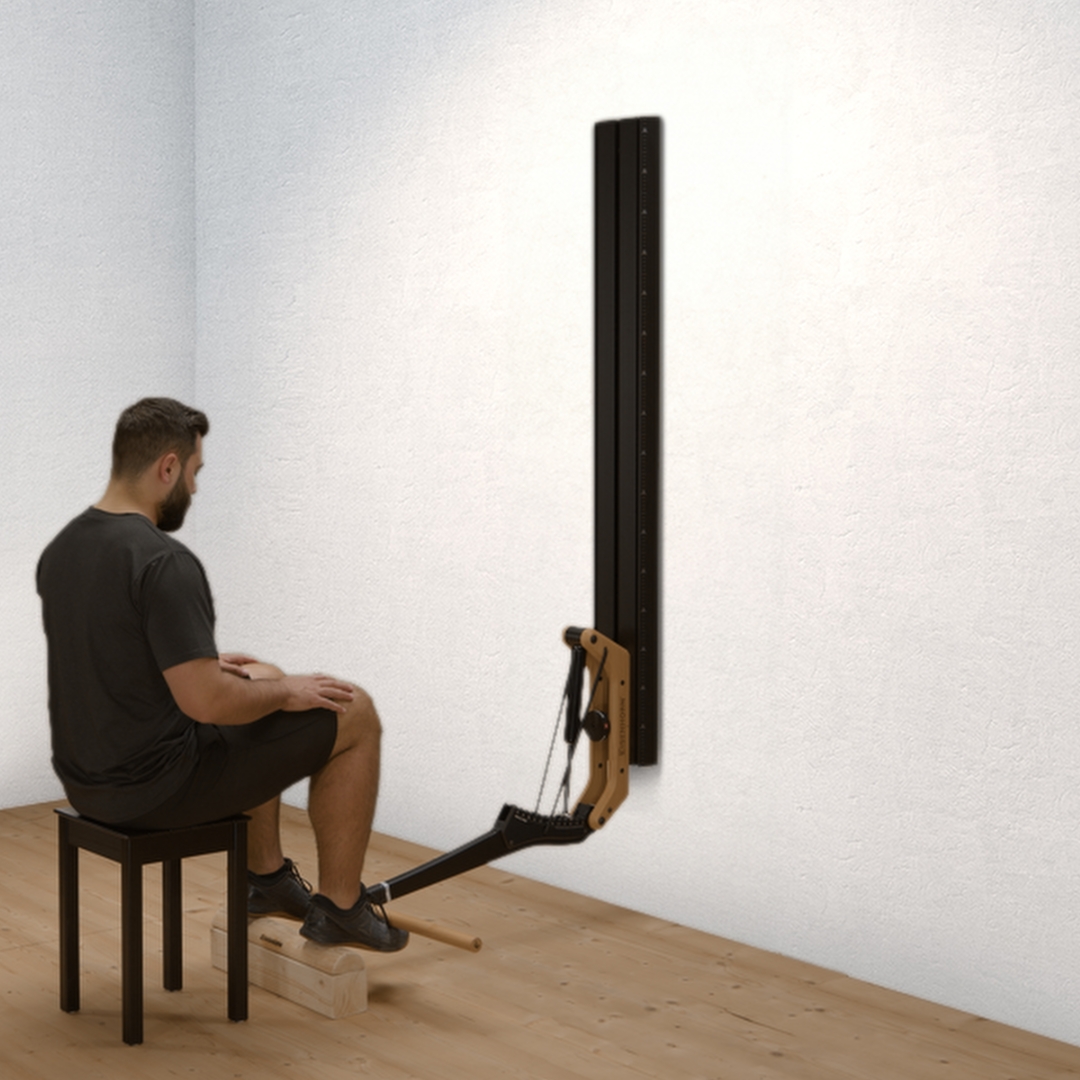
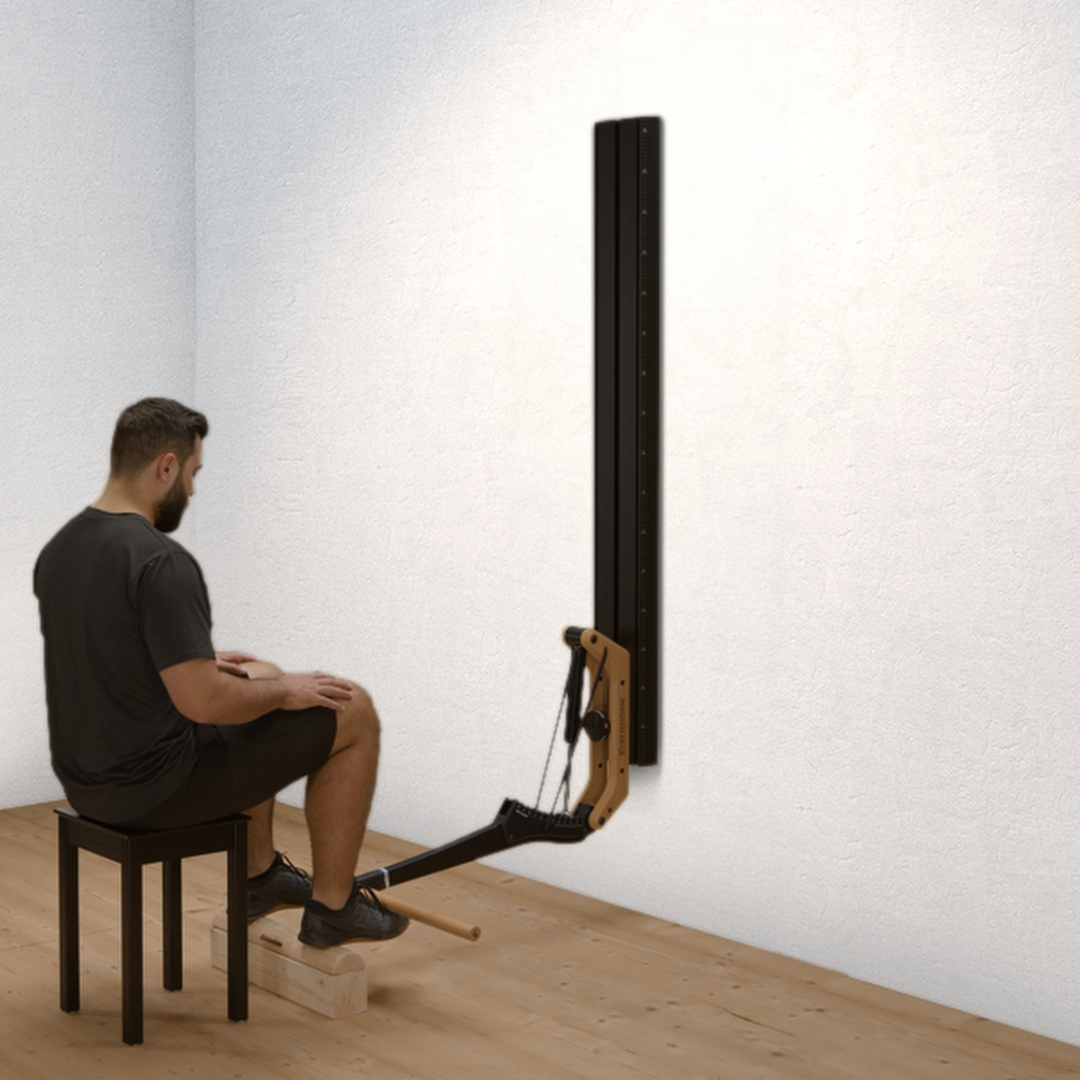
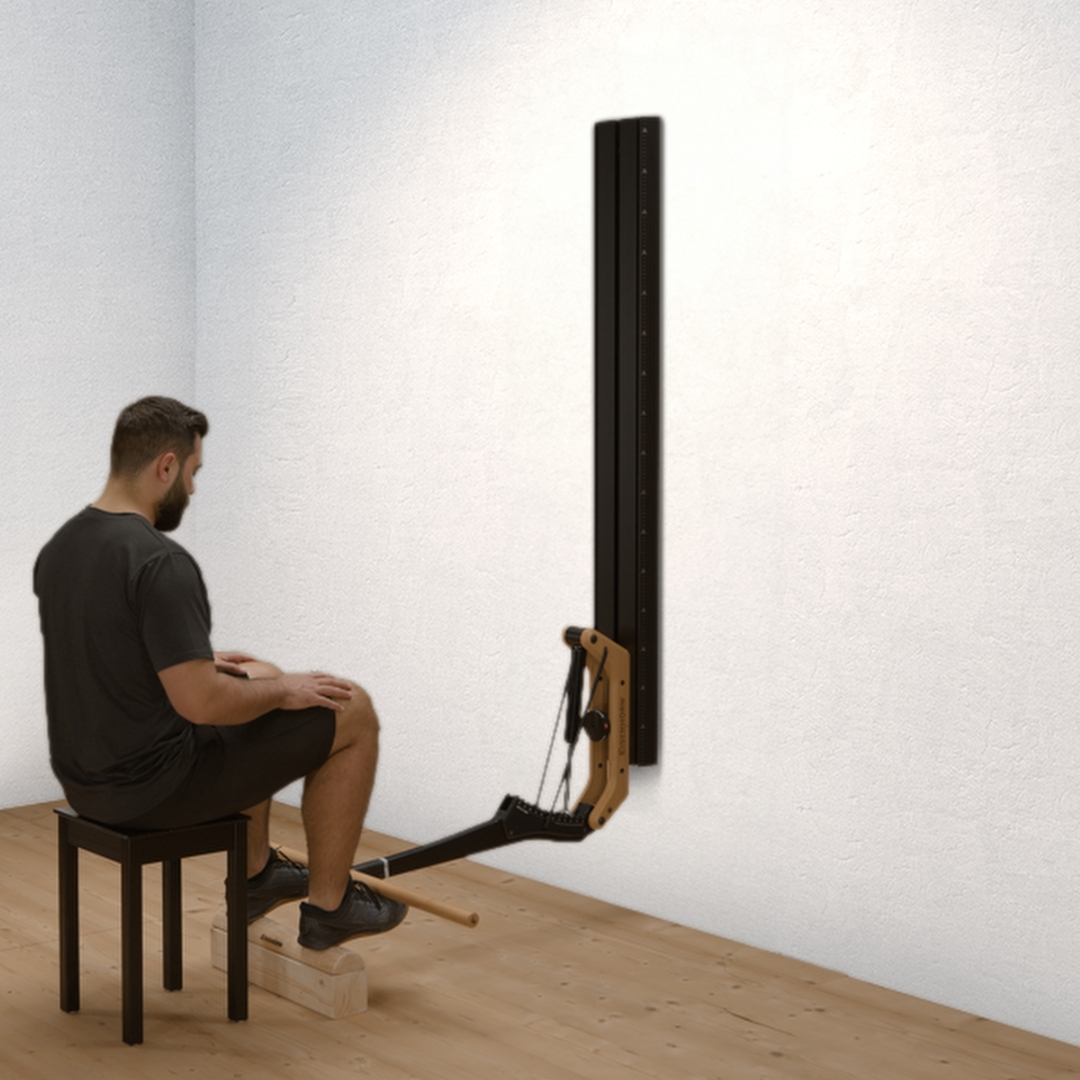
What makes this exercise particularly effective?
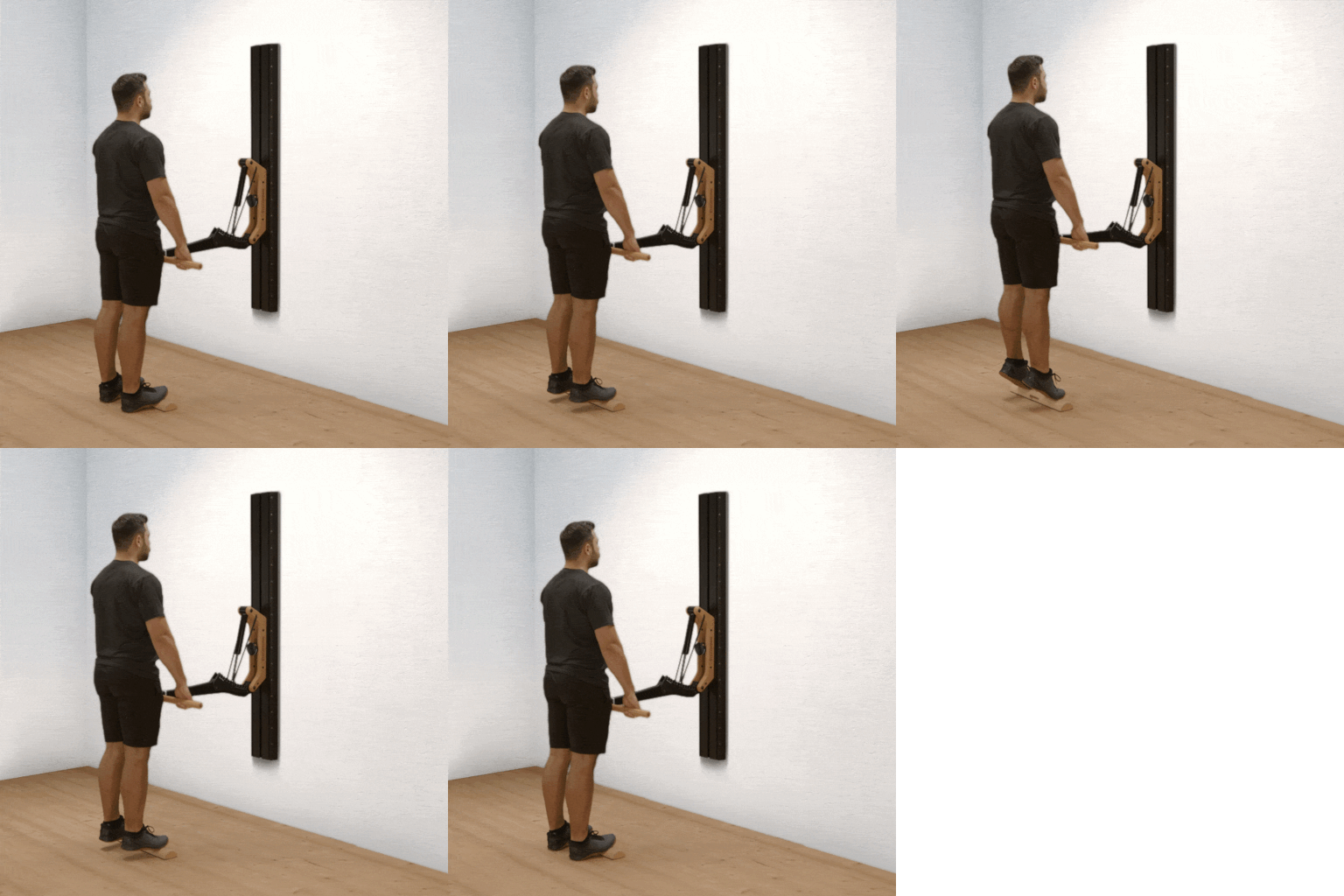
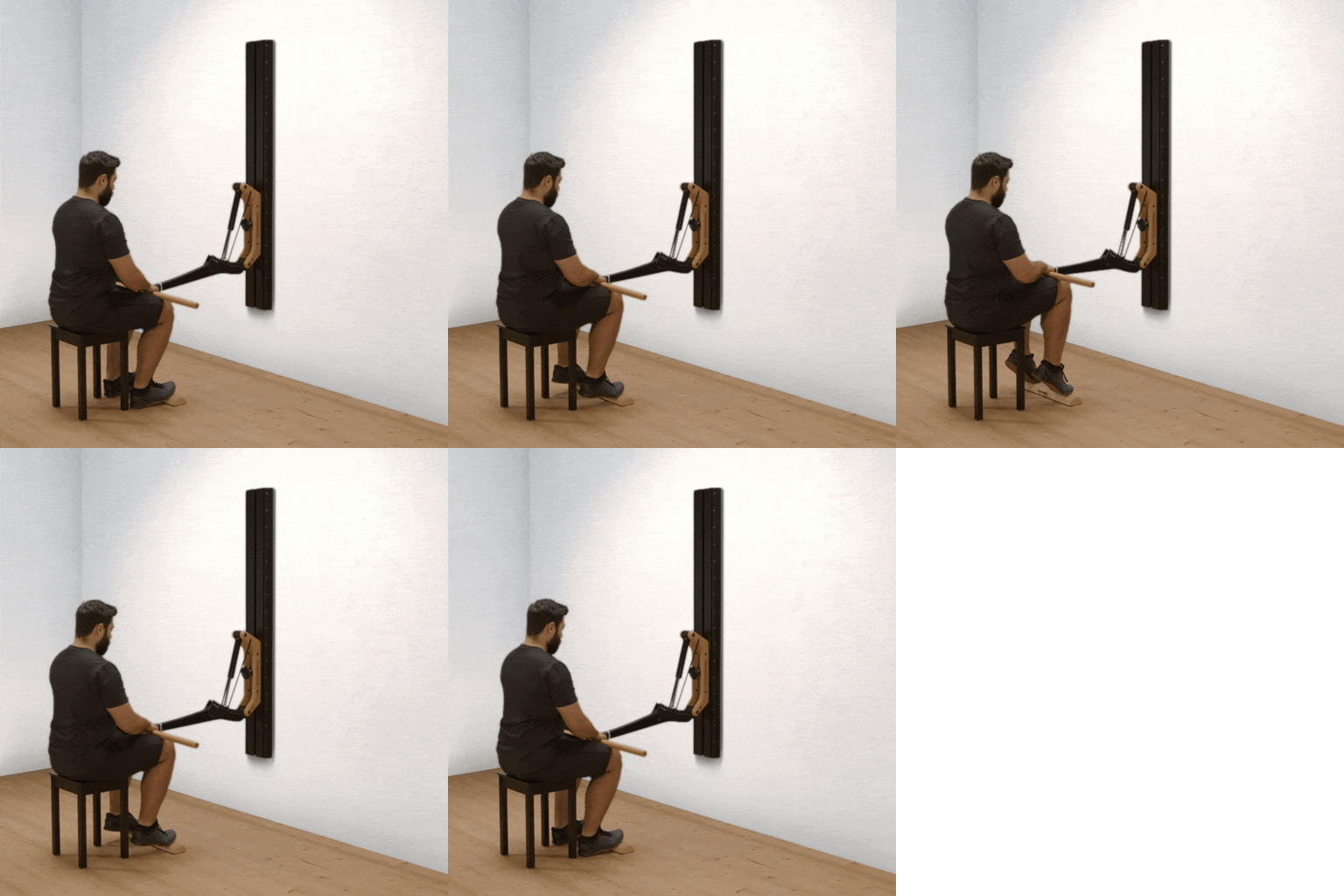
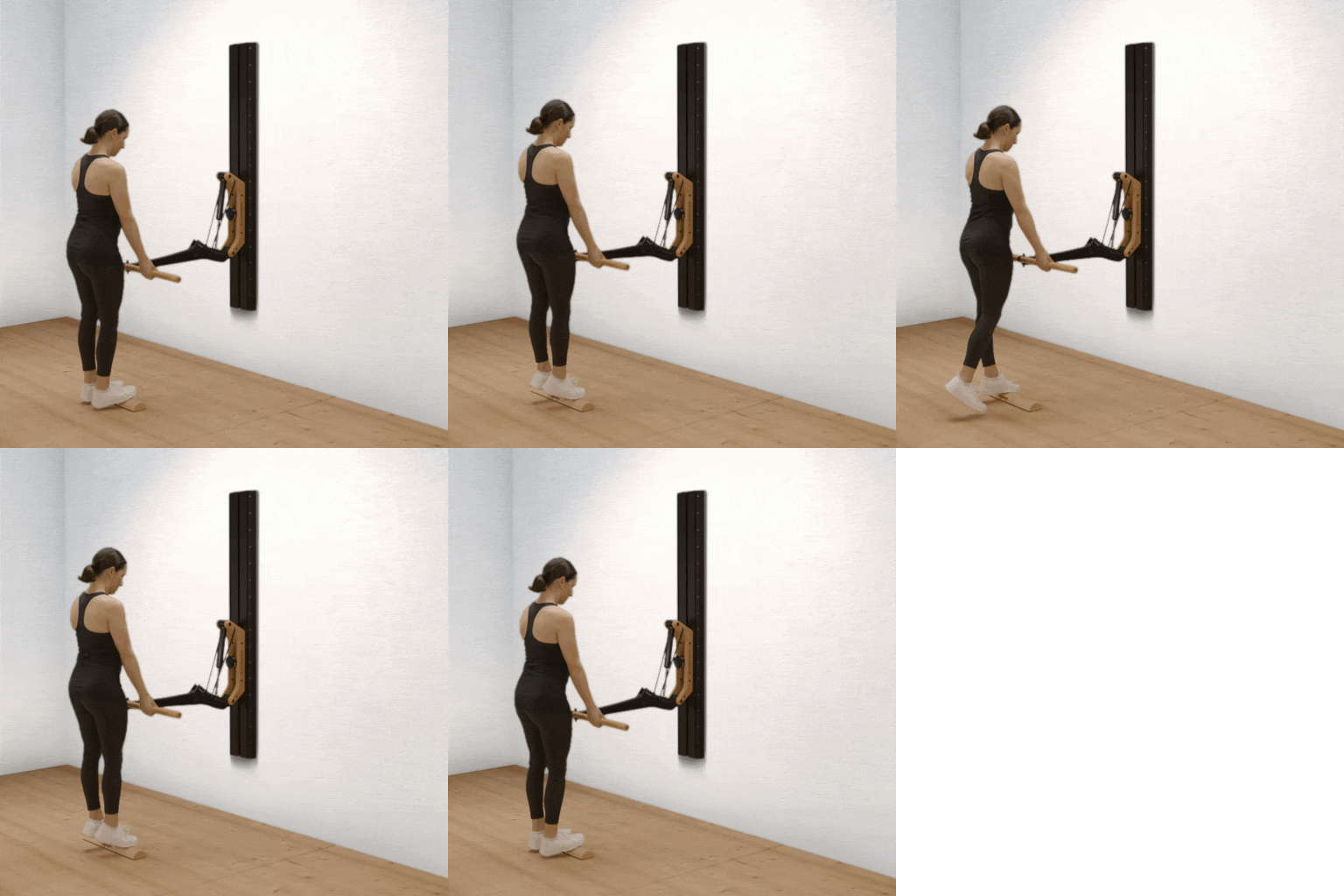
During seated shin raises – also known as seated toe raises – you specifically train the tibialis anterior, the muscle at the front of the shin. This muscle group plays a central role in lifting the foot (dorsiflexion). The exercise provides a simple yet targeted way to effectively strengthen this often-neglected muscle.
What effect does the exercise achieve?
Strengthening the tibialis anterior: Targeted development of this muscle promotes ankle stability and function.
Improved balance and joint performance: A strong shin muscle supports balance and foot performance, which is particularly beneficial for walking, running, and jumping.
Prevention of shin splints: Strengthening the dorsal lower leg muscles can help prevent shin splints and relieve associated pain.
Joint-friendly and easy to perform: This exercise is suitable for all fitness levels, as it is gentle on the joints and requires minimal coordination.
How does this exercise fit into the Big 5 concept?
The Big 5 include the fundamental exercises: squat, deadlift, bench press, pull-up or lat pulldown, and shoulder press. Even though seated shin raises are not directly part of the classic Big 5, they can meaningfully complement this training concept:
Improved foot and ankle control: A stable tibialis anterior provides a secure base of support and contributes to proper technique and balance in Big 5 movements.
Holistic leg stability: Including training for the front lower leg helps create a more balanced muscle structure throughout the leg.
Functional addition for everyday life and sports: Strong lower-leg muscles not only improve performance but also protect against injuries during daily activities and athletic movements.
:format(webp))
)
)
)
)
)
:format(webp) "EISENHORN S Black Edition")
 "EISENHORN S Black Edition")