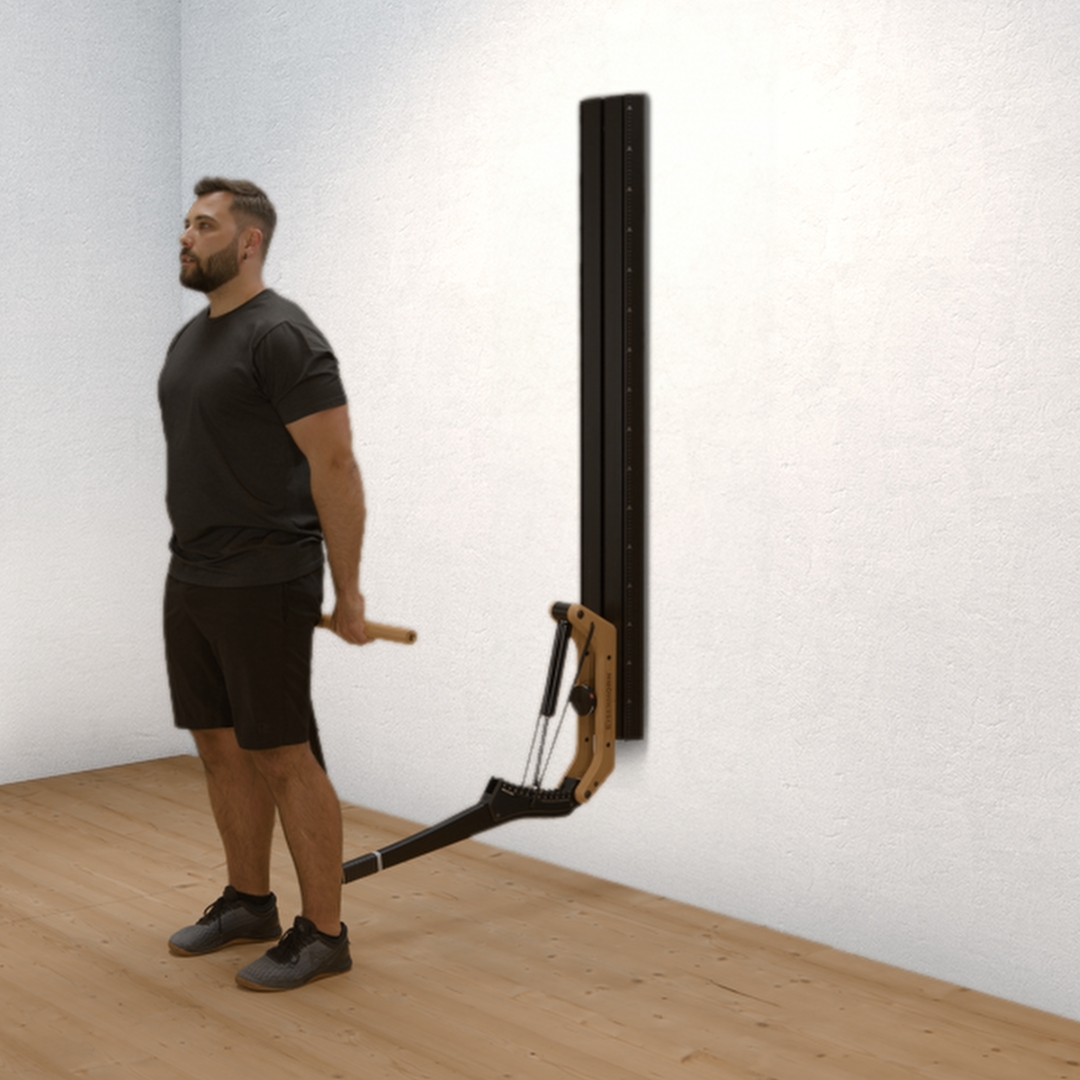
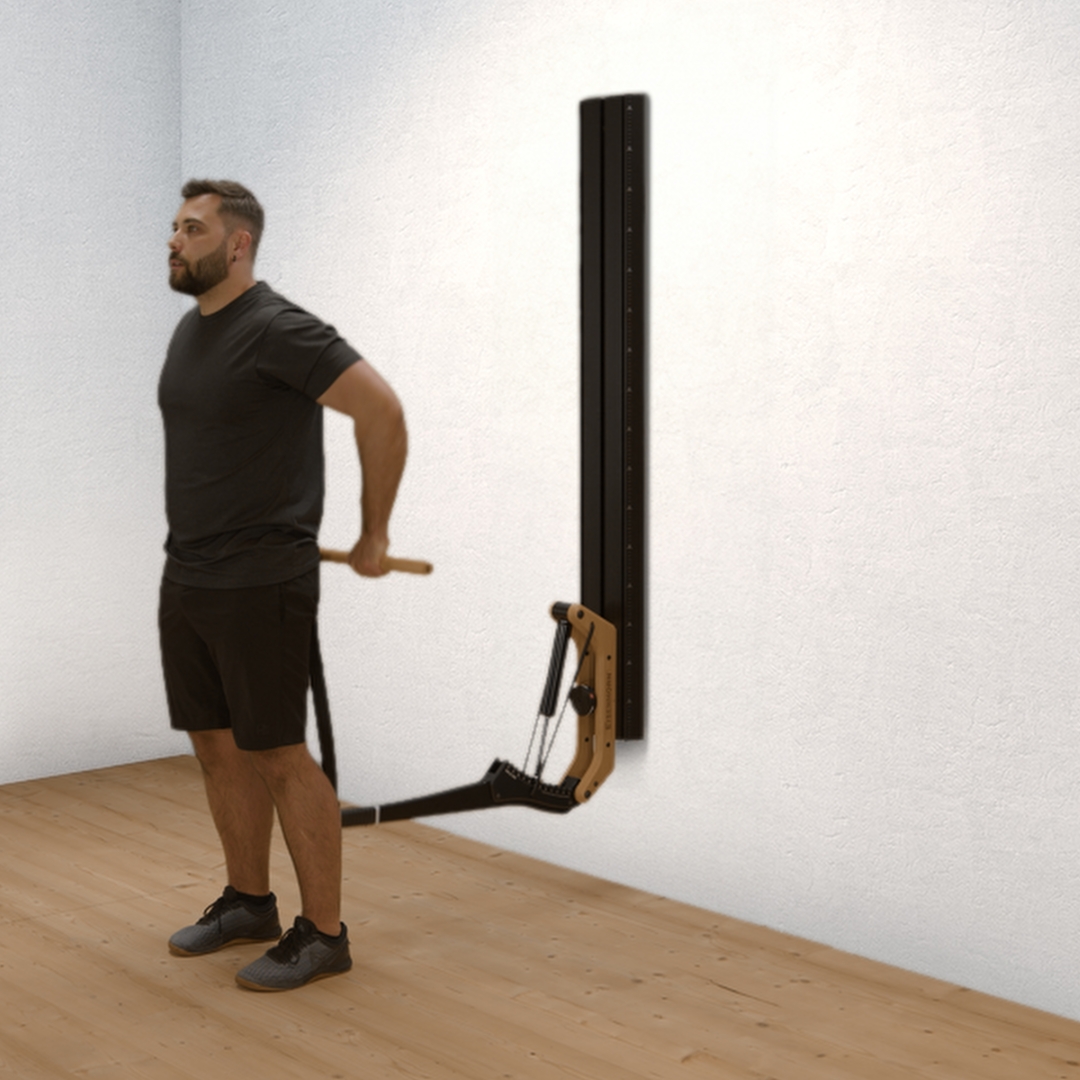
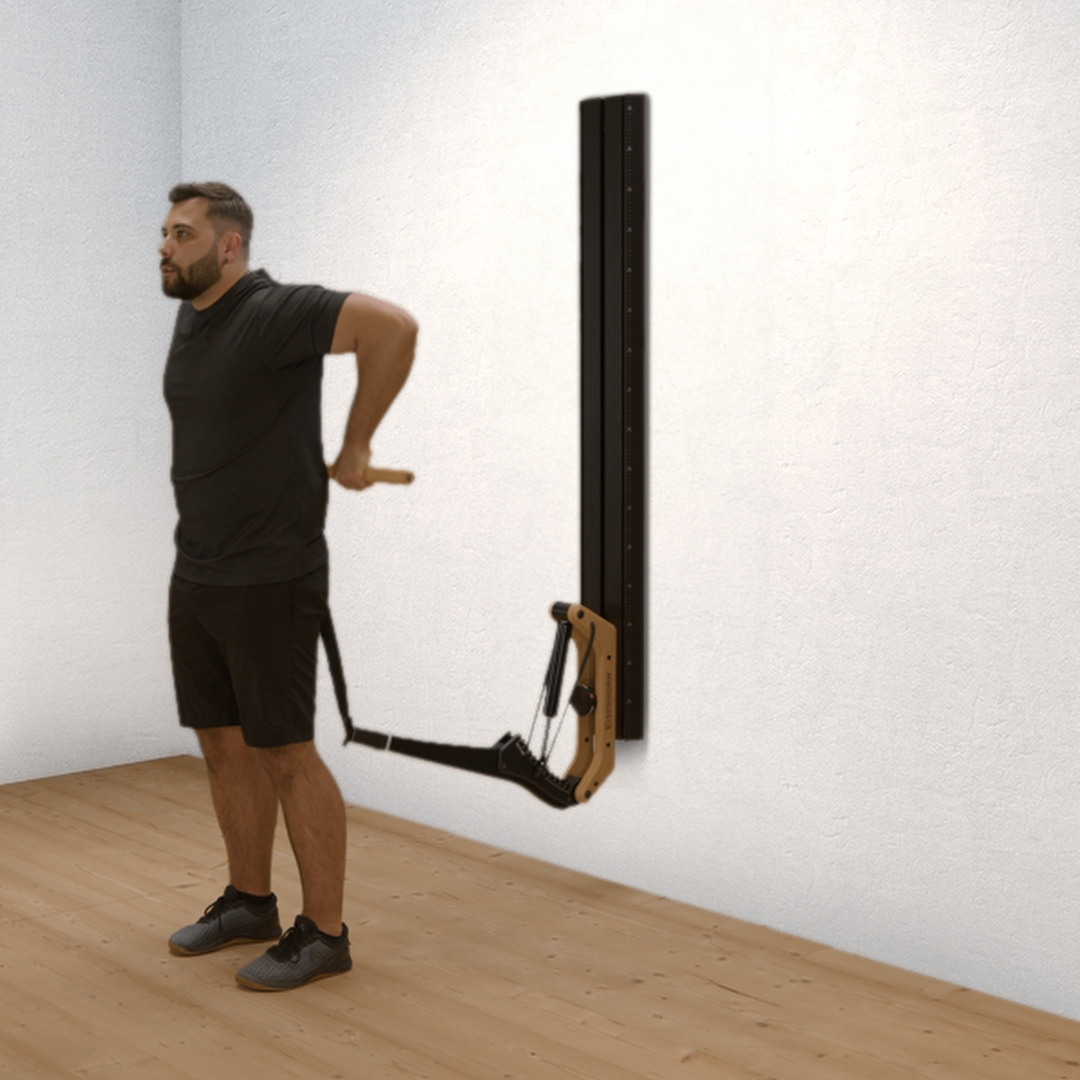
What makes this exercise particularly effective?
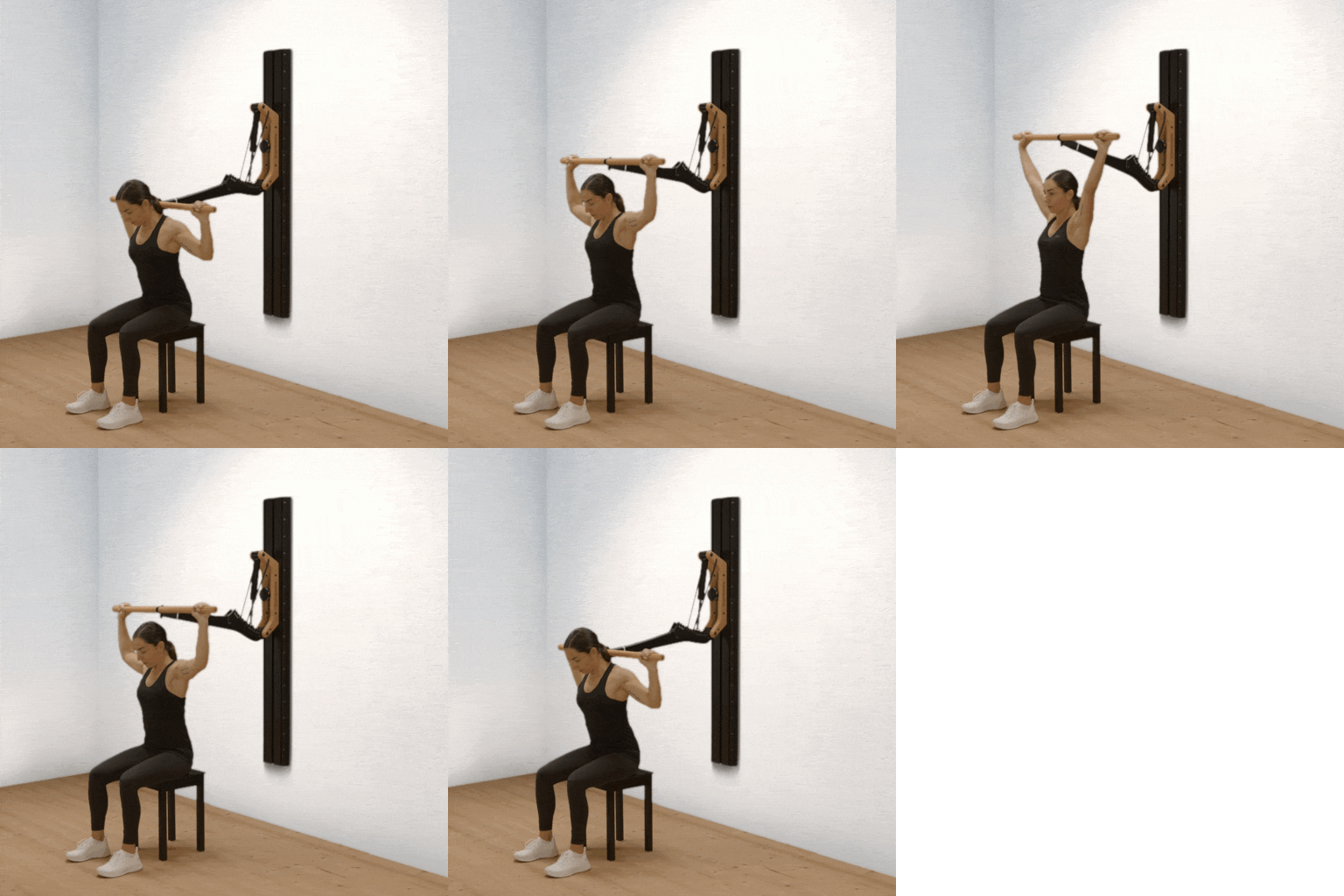
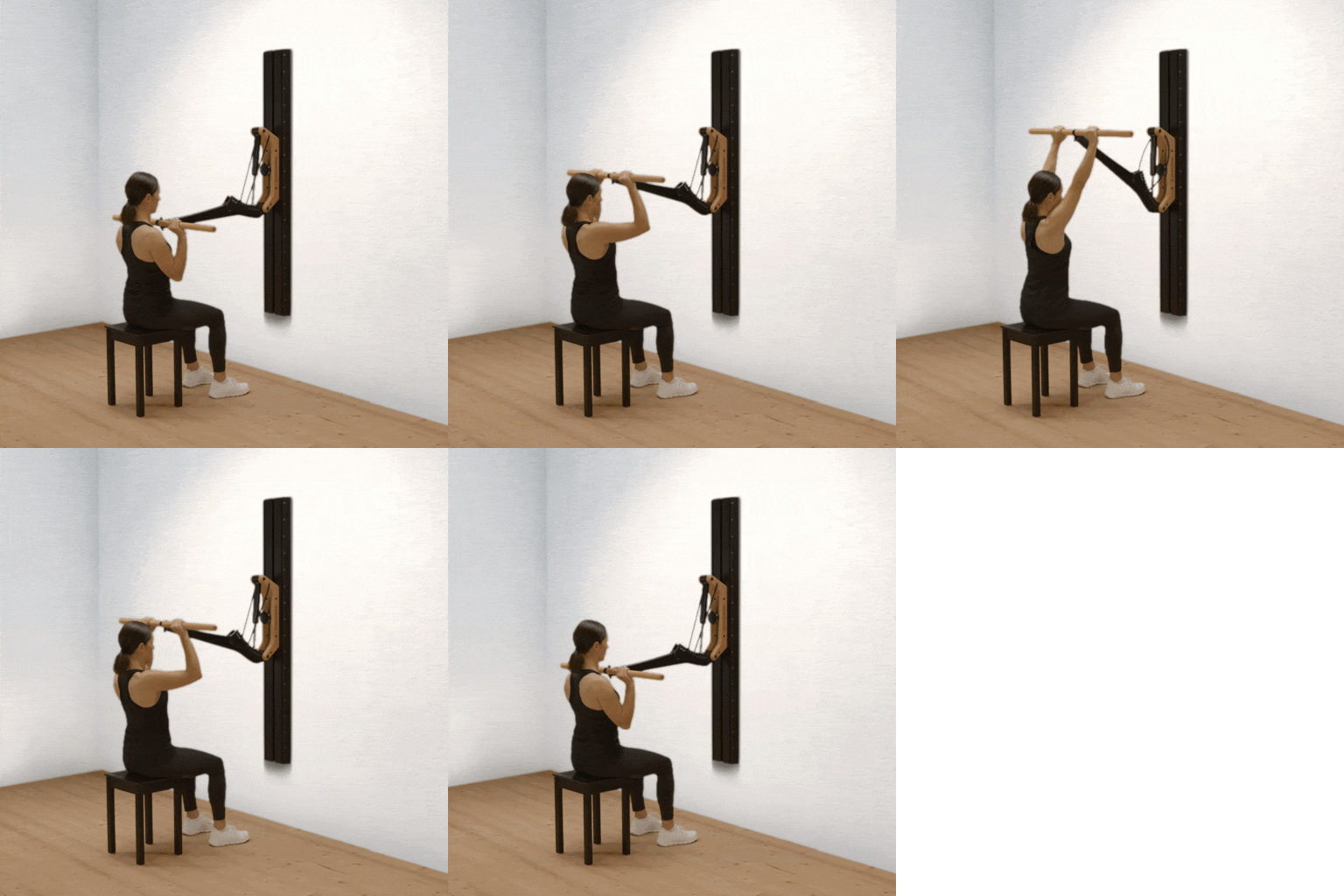
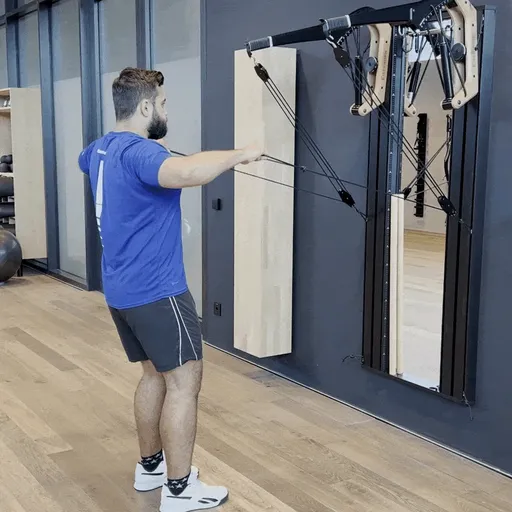
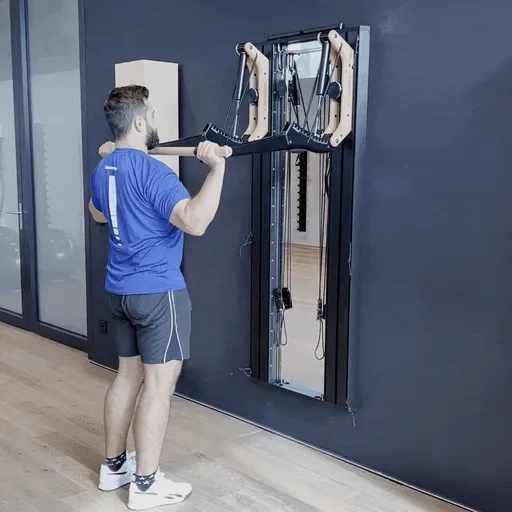
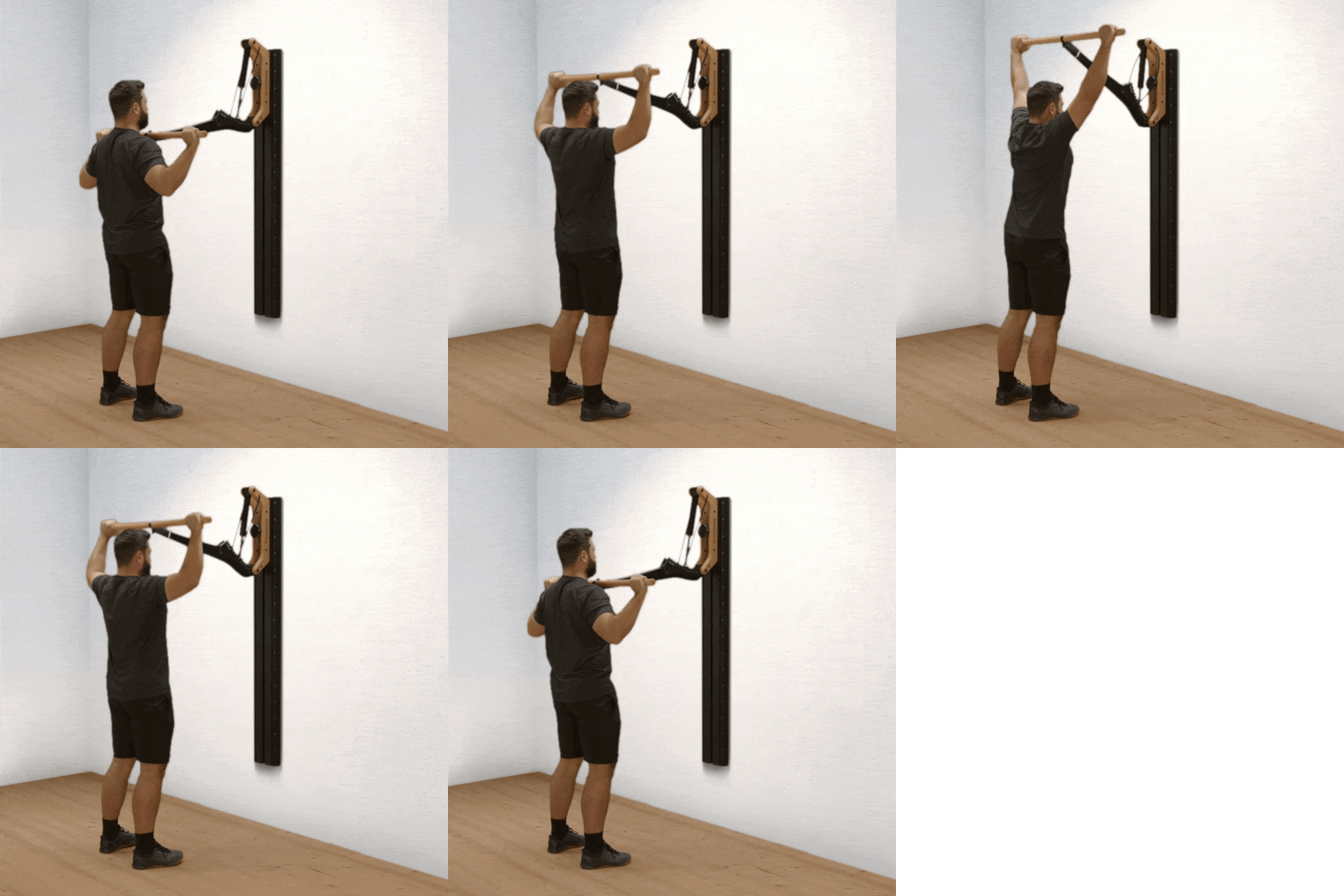
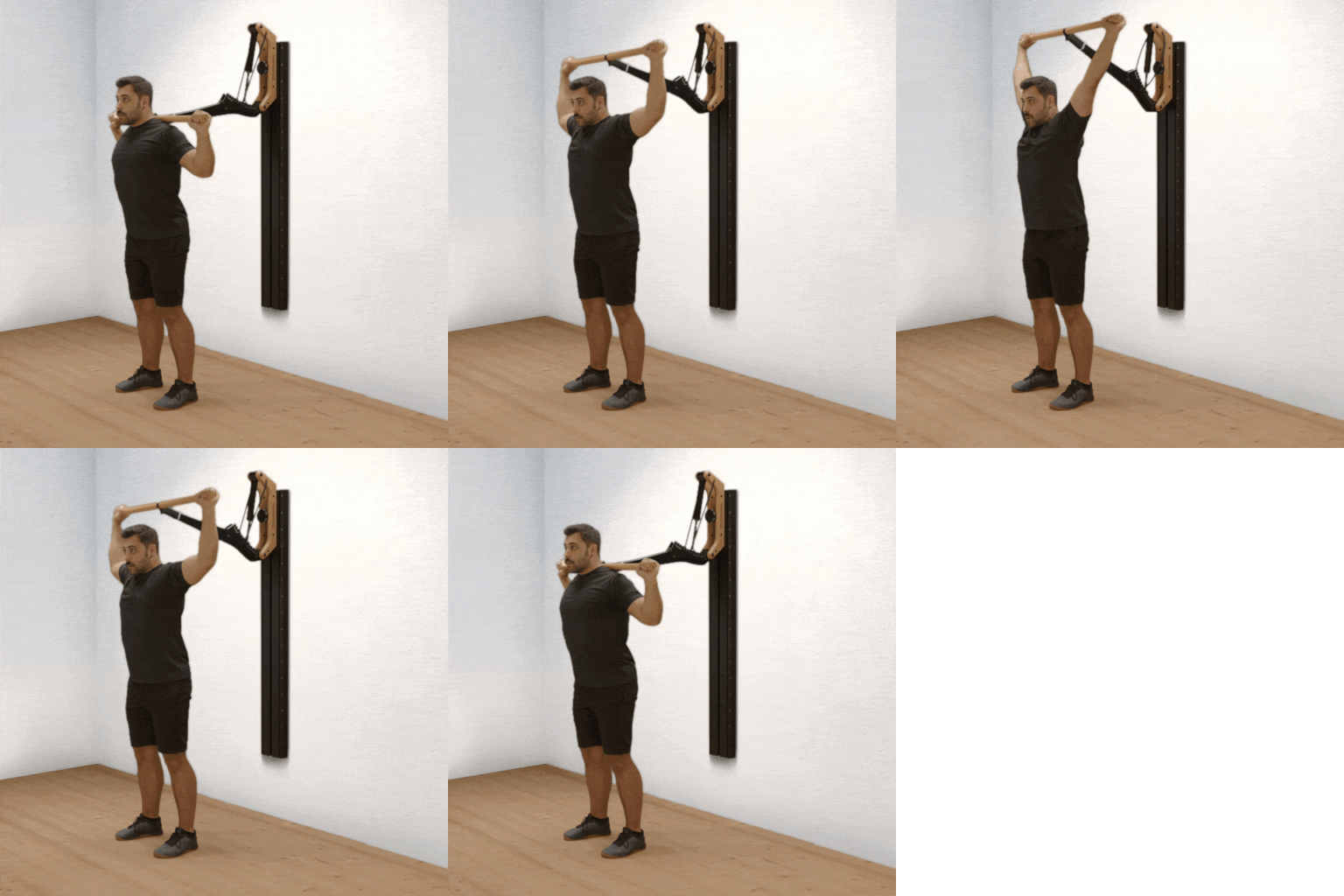
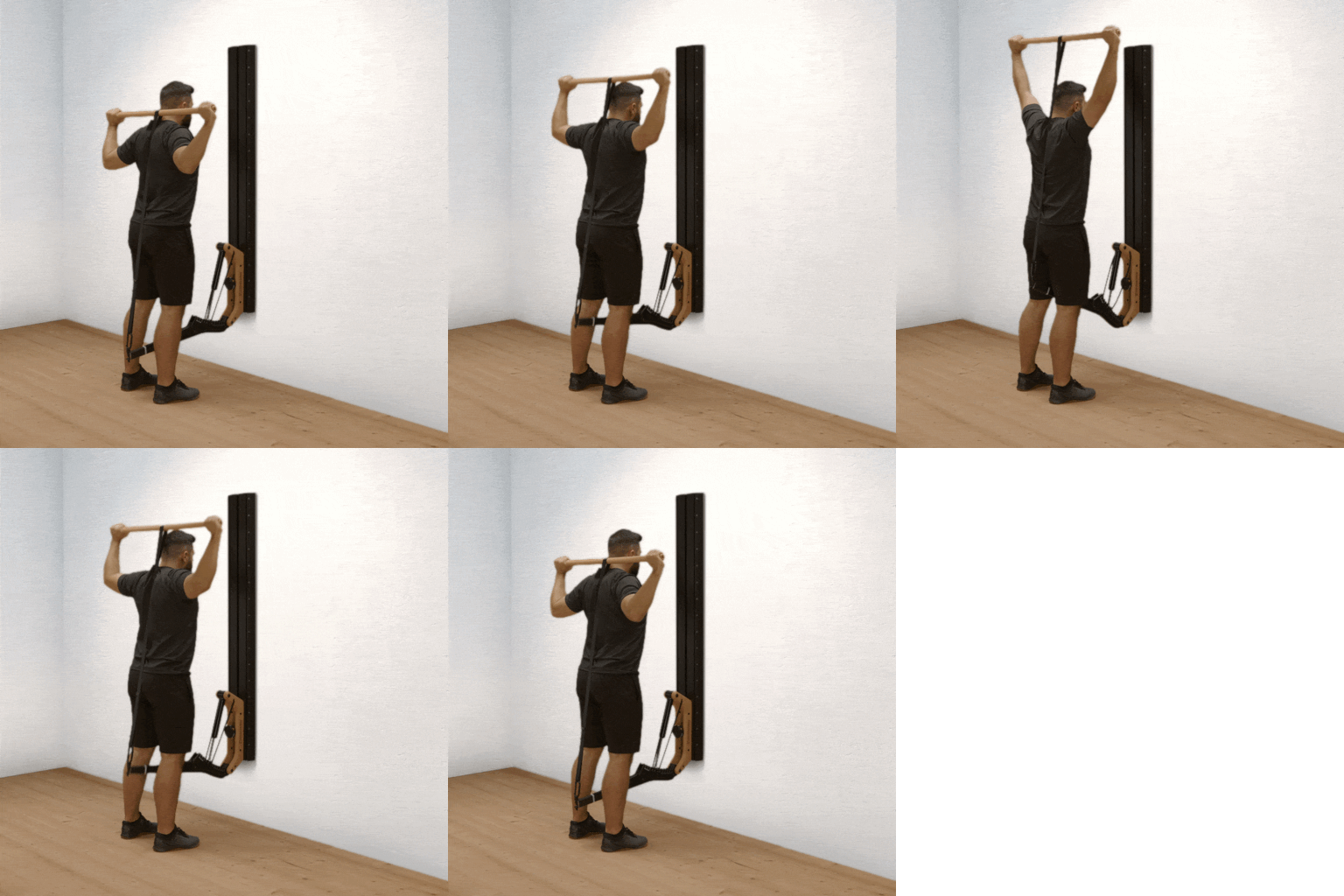
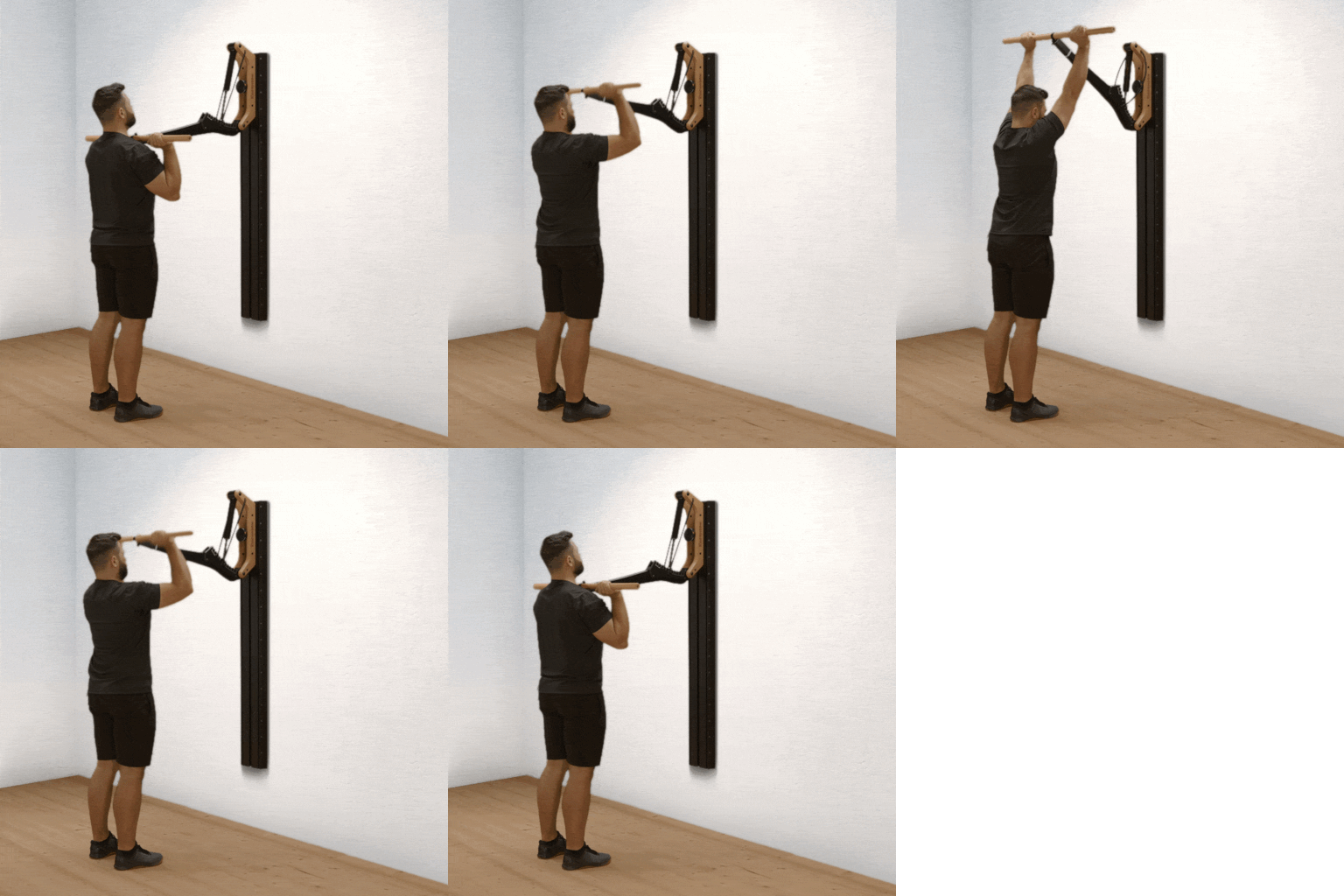
"Rear shoulder shrugs" (occasionally referred to as reverse shrugs) primarily target the muscles of the rear shoulder area and upper back—especially the posterior deltoid and upper trapezius. Since the bar is guided behind the body, the movement is executed in a way that engages the posterior shoulder muscles more effectively. This exercise promotes good posture, stability in the shoulder girdle, and reduces shortening tensile forces caused by frequent forward movements (e.g., sitting at a desk).
What effect does the exercise achieve?
Targeted strengthening of the rear shoulder and upper back muscles: By moving the load backward, the posterior deltoid, rhomboids, and upper trapezius are more intensely activated.
Improved shoulder stability and posture: Many everyday postures (hunched forward, shoulders rounded) weaken the rear shoulder and upper back. This exercise strengthens the opposing muscles and promotes better overall posture.
Reduction of tension and prevention of shoulder problems: Weak rear shoulder muscles can lead to imbalances that cause discomfort in the neck, shoulders, and upper back. Regular training helps prevent these issues.
Joint-friendly execution options: The exercise can be easily modified with moderate resistance, controlled tempo, and focus on proper technique, minimizing the risk of overload.
How does this exercise fit into the Big 5 concept?
The Big 5 include the fundamental exercises: squat, deadlift, bench press, pull-up or lat pulldown, and shoulder press. Although rear deltoid raises are not part of the classic Big 5, this exercise effectively complements your training:
Complements pulling movements and supports pull-ups and rows: Strong rear shoulder muscles improve stability and efficiency during pulling exercises such as pull-ups or rowing movements.
Helps balance shoulder muscles: The basic exercises primarily target the front and lateral shoulder muscles (e.g., bench press, shoulder press). Rear shoulder raises provide a counterbalance, promoting muscular balance and injury prevention.
Transfer to everyday life and sports: Improved posture, reduced neck strain, and stronger shoulder support positively impact daily activities and athletic performance.
:format(webp))
)
)
)
)
)
:format(webp) "EISENHORN S Black Edition")
 "EISENHORN S Black Edition")