What makes this exercise particularly effective?
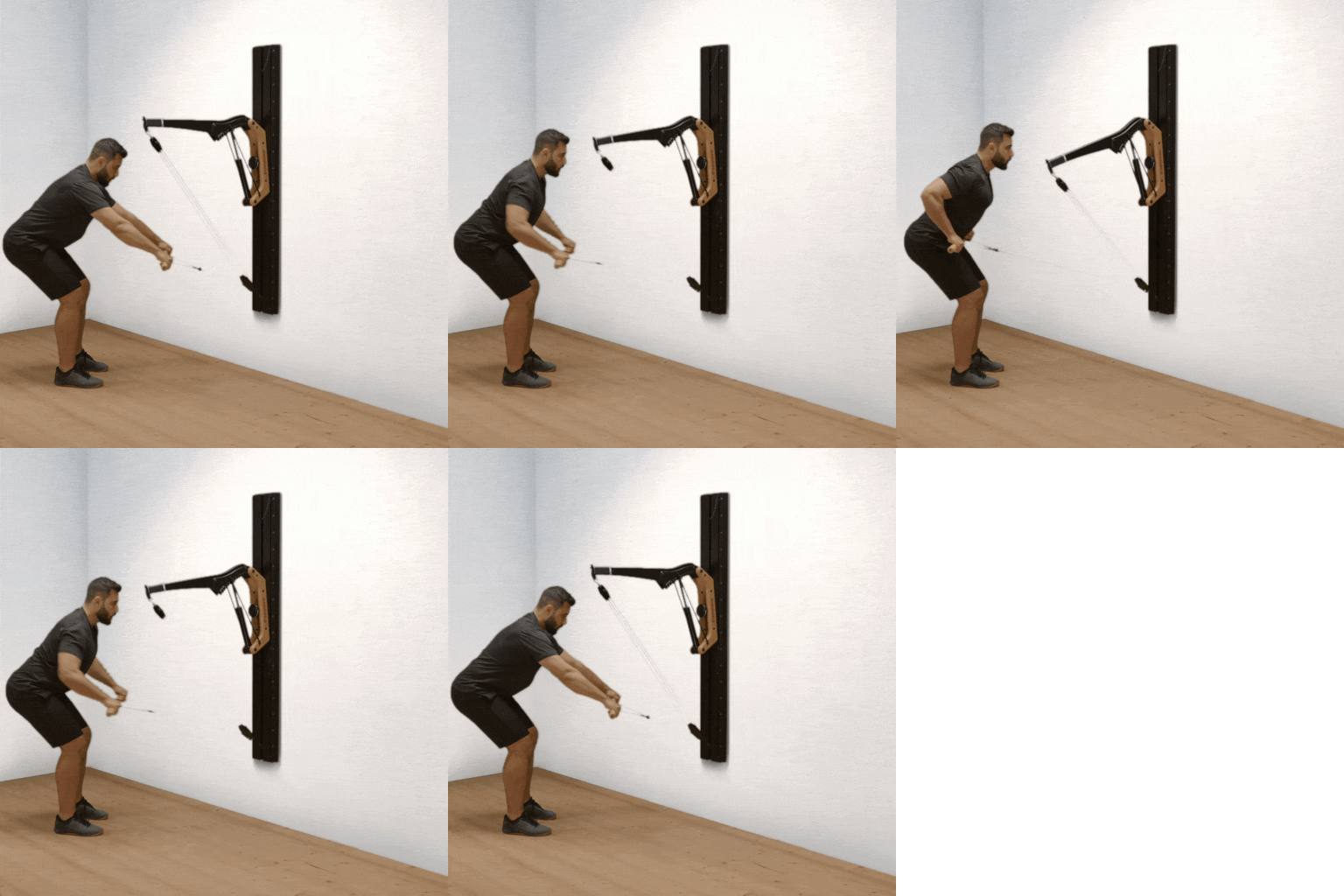
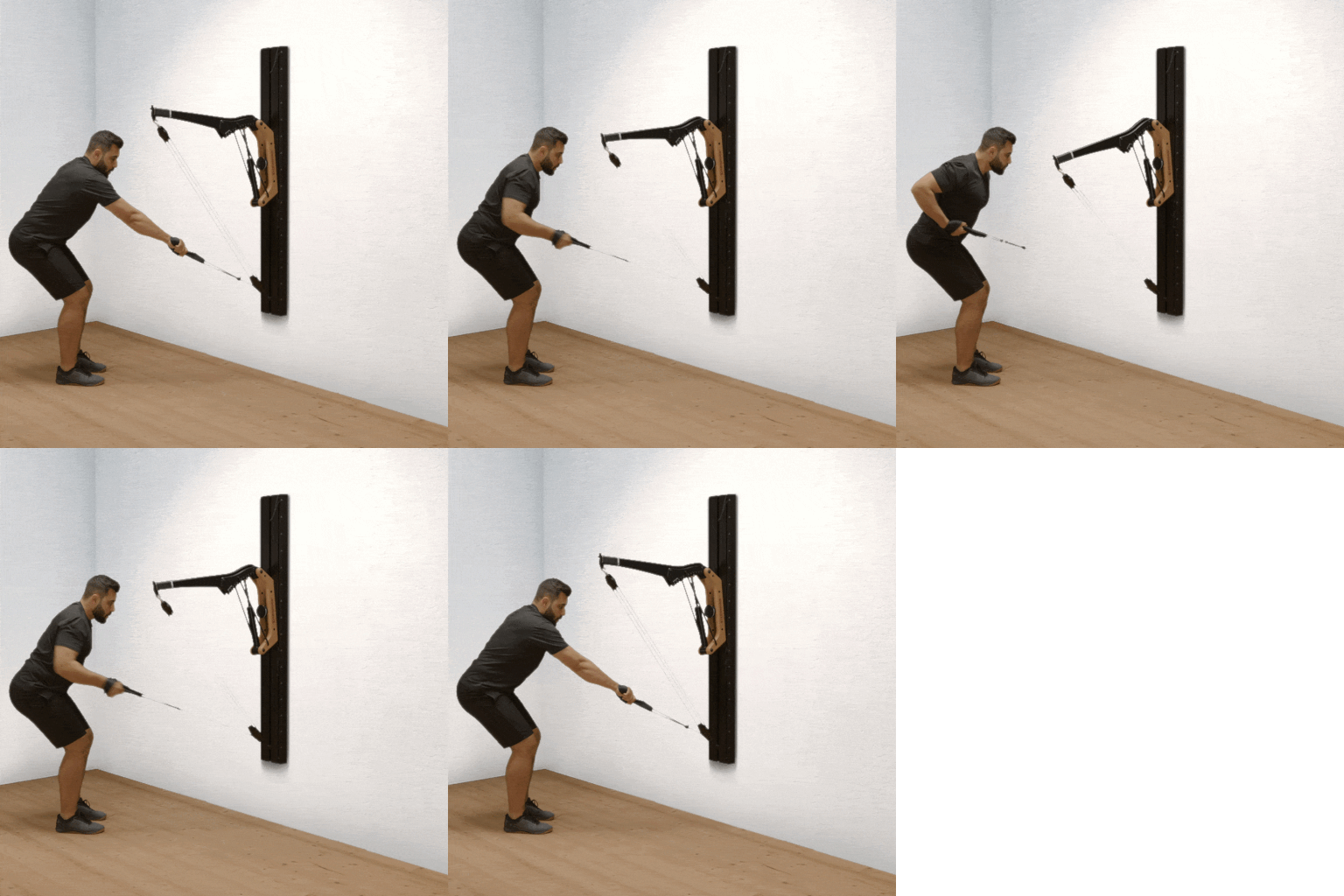
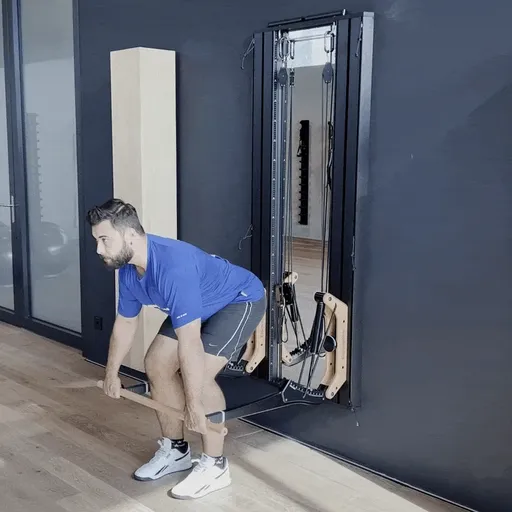
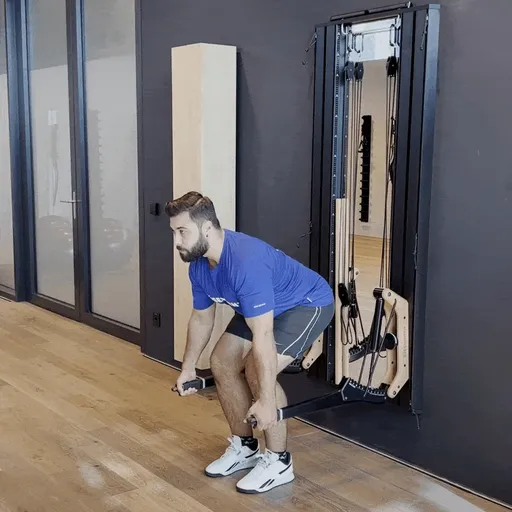
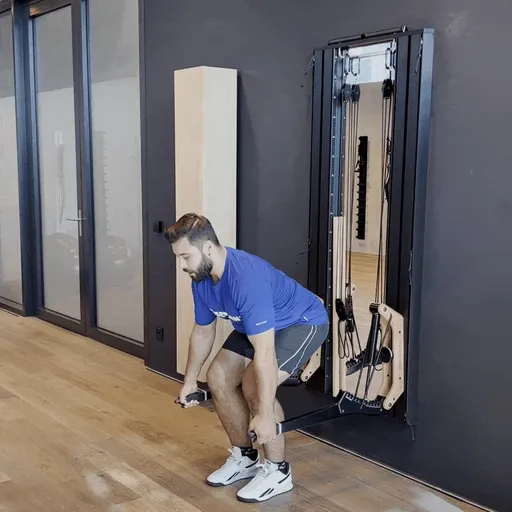
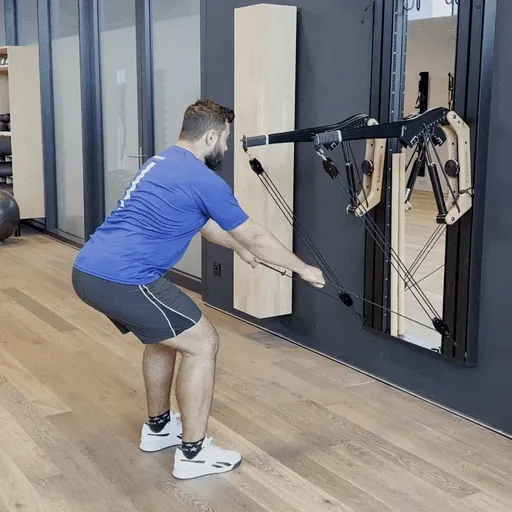
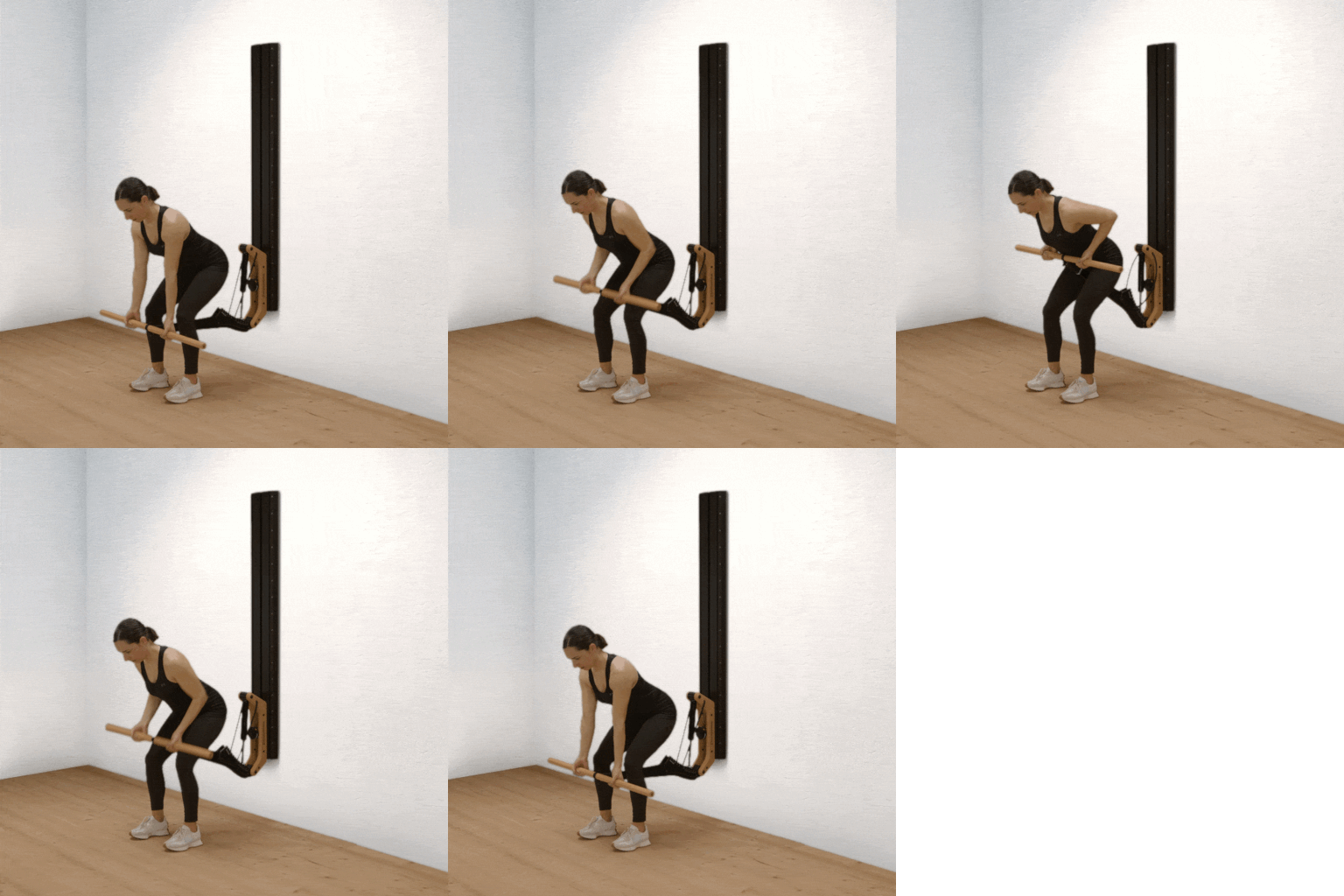
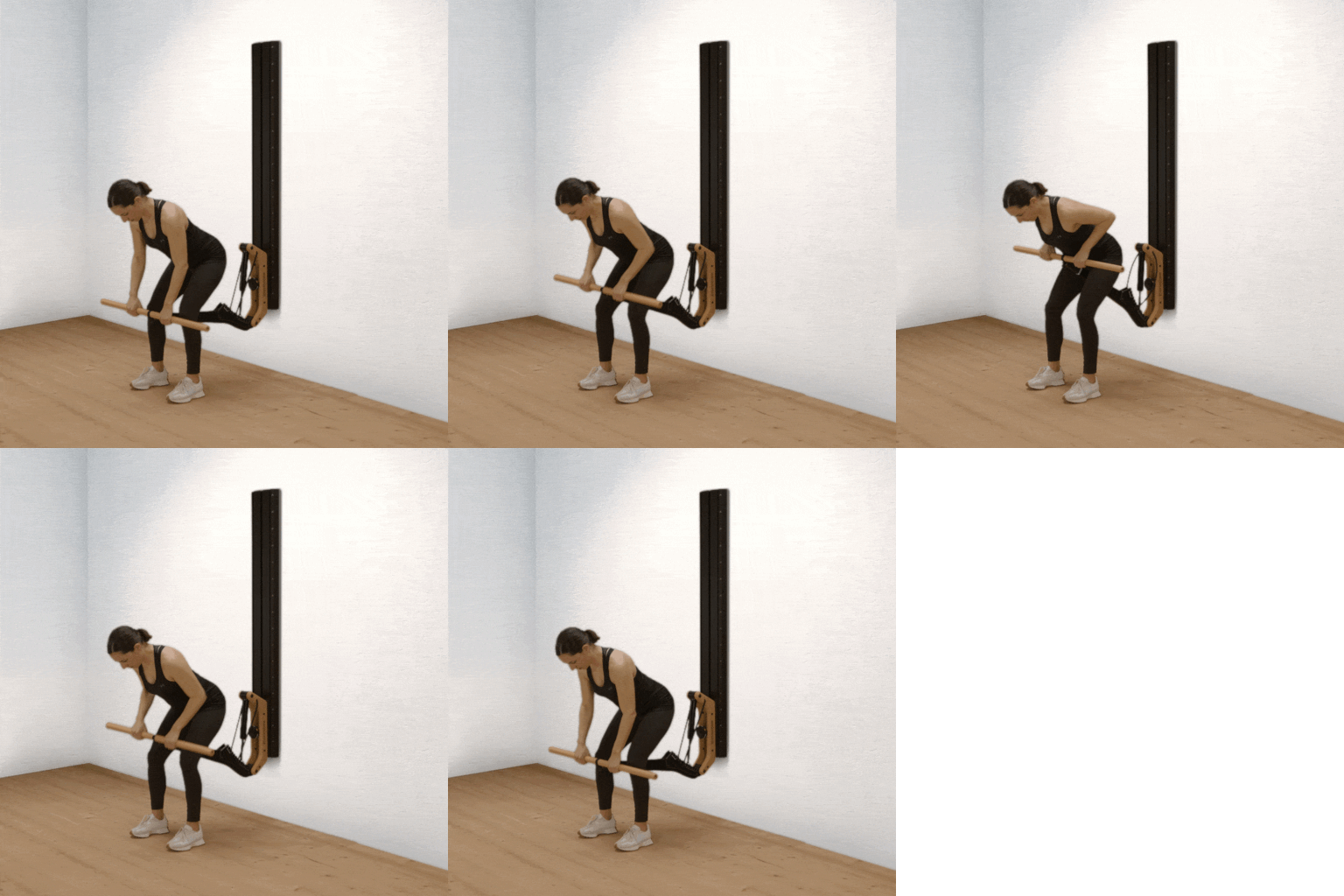
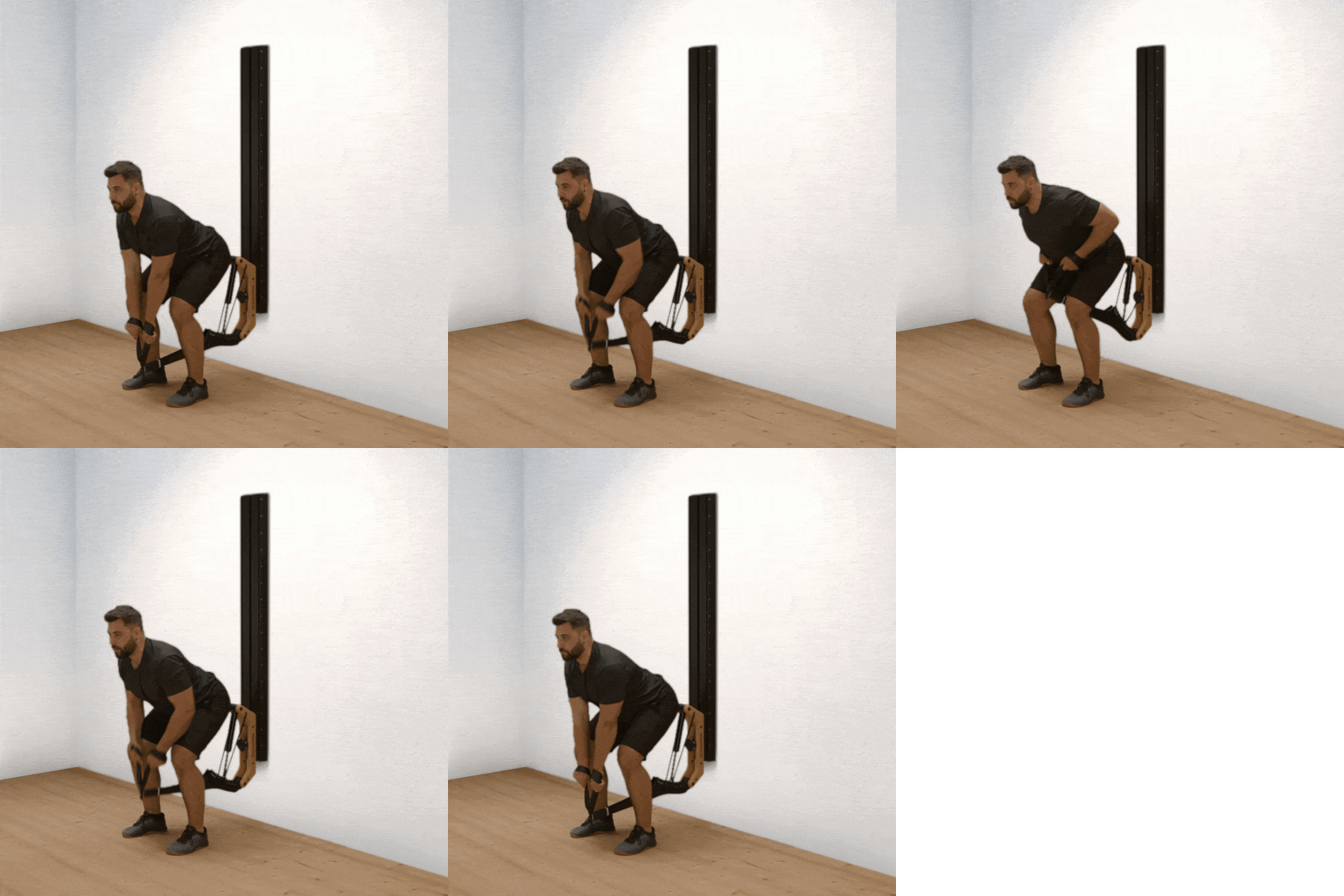
This variation of the standing row exercise uses an underhand grip and a cable pulley, which offers several advantages:
The underhand grip brings the elbows closer to the body, which engages the latissimus dorsi and the lower parts of the back more than a wide grip.
Performing the exercise standing increases torso (core) stability and challenges the legs, as no seat support is available.
The cable provides consistent resistance throughout the entire range of motion and reduces inertia, improving control and muscle tension.
What effect does the exercise achieve?
Strengthening the latissimus and back muscles: The underhand grip allows for more effective engagement of the latissimus dorsi.
Supporting the biceps: Underhand pulling movements naturally involve the biceps as a secondary muscle.
Improved posture: A stronger back stabilizes the spine and helps prevent poor posture, such as a rounded back.
Stronger core & stability: Standing rows engage the entire body to maintain stability, training the core muscles (abdominals and back) together.
How does this exercise fit into the Big 5 concept?
The Big 5 include the fundamental exercises: squat, deadlift, bench press, pull-up or lat pulldown, and shoulder press. The standing row with underhand grip on a cable pulley is not a classical component of the Big 5, but it can complement the Big 5 training concept in a valuable way:
It supports pulling movements (e.g., pull-ups, rowing exercises) by strengthening the back, which is central in many Big 5 movements.
A strong back also helps with pushing exercises, as stable shoulders and a healthy posture are prerequisites for handling loads effectively and safely.
Variation through grip style (underhand), position (standing), and resistance allows for progression, overcoming training plateau, and introducing new stimuli – essential for long-term progress.
:format(webp))
)
)
)
)
)
:format(webp) "EISENHORN S Black Edition")
 "EISENHORN S Black Edition")