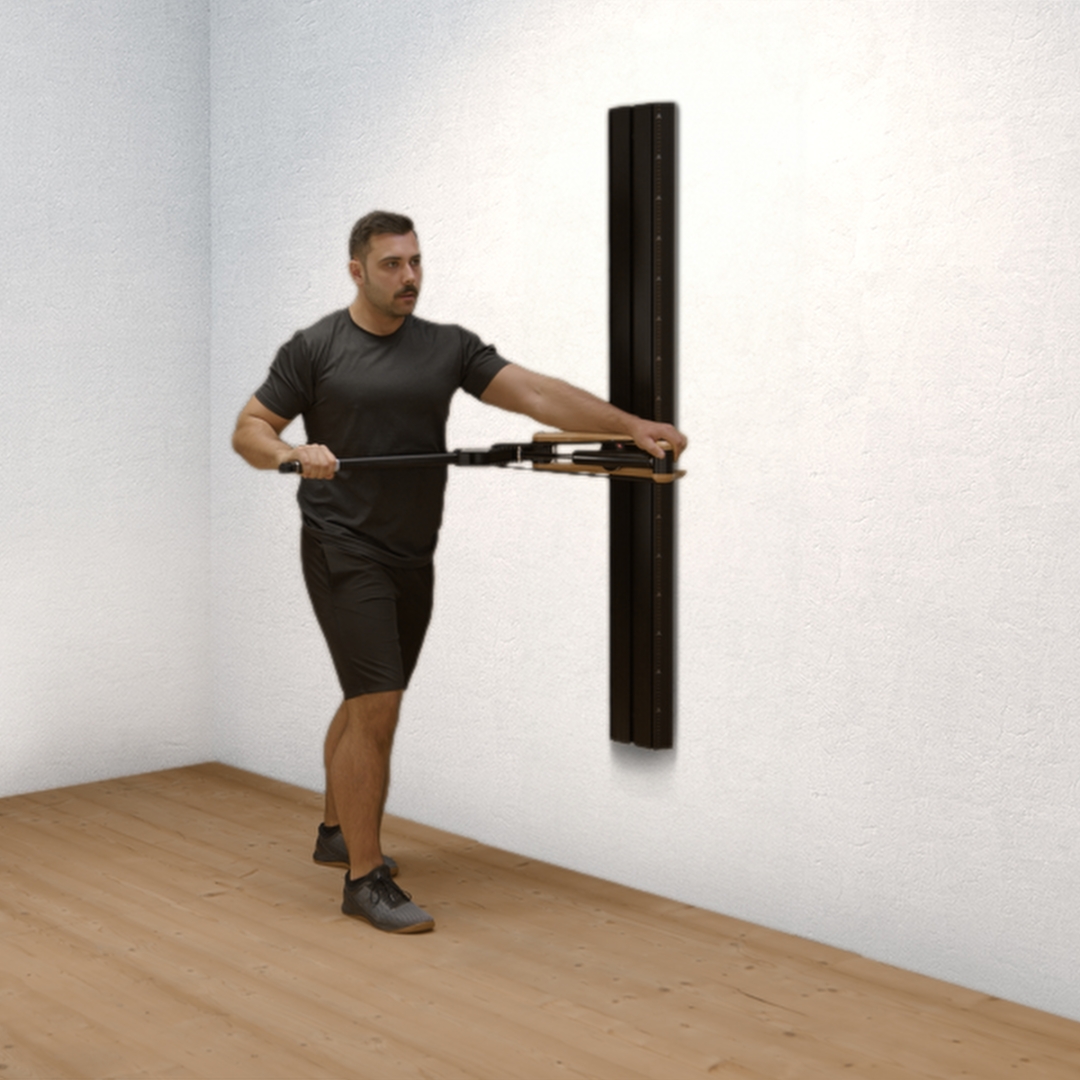
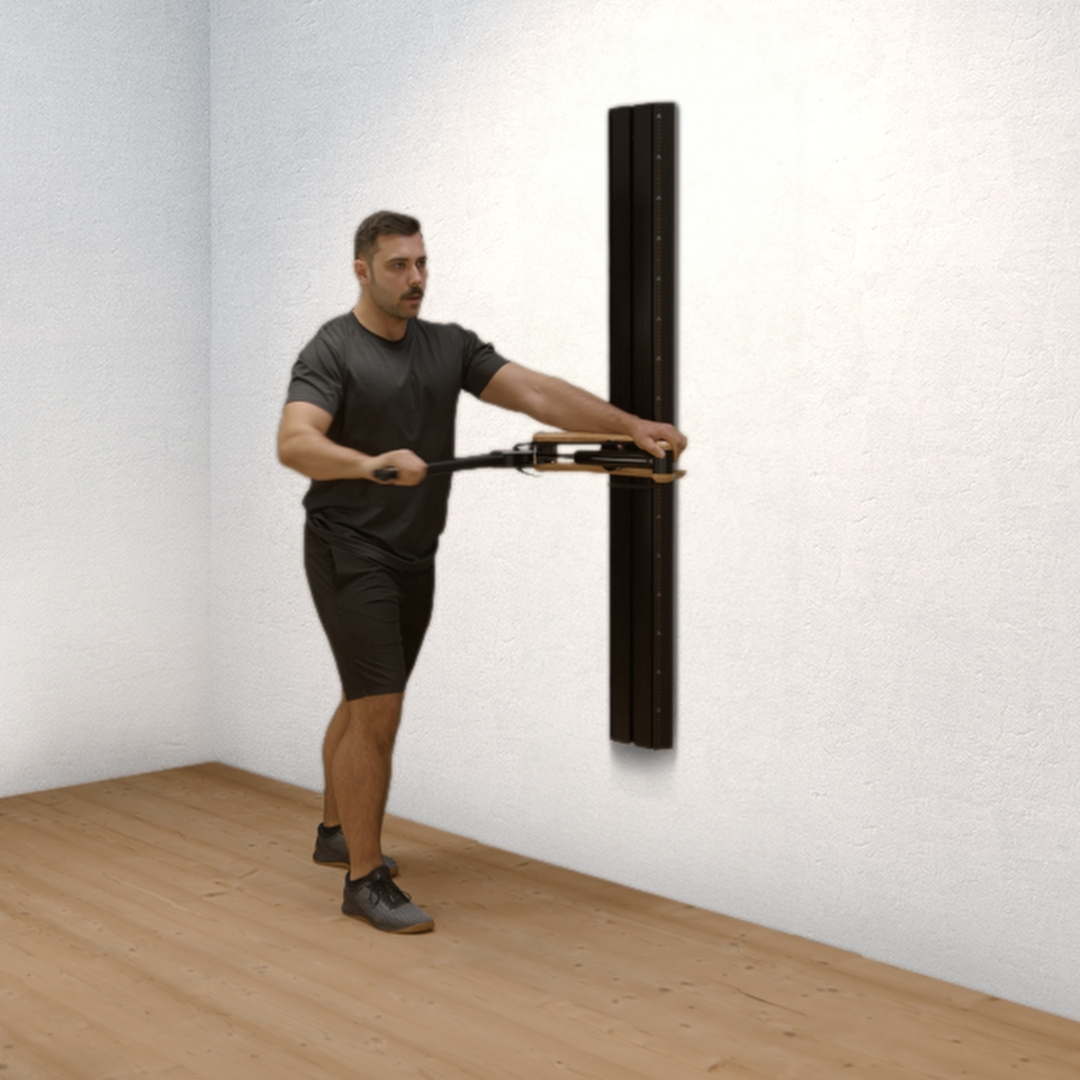
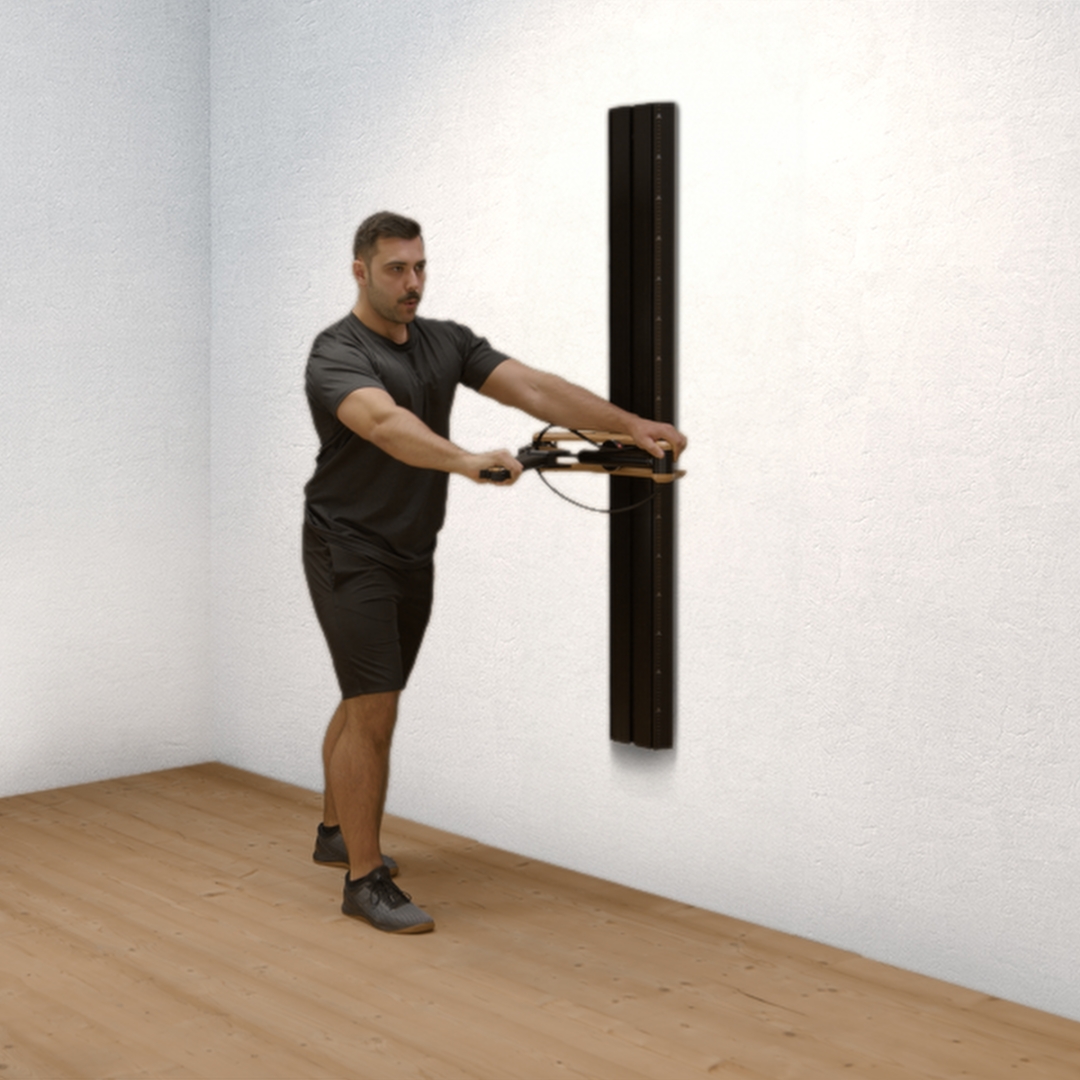
What makes this exercise particularly effective?
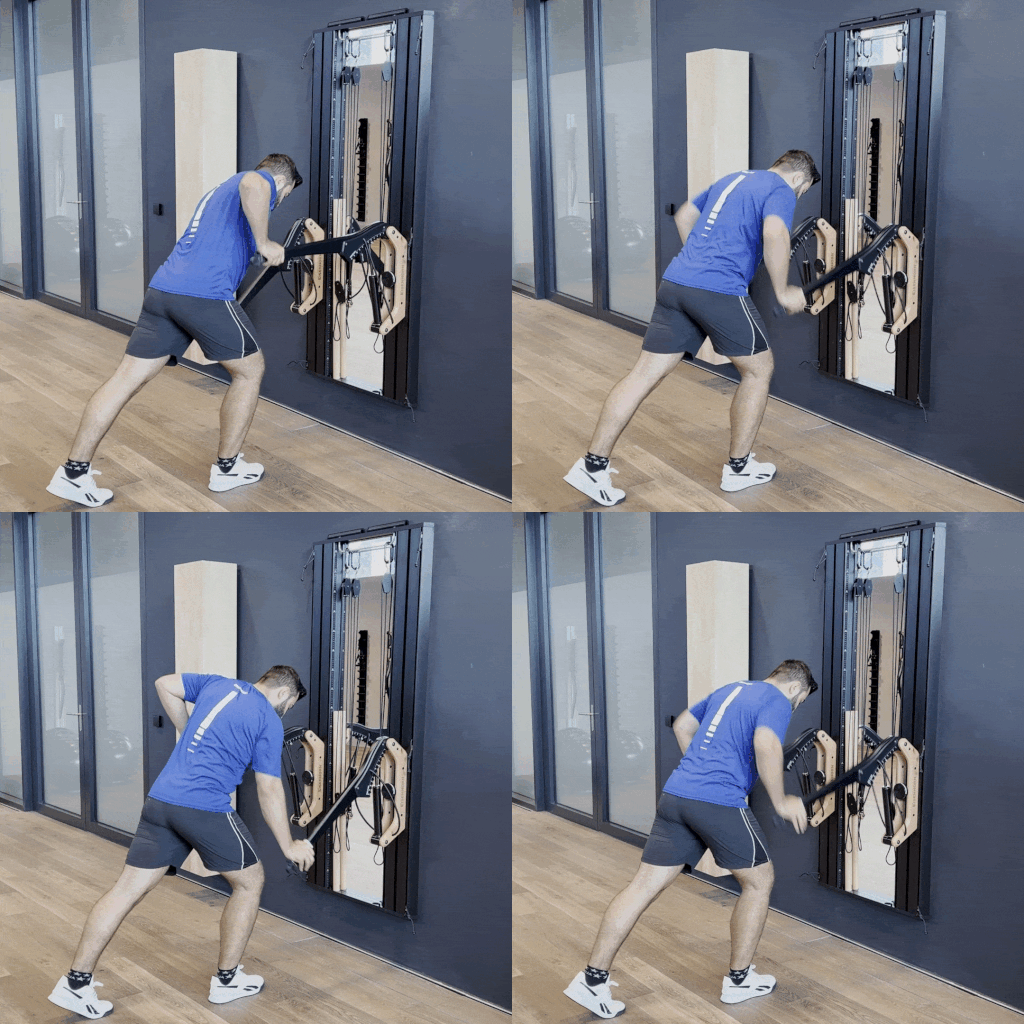
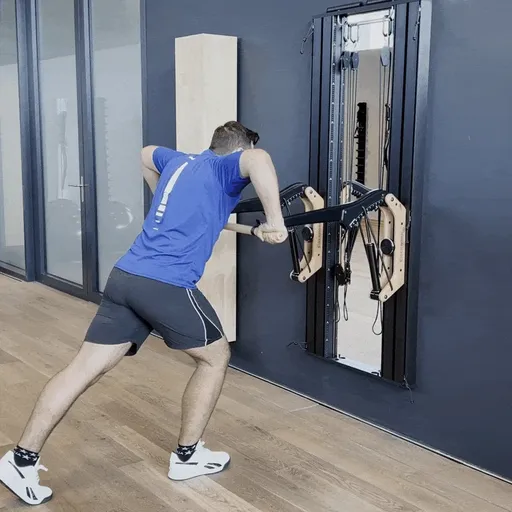
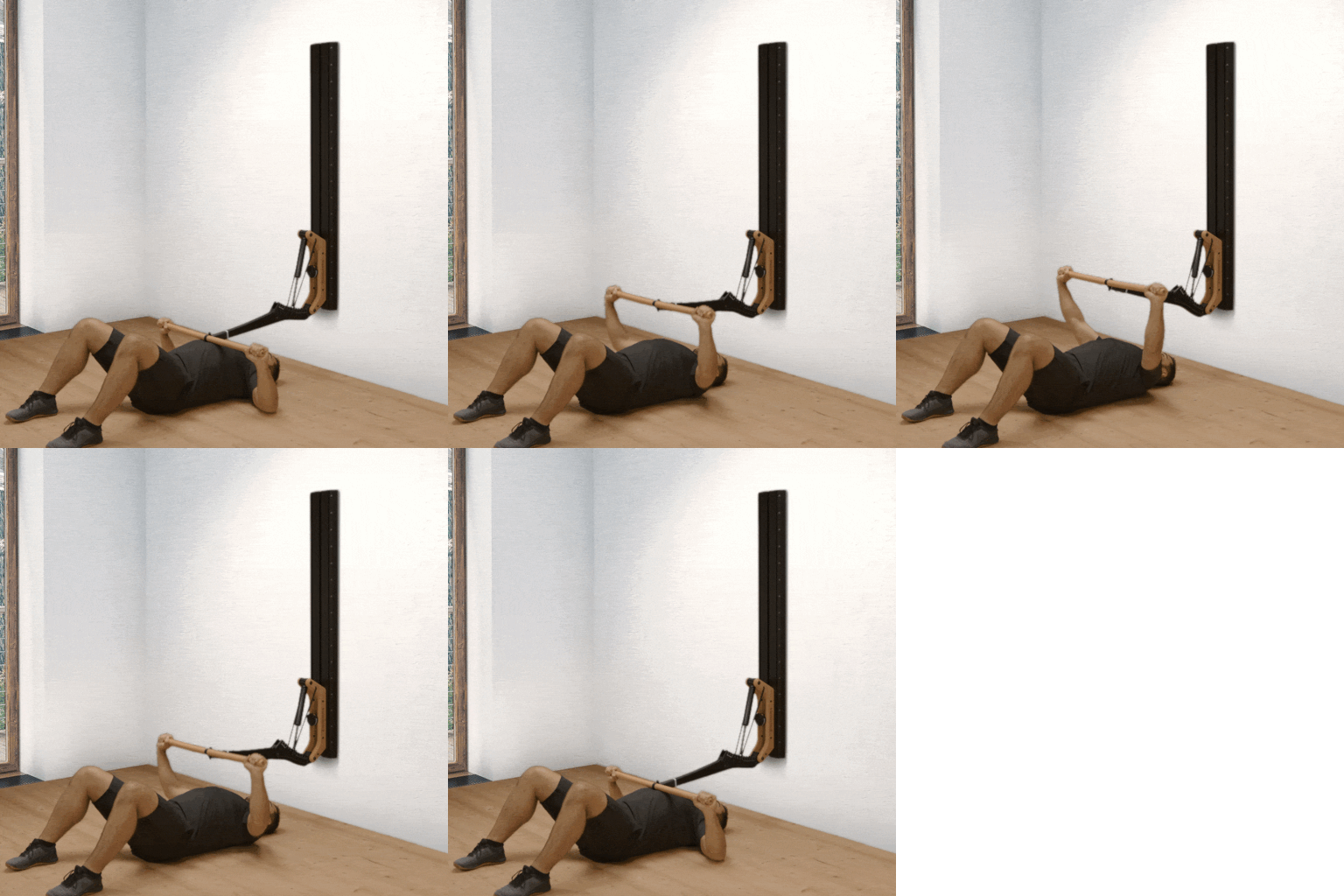
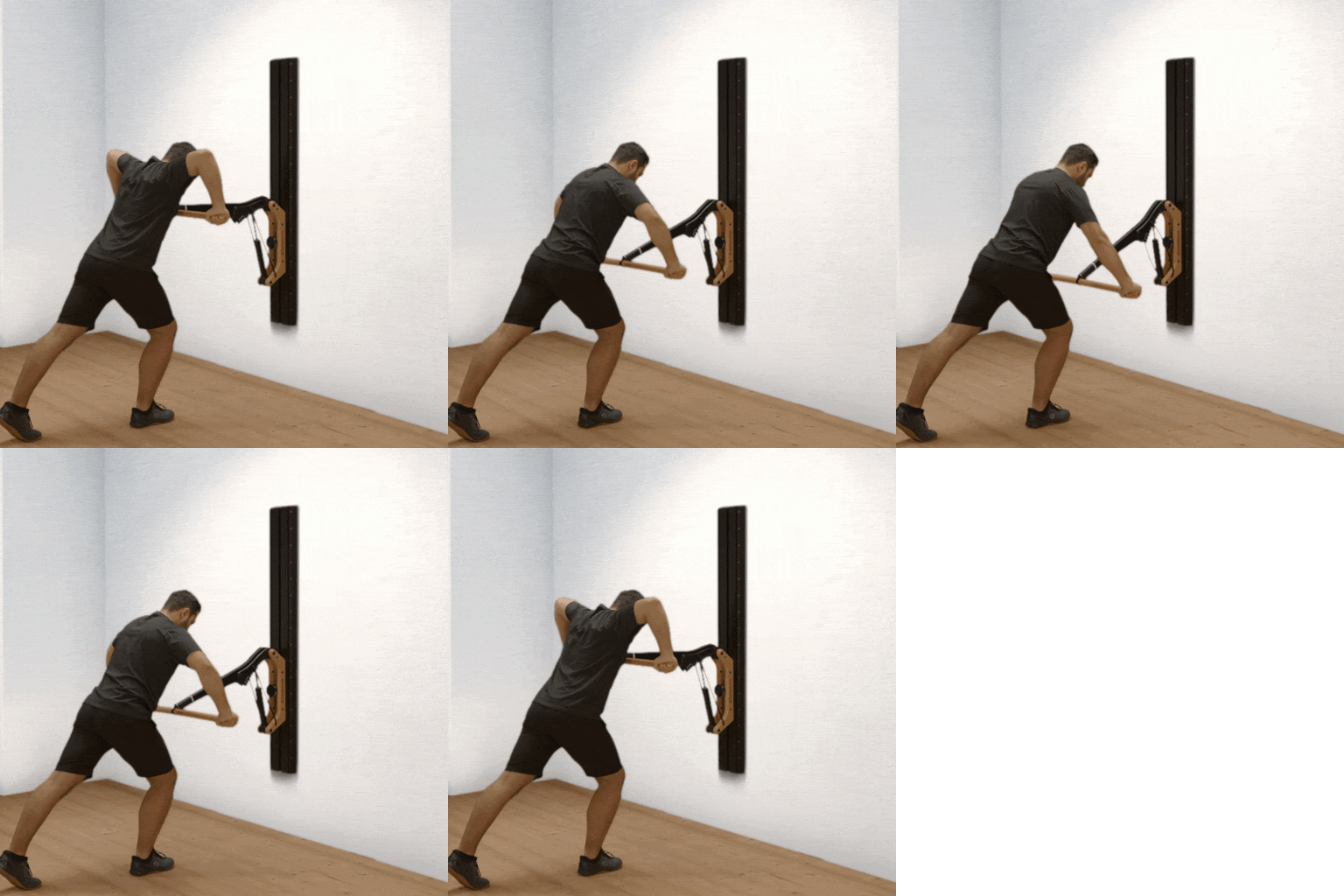
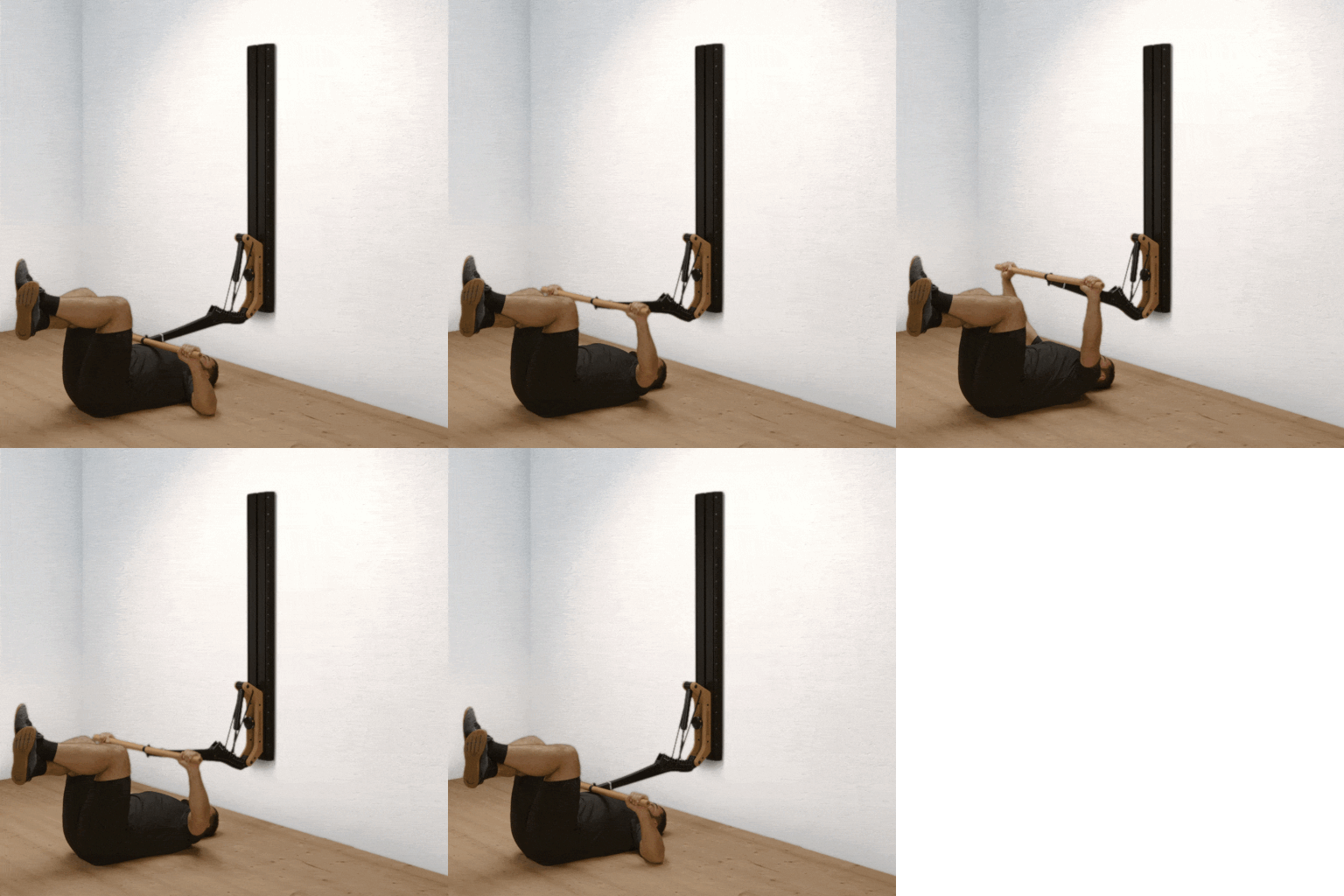
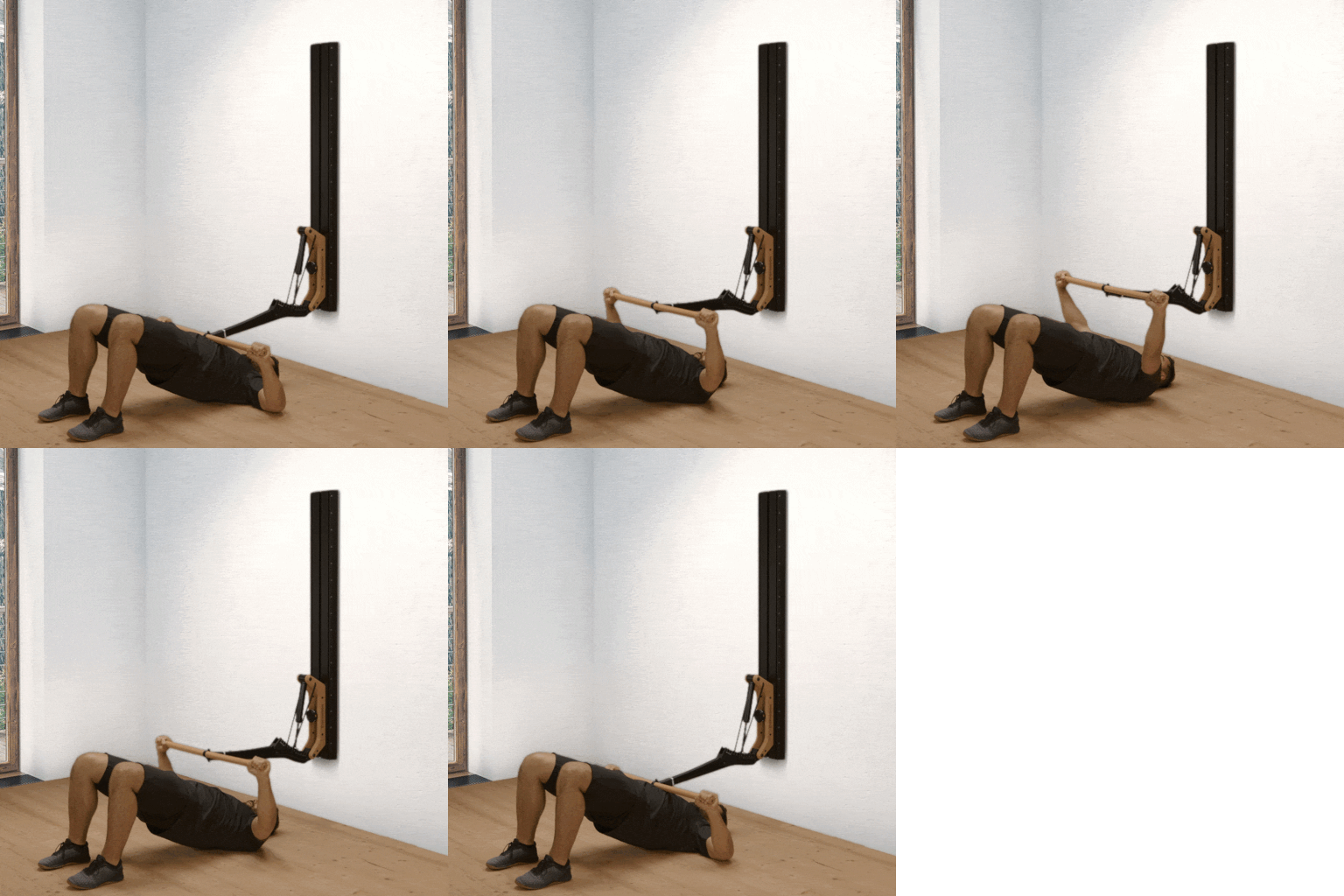
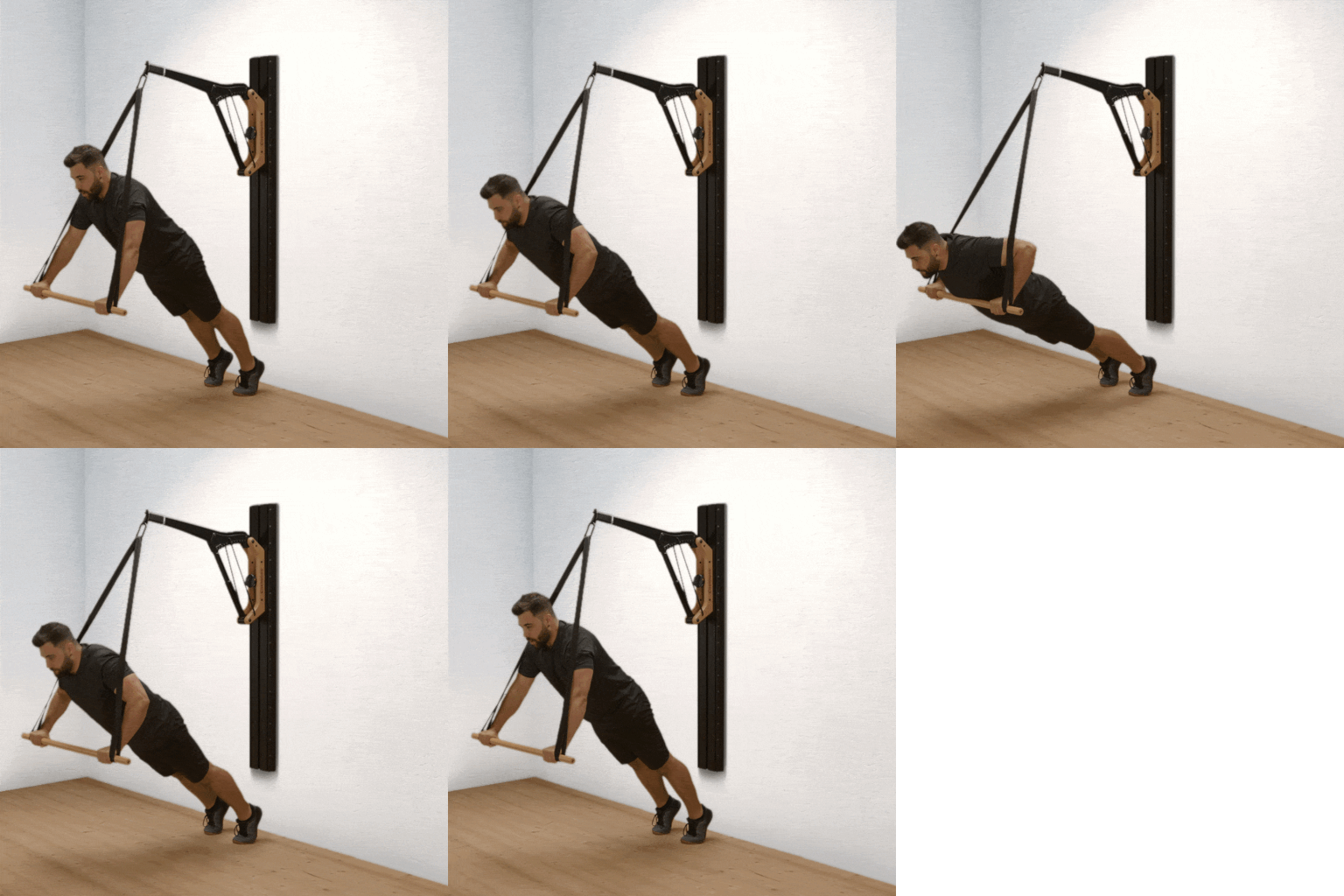
The lateral chest press, also known as the single-arm chest press, is an effective one-arm pressing movement in which you support your forearm on the sled and actively push the handle forward with the free hand. This position generates targeted activation of the pectoral muscles (pectoralis major) while simultaneously engaging the triceps. The lateral stance also promotes stability and body tension, as you must control your body against unilateral forces.
What effect does the exercise achieve?
Targeted chest activation: The one-sided pressing movement allows a focused training effect on the chest muscle—ideal for conscious muscle awareness.
Triceps strengthening: Secondary activation of the triceps supports the pressing motion and contributes to overall arm integration.
Core stability: The unilateral load requires active tension in the core to resist lateral rotation, improving overall core strength.
Controlled execution: The EISENHORN strength station S ensures a safe and guided movement, providing optimal conditions for proper technique and progressive overload.
How does this exercise fit into the Big 5 concept?
The Big 5 include the fundamental exercises: squat, deadlift, bench press, pull-up or lat pulldown, and shoulder press. The lateral chest press can be classified as follows:
Horizontal pressing variation: Adds an extra dimension to traditional bench pressing, especially with one-arm pressing patterns that train movement coordination.
Symmetry & balance: Trains muscular and strength-related balance between the left and right sides of the body, an important prerequisite for functional stability.
Core transfer: The required core tension strengthens overall stability—a beneficial side effect for all Big 5 movements, particularly squats and deadlifts, where core control is essential.
:format(webp))
)
)
)
)
)
:format(webp) "EISENHORN S Black Edition")
 "EISENHORN S Black Edition")