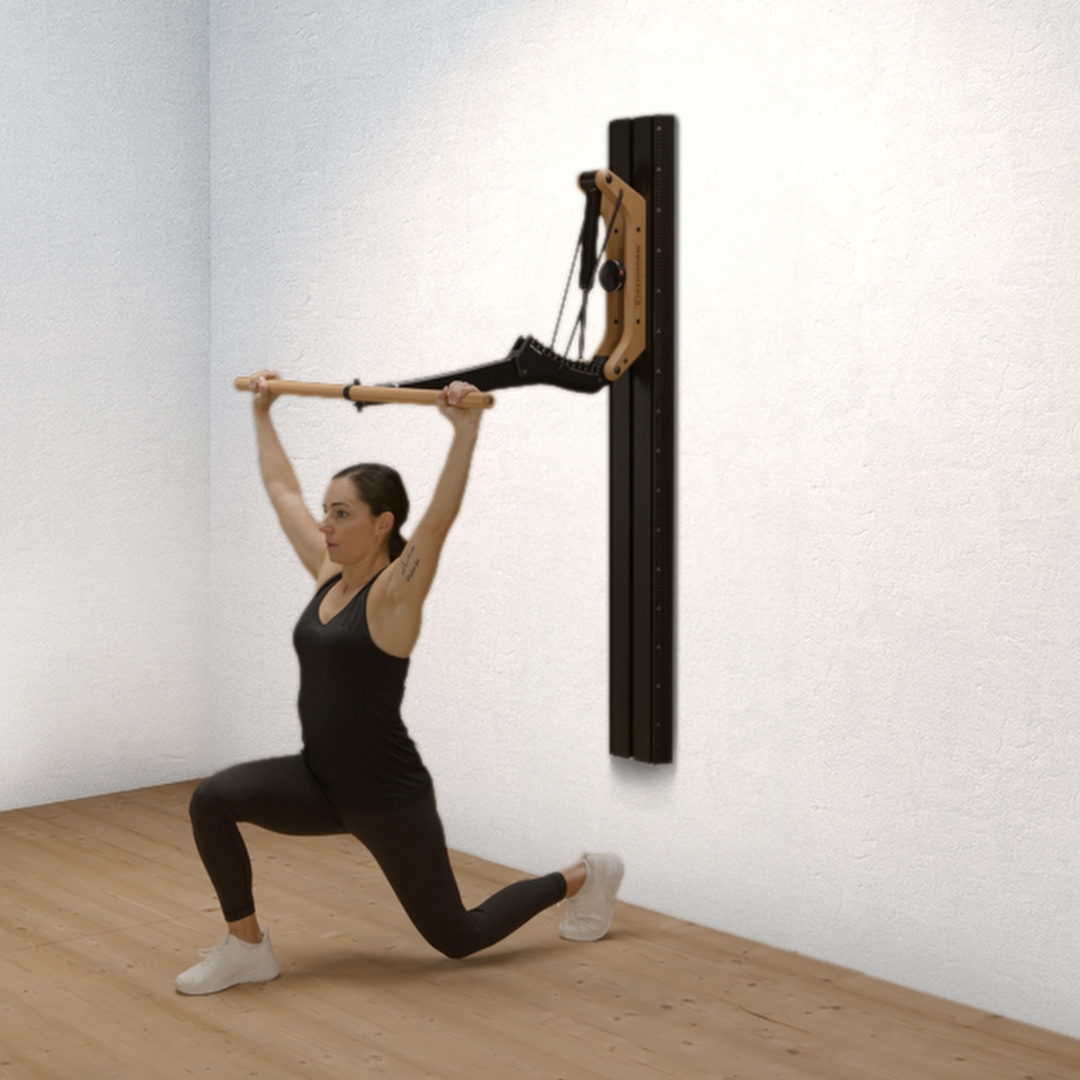
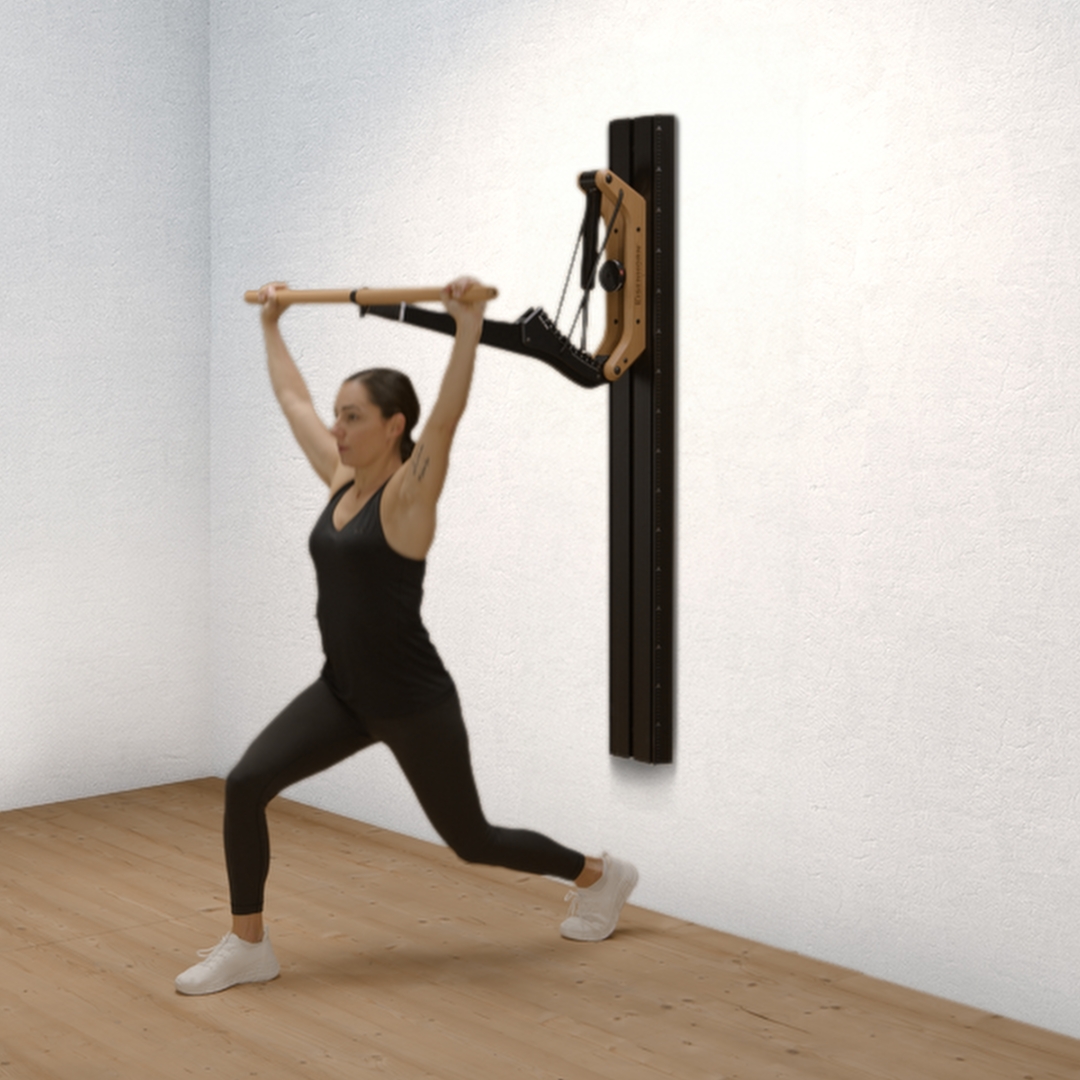
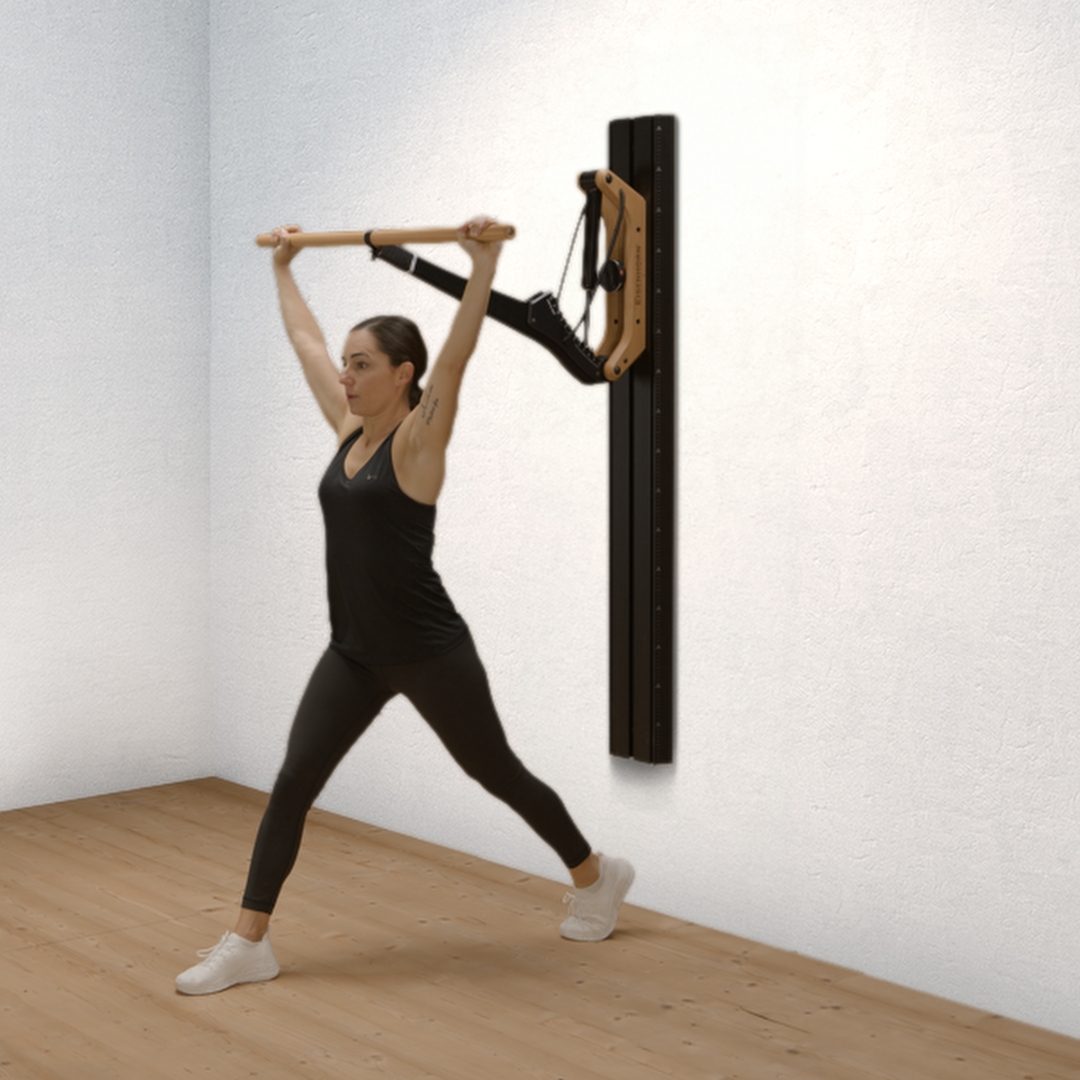
What makes this exercise particularly effective?
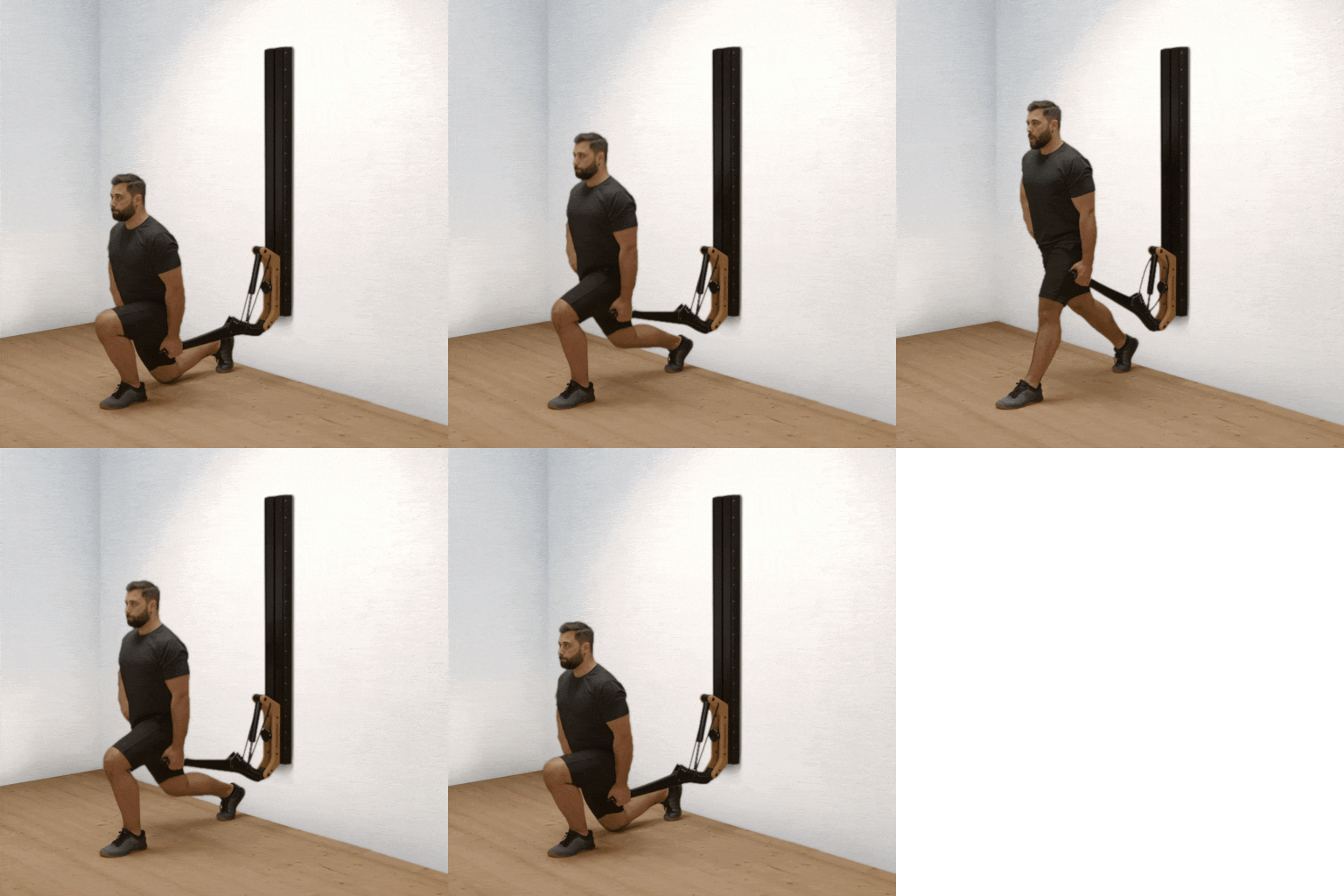
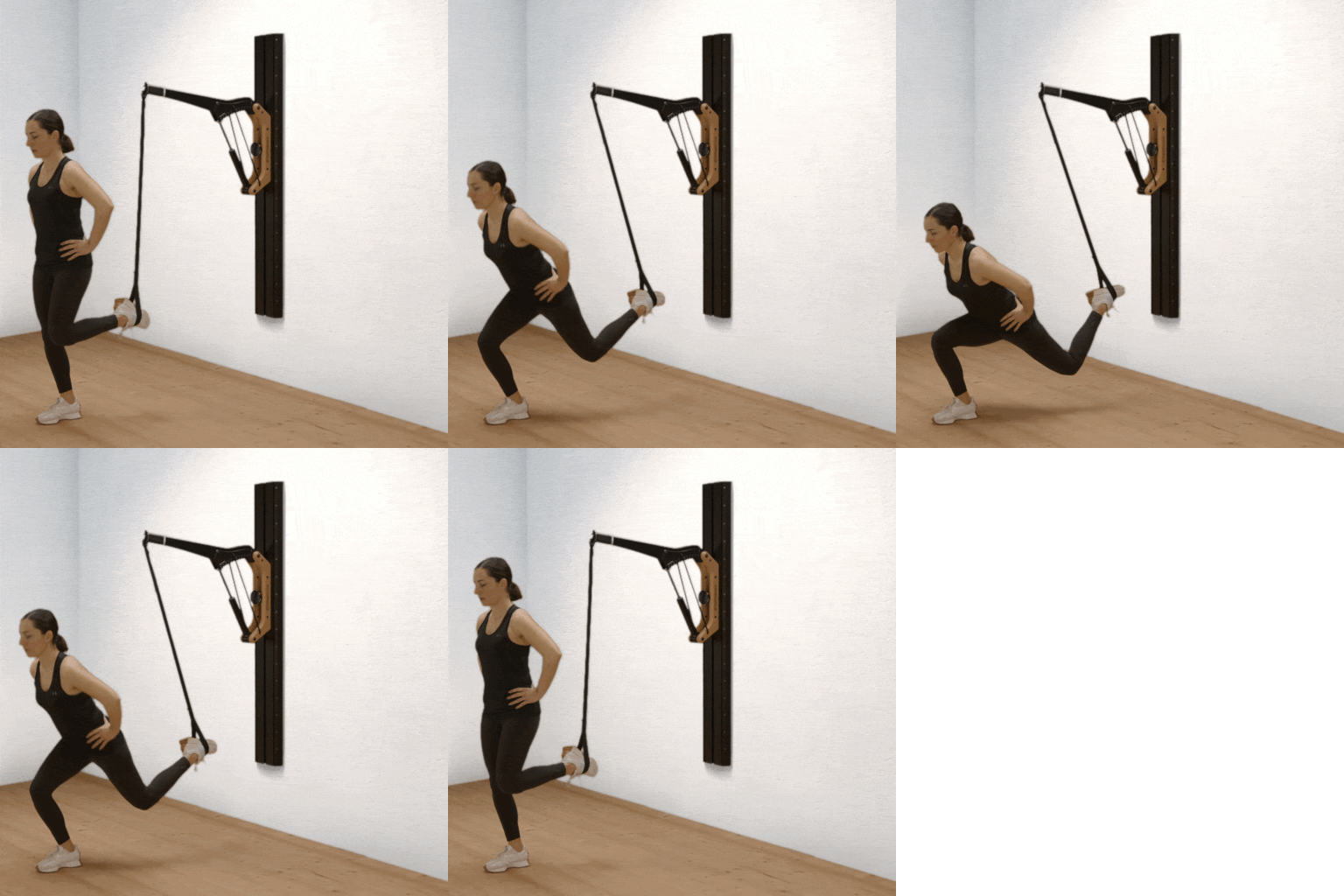
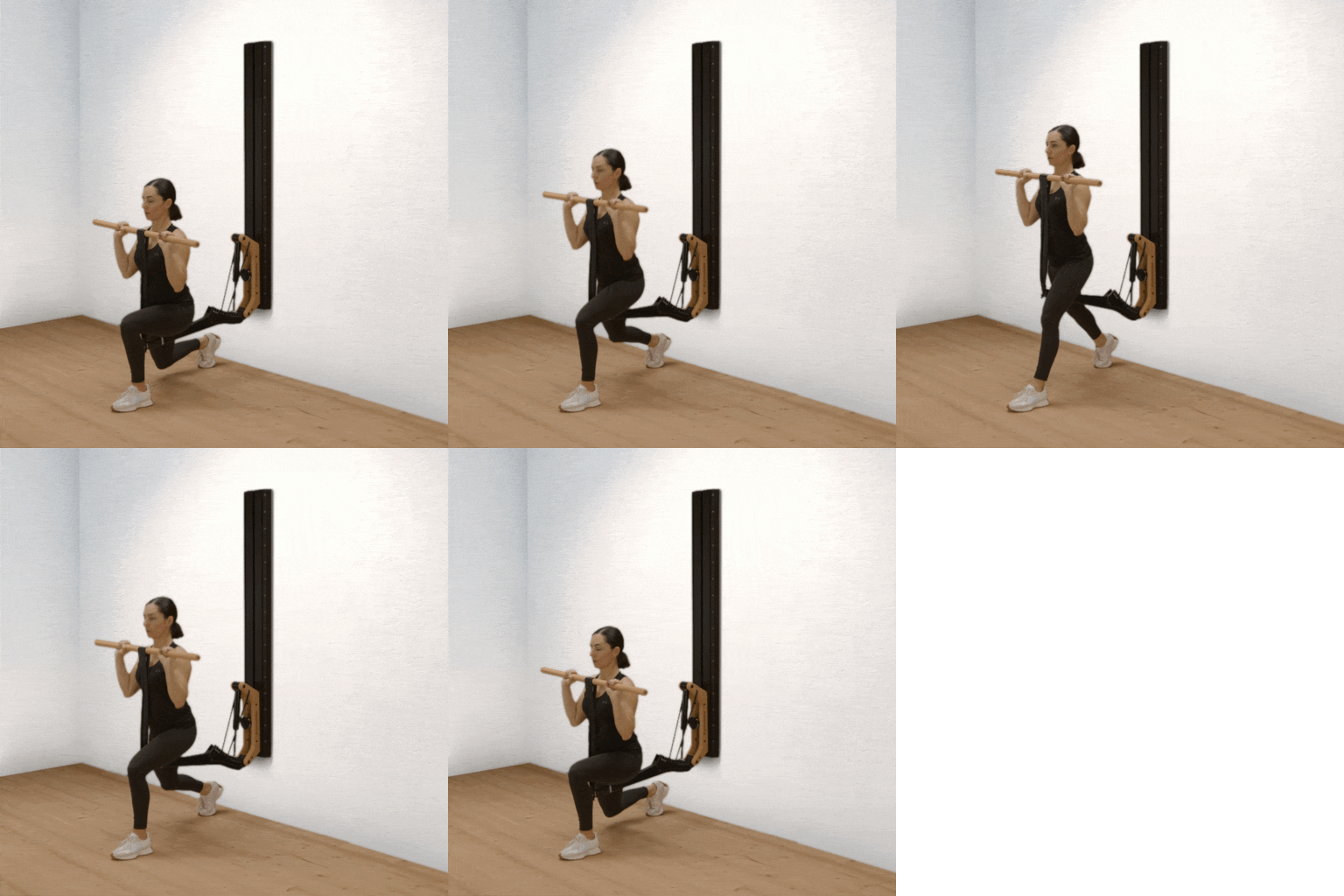
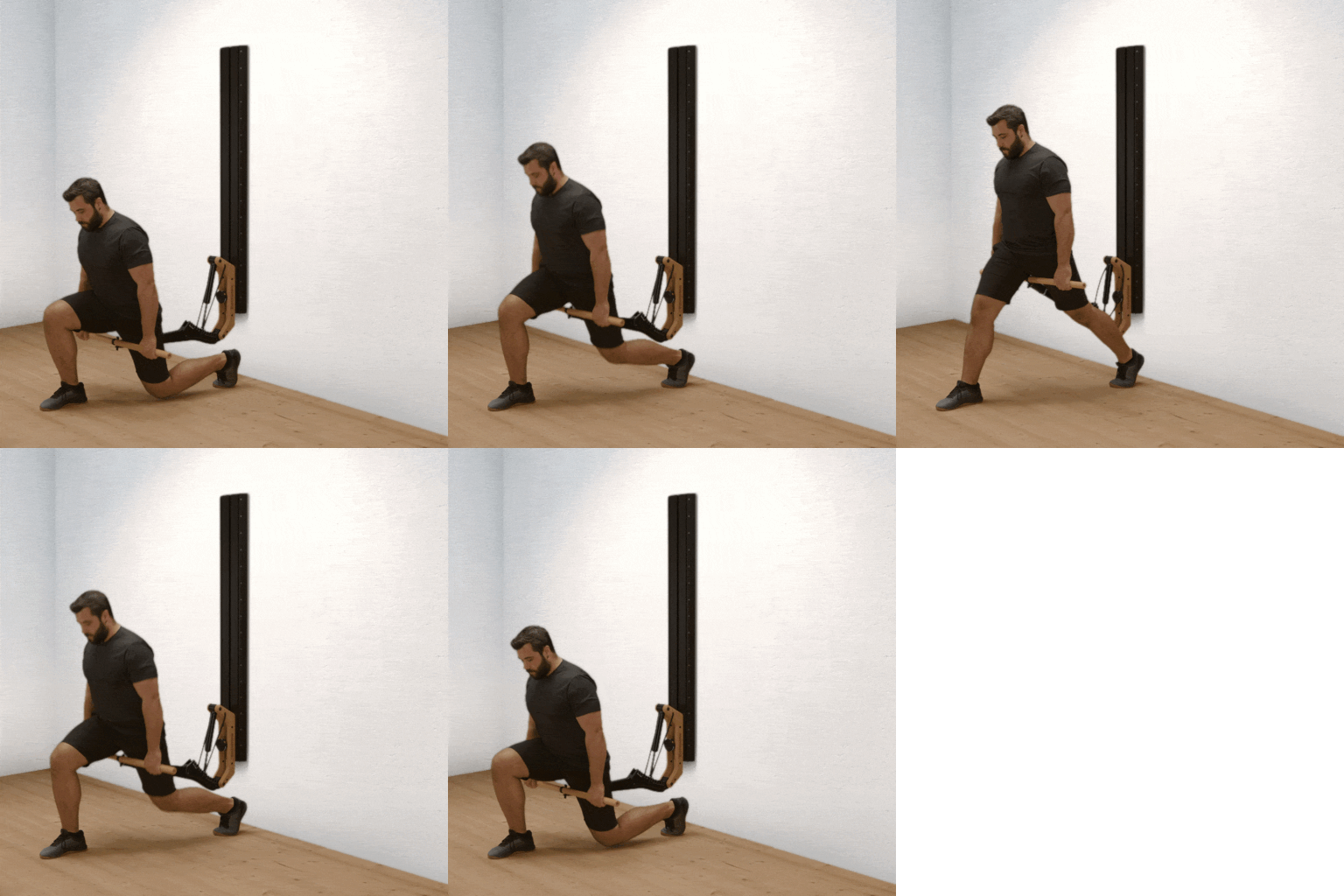
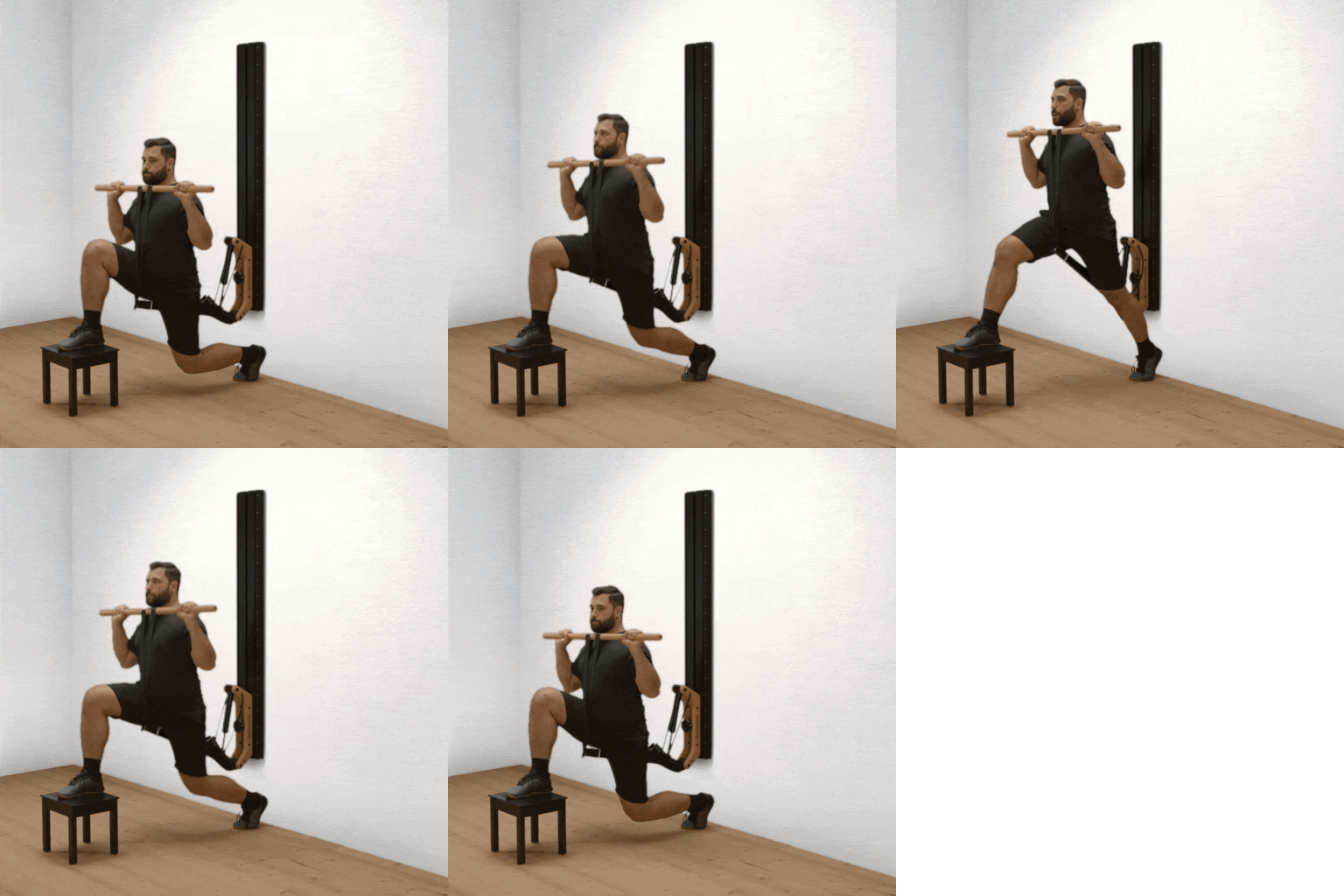
Overhead walking lunges combine the classic walking lunge with a stable overhead position. This not only strengthens the legs and glutes but also challenges shoulder stability, core strength, and overall body coordination. This variation is considered one of the most functionally demanding lower-body exercises and improves strength transfer, posture, and mobility.
What effect does the exercise achieve?
Intensive leg strengthening: The quadriceps, glutes, and hamstrings are highly activated, promoting unilateral strength and a stable foundation.
Enhanced shoulder and core stability: Lifting weight overhead requires constant tension in the core, strengthening both shoulder and postural muscles.
Improved posture and mobility: The extended overhead position mobilizes the thoracic spine, improves shoulder flexibility, and promotes an upright movement pattern.
Full-body coordination and balance: The exercise develops balance and movement control, as the upper and lower body must work together perfectly.
How does this exercise fit into the Big 5 concept?
The Big 5 include the fundamental exercises: squat, deadlift, bench press, pull-up or lat pulldown, and shoulder press. Even though overhead lunges are not part of the classic Big 5, they complement this training concept effectively:
Unilateral leg strengthening: They help correct muscular imbalances and enhance stability in all Big 5 movements.
Overhead stability as a key transfer: The overhead position supports shoulder strength and core control, both essential for shoulder presses and pull-ups.
Functional full-body exercise: This exercise links lower and upper body training, promoting overall strength and athletic performance.
:format(webp))
)
)
)
)
)
:format(webp) "EISENHORN S Black Edition")
 "EISENHORN S Black Edition")