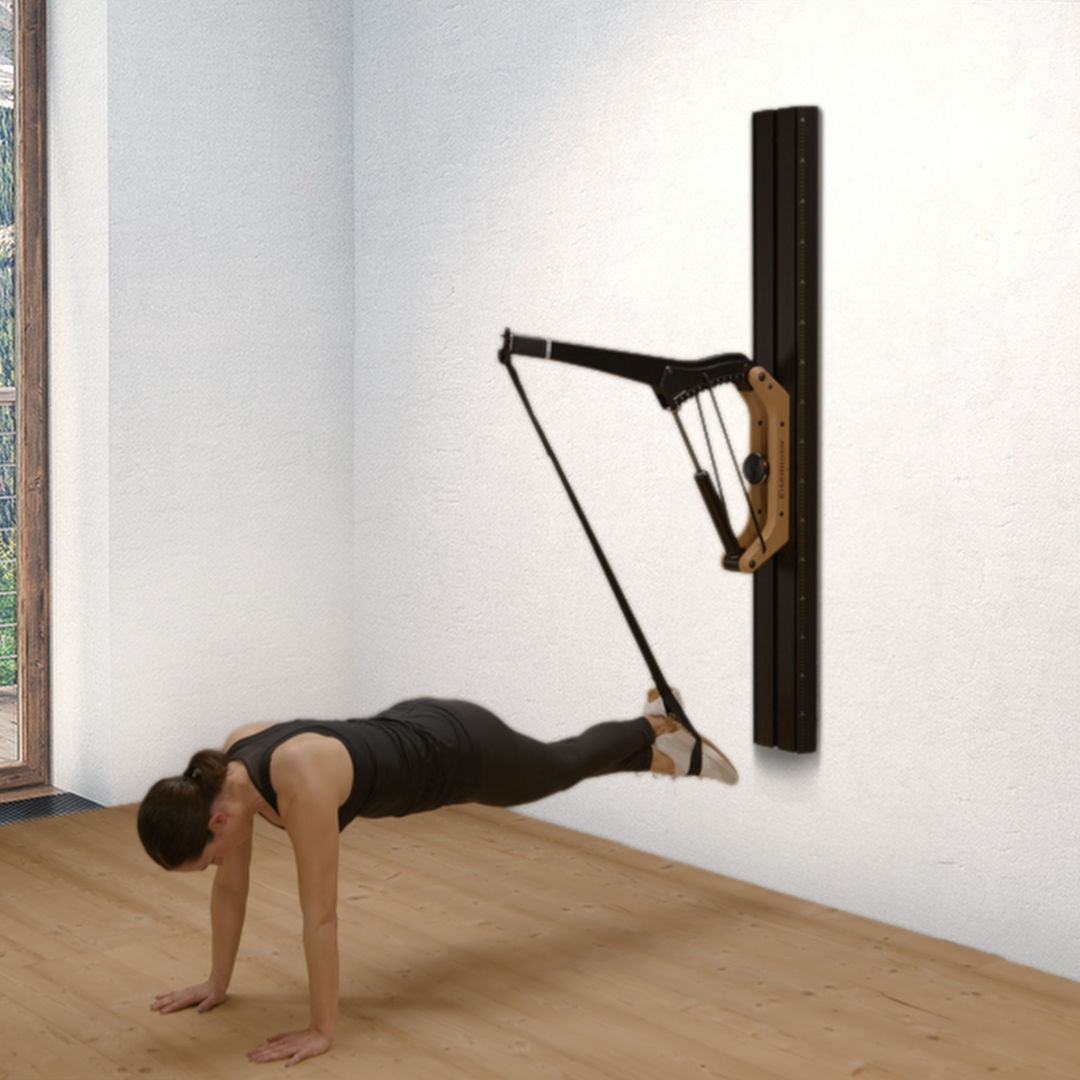
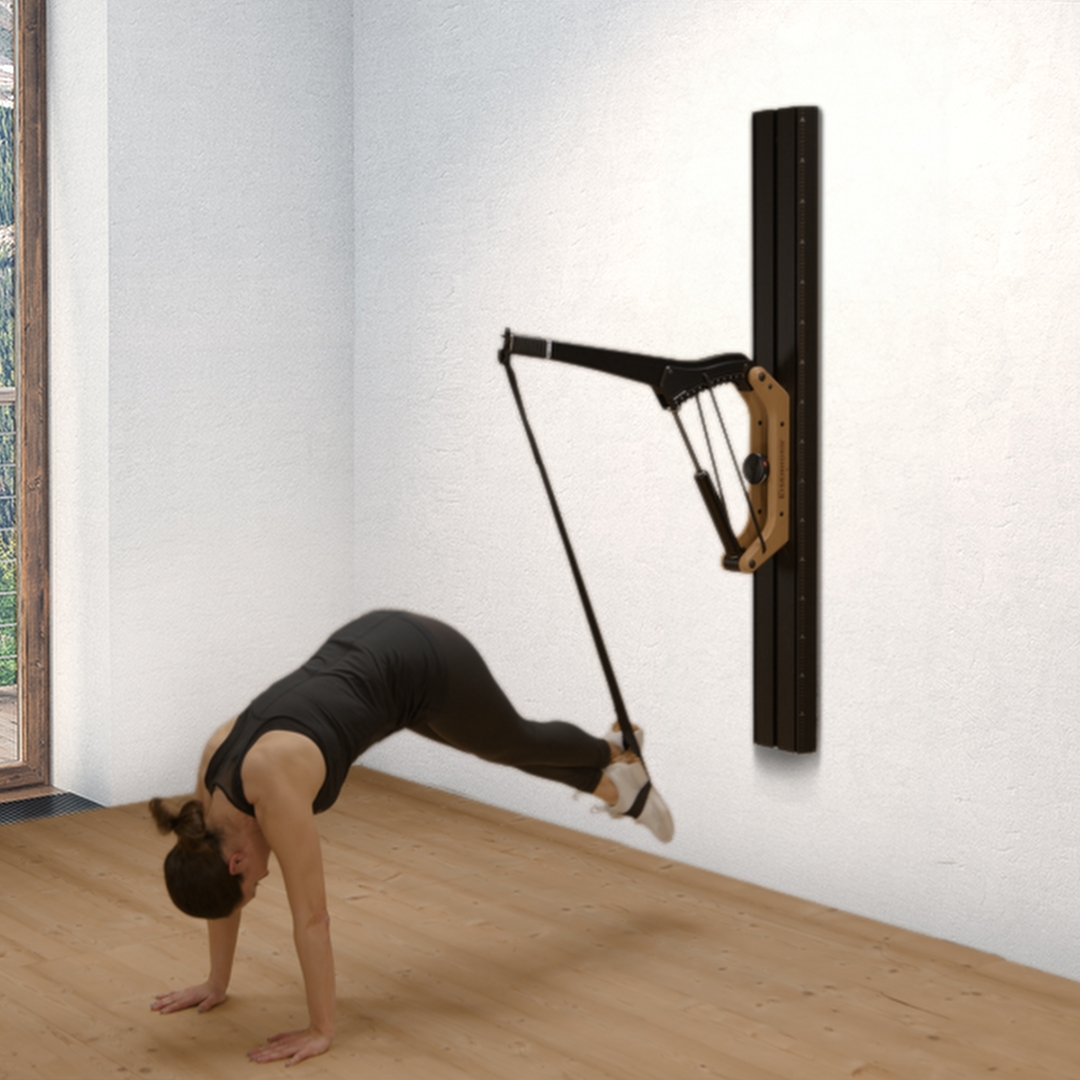
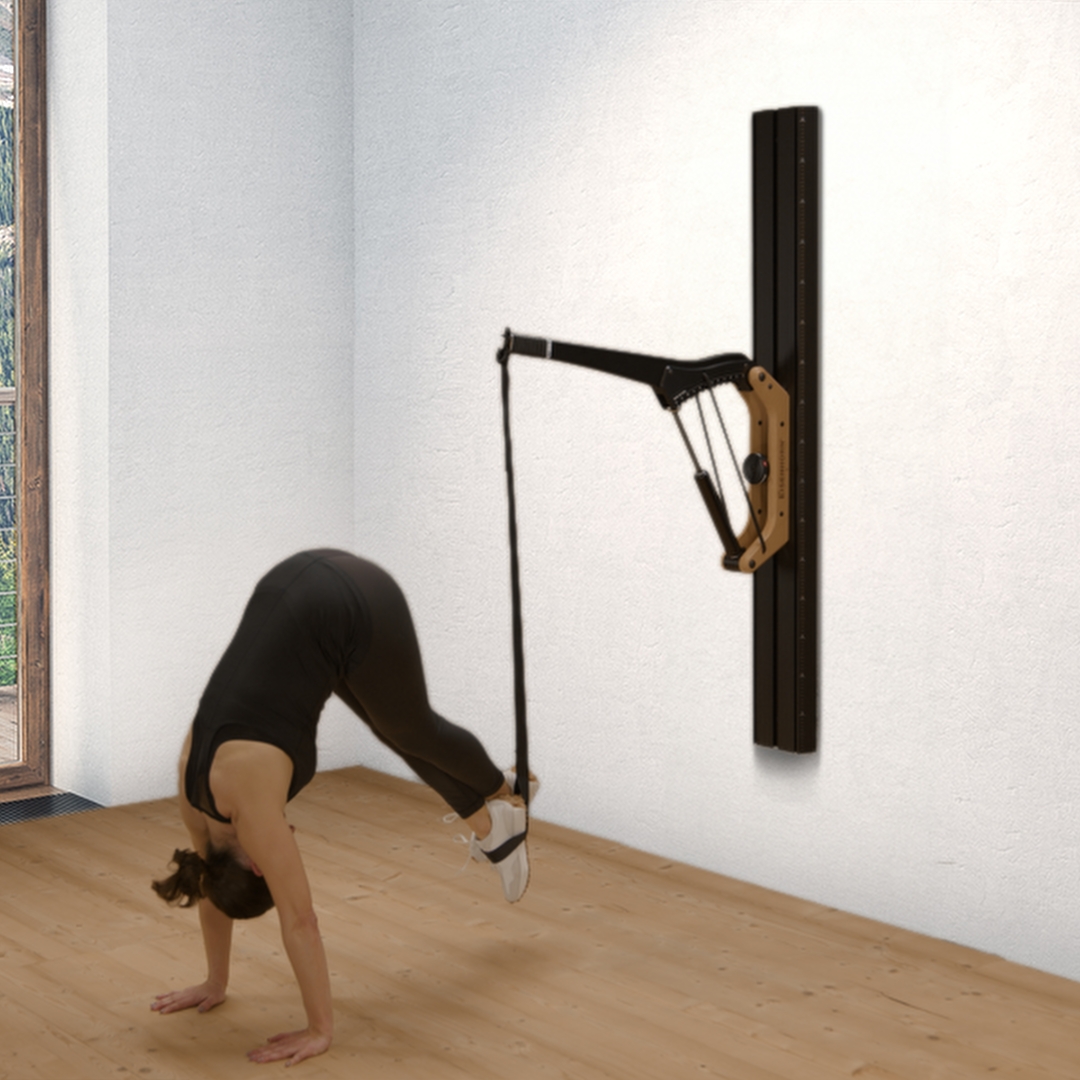
What makes this exercise particularly effective?
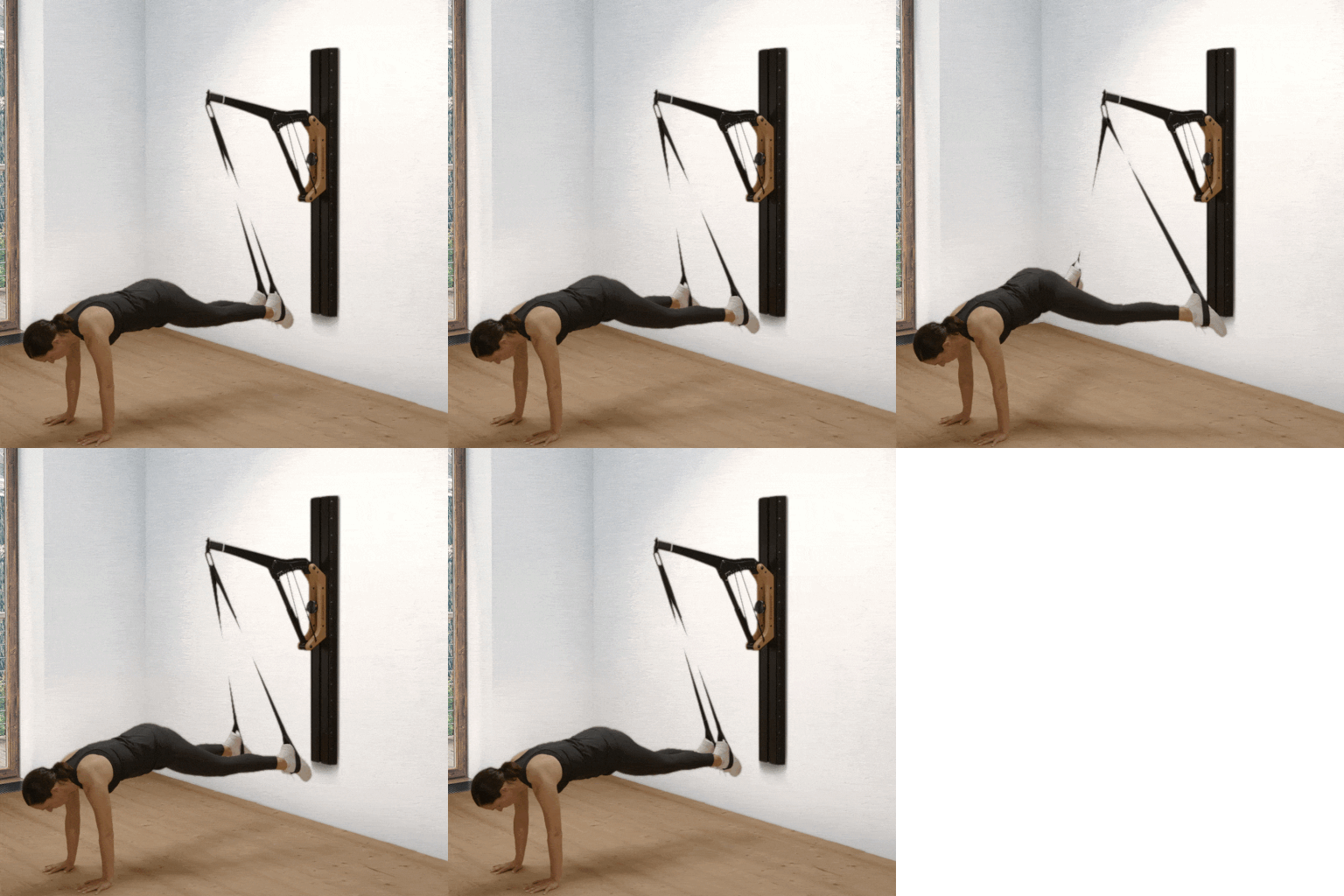
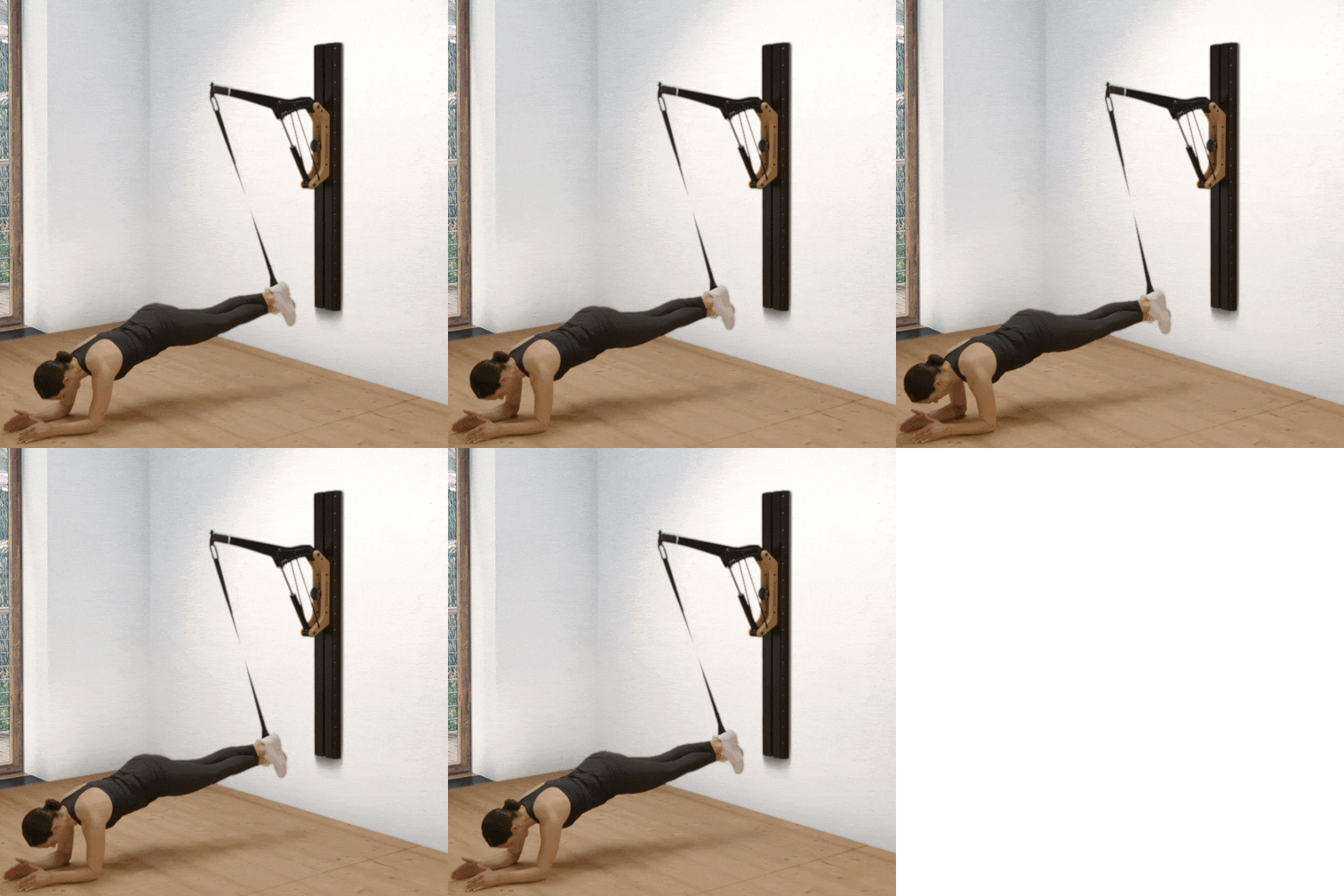
The transition from a classical forearm plank or push-up position to the "pike" position (hips raised, head between the arms) is a powerful variation that challenges core stability, engages the shoulders, and dynamically activates the hip flexors. It combines static tension with controlled movement, making this exercise particularly effective.
What effect does the exercise achieve?
Intensive activation of the core and lower abdomen: This exercise specifically targets the deep core muscles, which are often difficult to activate.
Full-body coordination: The transition between plank and pike activates not only the core, but also the shoulders, arms, hip flexors, and posterior chain, resulting in a comprehensive full body workout.
Development of tension and increased mobility: Raising the hips creates a gentle stretch in the hamstrings and calves, while also improving shoulder mobility.
Variation for conditioning and explosiveness: Adding jumping movements (plank-to-pike jump) turns the exercise into a dynamic, high-intensity cardio element.
How does this exercise fit into the Big 5 concept?
The Big 5 include the fundamental exercises: squat, deadlift, bench press, pull-up or lat pulldown, and shoulder press. Plank-to-Pike can be a valuable addition to the Big 5 training concept:
Core strengthening as a foundation for all basic exercises: A stable, strong core is essential for proper technique and injury prevention across all Big 5 movements.
Dynamic movement understanding and mobility: This exercise combines strength and flexibility, complementing static training and supporting athletic performance in daily life.
Ideal for progression and variety: Plank-to-Pike introduces new stimulus patterns, promoting motivation, adaptation, and enjoyment of training.
:format(webp))
)
)
)
)
)
:format(webp) "EISENHORN S Black Edition")
 "EISENHORN S Black Edition")