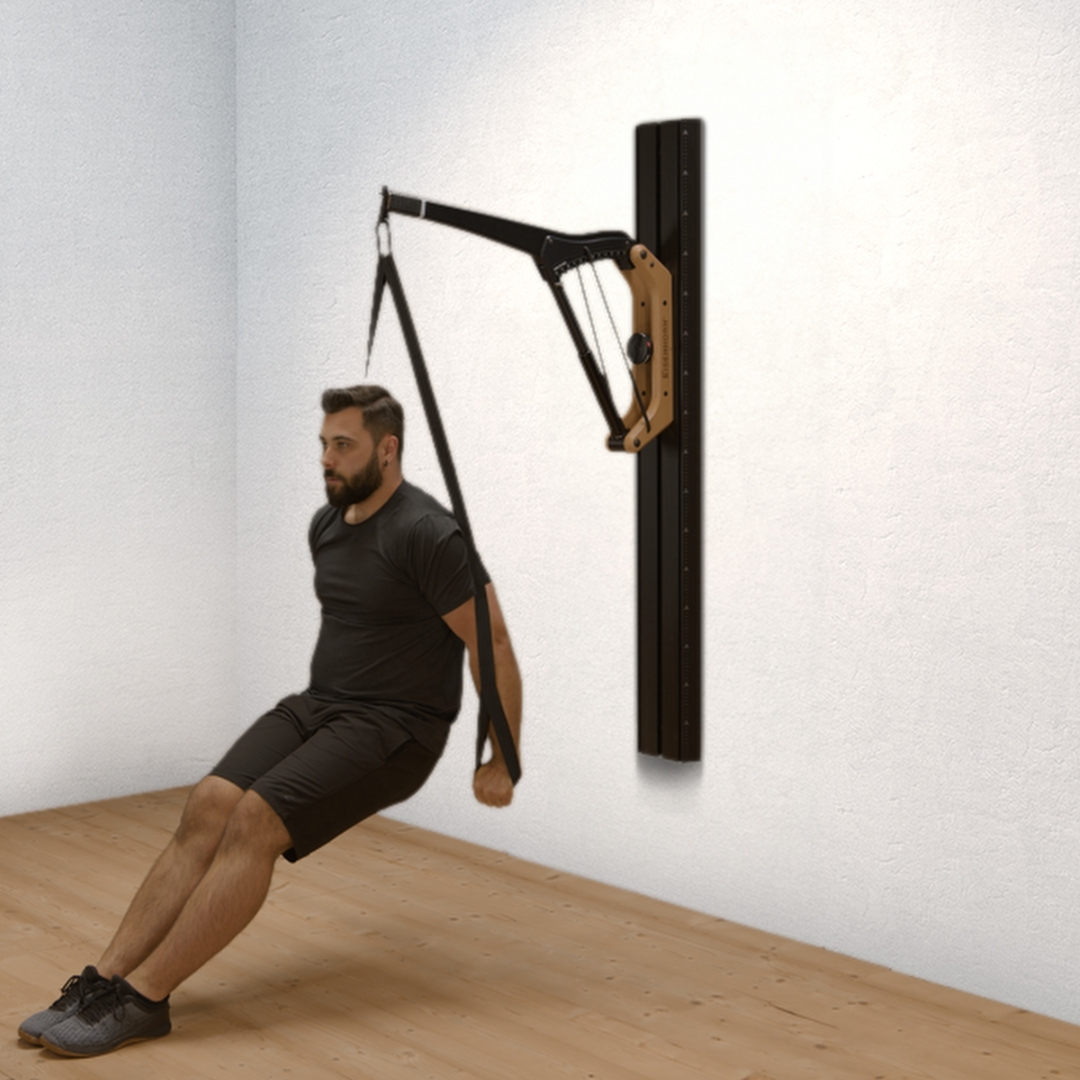
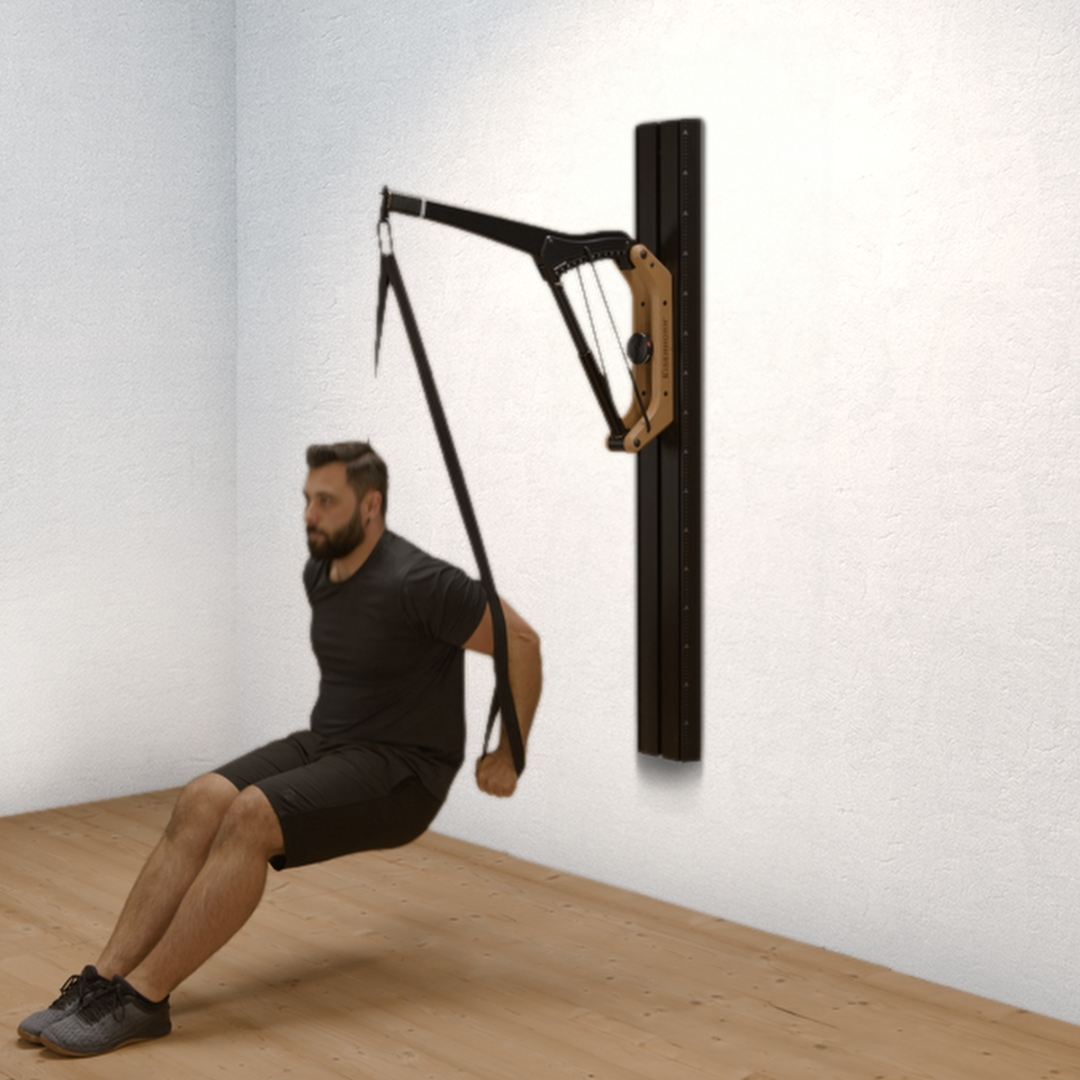
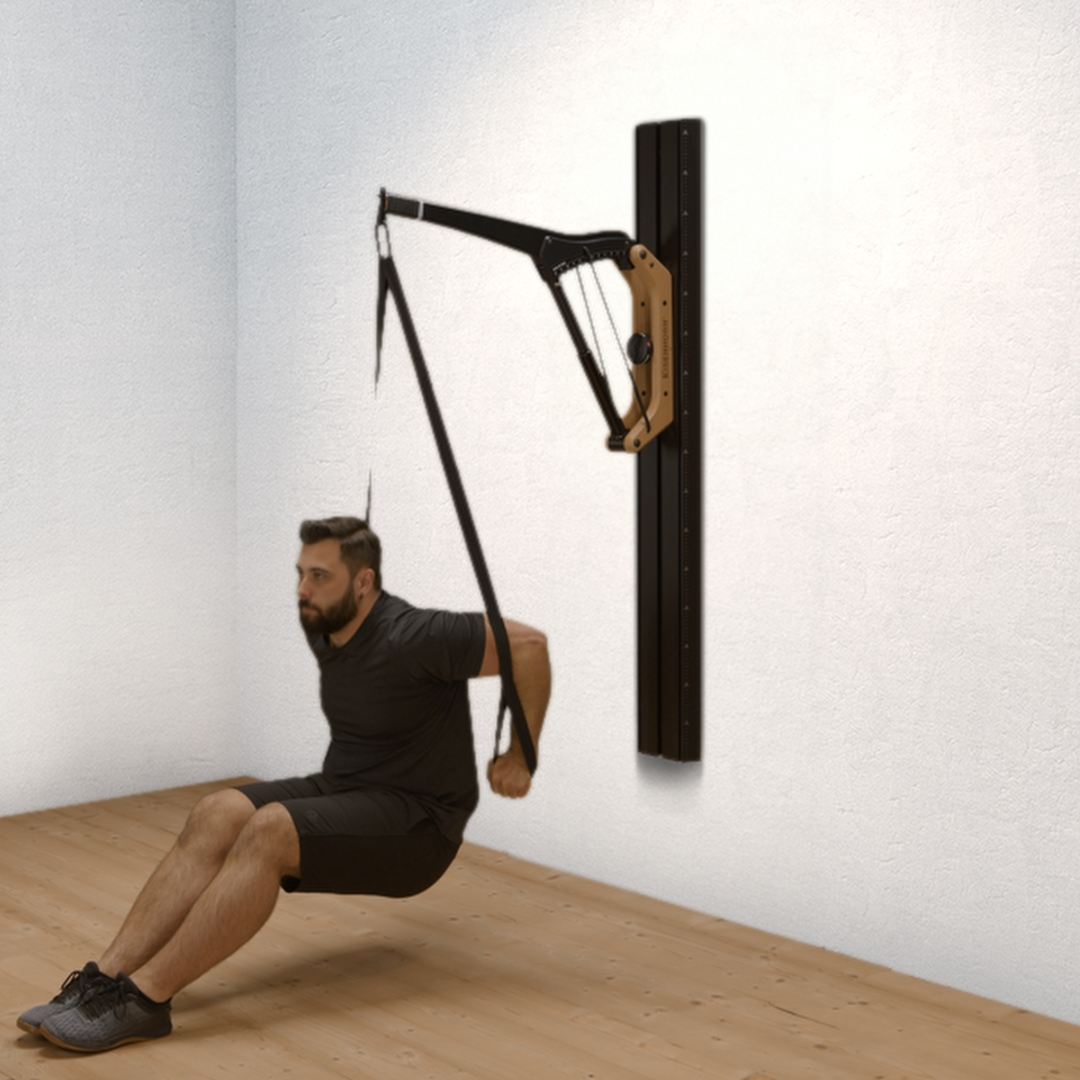
What makes this exercise particularly effective?
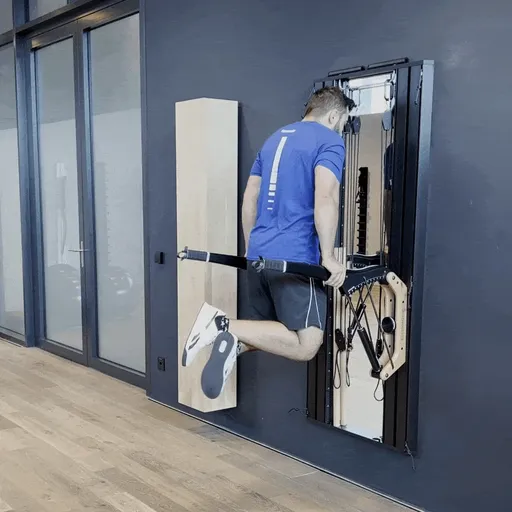
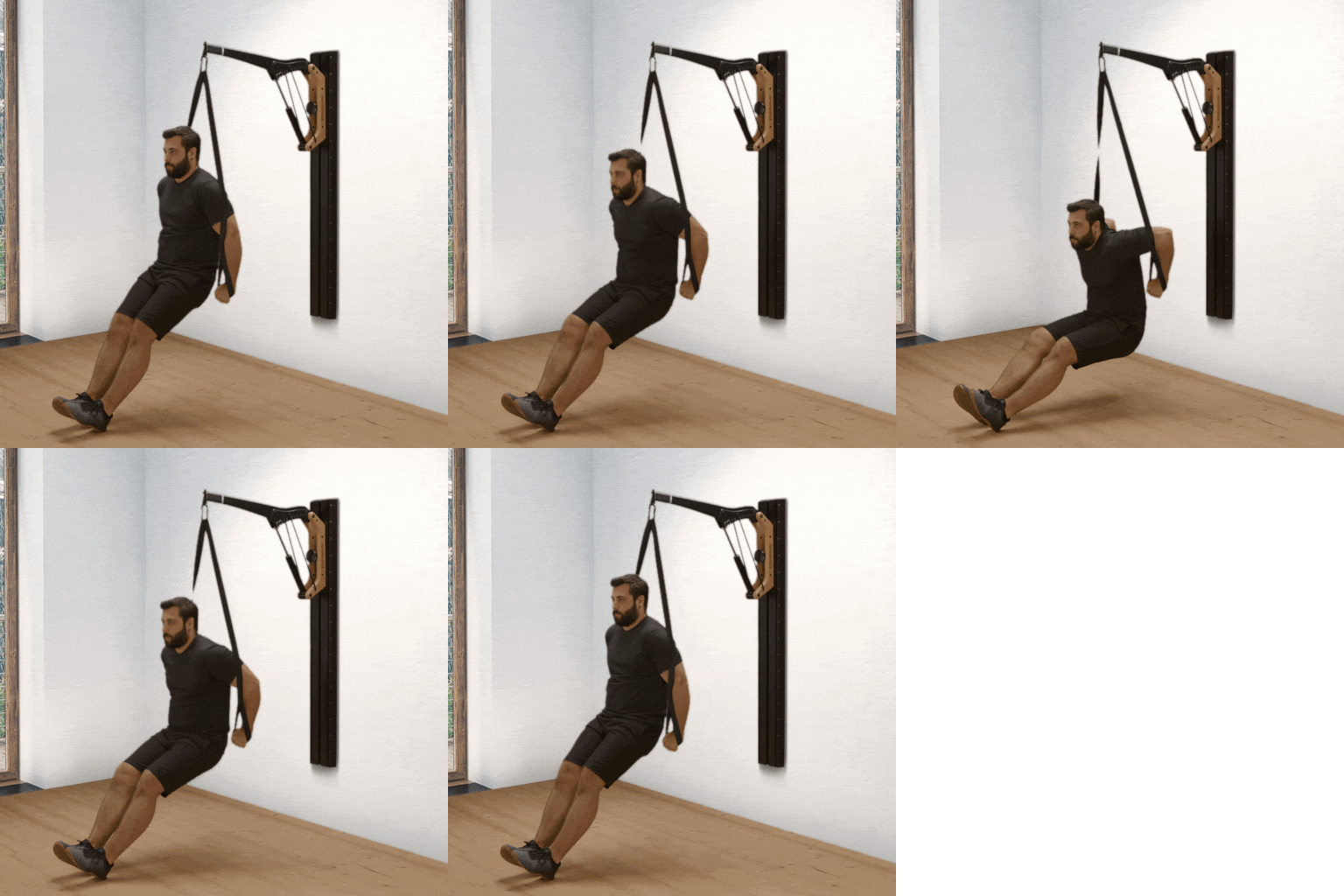
Deep dips are a variation of the classic dips in which the body is lowered significantly, often until the shoulders drop below the elbows. Using a grip band provides additional stability, coordination, and muscle control. The combination of a large range of motion and band tension creates an extended stretch in the chest, shoulder, and triceps areas, leading to increased muscle activation.
What effect does the exercise achieve?
Increased muscle stimulus through a greater range of motion: Going deeper than standard dips stretches the chest muscles more and intensifies triceps activation. This recruits more muscle fibers and can provide a stronger hypertrophic stimulus.
Greater activation of shoulder and chest muscles: During deep dips, the anterior deltoids and chest muscles are also engaged, making the exercise more comprehensive than purely targeting the triceps.
Improved joint and core stability as well as body control: The grip band requires additional muscular control (core and stabilizing muscles around the shoulder and torso) to perform the movement in a controlled manner rather than with instability or swinging.
Functional stimulus and everyday transferability: The exercise enhances pushing strength, core stability, and arm-shoulder coordination, positively impacting many foundational movements and daily activities.
How does this exercise fit into the Big 5 concept?
The Big 5 include the fundamental exercises: squat, deadlift, bench press, pull-up or lat pulldown, and shoulder press. Even though deep dips with a handlebar are not part of the classic Big 5, they complement the Big 5 exercises effectively:
Supports pushing movements: Strong chest, shoulder, and triceps muscles improve performance in bench presses and shoulder presses. Deep dips specifically target and strengthen this musculature.
Balances muscular development: Many Big 5 exercises heavily engage the anterior and medial shoulders. Deep dips provide a counterbalance and add additional depth to the movement pattern.
Enhances core and joint stability: The exercise requires a stable core, proper posture, and controlled execution—qualities essential for safety and effectiveness in all Big 5 movements.
:format(webp))
)
)
)
)
)
:format(webp) "EISENHORN S Black Edition")
 "EISENHORN S Black Edition")