What makes this exercise particularly effective?
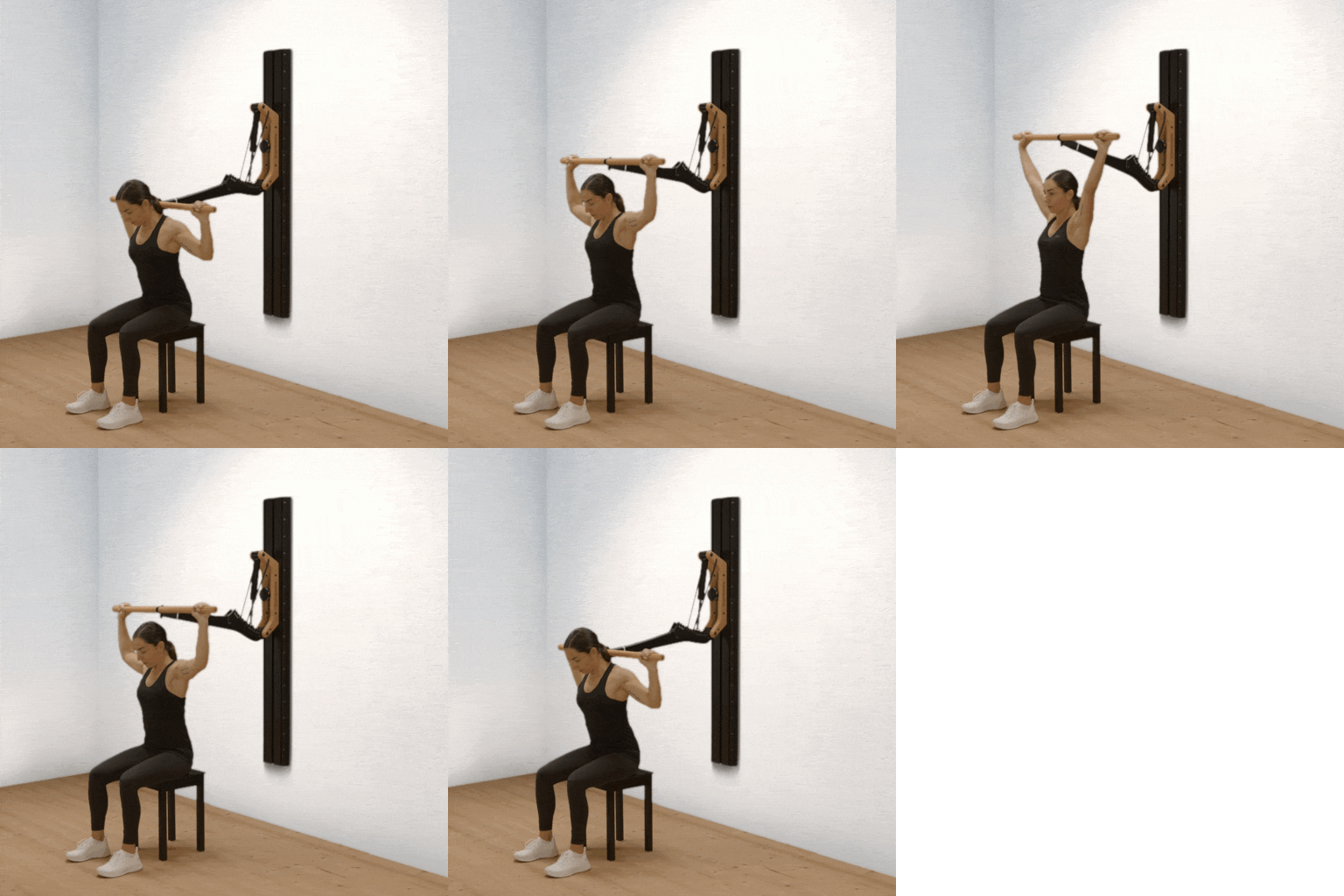
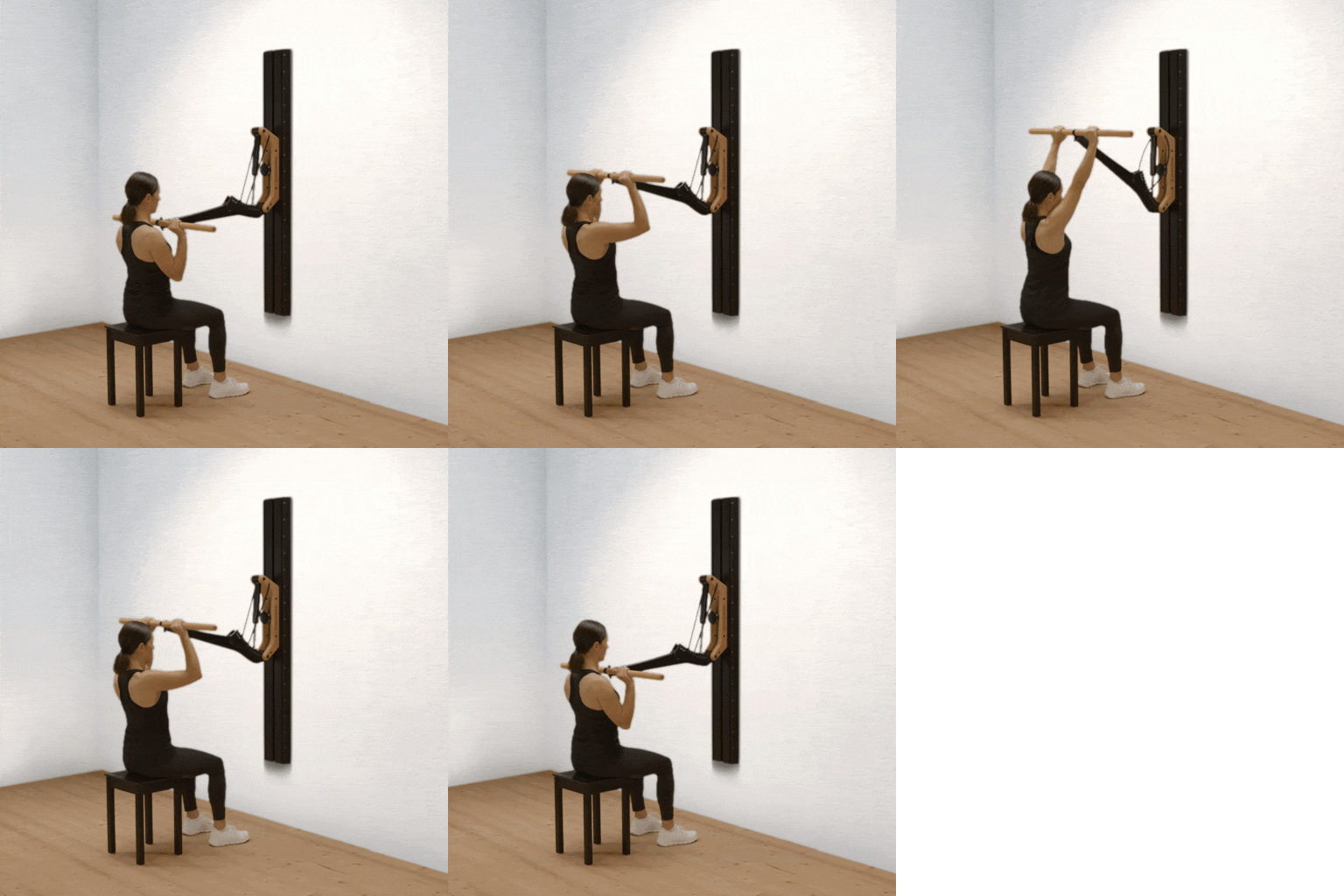
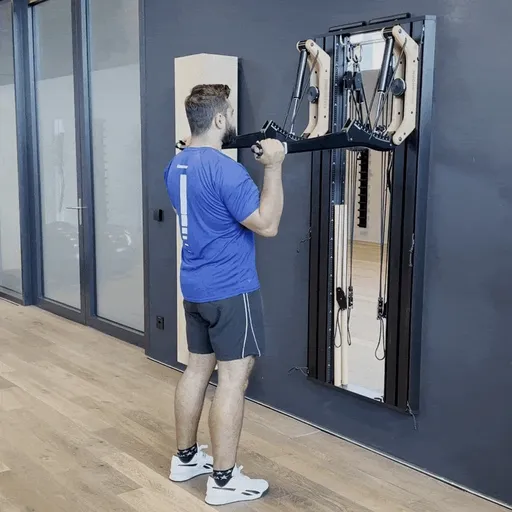
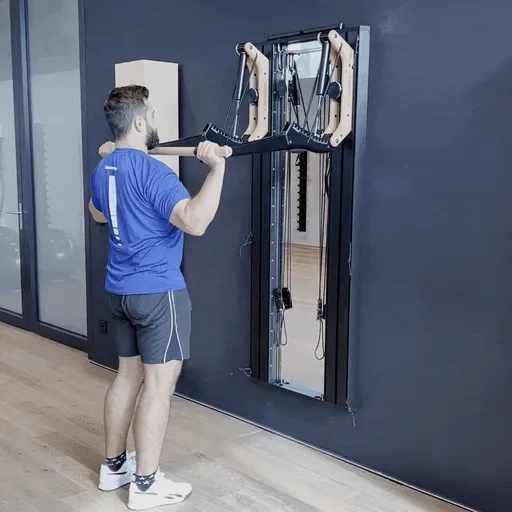
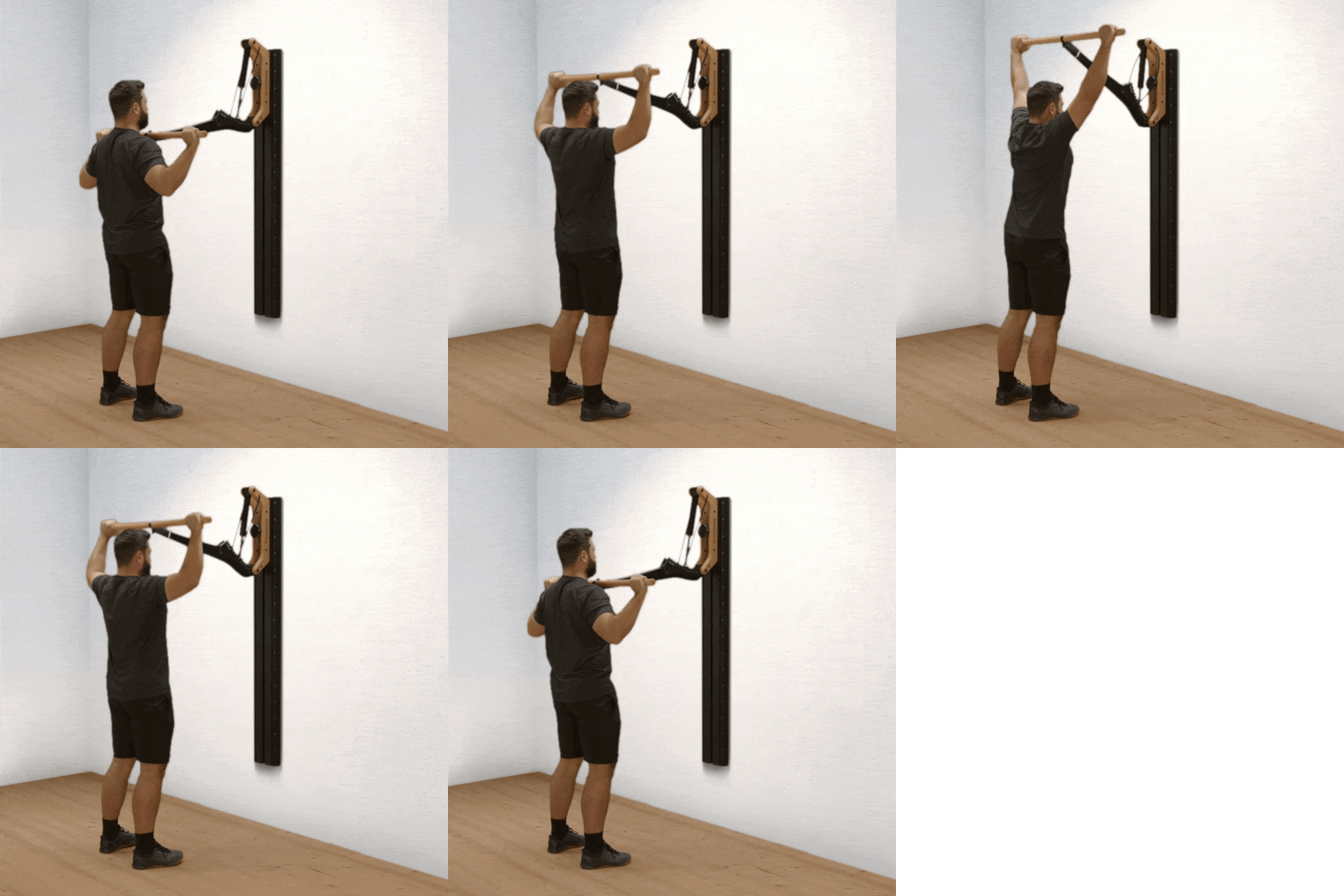
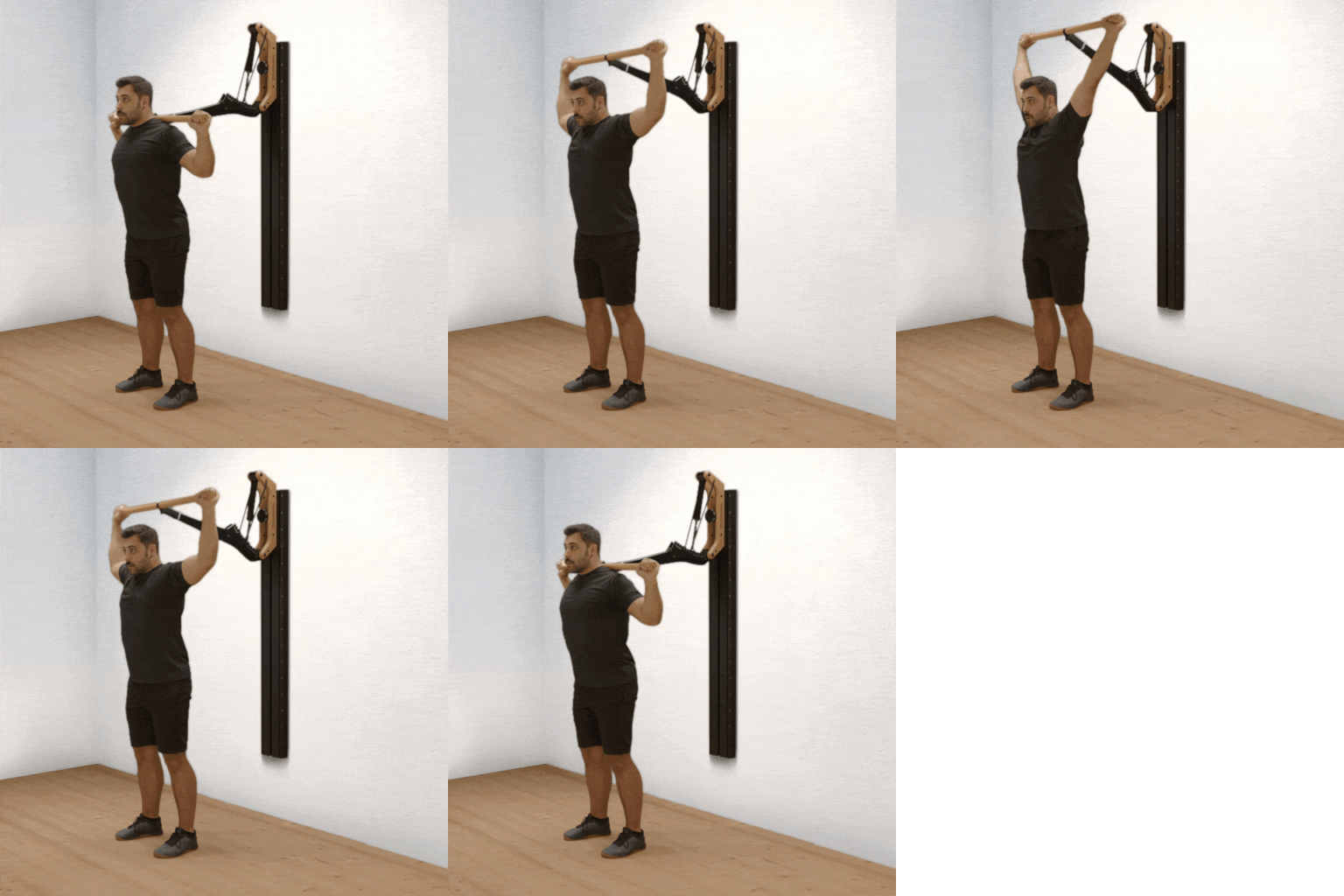
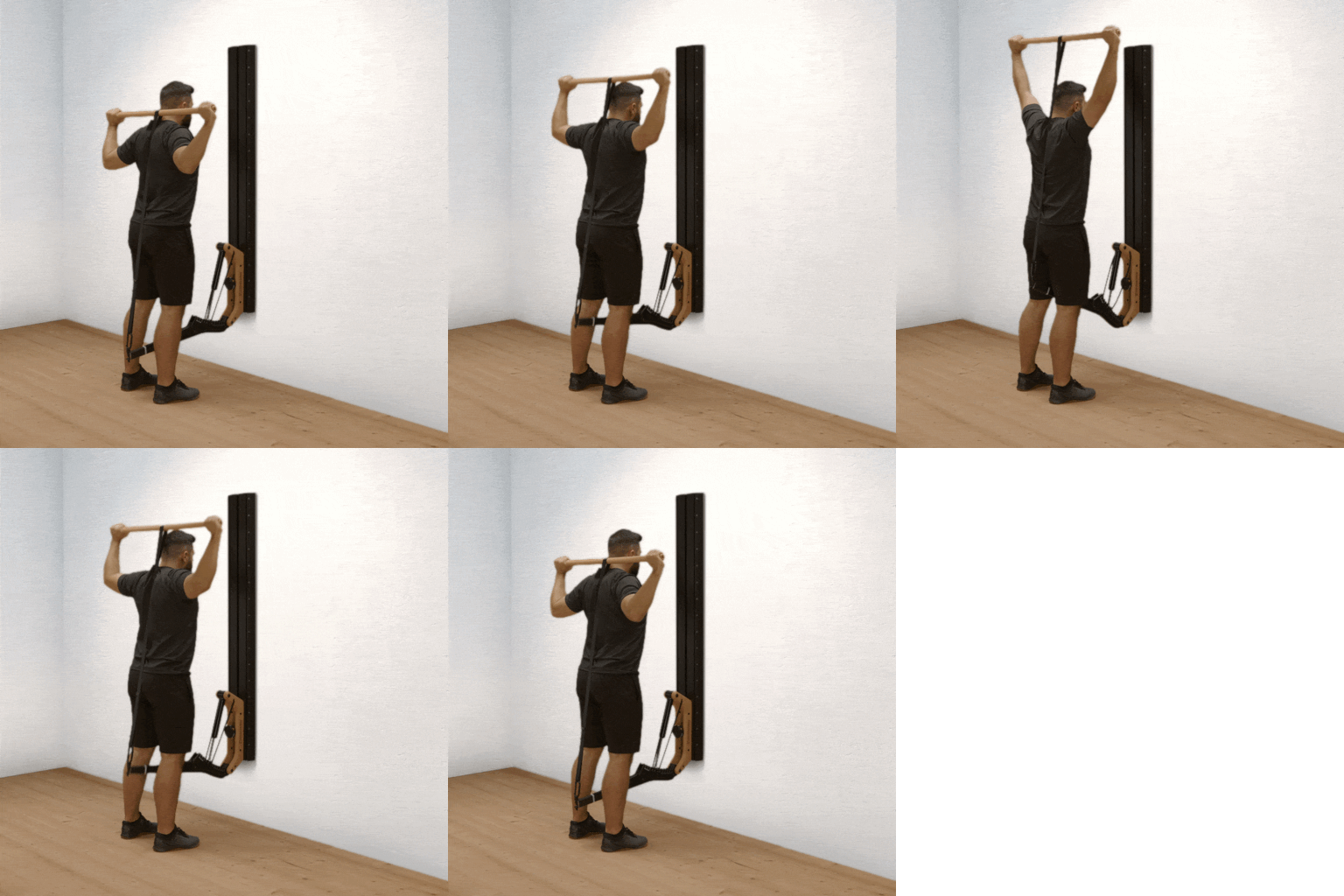
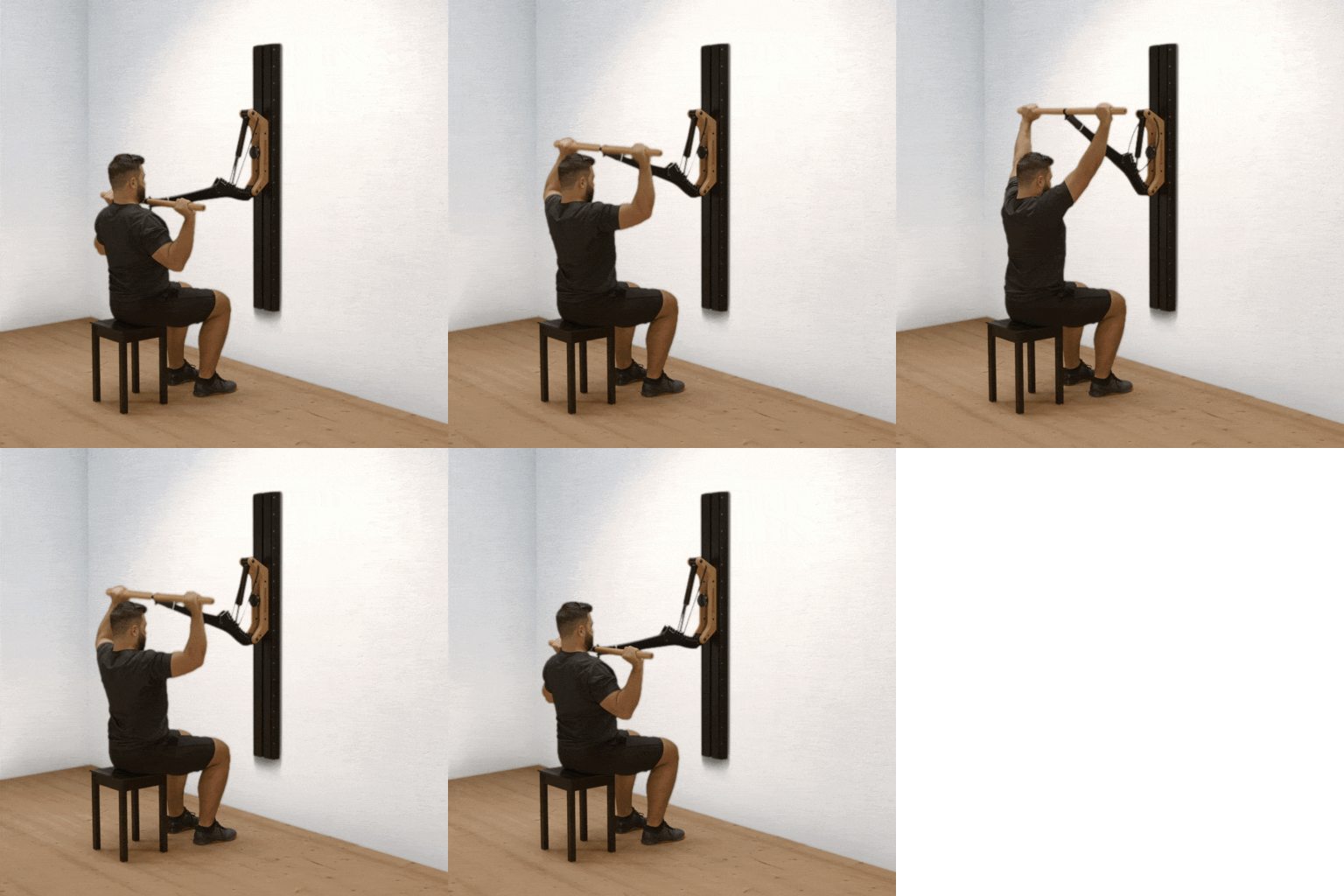
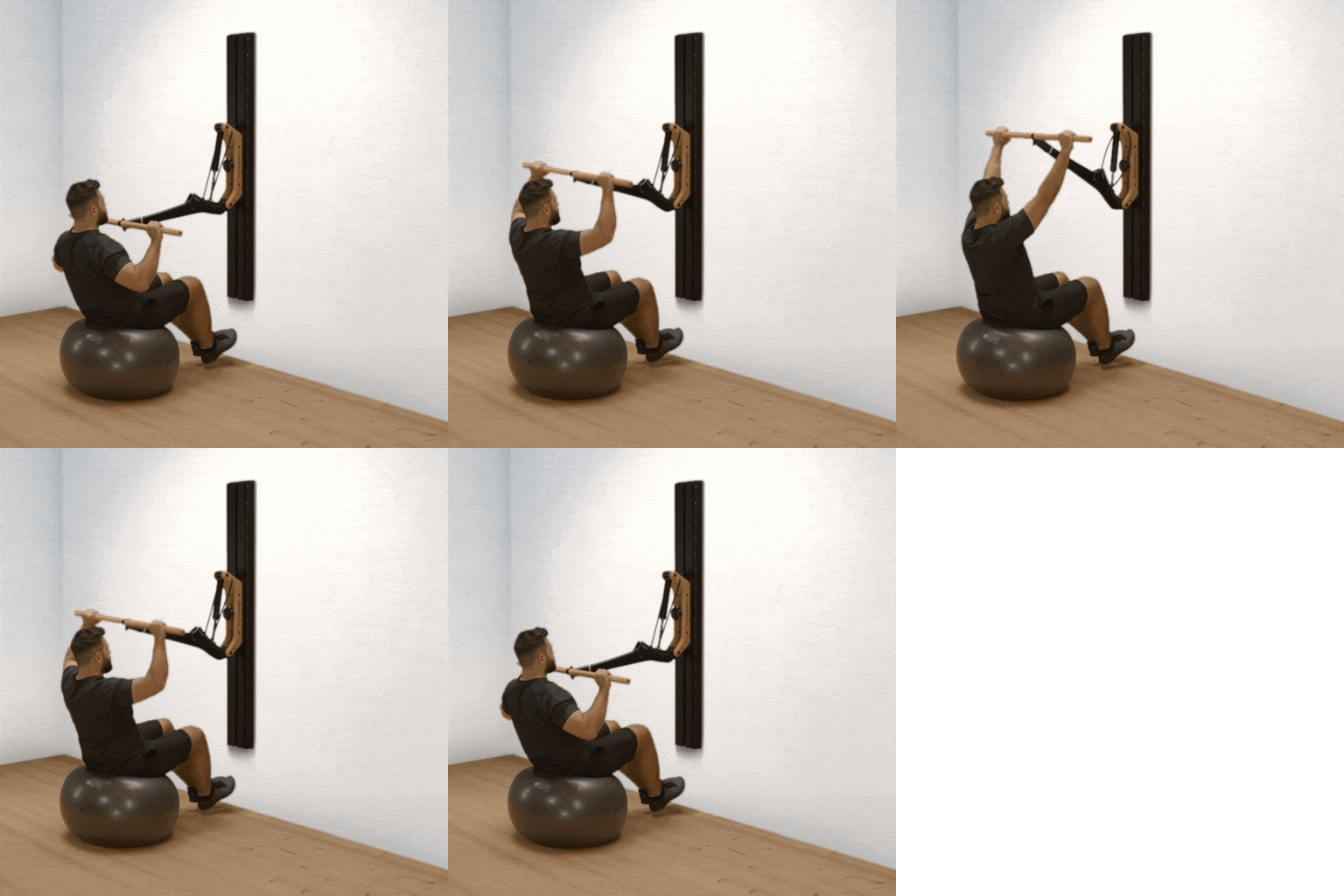
The close-grip shoulder press changes the hand placement compared to the classic variation. With the closer grip, the arms move closer to the body, which alters the leverage and affects the shoulder muscles — especially the front and middle parts of the deltoid — differently. The close grip can also reduce strain on the shoulders and joints because the elbows are positioned closer to the body’s center, distributing the leverage forces more efficiently.
What effect does the exercise achieve?
Focus on front & middle shoulders: The close grip enhances activation of the anterior and middle deltoid muscles, as the range of motion requires these parts to work more.
Supports shoulder stability: By reducing the lateral lever arms, less stress is placed on the shoulder joints and rotator cuff.
Stronger connection to the triceps: The close grip also increases triceps involvement, as it is more engaged in the extension with narrower hand spacing.
Better posture & control: The position requires more core tension, helping the body remain stable and preventing excessive lower back arching.
Variation & joint protection: For those with shoulder issues or who want to reduce joint stress, the close grip provides a gentler alternative without sacrificing pressing performance.
How does this exercise fit into the Big 5 concept?
The Big 5 include the fundamental exercises: squat, deadlift, bench press, pull-up or lat pulldown, and shoulder press. Even though the close-grip shoulder press is not part of the classic Big 5, it is a meaningful alternative to the standard shoulder press:
The close-grip variation modifies the classic movement to influence pressure distribution and muscle activation specifically.
It helps address weaknesses that may occur with the traditional shoulder press — for example, when the shoulders are overloaded on the outside or when joint range of motion is restricted.
This exercise can be incorporated as a variation in training to overcome plateaus and enhance stability.
:format(webp))
)
)
)
)
)
:format(webp) "EISENHORN S Black Edition")
 "EISENHORN S Black Edition")