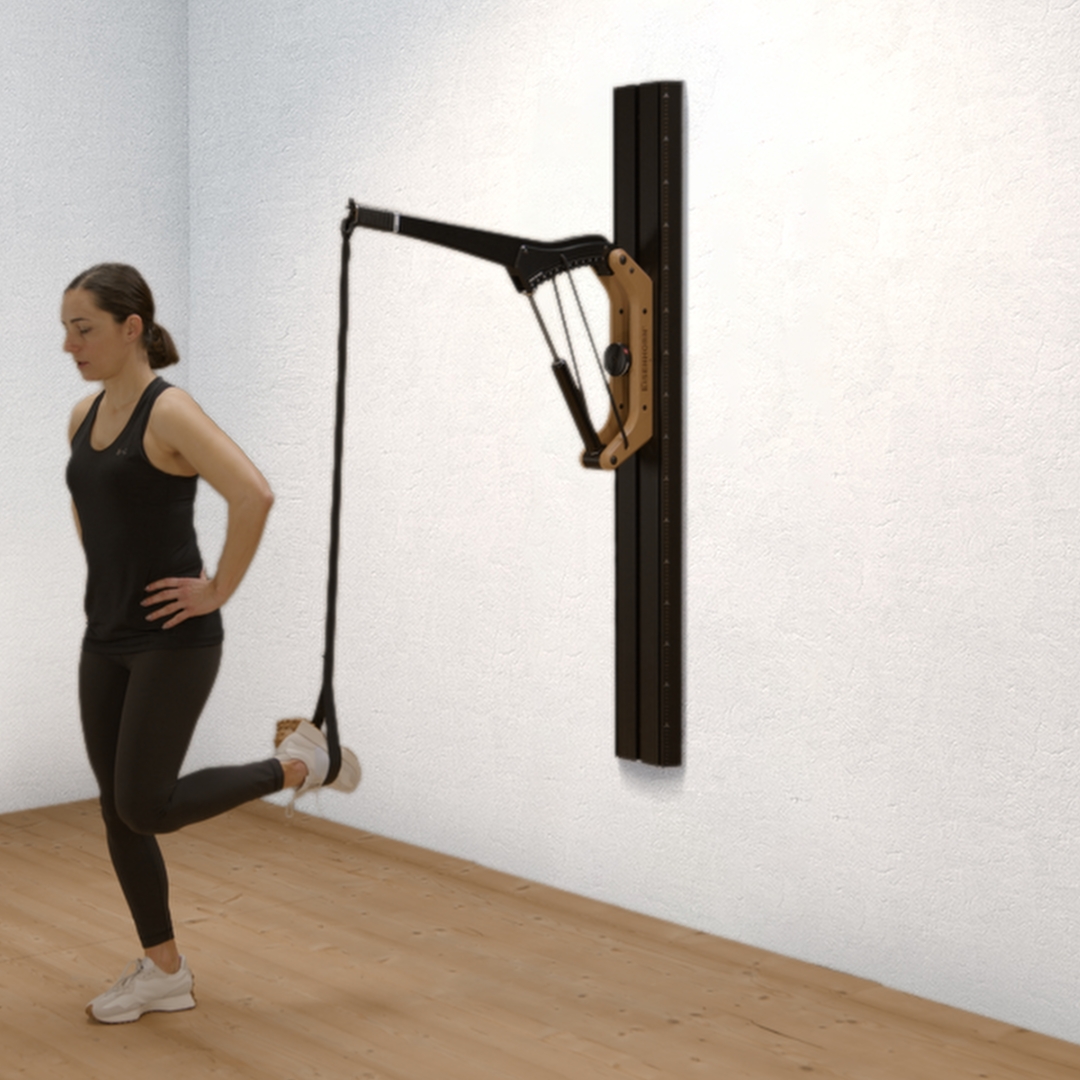


What makes this exercise particularly effective?
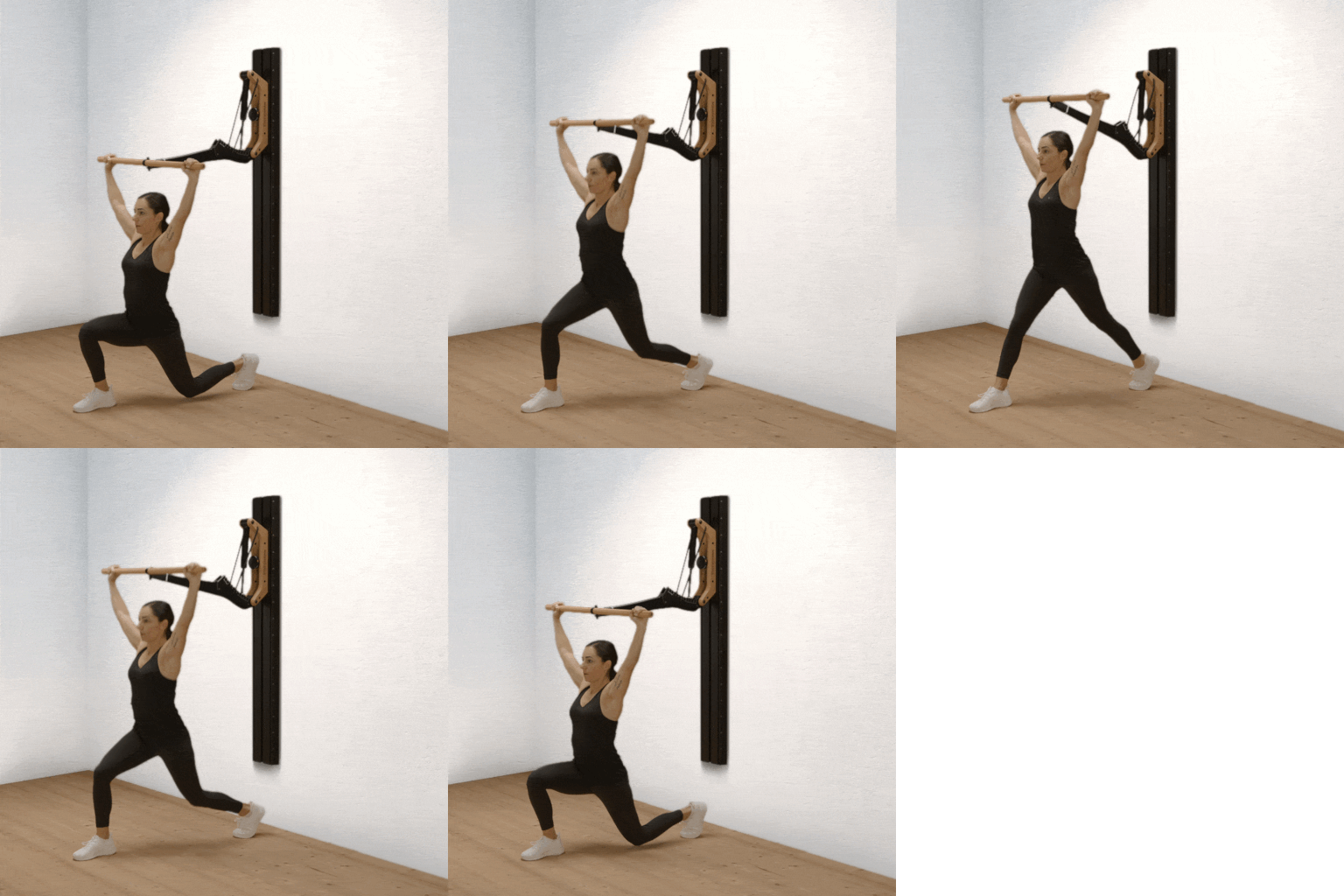
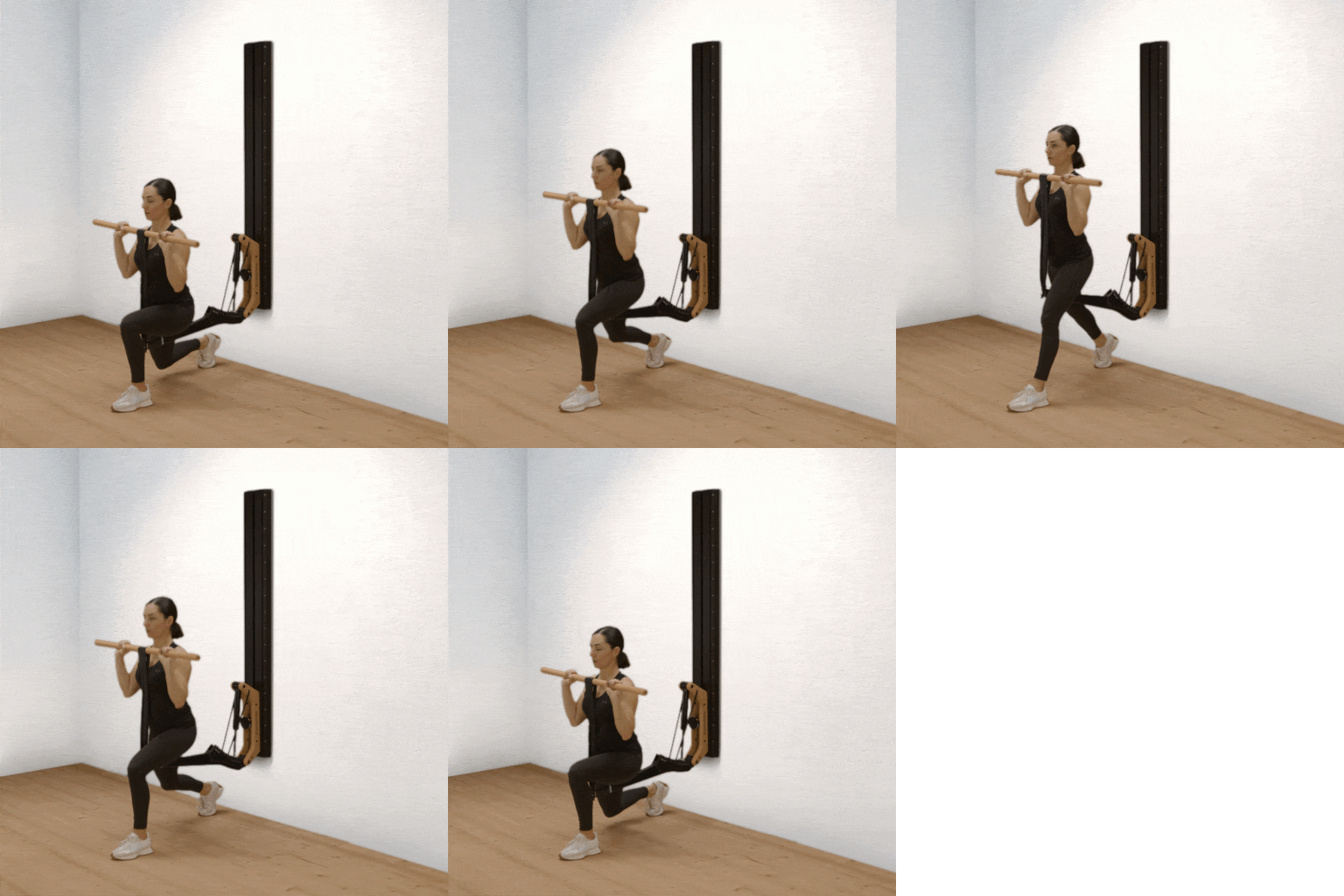
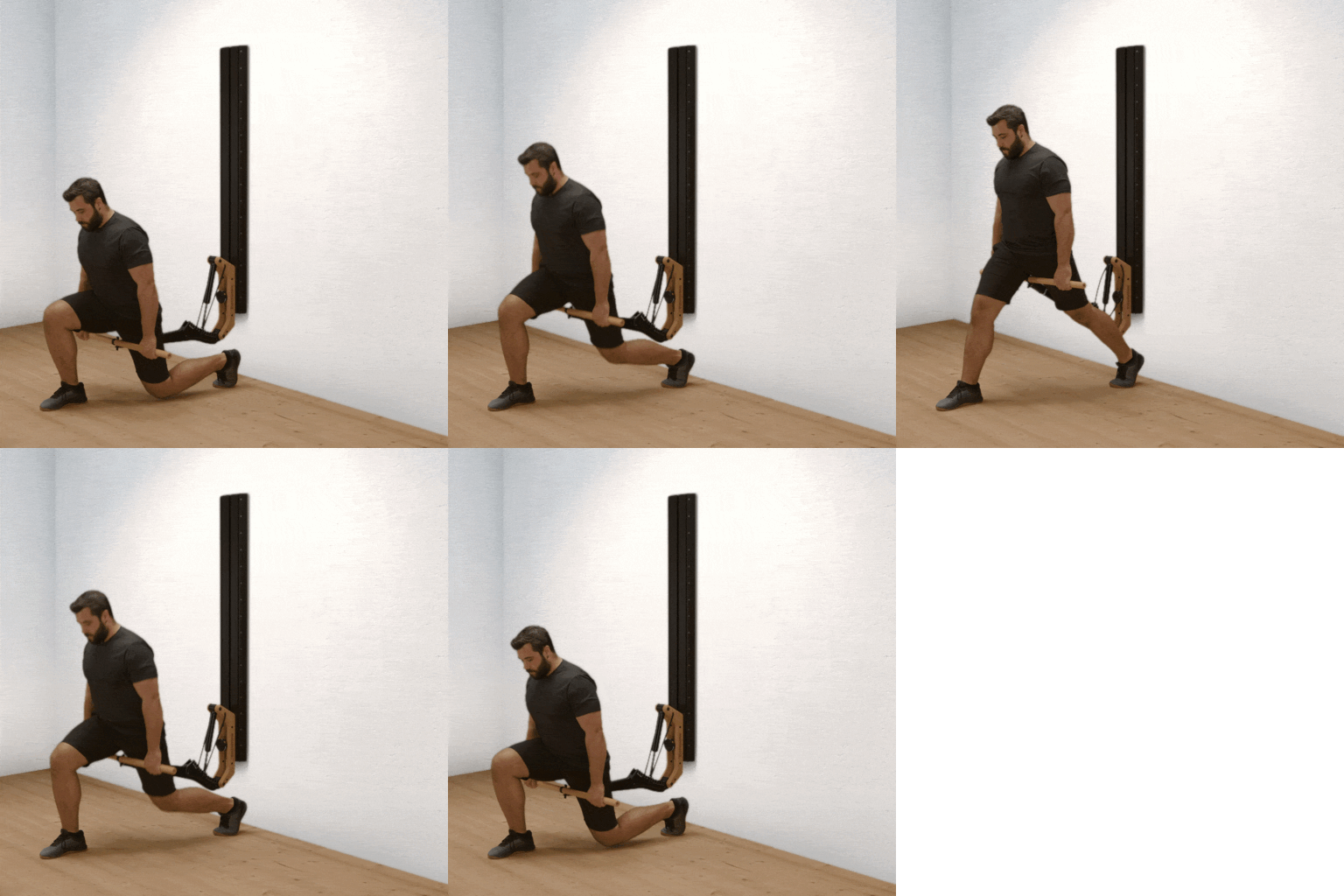
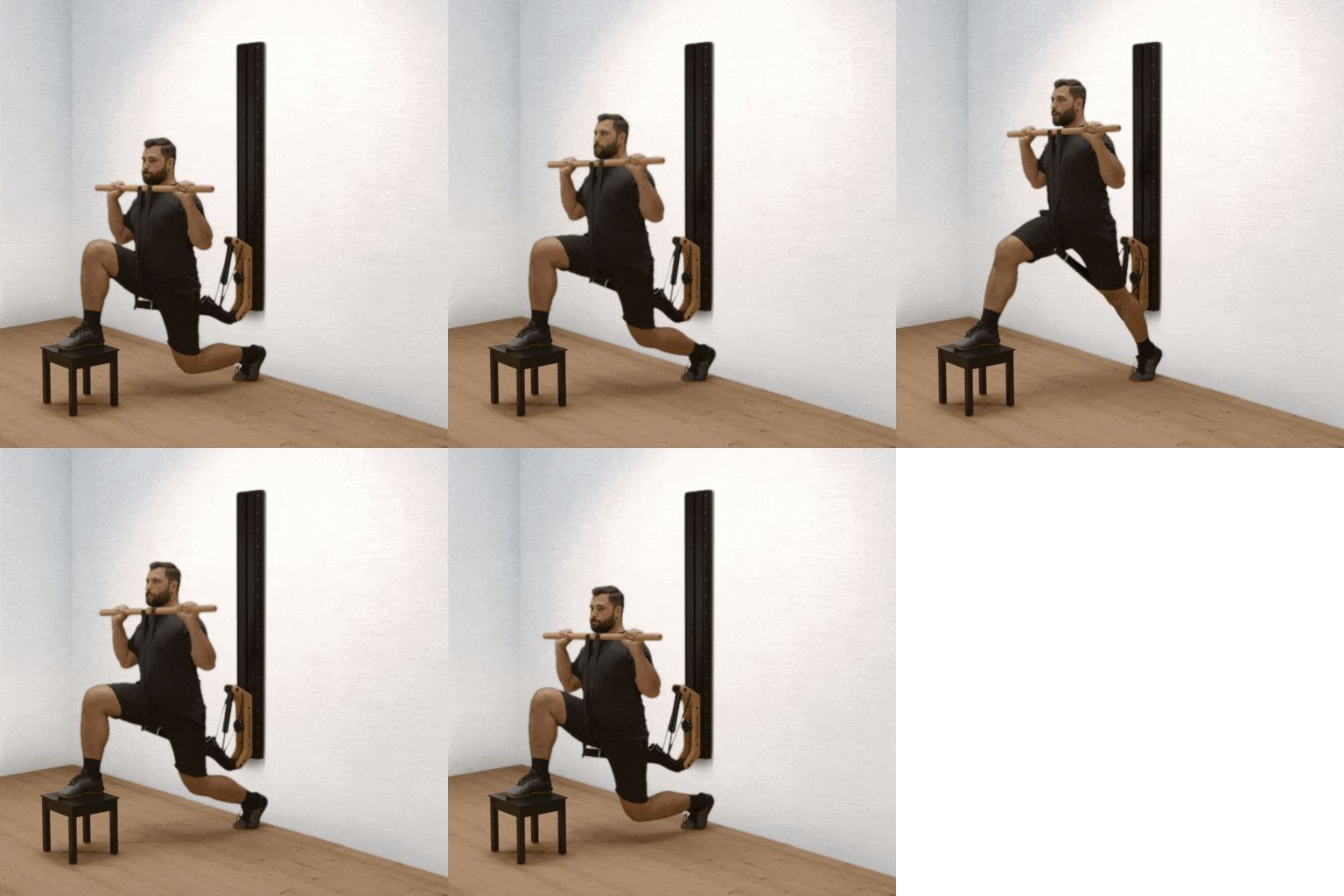
Lunges with resistance bands increase the intensity of the classic lunge by adding extra complexity through the band. This not only enhances activation of the target muscles, but also improves balance, coordination, and core stability.
What effect does the exercise achieve?
Full-body activation with focus on legs and glutes: Lunges effectively train the quadriceps, hamstrings, glutes, and adductors, while the band adds an extra stability challenge.
Improved balance and coordination: The added instability from the band engages the core muscles, promoting better overall body control.
How does this exercise fit into the Big 5 concept?
The Big 5 include the fundamental exercises: squat, deadlift, bench press, pull-up or lat pulldown, and shoulder press. Lunges with resistance bands can be a valuable addition to the Big 5 training concept:
Unilateral training and muscular balance: Training one side at a time helps correct muscular imbalances and develops stability that synergizes with Big 5 movements.
Core and hip stability: The increased core engagement strengthens the areas necessary for clean and safe execution of all basic exercises.
Versatility and progression: The resistance band allows for numerous variations (e.g., backward or lateral lunges), making the training program diverse, adaptable, and effective.

:format(webp))
)
)
)
)
)
:format(webp) "EISENHORN S Black Edition")
 "EISENHORN S Black Edition")