What makes this exercise particularly effective?
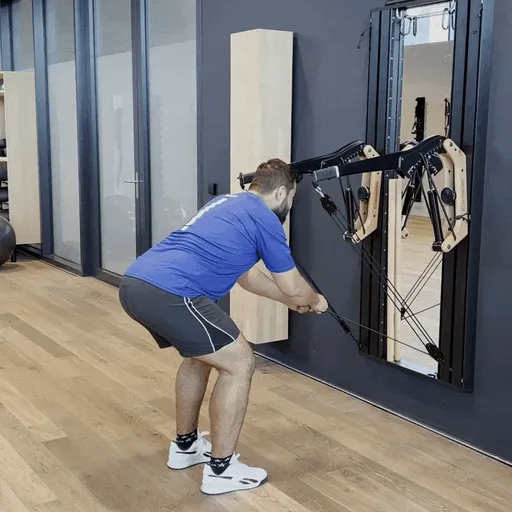
The asymmetrical reverse fly on the cable machine combines the classic reverse fly movement with an asymmetric approach. One hand performs the pull from the upper position while the other remains in the lower position, hooked on EISENHORN DS. This variation intensively engages the shoulder muscles and upper back muscles, as the arms are crossed, creating different movement angles. The asymmetric execution increases coordination demands and further activates core stability, as the body must compensate for the uneven load.
What effect does the exercise achieve?
Targeted strengthening of the rear shoulders: The posterior deltoid, often neglected in other exercises, is specifically activated.
Promotion of core stability: The asymmetric load activates the core muscles to maintain balance and posture.
Improving shoulder health: Strengthening the rotator cuff helps prevent shoulder injuries.
Improvement of movement coordination: Alternating arm movements enhance inter- and intramuscular coordination.
Compensation of muscular imbalances: The asymmetric execution helps identify and correct imbalances between the left and right sides of the body.
How does this exercise fit into the Big 5 concept?
The Big 5 include the fundamental exercises: squat, deadlift, bench press, pull-up or lat pulldown, and shoulder press. Even though the asymmetrical reverse fly is not part of the classic Big 5, it can be a valuable addition:
Supporting shoulder press and pull movements: A strong rear shoulder area improves performance in shoulder presses and pull-ups.
Promotion of movement quality: Enhancing shoulder stability makes Big 5 exercises safer and more effective.
Prevention of injuries: Strengthening the rotator cuff reduces the risk of shoulder injuries, which is beneficial within the context of Big 5 training.
Balancing muscular imbalances: The asymmetric execution helps detect and correct muscular imbalances between the two sides of the body.
:format(webp))
)
)
)
)
)
:format(webp) "EISENHORN S Black Edition")
 "EISENHORN S Black Edition")