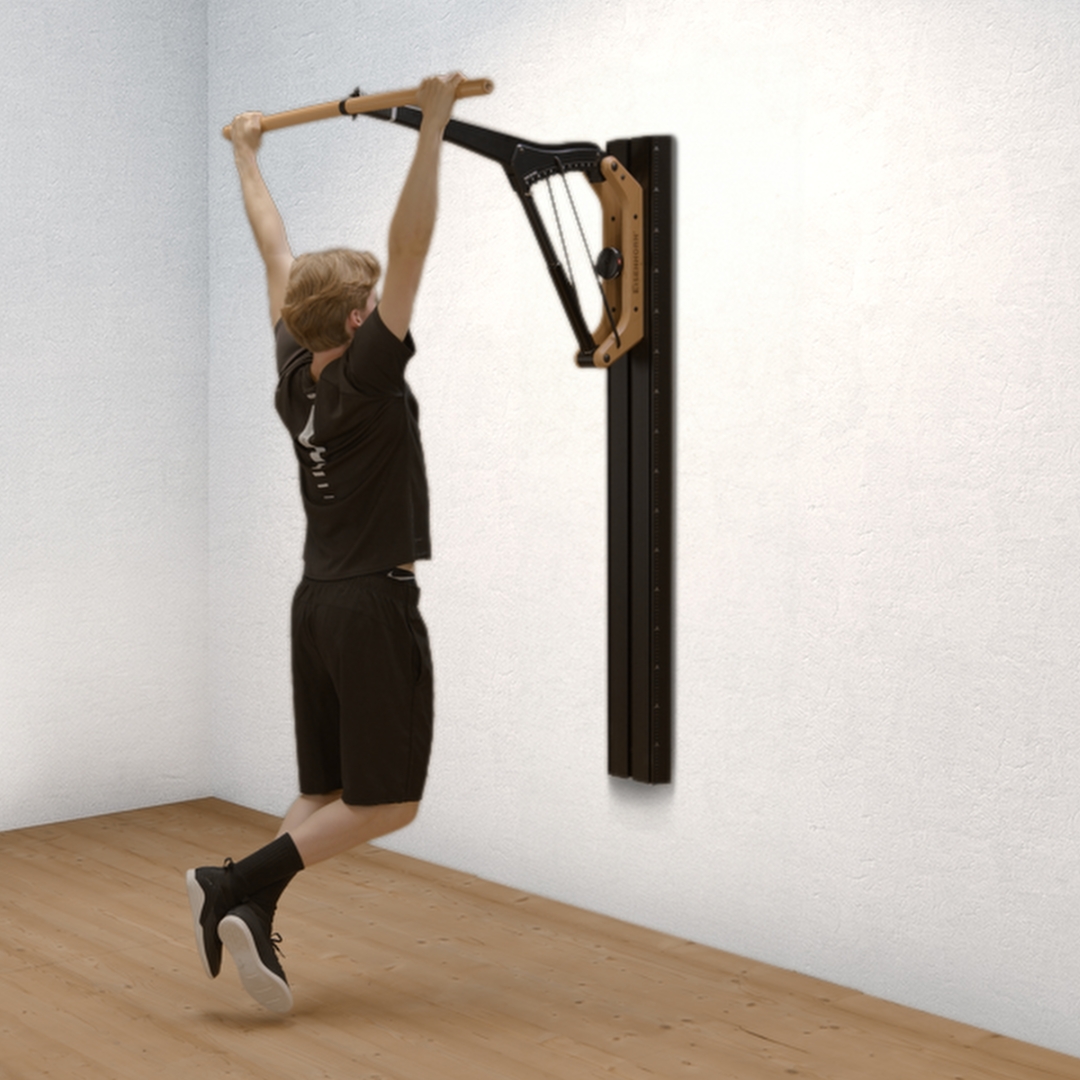
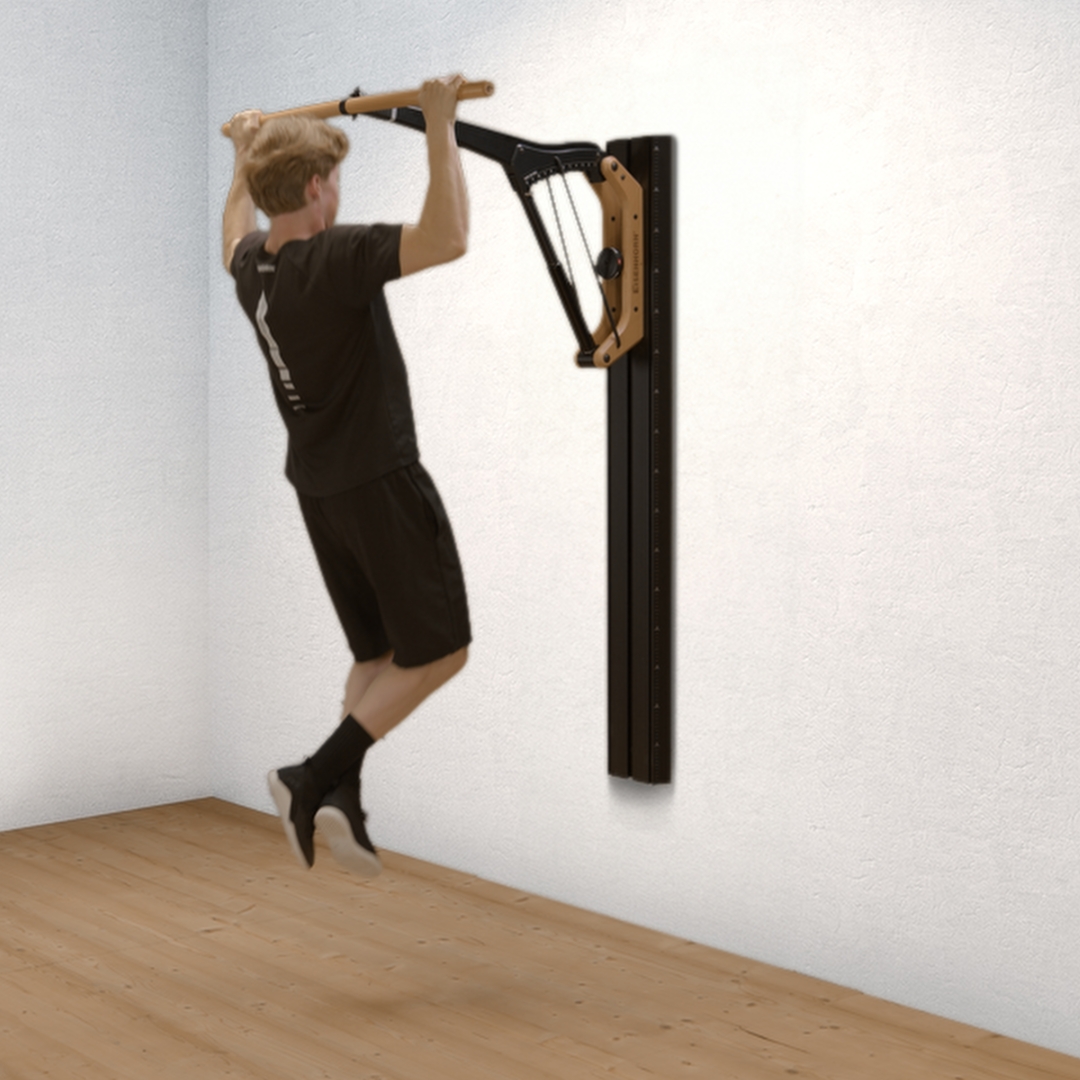

What makes this exercise particularly effective?
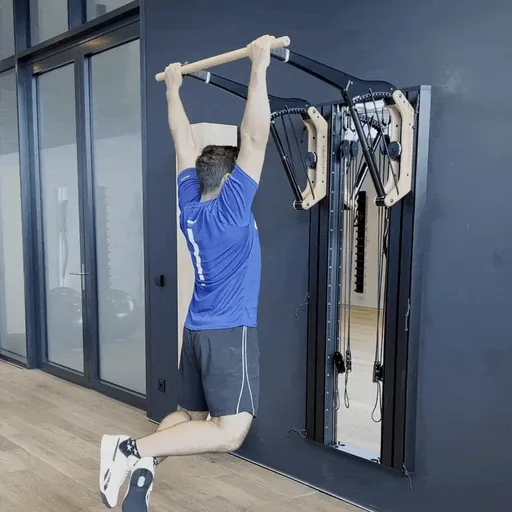
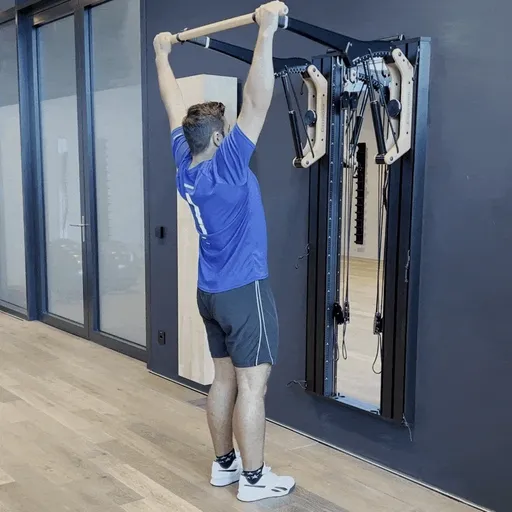
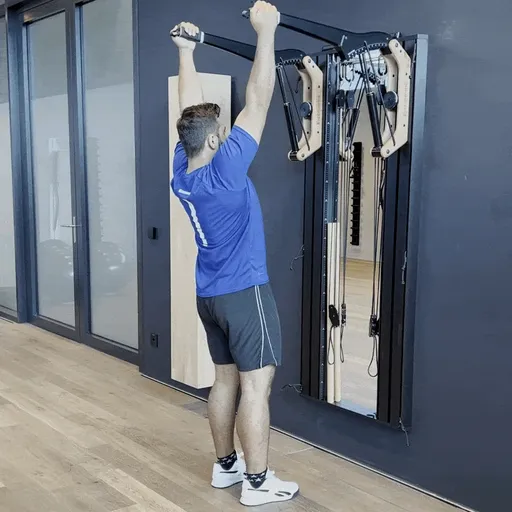
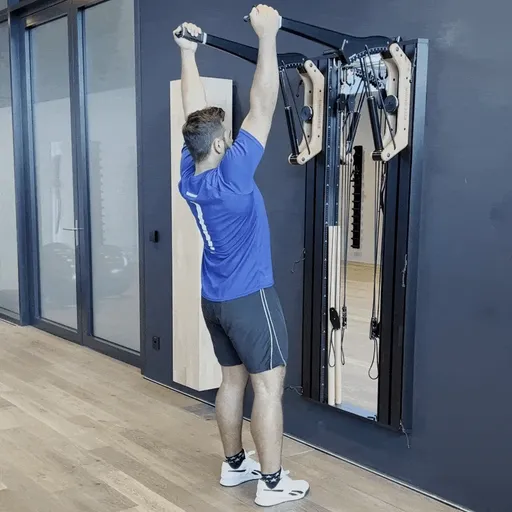
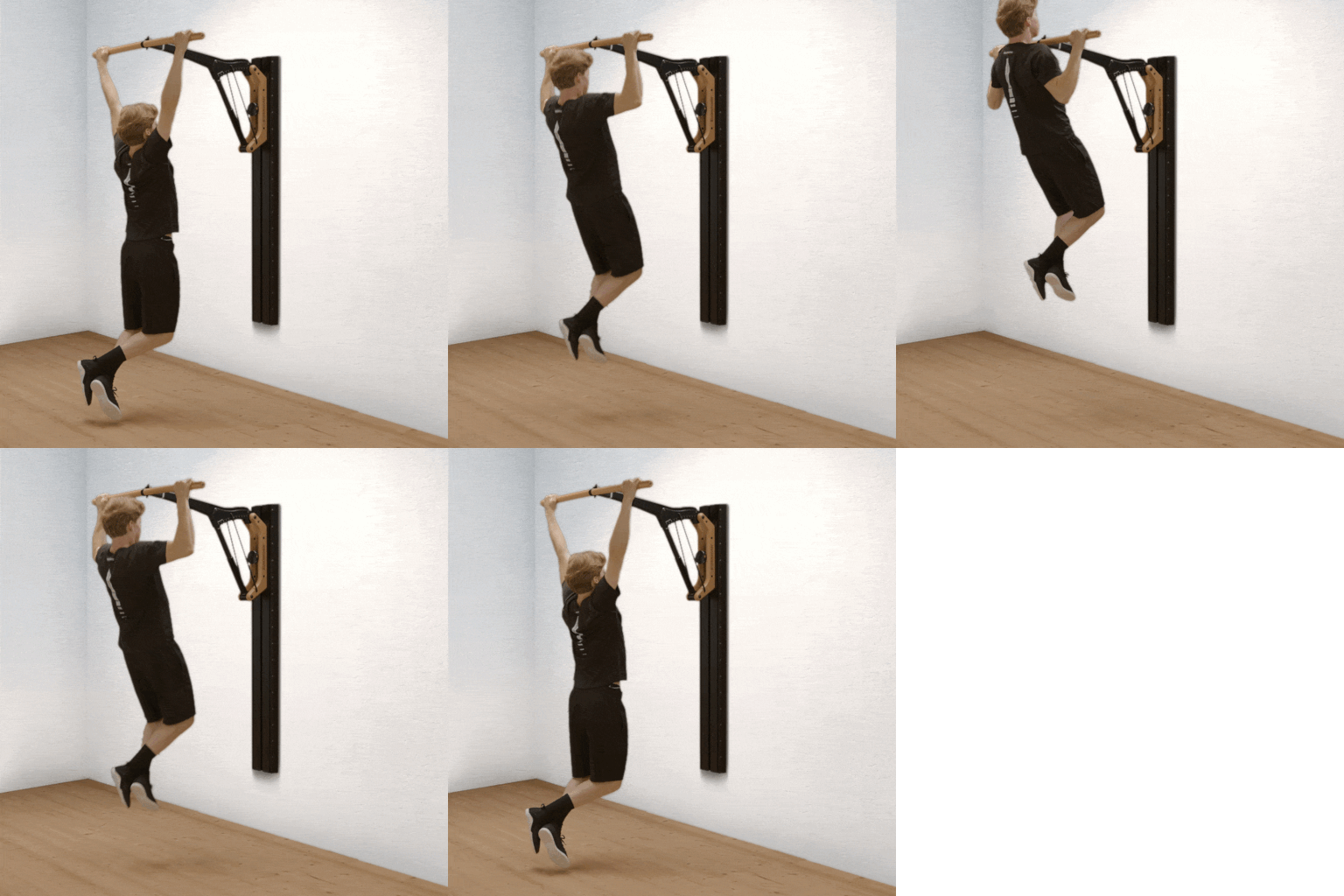
The pull-up is one of the most functional basic exercises for the upper body. It primarily targets the latissimus dorsi—our broad back muscle—through a closed, multi-joint movement. The trapezius, rhomboids, biceps, and the entire core are also engaged to maintain trunk stability. The upper body is pulled completely up to the chest, resulting in maximal active engagement of the back muscles.
What effect does the exercise achieve?
Intensive back strengthening: Primary activation of the latissimus dorsi with supporting activity from the trapezius, rhomboids, and lower back muscles.
Arm & grip strength: The biceps and forearm muscles work intensely, improving overall grip strength.
Core and posture benefits: The entire core is activated, enhancing body control and stability.
Bone density & joint health: Regular bodyweight training can increase bone density and maintain shoulder joint mobility.
Versatile & efficient: Targets multiple relevant muscle groups, making it ideal for a home gym, for example on the EISENHORN strenght station S or DS.
How does this exercise fit into the Big 5 concept?
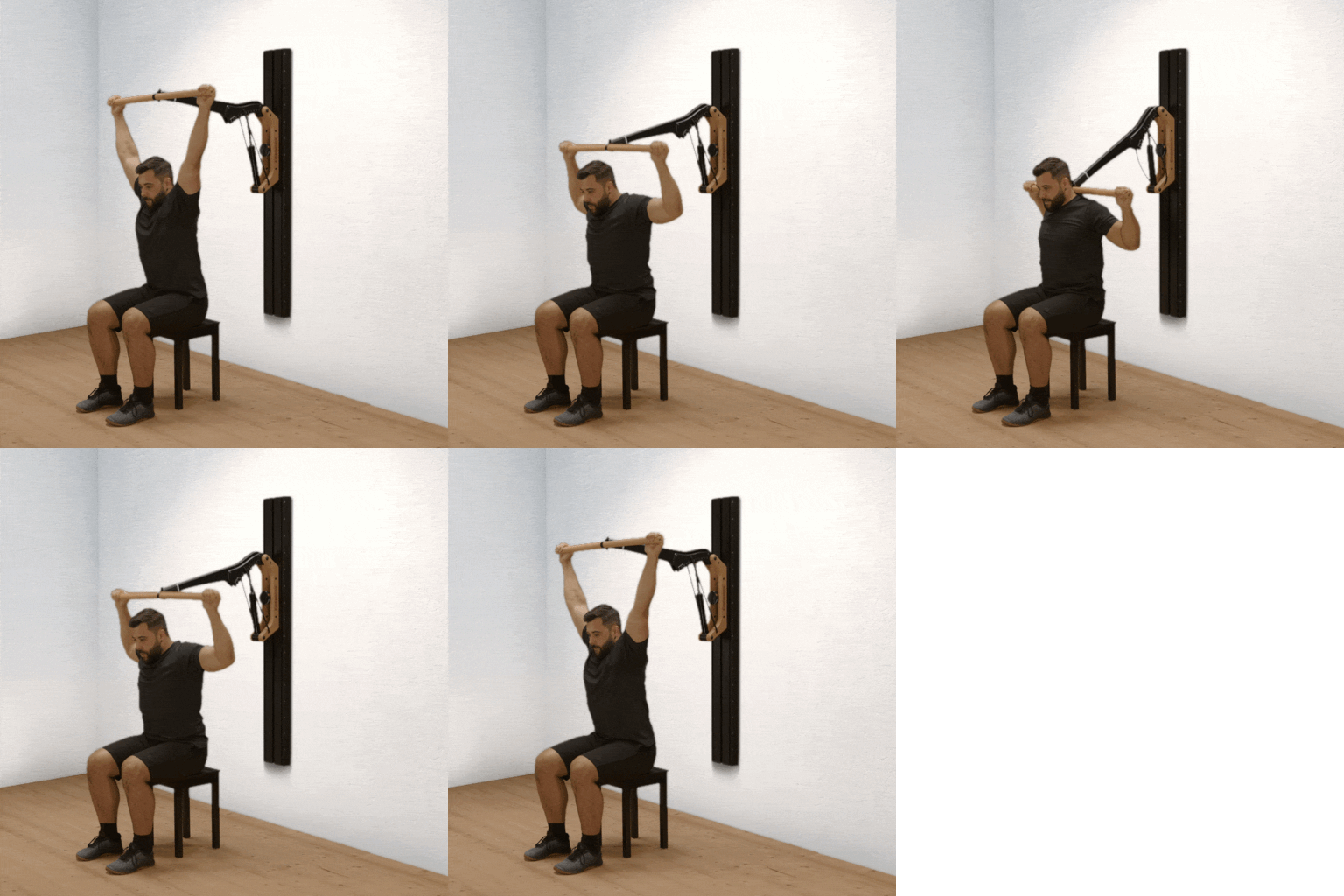
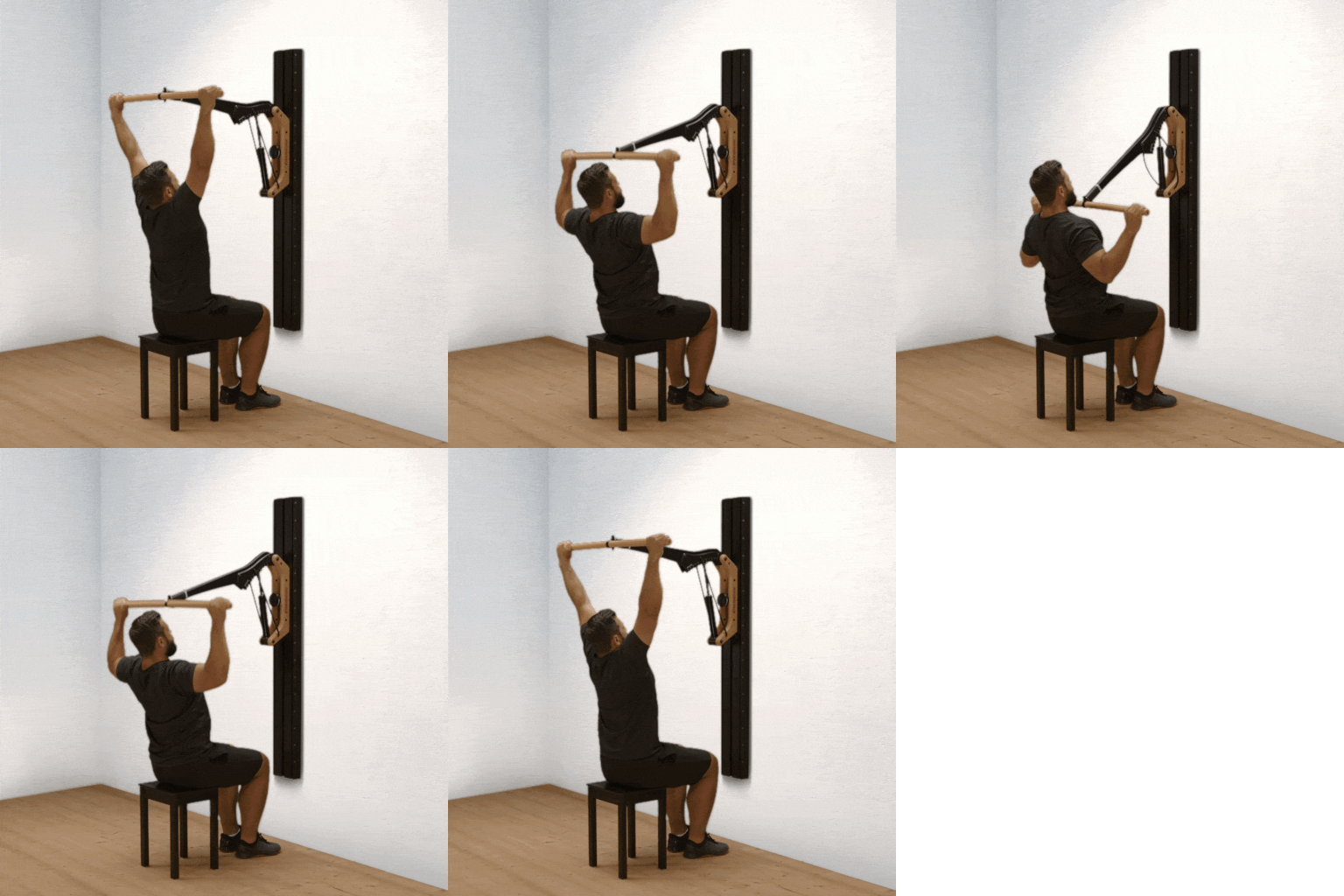
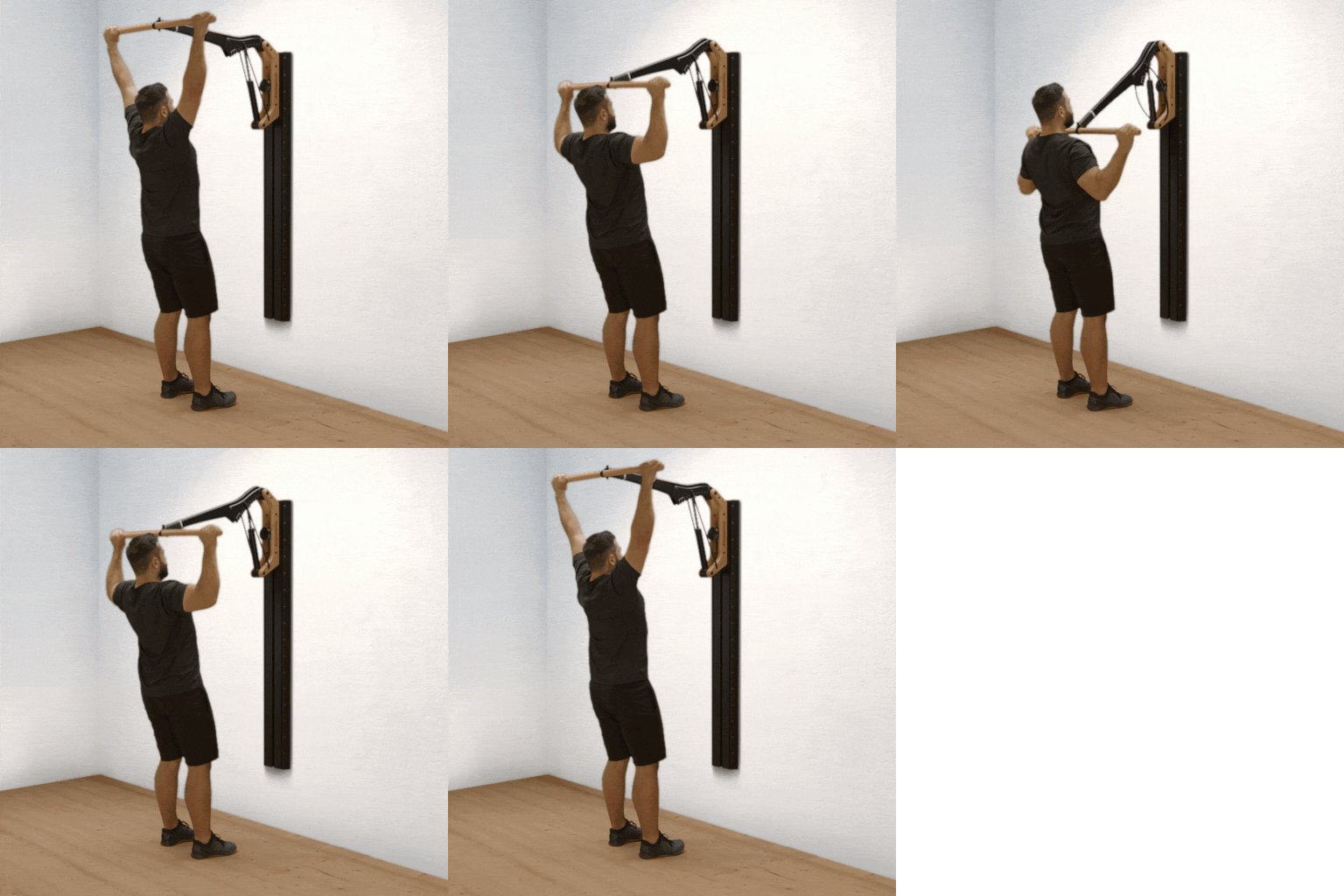
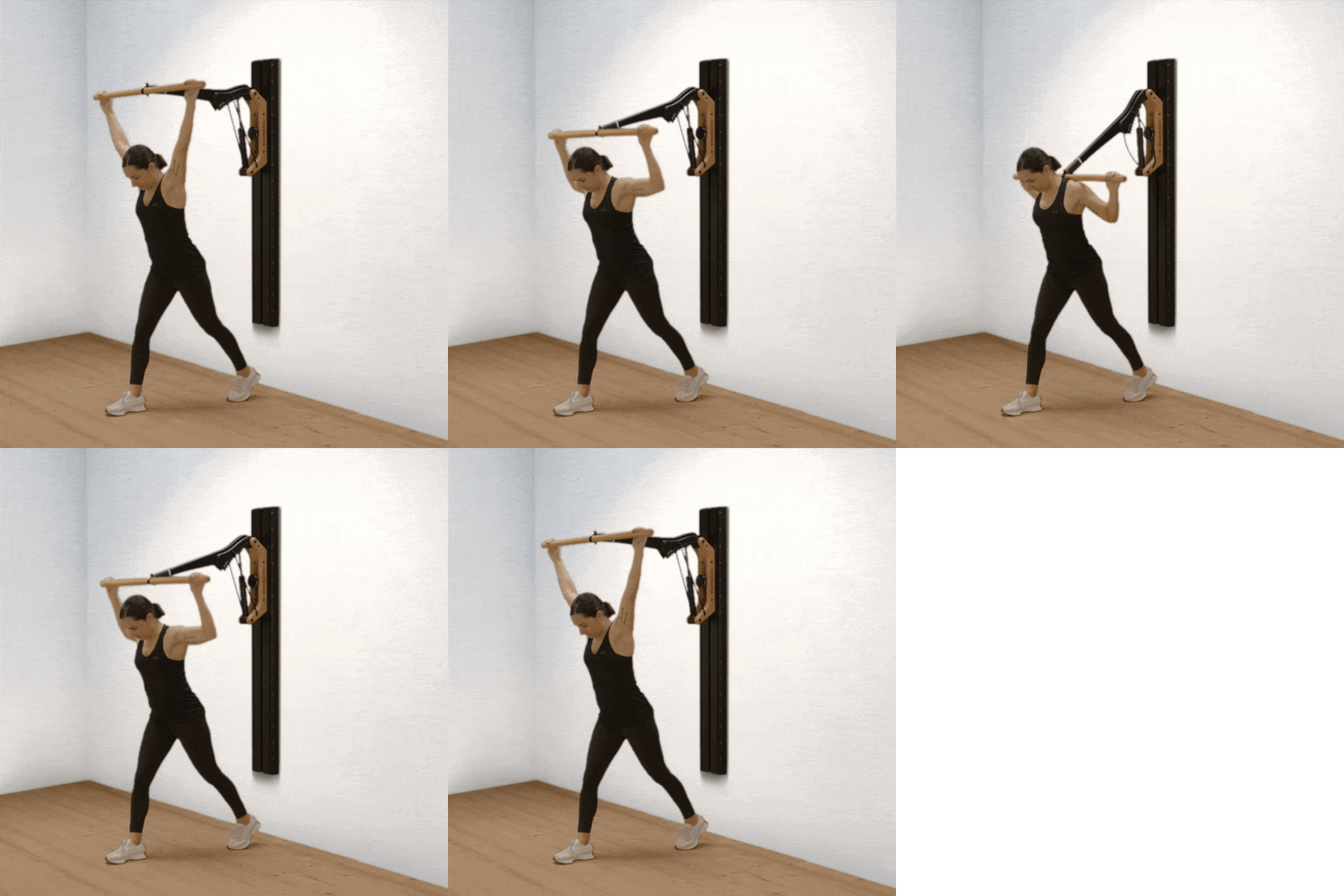
The Big 5 include the fundamental exercises: squat, deadlift, bench press, pull-up or lat pulldown, and shoulder press. The pull-up is a key component of this concept and provides:
Upper body balance: Pulling movements are optimally complemented by pushing exercises like the bench press, which is essential for muscular symmetry.
Joint & posture optimization: Strong activation of the back and core enhances performance, stability, and reduces injury risk in all basic exercises.
Challenging progression: Every improvement in pull-up performance is a strong indicator of functional core strength and upper-body pulling capacity.


:format(webp))
)
)
)
)
:format(webp) "EISENHORN S Black Edition")
 "EISENHORN S Black Edition")