What makes this exercise particularly effective?
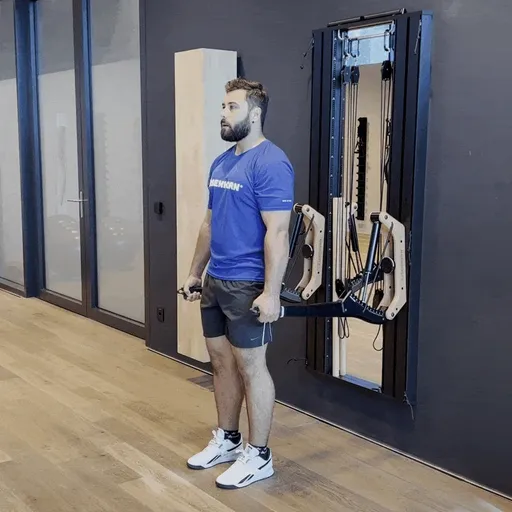
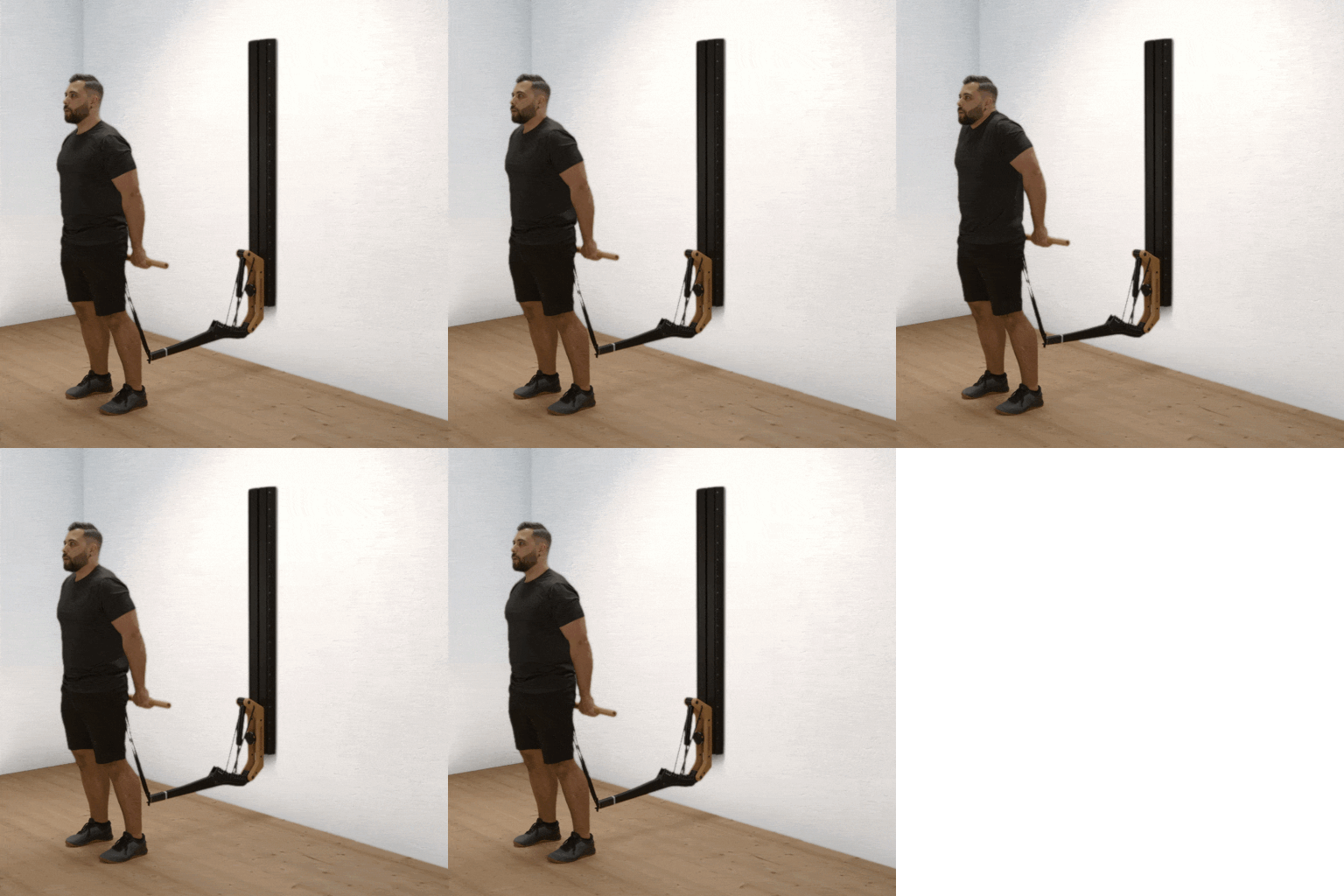
Alternating shrugs with a grip on the horn at the EISENHORN DS activate the neck muscles and upper trapezius muscles in isolation and target them intensively. The movement is controlled and performed stably through the horn handle — momentum is minimized, allowing full focus on conscious muscle contraction. The arms remain extended, keeping the leverage constant and the stimulus on the shoulder muscles clear and direct. Alternating execution also enhances neuromuscular coordination, preventing one side from compensating for the other.
What effect does the exercise achieve?
Targeted neck and trapezius strengthening: The upper trapezius and neck muscles are trained in isolation.
Muscle balance & compensation: Alternating execution allows differences between the left and right sides to be recognized and corrected.
Controlled execution: Guided movement ensures precise contraction and minimizes momentum, ideal for clean muscle engagement.
Core stability & posture: The core is engaged to prevent deviations and maintain an upright body posture.
Intensified focus: Each repetition focuses on one side at a time, allowing for better muscle tension, slow control, and maximum activation.
How does this exercise fit into the Big 5 concept?
The Big 5 include the fundamental exercises: squat, deadlift, bench press, pull-up or lat pulldown, and shoulder press. Even though alternating shrugs with a grip on the horn are not part of the classical Big 5, they can be a meaningful addition:
Strengthening of accessory stabilizers: A strong neck and trapezius chain supports posture and stability during basic exercises, such as squats or deadlifts.
Increased shoulder/neck competence: In sports and daily life, a stable neck is essential — shrugs develop exactly this strength.
Balance training: Asymmetrical exercises help identify and correct muscular imbalances, contributing to injury prevention.
Varied stimulus: In combination with the Big 5, shrugs add a training component that specifically targets the upper pulling and stabilizing muscles.
:format(webp))
)
)
)
)
)
:format(webp) "EISENHORN S Black Edition")
 "EISENHORN S Black Edition")