What makes this exercise particularly effective?
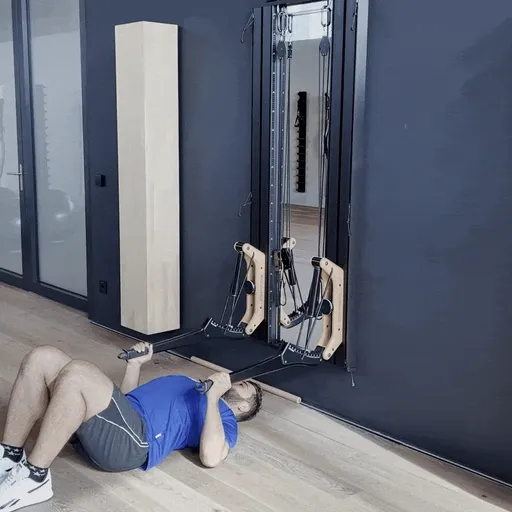
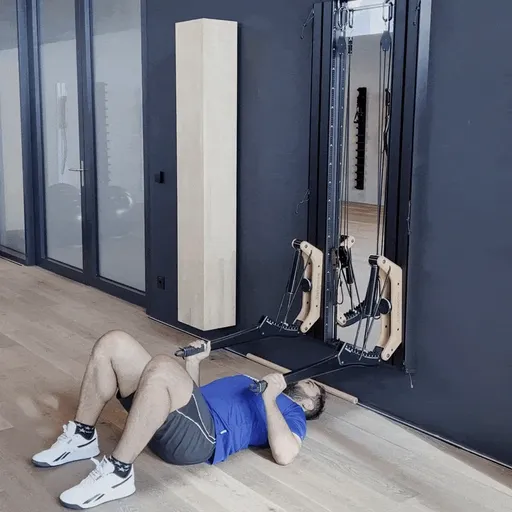
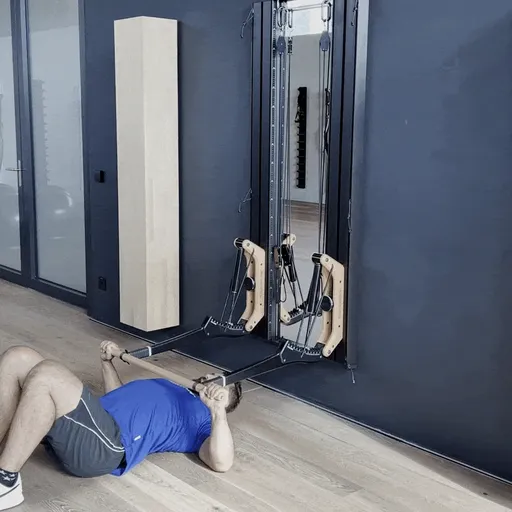
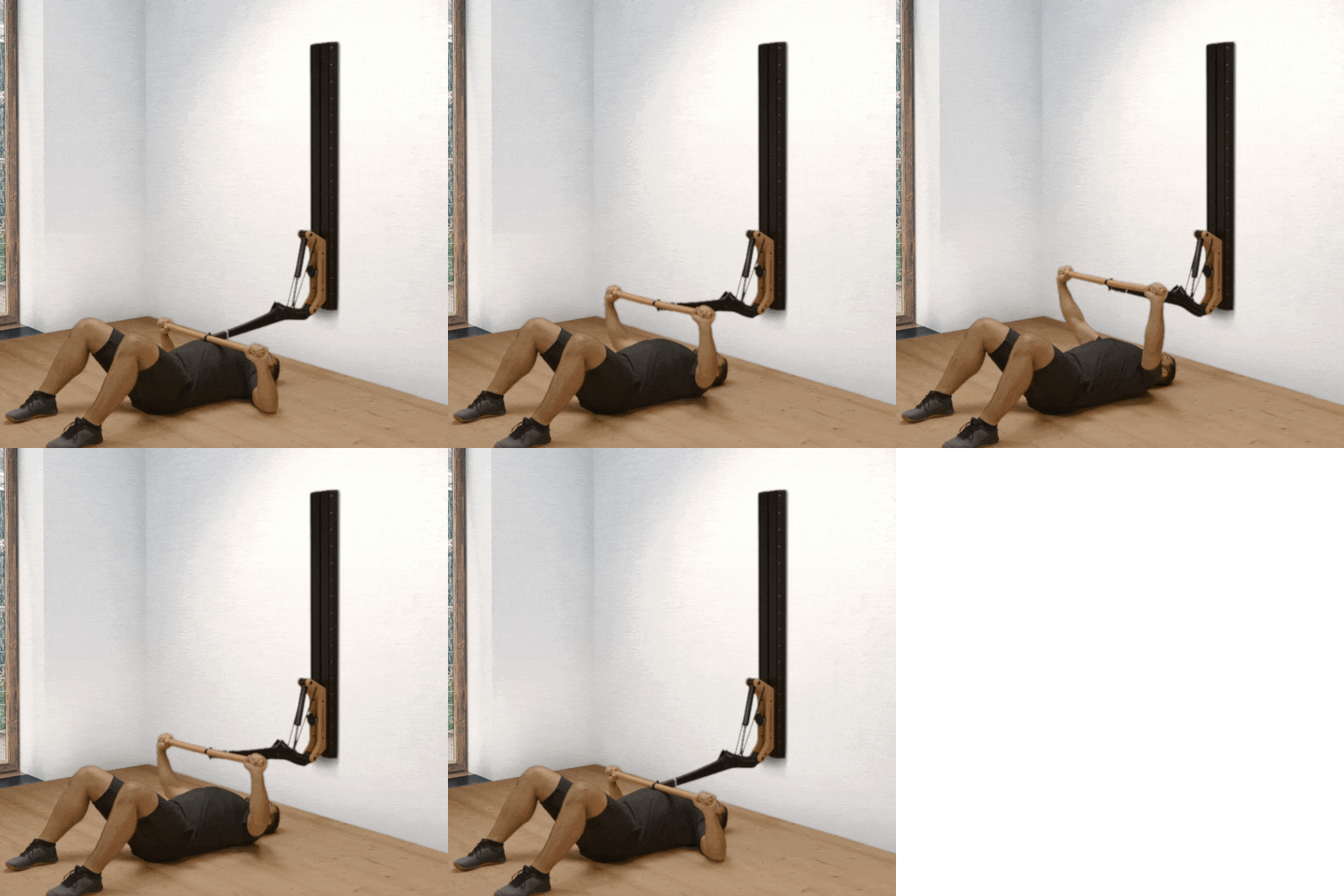
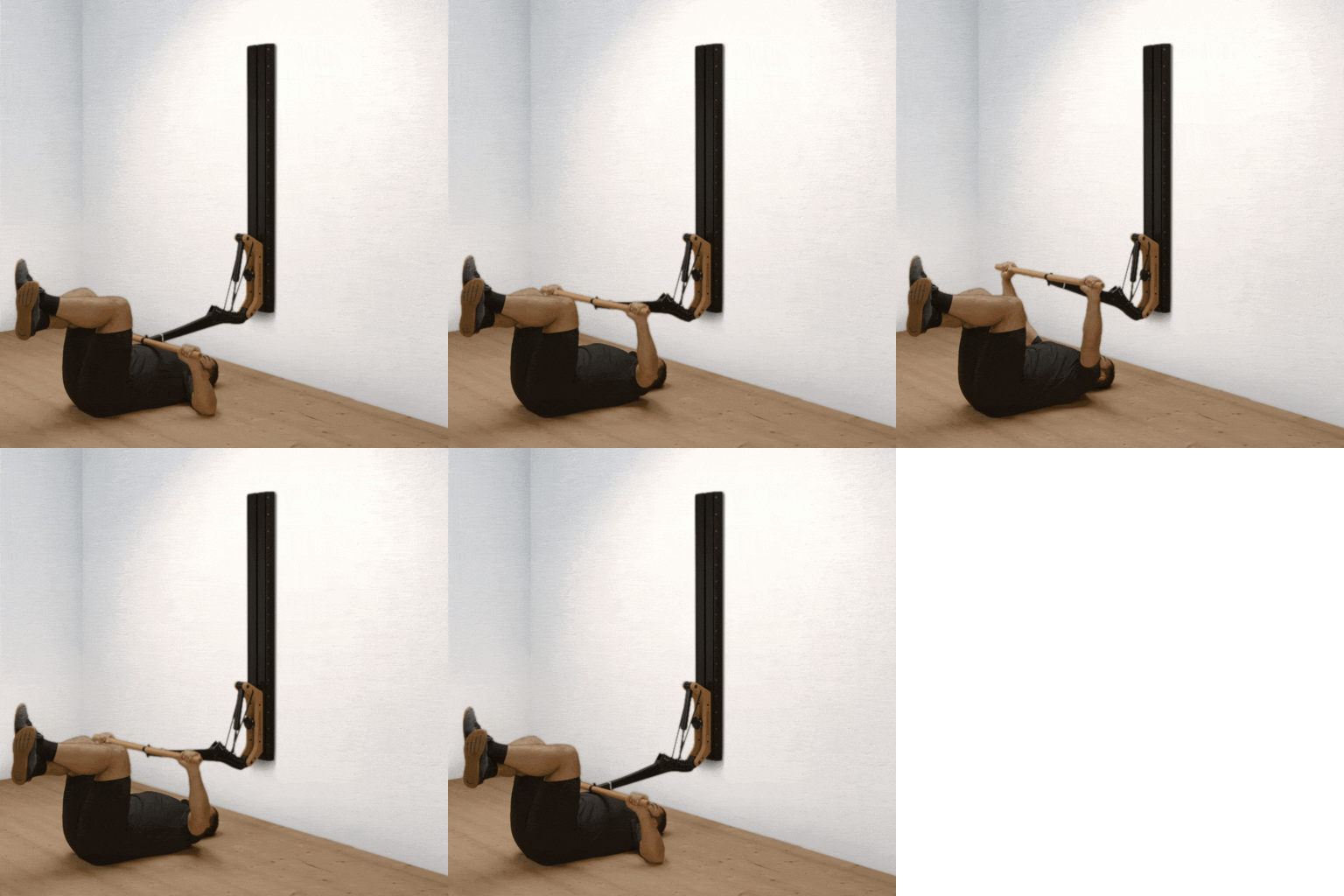
Bench press in bridge position (often called "Bridge Press" or "Glute-Bridge Bench Press") combines the classic bench press with a hip elevation. By lifting the hips and pressing, multiple muscle groups are engaged more effectively:
Larger angle between the chest and the floor: This places the chest muscles under tension differently than in the standard bench press.
Greater involvement of hips, glutes, and core muscles: These muscles must stabilize the bridge, increasing overall body tension.
Better biomechanical shoulder positioning: Hip drive and pelvic alignment optimize pressure distribution, reducing stress on the shoulders. Studies show that Bridge Press variations often result in a safer shoulder position thanks to hip function and bridge stabilization.
What effect does the exercise achieve?
Strengthening of the chest muscles, including deeper fibers: The bridge position allows for increased stretch and tension, especially in the lower chest.
More involvement of glutes and hips: The glute and hamstrings muscles work to maintain hip position and stabilize the body, combining upper and lower body strength.
Improved core stability and activation: Core, lower back, and hip muscles are engaged to maintain bridge stability, making this an excellent core exercise.
Improved shoulder positioning and joint protection: Supported hip drive reduces compression on the shoulder and neck joints, making the movement safer.
Promotion of full-body strength and power transfer: The hip drive helps develop explosiveness and can positively influence conventional pressing movements such as the standard bench press.
How does this exercise fit into the Big 5 concept?
The Big 5 include the fundamental exercises: squat, deadlift, bench press, pull-up or lat pulldown, and shoulder press. Although the bench press in bridge position is not a classic Big 5 exercise, it can complement your training program effectively:
Strengthens pressing movements in a new way: Combines upper body and hip strength.
Improves stability and technique: Especially useful for variations where the press is performed above chest height.
Supports progression principles: By adjusting hip height, resistance, and control, new training stimuli can be introduced in line with supercompensation and progressive overload.
:format(webp))
)
)
)
)
)
:format(webp) "EISENHORN S Black Edition")
 "EISENHORN S Black Edition")