This simplification is not a compromise, but rather the reason why it works
„
I love enjoying life through kitesurfing, tennis, cross-country skiing, or biking. With MIKE5, my family and I have found a program that can be efficiently integrated into our daily lives. With just 5 minutes of intense training per day, we lay the foundation for enjoying life.
Mathias Wegmüller Business Owner Active Person
„
For years, I’ve been incorporating a short, intense strength training session with MIKE5 into my daily routine. The exercises provide an optimal challenge for my muscles, and I enjoy doing them. As a result, I feel stronger and full of energy in no time.
Silvana Kropf Pharmacy Technician in Training Mountain sports enthusiast and dancer
„
Two kids, a job that rarely ends on time: Thanks to MIKE5, I still have time for an effective strength training session. I’m really excited about how easy it is to use and the many possibilities it offers. It’s my 5 minutes a day—and I have the strength I need for sports on the weekend.
To maintain my strength, I’ve been using the EISENHORN in combination with MIKE5 for years. The short daily strength training routine is fantastic. The quick access, easy operation, and varied exercises are exactly what I’m looking for.
Andreas Krummen Early retiree Enthusiastic outdoor sports enthusiast
So you know right away if you’re in the right place
Made for you when
—you view strength training as a means to an end and not as a hobby.
—You’re busy with work but still want to stay in shape.
—you play sports and want to efficiently complete the necessary strength training.
—you want to counteract the loss of strength and muscle mass that comes with aging.
—you’re looking for a system you’ll stick with in the long run.
What MIKE5 is not designed for
×for the build-up phase of a competitive athlete. This requires a more comprehensive plan.
×for a target in three weeks. MIKE5 calculates in months.
×for stage-level muscle mass. That takes more time.
×as a substitute for outdoor exercise. MIKE5 is the foundation for this, not a substitute.
×if you want to put together your own plan. MIKE5 dictates what’s on the agenda today.
Established principles, , revised and condensed
None of this is new. The principles on which MIKE5 is based have been the most important in training theory for decades—researched, proven, and applied thousands of times in elite sports.
MIKE5 is based precisely on these elements—which actually determine the effect—and omits everything else.
When used correctly together, they’re so effective that your daily schedule will never need to include more than 5 minutes for this.
MMotivational Big-5 Training
The 5 basic exercises engage so many muscles at once that your entire body responds. Their effect is irreplaceable.
You sense early on that something is changing. That’s exactly why you stick with it.
IIntensity is a prerequisite
The shorter the workout, the greater the mental readiness to push to the limit—and only there does effective muscle stimulation occur.
The intensity determines whether anything happens at all.
KShort and to the point with periodization
Short and intense training is effective as long as the workload remains new. That’s why you should change the interval and exercise variation every 5 weeks: periodization.
This way, your progress will always be as significant as it was at the beginning.
EEfficiency Through Consistency
After every workout, your body raises your performance level above the baseline. Whoever applies the next stimulus within this window will improve.
That’s why rhythm is more important than volume.
5The Measure
5 Basic Exercises
5 training days
5 minutes per day
5 weeks per block
5 Interval Profiles
One basic exercise per day. Everything else is optional.
Each day has its own basic exercise with a set interval that changes every 5 weeks—including new exercise variations.
Precisely because the workout is so short, you’ll develop the mental readiness to achieve high intensity. This creates an effective muscle stimulus.
After that, you can decide each day whether you have the time and motivation to add more exercises. MIKE5 will make suggestions. However, they’re only worthwhile if you’re confident that you’ll stick with the basic exercises at a high intensity throughout the entire year.
Monday
Bench Press
Tuesday
Squats
Wednesday
Lat pulldown
Thursday
Shoulder Press
Friday
Deadlift
Saturday + Sunday
Get out into nature
Assistance Exercises — optional, always corresponding to the day’s main exercise
Core Training — optional, independent of the day’s main exercise
Most training plans are designed for a theoretical optimum, not for people who have lives. In theory, they might work. In everyday life, they fall by the wayside after just a few weeks.
With MIKE5, we take the psychological aspect into account—and what someone with a job, family, and hopefully athletic hobbies can actually accomplish every day.
Ultimately, the goal is to achieve the majority of the result with a fraction of the effort. That’s why our recommendation is: Never plan more than 5 minutes. On days when you have the time and feel like it, you can do more—but don’t make it a rule.
Yes. And this simplification is not a compromise, but rather the prerequisite for it to work.
Effective strength training begins when you push a muscle beyond its performance level. This requires a mental readiness that hardly anyone can sustain for a full hour—you pace yourself, hold back, and the effective muscle stimulation never even happens. In 5 minutes, you can build that readiness.
Sure, anytime. You just don’t plan it. Your plan sticks to one basic exercise and the specified interval. You decide after the basic exercise whether to do more—depending on whether you have the time and energy. Additional exercises aren’t worth it anyway until you’re confident that you can stick with the basic exercises at high intensity all year long.
For athletes with a very high fitness level, it becomes increasingly difficult to even provide an effective stimulus—one way to do this is by increasing volume. Professionals have also learned to consistently push themselves to the limit, even during long workouts. An amateur athlete is far from this level. For you, therefore, stick to 5 minutes—additional exercises are only worthwhile once you’re confident that you can perform the 5 basic exercises at high intensity throughout the entire year.
Absolutely! MIKE5 offers you the perfect start to efficient strength training with the beginner workouts. Through these introductory sessions, your body gets used to the load and builds the foundation for sustainable muscle building. This way, from the start, you set the right focus on efficient training and learn the movements. After a few weeks, you then switch to the MIKE5 Big 5 workout and benefit from intelligent interval training.
In fact, quite a few. Competitive athletes have phases lasting several weeks or months during which they build up their training volume significantly. During the rest of the year—especially during the competition phase, when time and energy are devoted to their own sport—strength training is reduced to basic exercises. It is precisely then that they train according to the same principle: few movements, high intensity, short sessions.
In the application
No, the assignment to the days of the week remains the same, but the exercises rotate on a 5-week cycle. Each basic exercise includes several variations—sometimes the leg press instead of the squat, sometimes the shoulder press with a narrower or wider grip. Each variation targets the same muscle chain from a different angle. The routine stays familiar to you, but the challenge is always fresh.
In exercise science, intensity refers to the selected weight in relation to your one-rep maximum. On this page, we use the term in its colloquial sense: how hard a workout feels to you.
A short warm-up set is always recommended. To do this, use the same exercise with less weight and perform it slowly and with control for 30–60 seconds. This gets your blood flowing. Your mindset is just as important. During these seconds, you get yourself in the right frame of mind for what’s coming next—and this mental preparation determines the effectiveness of your workout.
No, it goes without saying: Pushing yourself to your absolute limit is a skill that takes time to learn, and for most people, it takes several weeks. During this time, you’ll develop a feel for the movement, your form will become cleaner—and at the same rate, the intensity level you’re able to achieve will increase. Skill and intensity grow together.
Yes, but it should remain the exception. Two consecutive training days leave your body hardly any time to raise the intensity level between workouts—spread out over the week, each session fits within this window.
Even more important: The high intensity demands full mental readiness every single time. You can muster it for one basic exercise, but hardly for four in a row—then you start to pace yourself, and the effective muscle stimulation fails to materialize. Spreading the workouts over 5 days is exactly what prevents this from happening.
Yes, it’s intentionally structured that way. Two pressing exercises are spaced as far apart as possible—bench press on Monday, shoulder press on Thursday, with a pulling exercise (latpulldown) in between. The same goes for squats and deadlifts, the two heaviest exercises. This way, every muscle chain gets a chance to recover, even though you’re training 5 days in a row.
Still, you don’t have to take it too strictly. If you don’t feel ready for squats on Tuesday after a tough weekend hike in the mountains, just opt for the lat pulldown instead and do it on Wednesday. So there’s some flexibility built in.
Not for the vast majority. Even competitive athletes base their training plans on the same basic exercises—a personalized plan primarily adjusts the volume and timing, rarely the exercises themselves.
In addition, the plan is largely independent of your specific goal: Whether you want to reduce body fat, build muscle, or strengthen your back—the 5 basic exercises cover it all. A customized plan is worthwhile when there’s a specific requirement, such as training for a competition.
Background
Compound exercises are exercises that involve multiple joints and entire muscle chains simultaneously—in contrast to isolation exercises, which target a single muscle. Technically, they are called multi-joint exercises; they are known as the Big 5: bench press, squats, pull-ups, shoulder press, and deadlifts.
Yes, all major muscle groups—as primary or auxiliary muscles. The lower back works during deadlifts, and the abdominal muscles stabilize during deadlifts, squats, and shoulder presses to such an extent that isolated abdominal training is unnecessary. The biceps engage during lat pulldowns and stabilize during deadlifts; the triceps push during bench presses and shoulder presses.
Three, in particular.
The complex movement sequences improve the interaction of multiple muscles during a single movement—intermuscular coordination. Your body awareness improves, your form becomes more precise—and your risk of injury in sports and everyday life decreases.
The heavy loads also train the control of individual muscles—intramuscular coordination. This is the reason why you’ll get significantly stronger in the first few weeks.
And these are exactly the movements you need outdoors: standing up, pushing, pulling, lifting something heavy off the ground.
You can, but you don’t have to. The 5 basic exercises will bring you the greatest results.
So decide anew every day. If it’s dark and wet outside and you have the time and motivation, throw in a few exercises. On another day, skip it—you won’t miss a thing. Much more important than any extra exercise is that you stick to the 5 basic exercises at high intensity throughout the year.
The pull-up is originally one of the “Big 5.” The difference is that you’re relying solely on your own body weight—and very few people can manage a circuit consisting of multiple sets this way.
On the lat pulldown, adjust the weight to suit the specified interval. Same muscle chain, same movement—but with the weight that provides the optimal muscle stimulus.
Through periodization. After a few weeks, the muscle adapts to a specific load—you’re training just as intensely as before, but the effect diminishes. A good indicator of this is the absence of muscle soreness.
Conversely, this also explains why beginners make such rapid progress: Their muscles aren’t used to the strain and react strongly as a result. That’s exactly what periodization aims to achieve. With each new interval, the strain catches your muscles off guard again—you’re, in a sense, constantly putting yourself back in the beginner’s shoes.
You don’t have to worry about that. You’ll receive an email for each new block, and the training program will automatically adjust the intervals and exercise variations.
Based on two proven elements.
The 5 basic exercises have been around for as long as strength training has existed. They became widely known to the general public in the 1970s, in part thanks to Arnold Schwarzenegger, who trained according to the Big 5 program.
Equally effective is the method of spacing out workouts: one training day, one focus—known as the “bro split.” Research supports this. With the same weekly volume, one workout per muscle group per week yields as much benefit as several. What matters is the quality of the muscle stimulus, not the frequency.
MIKE5 combines both: Each training day focuses on one movement, and one movement always engages an entire muscle chain. We didn’t invent anything—but we left a lot out.
Schoenfeld, Grgic & Krieger (2019): Meta-analysis of 25 studies on training frequency. Grgic et al. (2018): 22 studies on maximal strength, subgroup with matched volume.
About the MIKE5 Training Program
A well-planned year: ten 5-week blocks, each with its own interval and its own exercise variations.
Every day, you’ll receive the main exercise with the specified interval, along with matching assistance and core exercises that you can add. Exercise videos and the instructions in the exercise database show you how to perform each exercise.
Register now easily for the MIKE5 training plan. The first six months are free and give you enough time to try MIKE5 without obligation. In conjunction with yourEISENHORN strength stationMIKE5 enables you to have an extremely effective full body workout – plan just 5 minutes a day and strengthen your entire body.
Yes, you can test MIKE5 for free for 6 months. Simply register as a member with MIKE5 as a member and you can test our most efficient training program for free for 6 months. During these 6 months, you have enough time to test MIKE5 extensively. If you are not convinced, you can easily cancel your membership monthly.
One membership per household is completely sufficient. When purchasing a fitness stationEISENHORN S or DS, you get the first 6 months free. This gives you ample time to comprehensively test our time-saving and efficient MIKE5 training program.
Installing the MIKE5 Web App is very simple and straightforward.
If you are using an iPhone:
Open the MIKE5 training program and tap the "Share" icon in the menu bar.
Scroll down and select "Add to Home Screen."
Tap "Add" to save the app.
If you are using an Android device:
Open the MIKE5 training program and tap the three dots in the menu bar.
Select "Add to Home Screen."
Confirm by tapping "Add."
We are currently working on developing a native MIKE5 app for training with your EISENHORN fitness station. Until then, you can use our web-based MIKE5 training programme, which you can easily access via your browser. For even faster access to your training plan, you can save the MIKE5 app as a desktop shortcut. You can find out how this works here in the description of the MIKE5 training programme.
MIKE5 is specifically tailored to your strength station EISENHORN S or DS adjusted and offers you an extremely effective workout - plan just 5 minutes daily for it. If you want to pause or cancel your MIKE5 subscription, simply follow these steps:
Open your account.
Navigate to "MIKE5" to view details of your subscription.
Select the option "Cancel" to pause or terminate your subscription.
Would you like to MIKE5 to use it again at a later time, then you can easily reactivate the training program.
5 minutes of strength training a day with a machine that’s always ready to use
Sign up for the MIKE5 membership no later than 30 days after delivery of your EISENHORN. This ensures you receive not only ongoing workout planning but also a lifetime warranty on your equipment.
The first 6 months are free
CHF 5.00/ Monat
inkl. Mwst.
No minimum duration·Can be canceled at any time
5 Exercises That Cannot Be Replaced
The 5 basic exercises are also called the Big 5—technically known as multi-joint exercises.
A basic exercise doesn’t just move a single muscle—it engages an entire chain across multiple joints. During a deadlift, the legs, glutes, lower back, core, grip strength, and shoulder girdle all work simultaneously. The strain your body must handle in a short period of time is correspondingly high.
And the more muscle mass is involved, the more strongly the entire body responds—circulation, metabolism, and hormonal balance. In addition, because so many muscles are working together, you’re moving significantly heavier loads than in an exercise that targets a single muscle. Together, these factors create a training stimulus that no isolation exercise can match.
Everything else is supplementary. Bicep curls, calf raises, ab machine—none of these are wrong, but none of them transform your body like these 5. If you have the time and motivation, add them. If you don’t have either, leave them out—you won’t be missing anything essential.
Because your body reacts quickly, motivation comes almost naturally.
Change happens outside the comfort zone
A muscle changes when it is challenged beyond its current performance level. It is only through this stimulation that it realizes it must develop.
Reaching this level requires a high level of mental readiness. And that’s exactly what’s easier to tap into during a short set: Your focus on each individual repetition is greater when you know it’s about to be over. You’ll understand this after the first set.
It’s not as if the entire 5 minutes are intense. The first few sentences proceed at a controlled pace; things get intense in the last one or two sentences—and the decisive seconds are few.
Wouldn’t a longer workout be even more intense? No—that’s the crux of the problem. Most programs are planned to be much too long. As a result, the focus on the individual repetition is lost, and the intensity level needed for effective stimulation is never even reached.
Five intense minutes provide a stronger muscle stimulus than a half-hearted hour.
Never plan for more than 5 minutes
Your plan is the same every day: one basic exercise, one preset interval. What comes after that is optional. MIKE5 suggests appropriate assistance and core exercises for each day of the week. If you have the time and feel like it, you can add them. If you don’t have either, you’ve still completed everything that was planned for that day.
The actual exercise duration is always less than 5 minutes—between two and a half and four minutes, depending on the interval. Including all rest periods and a brief warm-up, you can expect it to take about ten minutes, and then you’re done.
To ensure this remains effective over the years, it must be periodized: The muscle adapts to any load after a few weeks, at which point progress stalls. That’s why your interval changes every 5 weeks—the number of sets, work and rest times, and the exercise variation. The plan stays the same length. It just feels different each time.
A plan that works every day— —turns every day into a good one.
The right incentive at the right time
After a training session, your body doesn’t just repair itself—it builds on that: In the days that follow, your performance increases beyond its original level. This effect is called supercompensation.
If you use this higher level for the next session, you’ll improve with each workout. If the gap is too wide, the effect is lost—and you’ll have to start over from the beginning.
Because the muscle groups overlap in the 5 basic exercises, every major muscle chain is worked multiple times throughout the week—either as the primary or auxiliary muscles. Distributing the exercises over 5 days of the week naturally creates a good training and recovery rhythm.
Rhythm is more important than volume.
Monday · Bench Press
Sometimes flat, sometimes negative, sometimes in a bridge position, sometimes butterfly. Each variation targets the same muscle chain from a different angle.
New stimuli are introduced every 5 weeks through a different variation or an alternative form of the same basic exercise.
Tuesday · Squats
Sometimes the classic squat, sometimes the leg press, sometimes front squats. Your legs and glutes work a little differently each time.
New stimuli are introduced every 5 weeks through a different variation or an alternative form of the same basic exercise.
Wednesday · Lat pulldown
Sometimes a lat pull-down to the chest, sometimes to the back of the neck, sometimes as a rowing variation. This constantly challenges the back and biceps in new ways.
New stimuli are introduced every 5 weeks through a different variation or an alternative form of the same basic exercise.
Thursday · Shoulder Press
Sometimes a classic military press, sometimes behind the head, sometimes upright rows over the shoulders. The shoulders and triceps get a different stimulus each time.
New stimuli are introduced every 5 weeks through a different variation or an alternative form of the same basic exercise.
Friday · Deadlift
Sometimes a sumo deadlift, sometimes a classic deadlift, sometimes with straight legs. The posterior muscle chain is engaged differently each time.
New stimuli are introduced every 5 weeks through a different variation or an alternative form of the same basic exercise.
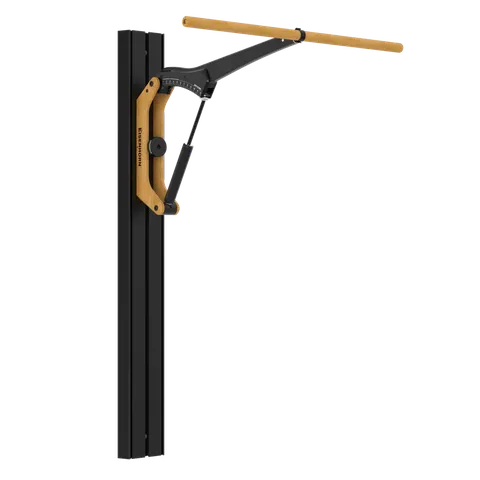
'/%3e%3cg%3e%3cclipPath%20id='a'%3e%3cpath%20d='M0%200h104.484v16H0z'/%3e%3c/clipPath%3e%3cg%20clip-path='url(%23a)'%3e%3cclipPath%20id='b'%3e%3cpath%20d='M-.024%200h104.532v16H-.024z'/%3e%3c/clipPath%3e%3cg%20clip-path='url(%23b)'%3e%3cpath%20d='M12.532%204.621h3.611v11.031h-3.611zM17.782%2012.212h3.446q.142.599.517.862.375.261%201.116.261.621%200%20.977-.213.357-.213.357-.588%200-.598-1.491-.973l-.458-.113q-1.22-.314-1.944-.573-.723-.257-1.052-.482a3%203%200%200%201-.955-1.093q-.32-.637-.319-1.453%200-1.64%201.236-2.576%201.238-.936%203.402-.937%202.127.001%203.349.896%201.22.895%201.378%202.564h-3.364q-.082-.487-.431-.726-.348-.24-.992-.239-.57%200-.847.186-.277.187-.277.569%200%20.546%201.453.914.127.038.196.053l.636.156q1.926.487%202.517.884.734.486%201.071%201.108.338.622.338%201.468%200%201.828-1.278%202.808-1.277.982-3.659.981-2.195%200-3.48-.981-1.285-.98-1.442-2.763'%20style='fill-rule:nonzero'/%3e%3cpath%20d='M17.782%2012.212h3.446q.142.599.517.862.375.261%201.116.261.621%200%20.977-.213.357-.213.357-.588%200-.598-1.491-.973l-.458-.113q-1.22-.314-1.944-.573-.723-.257-1.052-.482a3%203%200%200%201-.955-1.093q-.32-.637-.319-1.453%200-1.64%201.236-2.576%201.238-.936%203.402-.937%202.127.001%203.349.896%201.22.895%201.378%202.564h-3.364q-.082-.487-.431-.726-.348-.24-.992-.239-.57%200-.847.186-.277.187-.277.569%200%20.546%201.453.914.127.038.196.053l.636.156q1.926.487%202.517.884.734.486%201.071%201.108.338.622.338%201.468%200%201.828-1.278%202.808-1.277.982-3.659.981-2.195%200-3.48-.981-1.285-.98-1.442-2.763'%20style='fill-rule:nonzero'%20transform='translate(90.312)'/%3e%3cpath%20d='M29.241%2015.651V4.621h8.817v2.644h-5.273v1.468h4.458v2.53h-4.458v1.708h5.49v2.68zM52.417%2015.651V4.621h3.543v3.744h3.304V4.621h3.544v11.03h-3.544v-4.276H55.96v4.276zM67.993%2010.145q0%201.565.525%202.3.524.733%201.64.733%201.11.001%201.626-.73.517-.73.516-2.303%200-1.579-.516-2.31-.517-.73-1.626-.73-1.116%200-1.64.734-.525.734-.525%202.306m-3.574%200q0-2.696%201.54-4.253%201.54-1.558%204.199-1.558%202.652%200%204.188%201.558%201.535%201.557%201.535%204.253%200%202.689-1.535%204.25-1.536%201.562-4.188%201.561-2.66.001-4.199-1.561-1.54-1.561-1.54-4.25M50.319%204.621h-3.378v6.047l-3.648-6.047h-3.364v11.03h3.364V9.647l3.648%206.004h3.378zM99.597%204.621H96.22v6.049l-3.65-6.049h-3.363v11.03h3.364V9.647l.547.9.007.013%203.095%205.091h3.377zM83.062%209.246h-2.067V7.217h2.067a1.015%201.015%200%201%201%200%202.029m2.832%201.885a3.6%203.6%200%200%200%201.465-2.899%203.615%203.615%200%200%200-3.615-3.614h-6.248v11.03h3.499v-3.804h1.709l1.584%203.804h3.486zM3.343%203.766c0-.49.122-.95.336-1.354H-.024v13.237h11.268l-1.279-3.217H4.228v-2.048h5.349V7.345H4.228V5.851a2.9%202.9%200%200%201-.885-2.085'%20style='fill-rule:nonzero'/%3e%3cpath%20d='M4.711%202.408a2.04%202.04%200%200%200-.485%201.74%202.06%202.06%200%200%200%201.069%201.436C7.614%205.462%2012.983%204.671%2014.02%200c0%200-2.306%202.305-9.309%202.408M102.821%205.888h.208c.233%200%20.37-.102.37-.267%200-.154-.118-.252-.343-.252h-.235zm-.245-.735h.419c.338%200%20.664.054.664.463%200%20.209-.154.356-.353.39v.005c.076.029.113.066.167.172l.323.681h-.279l-.262-.593c-.076-.167-.157-.167-.287-.167h-.147v.76h-.245z'%20style='fill-rule:nonzero'/%3e%3cpath%20d='M101.861%206.051a1.21%201.21%200%200%200%201.21%201.209%201.21%201.21%200%200%200%201.209-1.209%201.21%201.21%200%200%200-2.419%200m-.211%200a1.42%201.42%200%201%201%202.842%200%201.42%201.42%200%201%201-2.842%200'%20style='fill-rule:nonzero'/%3e%3c/g%3e%3c/g%3e%3c/g%3e%3cpath%20d='M17.782%2012.212h3.446q.142.599.517.862.375.261%201.116.261.621%200%20.977-.213.357-.213.357-.588%200-.598-1.491-.973l-.458-.113q-1.22-.314-1.944-.573-.723-.257-1.052-.482a3%203%200%200%201-.955-1.093q-.32-.637-.319-1.453%200-1.64%201.236-2.576%201.238-.936%203.402-.937%202.127.001%203.349.896%201.22.895%201.378%202.564h-3.364q-.082-.487-.431-.726-.348-.24-.992-.239-.57%200-.847.186-.277.187-.277.569%200%20.546%201.453.914.127.038.196.053l.636.156q1.926.487%202.517.884.734.486%201.071%201.108.338.622.338%201.468%200%201.828-1.278%202.808-1.277.982-3.659.981-2.195%200-3.48-.981-1.285-.98-1.442-2.763'%20style='fill-rule:nonzero'%20transform='translate(90.358%20-1.373)scale(1.08605)'/%3e%3c/svg%3e) The complete full-body workout machine for your home. Work out whenever and as often as you want. From CHF 1'899.00 Learn more
The complete full-body workout machine for your home. Work out whenever and as often as you want. From CHF 1'899.00 Learn more 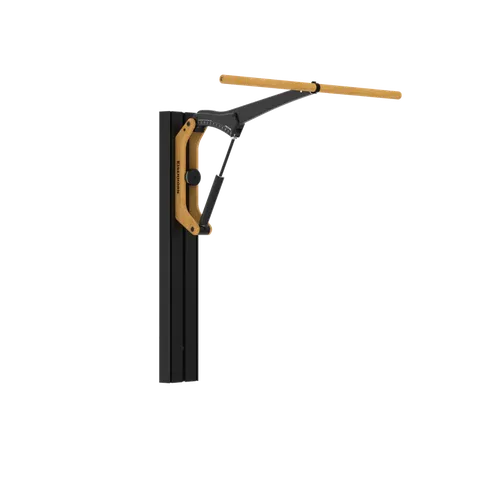
 The EISENHORN S Short features a shorter column, allowing exercises such as lat pulldowns and shoulder presses to be performed while seated. From CHF 1'246.00 Learn more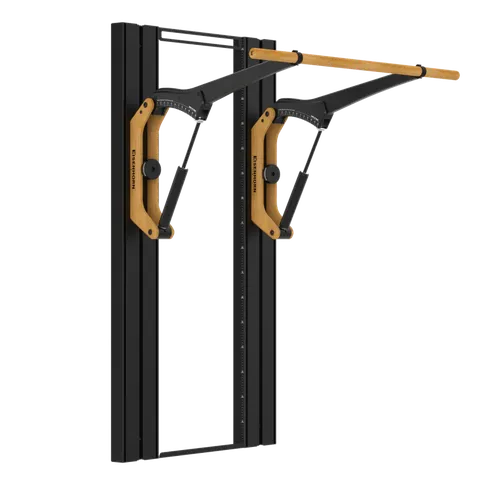
'/%3e%3cg%20transform='translate(.478)'%3e%3cclipPath%20id='a'%3e%3cpath%20d='M0%200h104.484v16H0z'/%3e%3c/clipPath%3e%3cg%20clip-path='url(%23a)'%3e%3cclipPath%20id='b'%3e%3cpath%20d='M-.024%200h104.532v16H-.024z'/%3e%3c/clipPath%3e%3cg%20clip-path='url(%23b)'%3e%3cpath%20d='M12.532%204.621h3.611v11.031h-3.611zM17.782%2012.212h3.446q.142.599.517.862.375.261%201.116.261.621%200%20.977-.213.357-.213.357-.588%200-.598-1.491-.973l-.458-.113q-1.22-.314-1.944-.573-.723-.257-1.052-.482a3%203%200%200%201-.955-1.093q-.32-.637-.319-1.453%200-1.64%201.236-2.576%201.238-.936%203.402-.937%202.127.001%203.349.896%201.22.895%201.378%202.564h-3.364q-.082-.487-.431-.726-.348-.24-.992-.239-.57%200-.847.186-.277.187-.277.569%200%20.546%201.453.914.127.038.196.053l.636.156q1.926.487%202.517.884.734.486%201.071%201.108.338.622.338%201.468%200%201.828-1.278%202.808-1.277.982-3.659.981-2.195%200-3.48-.981-1.285-.98-1.442-2.763'%20style='fill-rule:nonzero'/%3e%3cpath%20d='M17.782%2012.212h3.446q.142.599.517.862.375.261%201.116.261.621%200%20.977-.213.357-.213.357-.588%200-.598-1.491-.973l-.458-.113q-1.22-.314-1.944-.573-.723-.257-1.052-.482a3%203%200%200%201-.955-1.093q-.32-.637-.319-1.453%200-1.64%201.236-2.576%201.238-.936%203.402-.937%202.127.001%203.349.896%201.22.895%201.378%202.564h-3.364q-.082-.487-.431-.726-.348-.24-.992-.239-.57%200-.847.186-.277.187-.277.569%200%20.546%201.453.914.127.038.196.053l.636.156q1.926.487%202.517.884.734.486%201.071%201.108.338.622.338%201.468%200%201.828-1.278%202.808-1.277.982-3.659.981-2.195%200-3.48-.981-1.285-.98-1.442-2.763'%20style='fill-rule:nonzero'%20transform='translate(90.312)'/%3e%3cpath%20d='M29.241%2015.651V4.621h8.817v2.644h-5.273v1.468h4.458v2.53h-4.458v1.708h5.49v2.68zM52.417%2015.651V4.621h3.543v3.744h3.304V4.621h3.544v11.03h-3.544v-4.276H55.96v4.276zM67.993%2010.145q0%201.565.525%202.3.524.733%201.64.733%201.11.001%201.626-.73.517-.73.516-2.303%200-1.579-.516-2.31-.517-.73-1.626-.73-1.116%200-1.64.734-.525.734-.525%202.306m-3.574%200q0-2.696%201.54-4.253%201.54-1.558%204.199-1.558%202.652%200%204.188%201.558%201.535%201.557%201.535%204.253%200%202.689-1.535%204.25-1.536%201.562-4.188%201.561-2.66.001-4.199-1.561-1.54-1.561-1.54-4.25M50.319%204.621h-3.378v6.047l-3.648-6.047h-3.364v11.03h3.364V9.647l3.648%206.004h3.378zM99.597%204.621H96.22v6.049l-3.65-6.049h-3.363v11.03h3.364V9.647l.547.9.007.013%203.095%205.091h3.377zM83.062%209.246h-2.067V7.217h2.067a1.015%201.015%200%201%201%200%202.029m2.832%201.885a3.6%203.6%200%200%200%201.465-2.899%203.615%203.615%200%200%200-3.615-3.614h-6.248v11.03h3.499v-3.804h1.709l1.584%203.804h3.486zM3.343%203.766c0-.49.122-.95.336-1.354H-.024v13.237h11.268l-1.279-3.217H4.228v-2.048h5.349V7.345H4.228V5.851a2.9%202.9%200%200%201-.885-2.085'%20style='fill-rule:nonzero'/%3e%3cpath%20d='M4.711%202.408a2.04%202.04%200%200%200-.485%201.74%202.06%202.06%200%200%200%201.069%201.436C7.614%205.462%2012.983%204.671%2014.02%200c0%200-2.306%202.305-9.309%202.408M102.821%205.888h.208c.233%200%20.37-.102.37-.267%200-.154-.118-.252-.343-.252h-.235zm-.245-.735h.419c.338%200%20.664.054.664.463%200%20.209-.154.356-.353.39v.005c.076.029.113.066.167.172l.323.681h-.279l-.262-.593c-.076-.167-.157-.167-.287-.167h-.147v.76h-.245z'%20style='fill-rule:nonzero'/%3e%3cpath%20d='M101.861%206.051a1.21%201.21%200%200%200%201.21%201.209%201.21%201.21%200%200%200%201.209-1.209%201.21%201.21%200%200%200-2.419%200m-.211%200a1.42%201.42%200%201%201%202.842%200%201.42%201.42%200%201%201-2.842%200'%20style='fill-rule:nonzero'/%3e%3c/g%3e%3c/g%3e%3c/g%3e%3cpath%20d='M1.9%2023H25c11.7%200%2024%207.4%2024%2026.9%200%2016.8-10.1%2027.3-24.3%2027.3H1.9zm14.8%2040.2h5.9C29%2063.2%2033%2059.5%2033%2050.1c0-7.8-3.1-13.6-9.6-13.6h-6.7zM69.1%2058.3c.2%204.6%202.1%207.1%207.7%207.1%204.1%200%206.7-1.2%206.7-4.1%200-3.3-4.1-3.8-10.2-5.1C66.2%2054.7%2055%2051.9%2055%2040c0-9.9%207.6-18%2020.4-18%2012.2%200%2020.7%206.2%2021.1%2017.8l-15.6-.1c-.1-3.2-1.7-5.6-5.4-5.6-2.8%200-5.1%201.5-5.1%204.4%200%203.1%204.3%204.1%208.7%205%208.6%201.6%2019.1%204%2019.1%2016.4%200%2011.2-8.2%2018.3-21.7%2018.3-13.4%200-23.1-6.1-23.5-19.9z'%20style='fill-rule:nonzero'%20transform='translate(109.774%20-1.436)scale(.22162)'/%3e%3c/svg%3e) The most powerful workout machine for your home. More weight, more workout variety. From CHF 3'542.00 Learn more
The most powerful workout machine for your home. More weight, more workout variety. From CHF 3'542.00 Learn more 
:quality(82))
:quality(82))
:quality(82))
:quality(82))
:quality(78))

:quality(82))
:quality(82))
:quality(82))
:quality(82))