'/%3e%3cg%3e%3cclipPath%20id='a'%3e%3cpath%20d='M0%200h104.484v16H0z'/%3e%3c/clipPath%3e%3cg%20clip-path='url(%23a)'%3e%3cclipPath%20id='b'%3e%3cpath%20d='M-.024%200h104.532v16H-.024z'/%3e%3c/clipPath%3e%3cg%20clip-path='url(%23b)'%3e%3cpath%20d='M12.532%204.621h3.611v11.031h-3.611zM17.782%2012.212h3.446q.142.599.517.862.375.261%201.116.261.621%200%20.977-.213.357-.213.357-.588%200-.598-1.491-.973l-.458-.113q-1.22-.314-1.944-.573-.723-.257-1.052-.482a3%203%200%200%201-.955-1.093q-.32-.637-.319-1.453%200-1.64%201.236-2.576%201.238-.936%203.402-.937%202.127.001%203.349.896%201.22.895%201.378%202.564h-3.364q-.082-.487-.431-.726-.348-.24-.992-.239-.57%200-.847.186-.277.187-.277.569%200%20.546%201.453.914.127.038.196.053l.636.156q1.926.487%202.517.884.734.486%201.071%201.108.338.622.338%201.468%200%201.828-1.278%202.808-1.277.982-3.659.981-2.195%200-3.48-.981-1.285-.98-1.442-2.763'%20style='fill-rule:nonzero'/%3e%3cpath%20d='M17.782%2012.212h3.446q.142.599.517.862.375.261%201.116.261.621%200%20.977-.213.357-.213.357-.588%200-.598-1.491-.973l-.458-.113q-1.22-.314-1.944-.573-.723-.257-1.052-.482a3%203%200%200%201-.955-1.093q-.32-.637-.319-1.453%200-1.64%201.236-2.576%201.238-.936%203.402-.937%202.127.001%203.349.896%201.22.895%201.378%202.564h-3.364q-.082-.487-.431-.726-.348-.24-.992-.239-.57%200-.847.186-.277.187-.277.569%200%20.546%201.453.914.127.038.196.053l.636.156q1.926.487%202.517.884.734.486%201.071%201.108.338.622.338%201.468%200%201.828-1.278%202.808-1.277.982-3.659.981-2.195%200-3.48-.981-1.285-.98-1.442-2.763'%20style='fill-rule:nonzero'%20transform='translate(90.312)'/%3e%3cpath%20d='M29.241%2015.651V4.621h8.817v2.644h-5.273v1.468h4.458v2.53h-4.458v1.708h5.49v2.68zM52.417%2015.651V4.621h3.543v3.744h3.304V4.621h3.544v11.03h-3.544v-4.276H55.96v4.276zM67.993%2010.145q0%201.565.525%202.3.524.733%201.64.733%201.11.001%201.626-.73.517-.73.516-2.303%200-1.579-.516-2.31-.517-.73-1.626-.73-1.116%200-1.64.734-.525.734-.525%202.306m-3.574%200q0-2.696%201.54-4.253%201.54-1.558%204.199-1.558%202.652%200%204.188%201.558%201.535%201.557%201.535%204.253%200%202.689-1.535%204.25-1.536%201.562-4.188%201.561-2.66.001-4.199-1.561-1.54-1.561-1.54-4.25M50.319%204.621h-3.378v6.047l-3.648-6.047h-3.364v11.03h3.364V9.647l3.648%206.004h3.378zM99.597%204.621H96.22v6.049l-3.65-6.049h-3.363v11.03h3.364V9.647l.547.9.007.013%203.095%205.091h3.377zM83.062%209.246h-2.067V7.217h2.067a1.015%201.015%200%201%201%200%202.029m2.832%201.885a3.6%203.6%200%200%200%201.465-2.899%203.615%203.615%200%200%200-3.615-3.614h-6.248v11.03h3.499v-3.804h1.709l1.584%203.804h3.486zM3.343%203.766c0-.49.122-.95.336-1.354H-.024v13.237h11.268l-1.279-3.217H4.228v-2.048h5.349V7.345H4.228V5.851a2.9%202.9%200%200%201-.885-2.085'%20style='fill-rule:nonzero'/%3e%3cpath%20d='M4.711%202.408a2.04%202.04%200%200%200-.485%201.74%202.06%202.06%200%200%200%201.069%201.436C7.614%205.462%2012.983%204.671%2014.02%200c0%200-2.306%202.305-9.309%202.408M102.821%205.888h.208c.233%200%20.37-.102.37-.267%200-.154-.118-.252-.343-.252h-.235zm-.245-.735h.419c.338%200%20.664.054.664.463%200%20.209-.154.356-.353.39v.005c.076.029.113.066.167.172l.323.681h-.279l-.262-.593c-.076-.167-.157-.167-.287-.167h-.147v.76h-.245z'%20style='fill-rule:nonzero'/%3e%3cpath%20d='M101.861%206.051a1.21%201.21%200%200%200%201.21%201.209%201.21%201.21%200%200%200%201.209-1.209%201.21%201.21%200%200%200-2.419%200m-.211%200a1.42%201.42%200%201%201%202.842%200%201.42%201.42%200%201%201-2.842%200'%20style='fill-rule:nonzero'/%3e%3c/g%3e%3c/g%3e%3c/g%3e%3cpath%20d='M17.782%2012.212h3.446q.142.599.517.862.375.261%201.116.261.621%200%20.977-.213.357-.213.357-.588%200-.598-1.491-.973l-.458-.113q-1.22-.314-1.944-.573-.723-.257-1.052-.482a3%203%200%200%201-.955-1.093q-.32-.637-.319-1.453%200-1.64%201.236-2.576%201.238-.936%203.402-.937%202.127.001%203.349.896%201.22.895%201.378%202.564h-3.364q-.082-.487-.431-.726-.348-.24-.992-.239-.57%200-.847.186-.277.187-.277.569%200%20.546%201.453.914.127.038.196.053l.636.156q1.926.487%202.517.884.734.486%201.071%201.108.338.622.338%201.468%200%201.828-1.278%202.808-1.277.982-3.659.981-2.195%200-3.48-.981-1.285-.98-1.442-2.763'%20style='fill-rule:nonzero'%20transform='translate(90.358%20-1.373)scale(1.08605)'/%3e%3c/svg%3e)

'/%3e%3cg%20transform='translate(.478)'%3e%3cclipPath%20id='a'%3e%3cpath%20d='M0%200h104.484v16H0z'/%3e%3c/clipPath%3e%3cg%20clip-path='url(%23a)'%3e%3cclipPath%20id='b'%3e%3cpath%20d='M-.024%200h104.532v16H-.024z'/%3e%3c/clipPath%3e%3cg%20clip-path='url(%23b)'%3e%3cpath%20d='M12.532%204.621h3.611v11.031h-3.611zM17.782%2012.212h3.446q.142.599.517.862.375.261%201.116.261.621%200%20.977-.213.357-.213.357-.588%200-.598-1.491-.973l-.458-.113q-1.22-.314-1.944-.573-.723-.257-1.052-.482a3%203%200%200%201-.955-1.093q-.32-.637-.319-1.453%200-1.64%201.236-2.576%201.238-.936%203.402-.937%202.127.001%203.349.896%201.22.895%201.378%202.564h-3.364q-.082-.487-.431-.726-.348-.24-.992-.239-.57%200-.847.186-.277.187-.277.569%200%20.546%201.453.914.127.038.196.053l.636.156q1.926.487%202.517.884.734.486%201.071%201.108.338.622.338%201.468%200%201.828-1.278%202.808-1.277.982-3.659.981-2.195%200-3.48-.981-1.285-.98-1.442-2.763'%20style='fill-rule:nonzero'/%3e%3cpath%20d='M17.782%2012.212h3.446q.142.599.517.862.375.261%201.116.261.621%200%20.977-.213.357-.213.357-.588%200-.598-1.491-.973l-.458-.113q-1.22-.314-1.944-.573-.723-.257-1.052-.482a3%203%200%200%201-.955-1.093q-.32-.637-.319-1.453%200-1.64%201.236-2.576%201.238-.936%203.402-.937%202.127.001%203.349.896%201.22.895%201.378%202.564h-3.364q-.082-.487-.431-.726-.348-.24-.992-.239-.57%200-.847.186-.277.187-.277.569%200%20.546%201.453.914.127.038.196.053l.636.156q1.926.487%202.517.884.734.486%201.071%201.108.338.622.338%201.468%200%201.828-1.278%202.808-1.277.982-3.659.981-2.195%200-3.48-.981-1.285-.98-1.442-2.763'%20style='fill-rule:nonzero'%20transform='translate(90.312)'/%3e%3cpath%20d='M29.241%2015.651V4.621h8.817v2.644h-5.273v1.468h4.458v2.53h-4.458v1.708h5.49v2.68zM52.417%2015.651V4.621h3.543v3.744h3.304V4.621h3.544v11.03h-3.544v-4.276H55.96v4.276zM67.993%2010.145q0%201.565.525%202.3.524.733%201.64.733%201.11.001%201.626-.73.517-.73.516-2.303%200-1.579-.516-2.31-.517-.73-1.626-.73-1.116%200-1.64.734-.525.734-.525%202.306m-3.574%200q0-2.696%201.54-4.253%201.54-1.558%204.199-1.558%202.652%200%204.188%201.558%201.535%201.557%201.535%204.253%200%202.689-1.535%204.25-1.536%201.562-4.188%201.561-2.66.001-4.199-1.561-1.54-1.561-1.54-4.25M50.319%204.621h-3.378v6.047l-3.648-6.047h-3.364v11.03h3.364V9.647l3.648%206.004h3.378zM99.597%204.621H96.22v6.049l-3.65-6.049h-3.363v11.03h3.364V9.647l.547.9.007.013%203.095%205.091h3.377zM83.062%209.246h-2.067V7.217h2.067a1.015%201.015%200%201%201%200%202.029m2.832%201.885a3.6%203.6%200%200%200%201.465-2.899%203.615%203.615%200%200%200-3.615-3.614h-6.248v11.03h3.499v-3.804h1.709l1.584%203.804h3.486zM3.343%203.766c0-.49.122-.95.336-1.354H-.024v13.237h11.268l-1.279-3.217H4.228v-2.048h5.349V7.345H4.228V5.851a2.9%202.9%200%200%201-.885-2.085'%20style='fill-rule:nonzero'/%3e%3cpath%20d='M4.711%202.408a2.04%202.04%200%200%200-.485%201.74%202.06%202.06%200%200%200%201.069%201.436C7.614%205.462%2012.983%204.671%2014.02%200c0%200-2.306%202.305-9.309%202.408M102.821%205.888h.208c.233%200%20.37-.102.37-.267%200-.154-.118-.252-.343-.252h-.235zm-.245-.735h.419c.338%200%20.664.054.664.463%200%20.209-.154.356-.353.39v.005c.076.029.113.066.167.172l.323.681h-.279l-.262-.593c-.076-.167-.157-.167-.287-.167h-.147v.76h-.245z'%20style='fill-rule:nonzero'/%3e%3cpath%20d='M101.861%206.051a1.21%201.21%200%200%200%201.21%201.209%201.21%201.21%200%200%200%201.209-1.209%201.21%201.21%200%200%200-2.419%200m-.211%200a1.42%201.42%200%201%201%202.842%200%201.42%201.42%200%201%201-2.842%200'%20style='fill-rule:nonzero'/%3e%3c/g%3e%3c/g%3e%3c/g%3e%3cpath%20d='M1.9%2023H25c11.7%200%2024%207.4%2024%2026.9%200%2016.8-10.1%2027.3-24.3%2027.3H1.9zm14.8%2040.2h5.9C29%2063.2%2033%2059.5%2033%2050.1c0-7.8-3.1-13.6-9.6-13.6h-6.7zM69.1%2058.3c.2%204.6%202.1%207.1%207.7%207.1%204.1%200%206.7-1.2%206.7-4.1%200-3.3-4.1-3.8-10.2-5.1C66.2%2054.7%2055%2051.9%2055%2040c0-9.9%207.6-18%2020.4-18%2012.2%200%2020.7%206.2%2021.1%2017.8l-15.6-.1c-.1-3.2-1.7-5.6-5.4-5.6-2.8%200-5.1%201.5-5.1%204.4%200%203.1%204.3%204.1%208.7%205%208.6%201.6%2019.1%204%2019.1%2016.4%200%2011.2-8.2%2018.3-21.7%2018.3-13.4%200-23.1-6.1-23.5-19.9z'%20style='fill-rule:nonzero'%20transform='translate(109.774%20-1.436)scale(.22162)'/%3e%3c/svg%3e)
:format(webp))
Many people train hard, invest time and energy in strength training and still wonder why the desired muscle growth is not happening. The reason is often not the training itself, but the nutrition. Even the best workout can only reach its full potential if the body receives the right nutrients.
Strength training sets the crucial stimulus for growth and change. However, the actual adaptation takes place afterwards – in recovery and through nutrition. It is there that it is decided whether the body can build new muscles, recover, and become stronger.
To truly understand muscle growth, one must therefore view training and nutrition as a unit. In training, you give your body the impulse to change – through nutrition, you provide it with the building blocks.
Muscle building & nutrition – the basics simply explained
For successful muscle growth, the body primarily needs three things: sufficient energy, the right macronutrients, and a constant supply of important nutrients. These factors decide whether the body can build muscle, regenerate, and become more efficient in the long term.
The basis for this is usually a slight calorie surplus. This means that you provide your body with a little more energy every day than it consumes in everyday life and training. This additional energy surplus is important because muscle growth is an energy-intensive process for the body. If this additional energy is missing in the long term, it becomes significantly more difficult to build new muscle mass or improve training performance in the long run.
At the same time, it is not only about the amount of calories but especially about the quality of nutrition. The macronutrients have different tasks: Proteins provide the necessary building blocks for muscle growth and recovery, carbohydrates supply the body with energy for intense training sessions, and healthy fats support important hormonal processes and general health.
Protein plays a central role in muscle growth. After strength training, the body needs sufficient amino acids to repair damaged muscle fibers and build new muscles. Carbohydrates help at the same time to replenish energy stores and remain efficient in training. Healthy fats, in turn, support hormone production, which is also crucial for recovery and muscle growth.
Another important factor is individual energy needs. Each person consumes a different amount of energy – depending on age, body weight, muscle mass, daily routine, metabolism, and training intensity. Therefore, there is no perfect diet that works the same for everyone. Successful muscle growth nutrition must always be adjusted to one's own body, personal goal, and individual daily routine.
The 3 most important building blocks of your strength training diet
Protein – the key to muscle growth
Protein is the most important nutrient for muscle growth because it provides the amino acids the body needs for recovery and muscle growth. Those who regularly do strength training have a significantly higher protein requirement than inactive people. Depending on the training goal and activity level, daily protein intake should be consciously planned to optimally support muscle growth.
Important protein sources include meat, fish, eggs, dairy products, legumes, nuts, or protein shakes. What matters is not only the total amount but also the quality and regular distribution throughout the day.
Timing also plays an important role. Especially after training, the body benefits from a protein-rich meal, as the muscles are particularly receptive to recovery and building processes at this stage.
Carbohydrates – your training energy
Carbohydrates are the most important energy source for intense training sessions and crucial for performance and recovery. The requirement strongly depends on training volume, intensity, and daily routine. Those who train regularly and intensively need sufficient carbohydrates to fill energy stores and remain efficient in training.
Good carbohydrate sources include oatmeal, rice, potatoes, whole grain products, fruits, or legumes. Particularly complex carbohydrates – such as those found in oatmeal, whole grain rice, whole grain bread, or lentils – consist of longer sugar chains and are therefore digested more slowly. This results in a more stable blood sugar level, providing longer-lasting energy and usually longer satiety.
Timing can also be used sensibly. Before training, carbohydrates provide energy for intense exertions, while after a workout, they help replenish depleted energy stores and support recovery.
Fats – underestimated but crucial
Fats are often underestimated in muscle building, although they are essential for numerous processes in the body. They support hormone production, provide long-term energy, and play an important role in health, recovery, and metabolism. As with fat needs, the right amount depends individually on activity level, body weight, and training goal.
Particularly important are high-quality fat sources like nuts, avocados, olive oil, seeds, or fatty fish. They provide valuable fatty acids, which are among other things important for hormone production, cell health, and the cardiovascular system. A distinction is generally made between saturated and unsaturated fatty acids. Unsaturated fatty acids are generally considered the better option and are mainly found in plant oils, nuts, seeds, avocados, or fatty fish. These include omega-3 and omega-6 fatty acids. Saturated fatty acids are more commonly found in heavily processed foods, fatty meats, butter, or fast food and should be consumed more moderately. Studies show that replacing saturated with unsaturated fatty acids can have positive effects on cholesterol levels and heart health.
Regarding timing, fats are less in focus directly around training, as they are digested more slowly. Nonetheless, they are important throughout the day to consistently provide the body with energy and essential nutrients.
How many calories do you need for muscle growth?
The required amount of calories always depends on individual energy consumption. Factors such as body weight, activity level, training frequency, and metabolism play an important role. This consumption can be determined, for example, through smartwatches, fitness bracelets, or special tracking apps that estimate daily caloric consumption based on movement, heart rate, and activity data. This allows diet to be much more specifically tailored to personal muscle development and training routine.
For muscle growth, a moderate calorie surplus is usually advisable. The goal is to provide the body with enough energy for muscle growth and regeneration without unnecessarily increasing body fat. In practice, a surplus of about 5–15 % above the daily caloric consumption has often proven effective. For example, if your daily energy consumption is around 2,500 calories, a moderate muscle-building surplus might mean about 125 to 375 additional calories per day. In this case, the daily calorie intake would be approximately between 2,625 and 2,875 calories. The optimal surplus actually required depends, among other things, on training status, metabolism, activity level, and personal goal. Beginners often respond well even to small surpluses, while advanced individuals usually need to adjust their nutrition more precisely. What is especially important is regular monitoring of progress to adjust calorie intake if necessary.
Why strength training and nutrition belong together
Strength training and nutrition do not work independently – they complement each other. Training provides the muscle stimulus, while nutrition supplies the necessary building blocks for adaptation, regeneration, and growth.
Only the interplay of targeted training and appropriate nutrition creates a real synergy effect. For a smart, efficient, and targeted workout, we recommend our EISENHORN training system consisting of a EISENHORN strength station S or DS and the MIKE5 training concept. This takes care of training planning for you, so you can focus on intense workouts and nutrition.
Perfect interaction: MIKE5 training + high-quality nutrition
The MIKE5 training concept relies on short and intense workouts. These can be flexibly integrated into your daily routine and provide a very targeted muscle stimulus. The actual strain on the body is relatively short but intense. Lengthy and inefficient phases of exertion are avoided. The energy supplied can therefore be used more efficiently for training, regeneration, and muscle growth.
At the same time, short workouts allow for a perfectly timed match with your daily food intake. Extensive planning efforts, focused on long training sessions, are not required.
Sustainable muscle growth is not achieved through individual perfect training days, but through the consistent interplay of several factors. The combination of key elements from the MIKE5 training concept and high-quality nutrition provides you with the necessary framework.
Sufficient intensity in training – only a clearly set and strong muscle stimulus forces your body to adapt.
Regularity – even the best training is of little use if not implemented consistently. Continuity triumphs over sporadic training with short-term extreme phases in the long run.
High-quality food intake with sufficient protein supply – without enough proteins, your body lacks the necessary building blocks for regeneration and muscle growth.
Appropriate calorie surplus – only then is there enough energy available for muscle-building processes.
Recovery – muscle growth does not occur during training, but in the phases afterward. Adequate sleep, recovery, and sensible load management are therefore essential for long-term progress.
Muscle building & nutrition in everyday life – simple & effective
Many dietary plans fail not due to a lack of knowledge, but because they are too complicated and hard to maintain in everyday life. Consistency is crucial when it comes to muscle building – not the theoretically perfect plan, but one that works in the long term.
Why complicated dietary plans fail
Strict diets, detailed calorie counting, and many rules often lead to stress and overwhelm. Such requirements are difficult to consistently implement in everyday life, especially with work, while on the go, or in social situations. Even small deviations can quickly be seen as a setback, further lowering motivation. As a result, such plans are usually only followed temporarily and then abandoned again.
The simple solution – structure instead of chaos
A simple, flexible structure is significantly more sustainable than an overly complicated plan. Regular meal times, simple and recurring meals, and a focus on high-quality foods are often enough to make progress in muscle building. What matters is not perfection, but consistency – a diet that can be effortlessly integrated into everyday life and maintained in the long term.
An example meal plan for muscle building
Breakfast
A protein-rich breakfast with oatmeal, skyr, or eggs provides energy and supports muscle building already in the morning.
Lunch
A combination of protein source, complex carbohydrates, and vegetables provides long-lasting energy and important nutrients.
Dinner
In the evening, a balanced meal with high-quality protein and healthy fats is suitable to support recovery.
Snacks
Protein-rich snacks such as nuts, yogurt, or protein shakes help to easily meet the protein requirement throughout the day.
The focus should always be on practical and everyday-suitable solutions.
Timing – when should you eat for maximum muscle growth?
When it comes to timing, we can make a simple distinction between pre-workout and post-workout.
Pre-workout nutrition
The aim of pre-workout nutrition is primarily to provide energy and support performance. Ideal are easily digestible carbohydrates, as they are quickly available and replenish glycogen stores. A moderate amount of protein can also be beneficial to supply the body with amino acids early and prevent muscle breakdown during intense sessions. Heavy, fat-rich or very fiber-rich meals should be avoided shortly before training, as they burden digestion and can lead to a sluggish feeling.
Post-workout nutrition
After training, the focus is on recovery and muscle building. During this phase, the body is particularly receptive to nutrients. A combination of protein and carbohydrates supports the repair of muscle tissue and helps replenish depleted energy stores. Protein provides the building blocks for muscle protein synthesis, while carbohydrates accelerate recovery and can stabilize training performance for upcoming sessions.
Especially with short, intense MIKE5 sessions, this nutrition timing can be easily integrated into daily life, as no elaborate meal planning is needed, and simple snacks or normal meals around the training are sufficient.
Supplements – beneficial or overhyped?
Supplements can be a useful addition but never replace a balanced and well-structured basic nutrition. The foundation for muscle building, performance, and recovery always remains an adequate intake of calories, protein, carbohydrates, healthy fats, and micronutrients from natural foods.
Protein powder can be particularly practical when it's difficult to meet daily protein needs through solid meals alone. It's not a 'must', but it facilitates consistent protein intake, especially when short on time or on the go.
Creatine is one of the most well-researched supplements in sports and has been shown in numerous studies to be effective for strength and performance enhancement. It can help improve explosive strength, increase training intensity, and allow for more training volume in the long term. It indirectly supports muscle growth, especially during intense and short exertions.
However, the foundation always remains: regular training, adequate sleep, and high-quality nutrition.
Effective strength training at home as the perfect complement to nutrition
Why you don't need space-consuming equipment parks
For effective strength training at home, there is no need for huge equipment parks or complicated setups. The right exercises and an efficient system that makes regular training easy are crucial.
The perfect solution: EISENHORN fitness stations
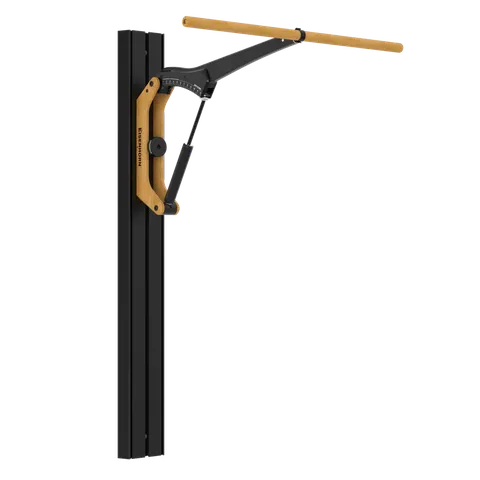
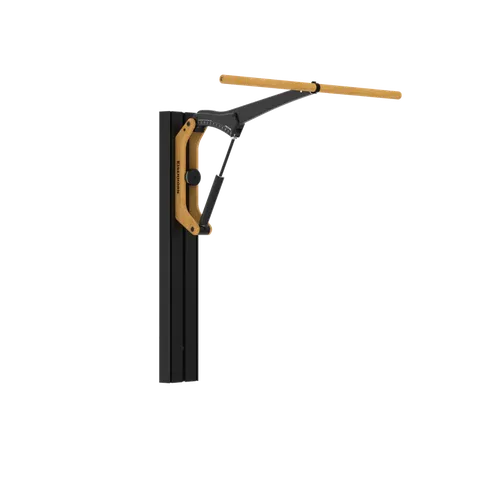
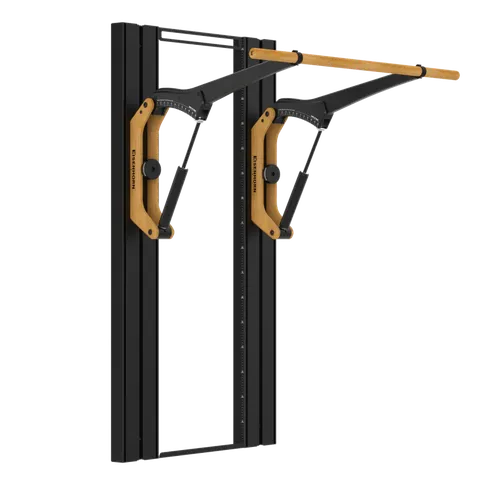
The strength stations EISENHORN S and EISENHORN DS enable efficient full-body training in minimal space and can be ideally combined with the MIKE5 training program . With their compact, wall-mounted design, they offer maximum performance with minimal space requirements. On both variants, you can perform over 100 exercises at home. In combination with the MIKE5 training program, you get an unbeatable efficient training system for your home gym.
Both power stations are ready to use at any time, eliminating setup and takedown times completely. Also, travel to and from the gym or organizational hurdles are things of the past. With their aesthetic design, they also integrate harmoniously into any living space.
Why consistency is the key to your success
Muscle building doesn't happen through individual perfect days but through long-term habits. That's why consistency and continuity are more important than short-term extremes. Those who permanently integrate training and proper nutrition into their everyday lives achieve sustainable progress and stay motivated in the long run.
The most common mistakes
Many people make fundamental mistakes when it comes to muscle building that significantly slow down progress.
Caloric surplus is not achieved: Often, too little food is consumed overall, so the body simply lacks the necessary energy for building processes.
Protein deficit: Often, protein intake falls below the necessary requirement, which means muscle protein synthesis is not optimally supported.
Irregular eating without a fixed rhythm: When meals are consumed randomly or fluctuate greatly, the body lacks a constant supply of energy and building blocks.
Training without a clear system: Load, progression, and recovery are not sensibly coordinated, leading to inefficiency and, in the worst case, lack of progress.
Sustainable muscle building only happens when nutrition and training are structured and consistently implemented. A clear, simple system ensures that progress is not left to chance but is planned and occurs in the long term.
Muscle building and nutrition for beginners vs. advanced
The difference between beginners and advanced in muscle building is mainly in how well the basics are already implemented and how much depth is necessary for further progress. While small changes often have a big impact at the beginning, the process becomes much more differentiated with increasing training experience.
Beginners often quickly benefit from simple adjustments in everyday life. Regular strength training, increased protein intake, and more structure in meals are usually sufficient to achieve visible progress. The body reacts particularly strongly to new training stimuli in this phase, which is why even basic improvements in nutrition and consistency can lead to significant muscle building.
Advanced individuals, however, eventually reach a point where simple optimizations are no longer enough. To continue making progress, they must focus more specifically on factors such as caloric balance, training intensity and adequate recovery. The control of training also becomes more important, as progression must be planned more consciously to avoid plateaus and to maintain muscle building in the long term.
Conclusion
Muscle building doesn't just happen in training. The workout initiates the stimulus – nutrition provides the foundation for growth, recovery, and lasting progress.
Those who intelligently combine training and nutrition create the best conditions for more strength, more energy, and sustainable muscle building. With the EISENHORN training system - consisting of a fitness station and MIKE5 training concept – you choose a simple, efficient, and everyday training approach. This way, you can focus entirely on your nutrition and intense workouts.
Take advantage of this bundle offer!
Order your EISENHORN multi-gym now and save with our attractive bundle deals on the EISENHORN S or EISENHORN DS.
Most common questions
Here you will find answers to the most common questions. If your question is still not answered, simply contact us directly and we will help you.